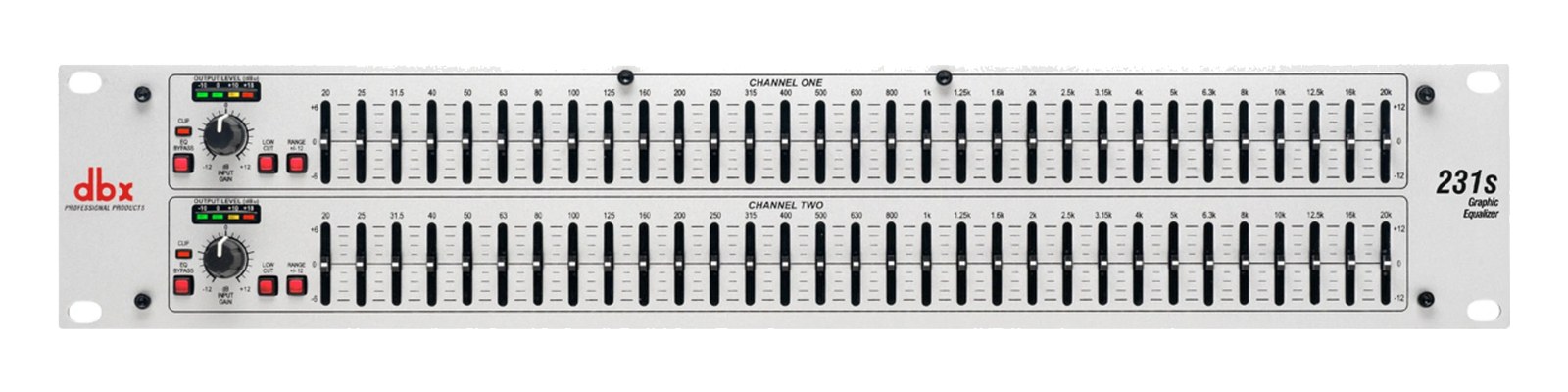

Klark Teknik DN360 Stereo 30-band Graphic EQ
Klark Teknik·Model DN360·klark-teknik-dn360
About the Klark Teknik DN360
The Klark Teknik DN360 is the reference graphic EQAn equalizer with one fader per fixed frequency band (31 on a pro unit) — fast broad tone-shaping, classic for ringing out monitors. for live touring — a stereo 30-band on 1/3-octave centers with the smooth, musical filter shapes that earned the Klark name. On FOHFront Of House — the main mix the audience hears, and the console position out in the room where it gets mixed. it lives between the console and the system processor for room correction; on monitor worldThe side-stage domain of the monitor engineer — console, IEM racks, and everything feeding the band’s ears instead of the audience. it's the first tool a monitor engineer reaches for to ring out a wedgeA floor monitor speaker angled up at the performer — the thing IEMs replace, and the thing you fall back on when they die. before showcall. Outlasts most consoles in the rack.
The DN360 is the graphic EQAn equalizer with one fader per fixed frequency band (31 on a pro unit) — fast broad tone-shaping, classic for ringing out monitors. that most working monitor engineers have spent more hours behind than they can count. Two channels, thirty bands each, 1/3-octave centers, all-XLRThe standard 3-pin locking connector for mics and balanced line signals — pin 1 is the shield, pins 2 and 3 carry the balanced pair. balancedCarries the signal on two wires and cancels whatever noise both pick up — why mic cables can run hundreds of feet hum-free. I/O — it does one job and does it without drama. On monitor worldThe side-stage domain of the monitor engineer — console, IEM racks, and everything feeding the band’s ears instead of the audience. it sits between your console outputs and the amp rack, giving you a visual map of where the room is fighting you and a direct way to fight back. At FOHFront Of House — the main mix the audience hears, and the console position out in the room where it gets mixed. it earns its place between the desk and the system processor for room correction, particularly in venues where a DSPDigital Signal Processing — the number-crunching that does EQ, compression, and effects inside a box. More DSP means more processing at once. curve alone isn't enough hands-on control during a show.
At 2UThe standard slice of rack height: 1U = 1.75″. A 3U box takes three slices; half-rack gear pairs two units side by side in one. and 235mm deep, the DN360 fits comfortably in a standard touring rack without forcing compromises. The 22-watt nominal draw is negligible on any halfway-decent power conditionerFilters venue AC, clamps surges, and gives the rack one tidy inlet. Not a voltage regulator and not a battery — just cleaner power.. More practically: the fader throws are long enough to make surgical cuts readable at a glance under stage light, which matters when a wedgeA floor monitor speaker angled up at the performer — the thing IEMs replace, and the thing you fall back on when they die. starts feeding back mid-song and you need to find the frequency by eye. Both channels share the same rear-panel footprint, so patching is clean — one XLRThe standard 3-pin locking connector for mics and balanced line signals — pin 1 is the shield, pins 2 and 3 carry the balanced pair. in, one XLR out per side, no adapters, no format conversion headaches at 7 a.m. load-in.
If you're running physical wedgesA floor monitor speaker angled up at the performer — the thing IEMs replace, and the thing you fall back on when they die. and need a dedicated tool for ringing them out, this is the straightforward choice at its price point. It's also the right call when your console's onboard GEQ feels too buried in menus for fast show adjustments. Where it isn't the answer: fully digital IEMIn-Ear Monitor — earpieces that replace floor wedges, feeding each player their own mix. The reason this whole rack exists. rigs where all your mix processing lives inside a console or a dedicated IEM transmitter rack — adding an analog graphic in that chain means unnecessary DA/AD conversion. Similarly, if your entire monitor worldThe side-stage domain of the monitor engineer — console, IEM racks, and everything feeding the band’s ears instead of the audience. is in-ears on a modern digital desk, the DN360 is weight and rack space you don't need.
In the rack
- Label each band's center frequency on the rack face with small P-touch tape above the fader bank — under moving lights the silk-screen printing disappears, and you want to grab the right frequency on the first reach.
- Patch it so channel A handles stage left sends and channel B handles stage right; keeping a consistent left/right convention across every show means a sub coming in on a fly dateA gig you fly to instead of driving — the whole rig has to shrink into checkable cases and carry-ons. can read your rack without a conversation.
- Before showcall, walk the stage with a reference track through the wedgeA floor monitor speaker angled up at the performer — the thing IEMs replace, and the thing you fall back on when they die. and use the DN360 to pre-shape before you bring in a live mic — you'll use fewer dramatic cuts when it's time to ring out, which means a cleaner-sounding result for the artist.
- If you're using it at FOHFront Of House — the main mix the audience hears, and the console position out in the room where it gets mixed. for room correction, take a photo of the final fader positions on your phone after soundcheck; if the unit gets bumped or swapped overnight, you have a restore point that doesn't rely on memory.
Two-channel 30-band graphic EQAn equalizer with one fader per fixed frequency band (31 on a pro unit) — fast broad tone-shaping, classic for ringing out monitors.. The reference for ringing-out monitor wedgesA floor monitor speaker angled up at the performer — the thing IEMs replace, and the thing you fall back on when they die. + tuning mains.
I/O Ports (5)
| Port | Connector | Direction | Signal | Channels |
|---|---|---|---|---|
| Input A (XLR) | XLR FEMALE | input | analog audio | — |
| Input B (XLR) | XLR FEMALE | input | analog audio | — |
| Output A (XLR) | XLR MALE | output | analog audio | — |
| Output B (XLR) | XLR MALE | output | analog audio | — |
- Power (IEC) (IEC C14)