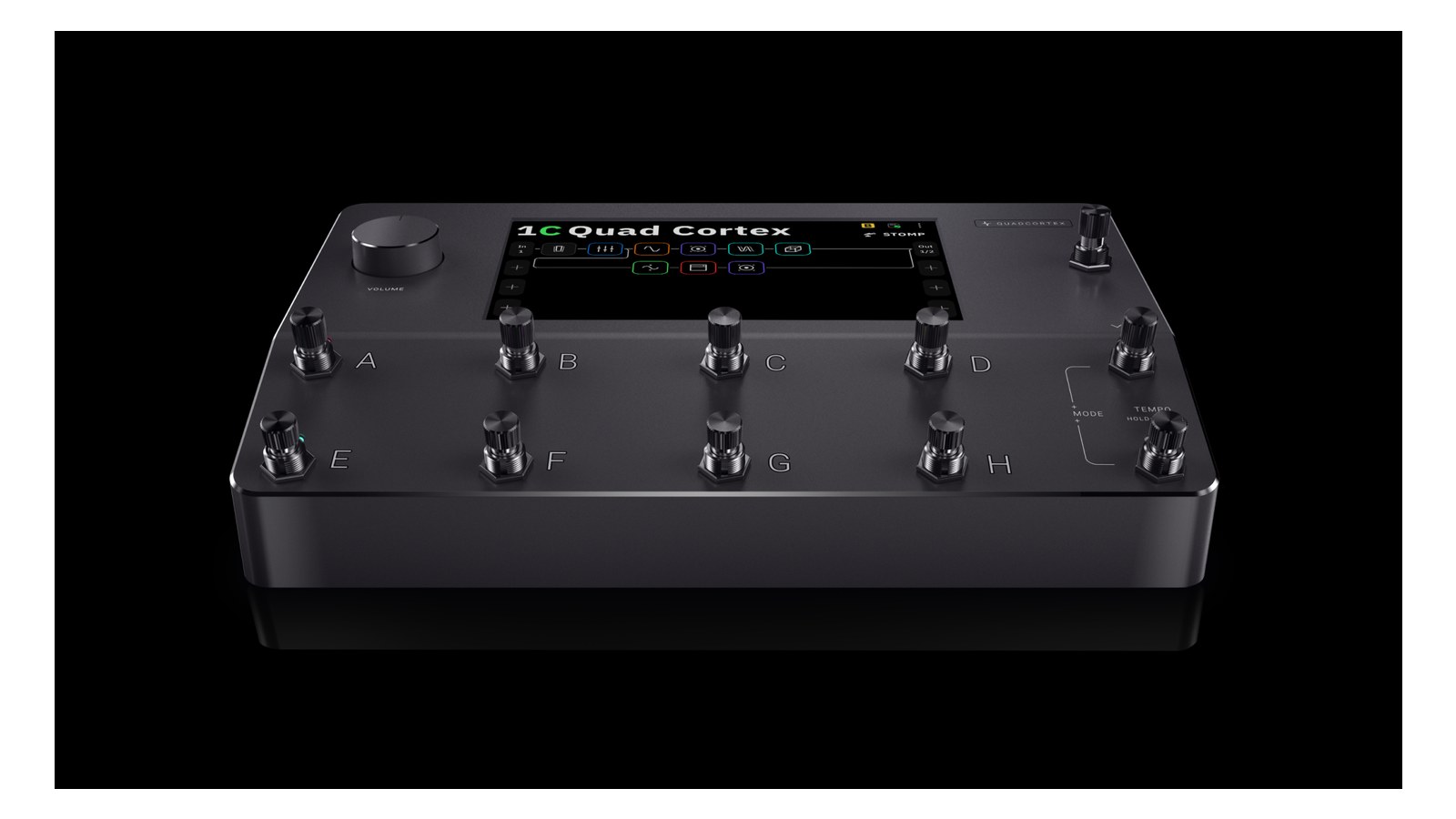

Eventide H9000 Multi-Effects Processor
Eventide·Model H9000·eventide-h9000
About the Eventide H9000
The Eventide H9000 is the flagship of Eventide's 40-year reverb/delay/multi-FX legacy — 16 stereo effect engines running in parallel, with full FaderPort-style control surface integration and DanteThe most common audio-over-network standard: dozens of channels of uncompressed digital audio down one ordinary Ethernet cable between Dante boxes. / MADIA pro digital format carrying 64 channels on one coax or optical cable. Point-to-point — one sender, one receiver, no network required. / AES routing. On a high-end touring rig it replaces an entire effects rack: every reverb, delay, harmonizer, and shimmer the engineer wants is in one 2UThe standard slice of rack height: 1U = 1.75″. A 3U box takes three slices; half-rack gear pairs two units side by side in one. box, recallable per song from the show file. The price reflects the position; this is the box on big-budget tours where the FX busA path where multiple channels sum into one signal — mixes, groups, and mains are all buses. A 25-bus console can build 25 blends at once. matters as much as the channel inputs.
The H9000 is what happens when an entire effects rack collapses into 2UThe standard slice of rack height: 1U = 1.75″. A 3U box takes three slices; half-rack gear pairs two units side by side in one.. Eventide built their reputation on reverb and harmonization over four decades, and this is the machine that carries all of it at once — 16 stereo effect engines running simultaneously, recallable per song from a show file. On a serious touring rig it replaces the sprawl of outboard that used to live behind the console: every plate, hall, shimmer, delay, pitch effect, and modulation the engineer might need is in here, pre-loaded, pre-routed, and waiting. It is not a utility device. It is the centerpiece of a high-budget effects strategy.
The connectivity list tells you exactly what kind of infrastructure this box expects to live inside. MADIA pro digital format carrying 64 channels on one coax or optical cable. Point-to-point — one sender, one receiver, no network required. at 64 channels, DanteThe most common audio-over-network standard: dozens of channels of uncompressed digital audio down one ordinary Ethernet cable between Dante boxes. at 16 with a redundantA second copy of anything critical — supply, computer, network path — already running so one failure can’t stop the show. secondary port, 8 channels of AES via DB25A 25-pin D-shaped connector carrying 8 channels of analog or AES audio in one multicore — the Tascam pinout is the de-facto standard., and a sterile pair of analog XLRsThe standard 3-pin locking connector for mics and balanced line signals — pin 1 is the shield, pins 2 and 3 carry the balanced pair. for legacy patching — this is a machine designed to live inside a networked audio ecosystem, not hang off a console's direct out. Power draw sits at 35W idle and peaks around 50W, which is light for what it does; a single outlet on your conditioner handles it without drama. At 6.8 kg in 2UThe standard slice of rack height: 1U = 1.75″. A 3U box takes three slices; half-rack gear pairs two units side by side in one. it is dense but not punishing, and the 305mm depth is standard enough for any touring case.
If you're running a high-end IEMIn-Ear Monitor — earpieces that replace floor wedges, feeding each player their own mix. The reason this whole rack exists. or FOHFront Of House — the main mix the audience hears, and the console position out in the room where it gets mixed. rig where FX quality is audible and song-to-song recall is non-negotiable, the H9000 earns its place and its price. If your console already handles FX adequately, your show is club-sized, or your budget is finite, the math doesn't work — there are capable multi-FX units at a fraction of the cost that will serve most gigs honestly. This box is for engineers who have run out of reasons to carry anything else and have the infrastructure — DanteThe most common audio-over-network standard: dozens of channels of uncompressed digital audio down one ordinary Ethernet cable between Dante boxes. or MADIA pro digital format carrying 64 channels on one coax or optical cable. Point-to-point — one sender, one receiver, no network required. — to feed it properly. Without that network backbone already in place, you'll be underusing it from day one.
In the rack
- Route via DanteThe most common audio-over-network standard: dozens of channels of uncompressed digital audio down one ordinary Ethernet cable between Dante boxes. primary whenever your network supports it and plug Dante Secondary into a separate switch path — if the primary link drops mid-show, the redundantA second copy of anything critical — supply, computer, network path — already running so one failure can’t stop the show. port picks up without an audible gap.
- Build one H9000 preset per song in your show file rather than one global patch and tweaking on the fly — the recall speed between songs is fast enough to make this workflow airtight, and it eliminates the risk of a late-night parameter drift living in tomorrow's show.
- If you're in a MADIA pro digital format carrying 64 channels on one coax or optical cable. Point-to-point — one sender, one receiver, no network required.-centric rig without DanteThe most common audio-over-network standard: dozens of channels of uncompressed digital audio down one ordinary Ethernet cable between Dante boxes. infrastructure, run the MADI BNCThe twist-lock coax connector used for word clock and antenna runs — it locks, so it can’t be pulled out mid-show. I/O and leave the Dante ports dark rather than bolting on a converterThe circuitry that turns analog audio into digital data and back (A/D and D/A). Converter quality sets a digital rig’s sound ceiling. just to use them — the MADI path is 64 channels and zero added latencyThe delay between sound entering and leaving a digital system. IEM rigs fight to keep the whole chain down to a few milliseconds. from an unnecessary bridge.
- Position it away from high-heat neighbors in the rack; even at 50W max draw it benefits from a free rack unitThe standard slice of rack height: 1U = 1.75″. A 3U box takes three slices; half-rack gear pairs two units side by side in one. above or below to breathe, particularly on outdoor summer shows where case temperatures climb.
Flagship Eventide processor — 16 stereo FX engines in parallel. The "no compromise" touring FX rack.
I/O Ports (13)
| Port | Connector | Direction | Signal | Channels |
|---|---|---|---|---|
| Analog In L (XLR) | XLR FEMALE | input | analog audio | — |
| Analog In R (XLR) | XLR FEMALE | input | analog audio | — |
| Analog Out L (XLR) | XLR MALE | output | analog audio | — |
| Analog Out R (XLR) | XLR MALE | output | analog audio | — |
| AES In 1-4 (DB25) | DB25 | input | digital audio | 8 |
| AES Out 1-4 (DB25) | DB25 | output | digital audio | 8 |
| Dante Primary (RJ45) | RJ45 | bidirectional | digital audio | 16 |
| Dante Secondary (RJ45) [redundant] | RJ45 | bidirectional | digital audio | 16 |
| MADI In (BNC) | MADI BNC | input | digital audio | 64 |
| MADI Out (BNC) | MADI BNC | output | digital audio | 64 |
| Ethernet (control) | RJ45 | bidirectional | data | — |
| Word Clock In (BNC) | BNC | input | digital audio | — |
- Power (IEC) (IEC C14)
Deciding between two?
Rack space, watts, weight and every connector, side by side.