The Lexicon PCM92 is the touring continuation of the Lexicon legacy that gave the world the 224, 480L, and PCM81 — lush, lead-vocal-defining reverbs that have shaped the sound of live shows for forty years. Two channels of true-stereo processing, AES/EBU + analog I/O, and the iconic Lexicon hall, plate, and chamber programs that engineers reach for on lead vox and drum room sends. Expensive, indispensable on high-end FOH rigs.
~$3,499Use retailer rows for current price and stock
01 · What it does—and what that changes in your rig.
Product overview
Start with the payoff, then work through how it functions, where it fits, and the details that change a real build.
The payoff
FX Processor decisions, organized around the whole rig.
The PCM92 is Lexicon's touring-grade flagship reverb, and it carries real weight behind that title. The lineage — 224, 480L, PCM81 — isn't marketing copy; those boxes defined what a large hall or warm plate sounds like on a live vocal for forty years, and the PCM92 continues that algorithm work in a single 1UThe standard slice of rack height: 1U = 1.75″. A 3U box takes three slices; half-rack gear pairs two units side by side in one. package. You're buying it for the reverb character: the way a Lexicon hall breathes around a lead vocal without masking intelligibility, or the way a plate settles under a snare without turning to mud. This is a dedicated effects processor, not a multi-effects Swiss army knife, and that focus is exactly the point.
Documented outputs
77 destination connections
Documented inputs
8Based on documented inputs
Rack space
1UBuilder checks available rail space
Lexicon product panel1U · 18W
Function
How it works in the path
Practically speaking, the PCM92 covers its bases for a professional touring rig without drama. BalancedCarries the signal on two wires and cancels whatever noise both pick up — why mic cables can run hundreds of feet hum-free.XLRThe standard 3-pin locking connector for mics and balanced line signals — pin 1 is the shield, pins 2 and 3 carry the balanced pair. analog I/O plus AES/EBUThe pro standard for stereo digital audio over an XLR cable — balanced, so it runs much farther than consumer S/PDIF. means it drops cleanly into either an analog or digital signal chain — useful when your console's aux sendsAn auxiliary mix output — each aux is its own independent blend of the channels, typically one per monitor mix or effects send. are analog but your stage snakeA multicore cable bundling many channels into one stage-to-console run. A sub-snake collects one corner of the stage into a drop box. is already running AES. At 18 watts nominal draw and 240mm depth, it won't stress a standard 1UThe standard slice of rack height: 1U = 1.75″. A 3U box takes three slices; half-rack gear pairs two units side by side in one. slot in a shallow IEMIn-Ear Monitor — earpieces that replace floor wedges, feeding each player their own mix. The reason this whole rack exists. or FOHFront Of House — the main mix the audience hears, and the console position out in the room where it gets mixed. rack. Ethernet control opens the door to recall and remote parameter changes from a laptop or console integration, which matters when a quick hall pre-delay tweak between sets isn't something you want to do from the front panel in the dark.
Best fit
Where it earns its place in the rack
Pick the PCM92 if you're carrying a high-end FOHFront Of House — the main mix the audience hears, and the console position out in the room where it gets mixed. or monitor rig and reverb quality is non-negotiable — think touring with artists where the lead vocal reverb is a signature sound, not just ambience fill. At $3,499 it demands that level of justification. If you're renting a club backlineThe band’s on-stage instrument gear — amps, drums, keys. What a venue or festival sometimes supplies so you can travel light. rig for a weekend run or building a utility effects loop where any quality plate will do, a PCM96 or a used TC Electronic M-One sitting in the same slot will free up significant budget for everything else. This box earns its rack space on ridersThe document attached to a booking that lists what the band needs — inputs, monitors, power, backline (and the green-room snacks). where the engineer has an opinion about reverb, and everyone in the room knows it.
In the rack
Details worth deciding before load-in.
Route the PCM92 on a dedicated aux sendAn auxiliary mix output — each aux is its own independent blend of the channels, typically one per monitor mix or effects send. from your console specifically for lead vocal and keep a second aux for drums or keys — splitting the two channels across different sources lets you run independent tail times without chewing up another rack unitThe standard slice of rack height: 1U = 1.75″. A 3U box takes three slices; half-rack gear pairs two units side by side in one..
Use the AES/EBUThe pro standard for stereo digital audio over an XLR cable — balanced, so it runs much farther than consumer S/PDIF. path when your console supports it: you eliminate one analog conversion stage and keep the clock domain consistent, which is audible on long pre-delay programs where jitterTiny timing wobble in a digital clock. Enough of it smears detail and stereo image — why serious rigs care about clocking. can smear the attack of a return.
Save and name your show-specific programs to user banks before load-in; the factory presets are a starting point but you'll dial in hall size and pre-delay to the room on day one, and losing that work at the next power cycle is a painful reset.
Ethernet control is worth patching even if you don't plan to use it regularly — having remote recall available means you can snapshot a reverb state mid-show from FOHFront Of House — the main mix the audience hears, and the console position out in the room where it gets mixed. without touching the rack, which matters in festival changeovers where the rack may be locked in a case road-side.
02 · Know the whole path before you buy.
Signal path
Learn the route as a block diagram: source, product function, transport, and destination. Select any block to see what enters, what changes, and what leaves.
Interactive block diagramAuto-looping · hover, focus, or tap to hold a stage
Port-type signalProduct functionSystem boundary
Follow one signal from source to destination
Each block answers the same three questions: what arrives, what changes here, and what leaves.
01 · Source · selected
XLR/TRS combo + aes3 xlr
aes3 xlr + RJ45
XLR male + aes3 xlr
01 · Source
8 documented inputs
XLR/TRS combo + aes3 xlr
Arrives as
8 documented inputs
Connector
XLR/TRS combo + aes3 xlr
Signal
analog audio
03 · What this product asks of the rest of the system.
Compatibility
Treat connector names as the start of the check—not the answer. These are the boundaries that determine a complete working path.
Best fit · FX Processor
Use it when 1U and 193.8 mm of depth fit the case.
Plan the companion path
Complete the path with upstream and downstream gear that matches connector, direction, signal type, protocol, and wiring standard.
Connector boundary
Documented connectors: XLR/TRS combo, XLR male, aes3 xlr, RJ45. Match connector, direction, and signal type—not shape alone.
04 · Every connector, grouped by job.
I/O ports
Switch the product view and the documented port inventory updates with it—hardware and data stay side by side.
Every connector, grouped by job.
Switch panels to keep the hardware view and the documented port list in sync.
Front panelRear panel
All documented ports for Lexicon PCM92 Reverb / Effects
Port
Panel
Connector
Direction
Signal
Channels
IN LEFT
rear
XLR/TRS combo
input
analog audio
—
IN RIGHT
rear
XLR/TRS combo
input
analog audio
—
OUT LEFT
rear
XLR male
output
analog audio
—
OUT RIGHT
rear
XLR male
output
analog audio
—
AES IN
rear
aes3 xlr
input
digital audio
—
AES OUT
rear
aes3 xlr
output
digital audio
—
ETHERNET
rear
RJ45
bidirectional
data
—
POWER
rear
IEC C14
input
power
—
FOOT CONTROL
rear
¼-inch TRS
input
data
—
FOOTSWITCH
rear
¼-inch TRS
input
analog audio
—
MIDI IN
rear
midi din5
input
data
—
MIDI OUT
rear
midi din5
output
data
—
MIDI THRU
rear
midi din5
output
data
—
OUT L 1/4
rear
¼-inch TRS
output
analog audio
—
OUT R 1/4
rear
¼-inch TRS
output
analog audio
—
WORD CLOCK
rear
bnc
input
digital audio
—
Showing 16 of 16 documented physical ports. Scroll to review the remaining rows.
05 · Compare the decision, not just the price.
Alternatives
The rows are organized around fit, power, I/O, and system role so a cheaper unit cannot hide a more expensive workflow.
PCM92The Lexicon PCM92 is the touring continuation of the Lexicon legacy that gave the world the 224, 480L, and PCM81 — lush, lead-vocal-defining reverbs that have shaped the sound of live shows for forty years. Two channels of true-stereo processing, AES/EBU + analog I/O, and the iconic Lexicon hall, plate, and chamber programs that engineers reach for on lead vox and drum room sends. Expensive, indispensable on high-end FOH rigs.View gear →
H9000The Eventide H9000 is the flagship of Eventide's 40-year reverb/delay/multi-FX legacy — 16 stereo effect engines running in parallel, with full FaderPort-style control surface integration and Dante / MADI / AES routing. On a high-end touring rig it replaces an entire effects rack: every reverb, delay, harmonizer, and shimmer the engineer wants is in one 2U box, recallable per song from the show file. The price reflects the position; this is the box on big-budget tours where the FX bus matters as much as the channel inputs.View gear →
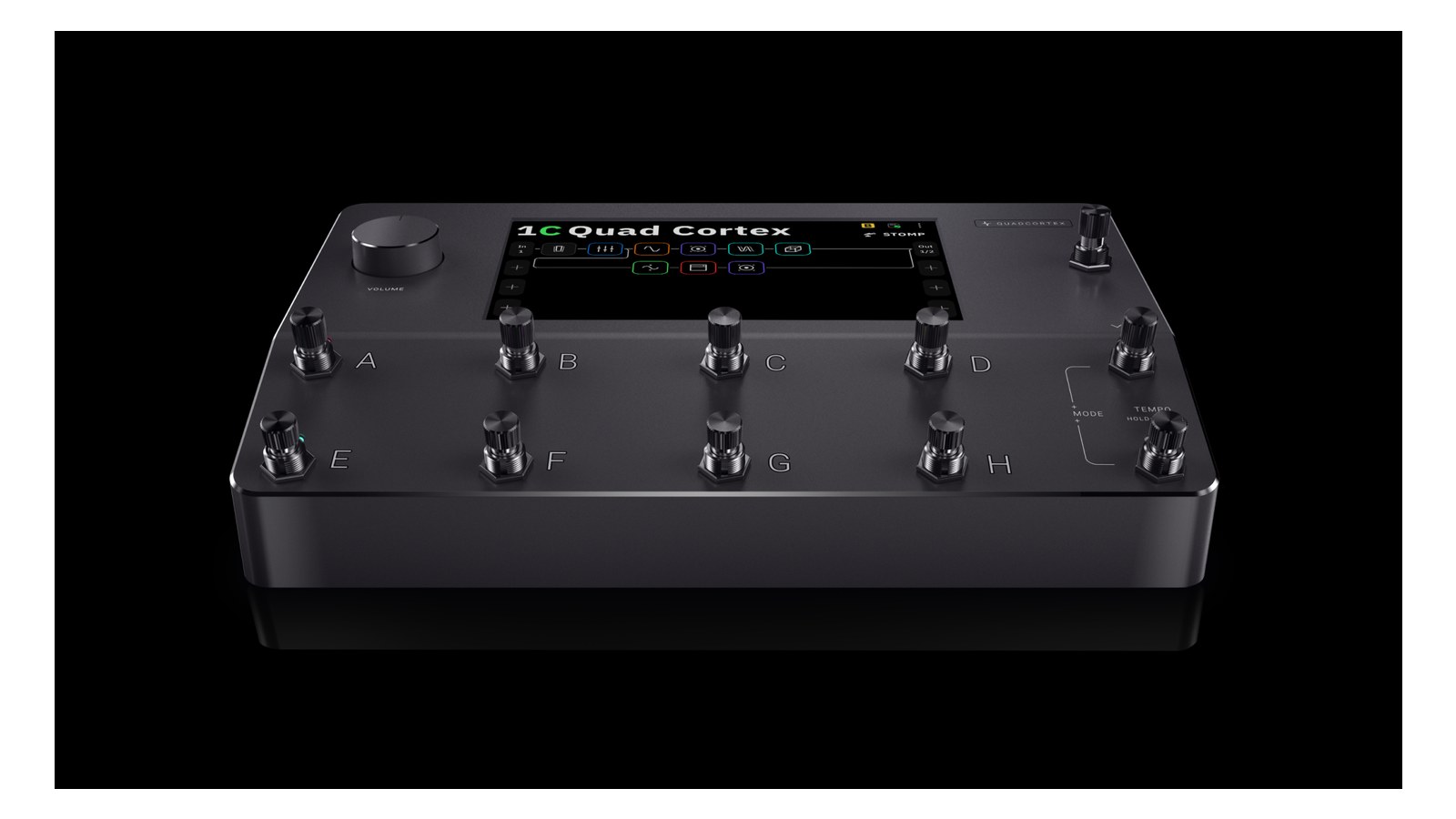
Quad CortexThe Neural DSP Quad Cortex is a floor-based guitar and bass modeler with quad-core processing that captures and reproduces amp tones with remarkable accuracy. Its neural capture technology can learn the characteristics of any real amp or pedal, making it a powerful tool for guitarists who want their exact studio tones on stage. Multiple outputs including XLR make it easy to feed both your IEM mix and FOH simultaneously with independent tone shaping.View gear →
Quad Cortex MK2The Quad Cortex MK2 builds on the original with improved DSP horsepower and enhanced connectivity options, allowing for more complex signal chains and effects routing. The updated hardware supports higher-quality captures and more simultaneous processing blocks, which matters for guitarists running elaborate rigs with multiple amp models and effects. If you are building a new rig, the MK2 is the version to get for future-proofing your tone chain.View gear →
06 · Resolve the questions that can change the purchase or build plan.
Planning questions
Short, source-backed answers surface rack fit, power, cabling, and connection details before they become surprises.
How will the Lexicon PCM92 Reverb / Effects affect rack fit and case depth?
It occupies 1U. Its documented depth is 193.8 mm.
How much power does the Lexicon PCM92 Reverb / Effects draw?
Typical draw is 18W and documented maximum draw is 14W.
What connections does the Lexicon PCM92 Reverb / Effects have?
16 documented physical ports, including IN LEFT, IN RIGHT, OUT LEFT, OUT RIGHT, AES IN, AES OUT.
07 · See this unit inside a real rack plan.
Builder preview
Placement is only the start. Builder checks space · depth · weight, power headroom, dependencies, and compatible signal paths around this exact catalog item.Open in Builder