
Radial Catapult Mini TX
Radial·Model Catapult Mini TX·radial-catapult-mini-tx
Photos
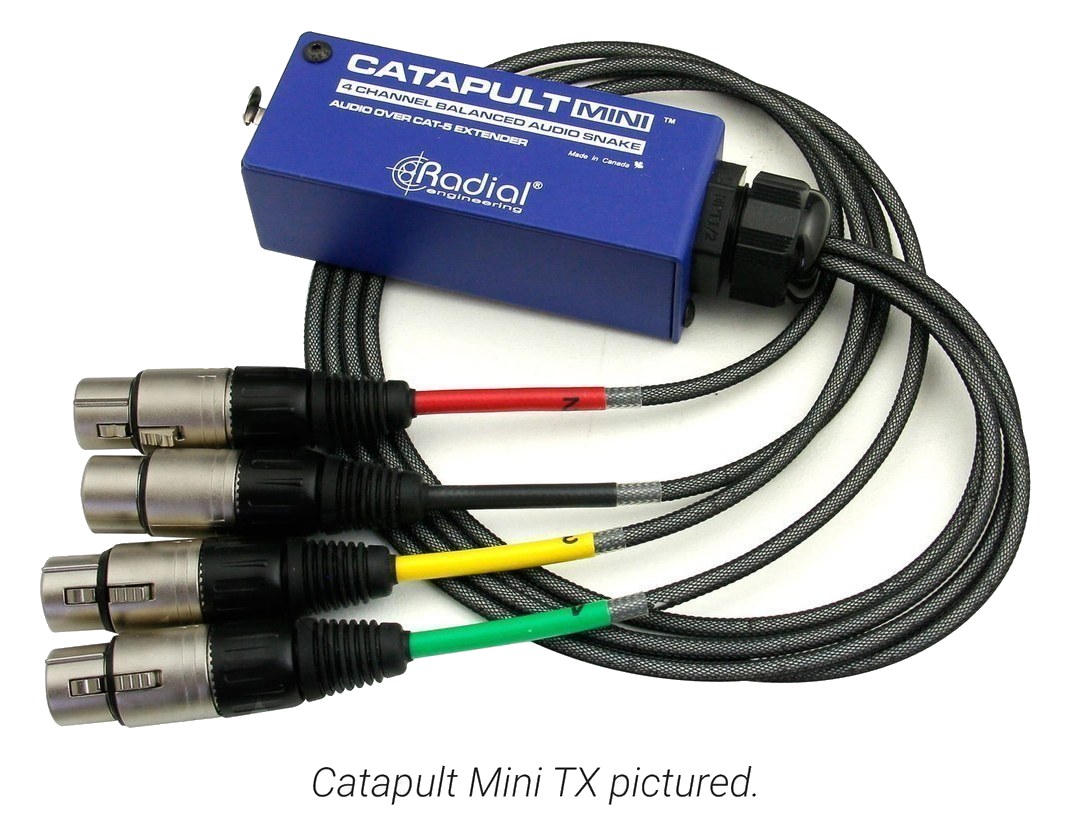
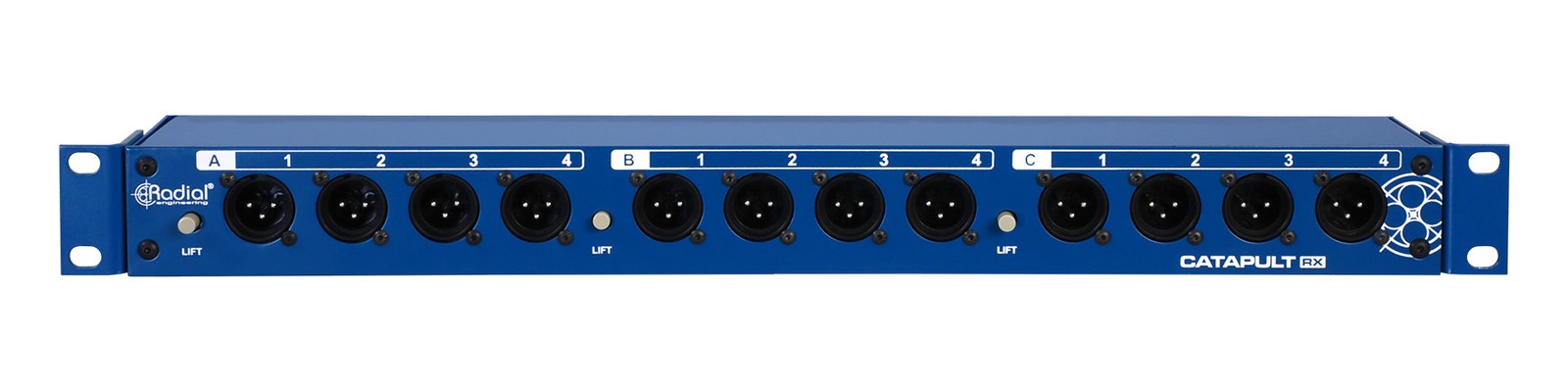
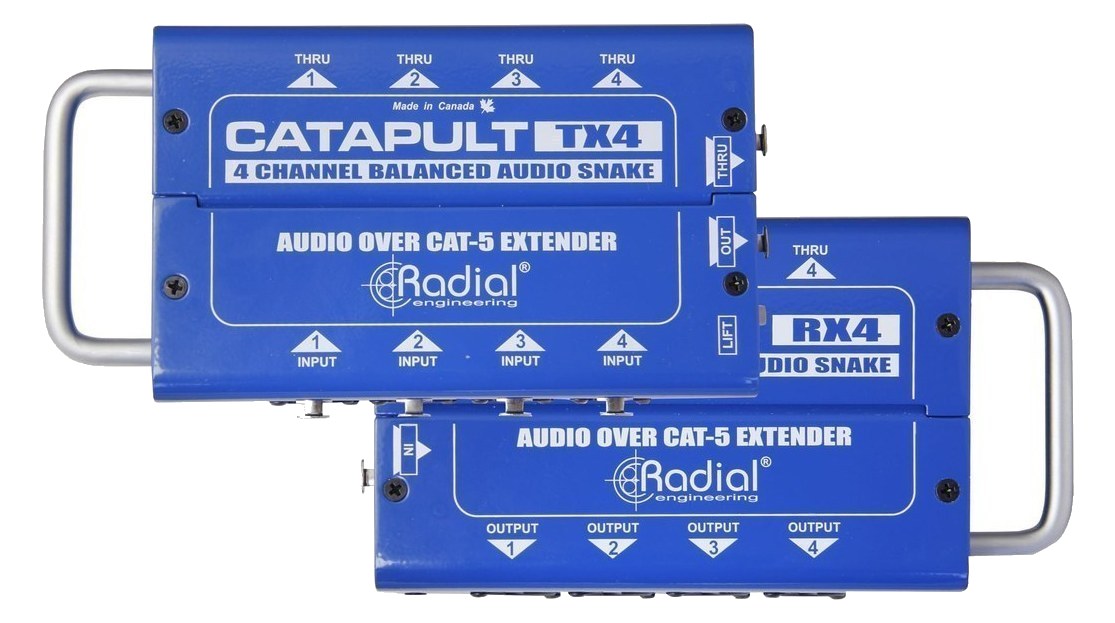
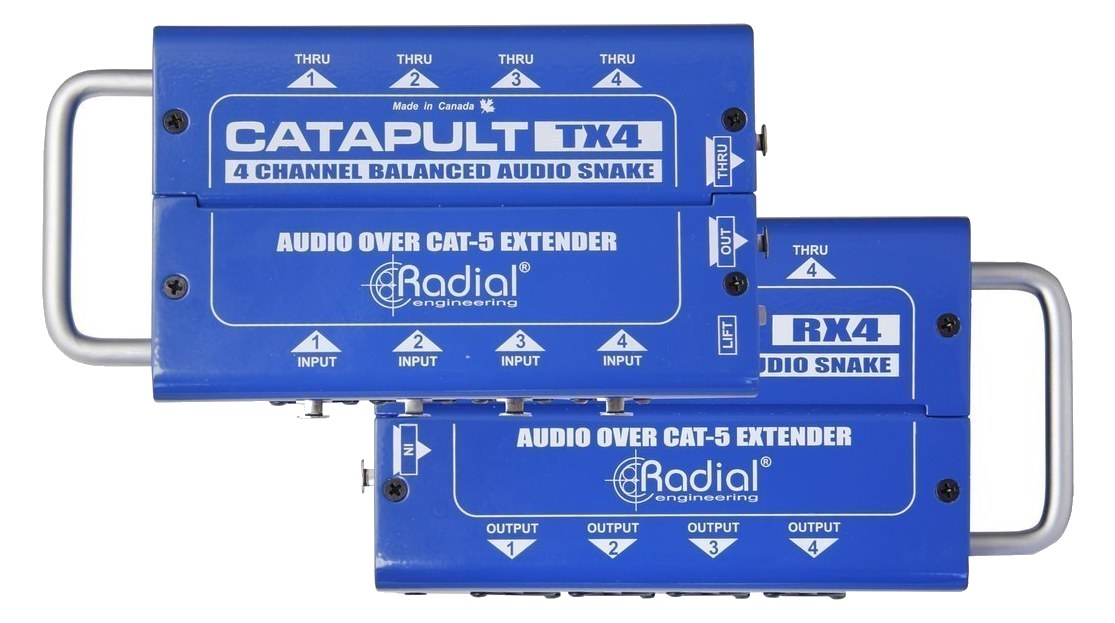
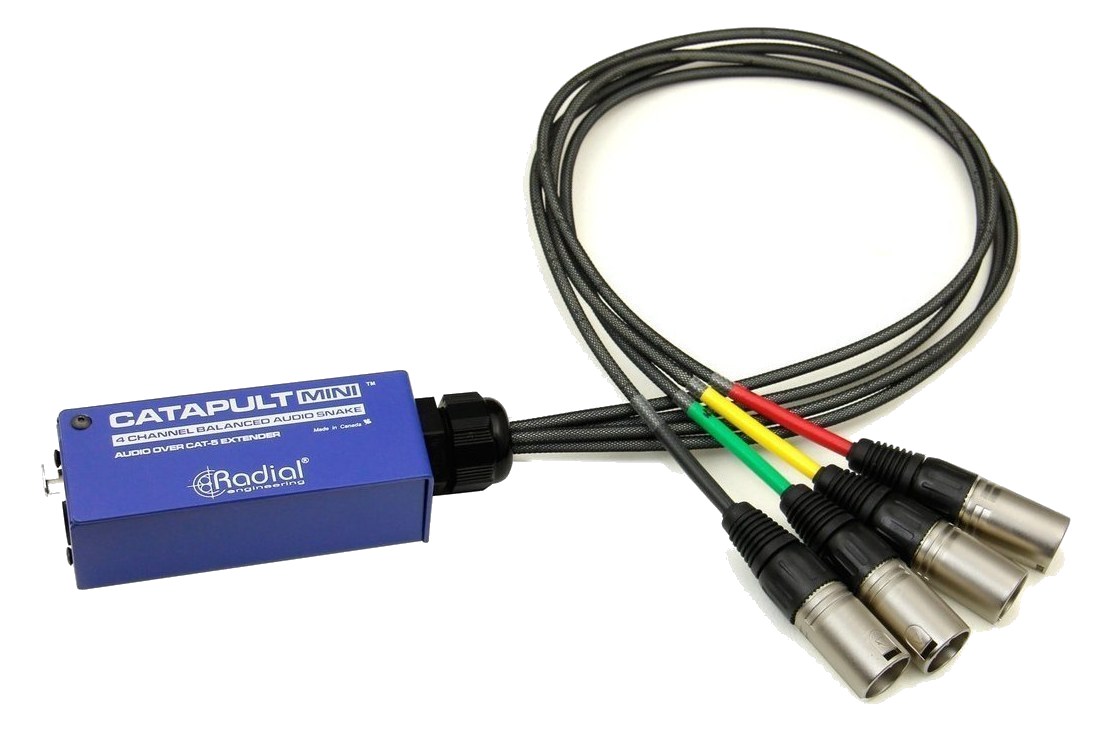
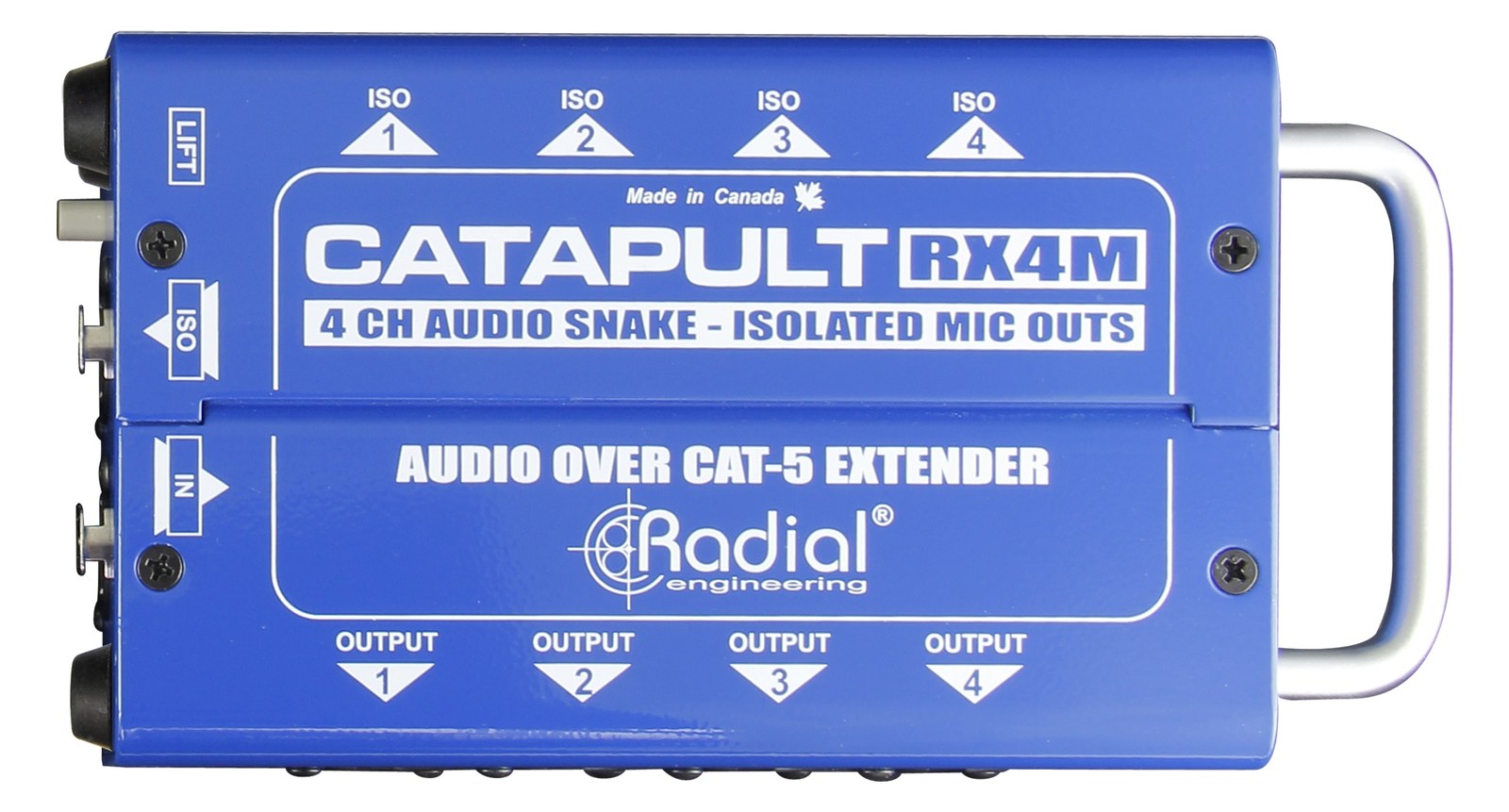
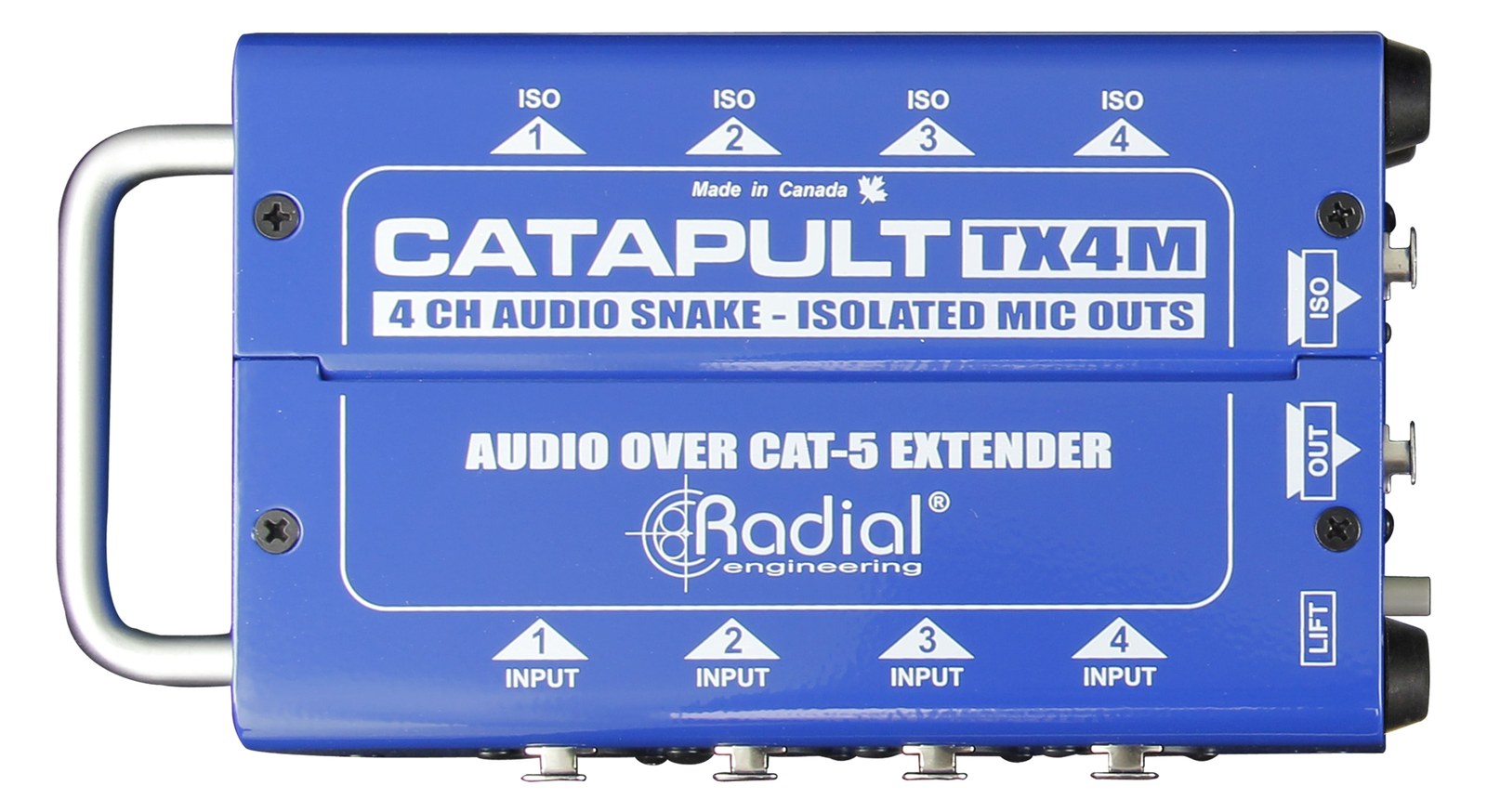
Manufacturer product photography — the drawn faceplate above stays true to panel layout; these show the hardware itself.
About the Radial Catapult Mini TX
The Radial Catapult Mini TX is the transmit side of a Cat5Standard network cable grades. In an audio rig one cheap Cat5e run can replace a 48-channel copper snake; AES50 wants it shielded. analog snakeA multicore cable bundling many channels into one stage-to-console run. A sub-snake collects one corner of the stage into a drop box., converting four XLRThe standard 3-pin locking connector for mics and balanced line signals — pin 1 is the shield, pins 2 and 3 carry the balanced pair. inputs to a single Cat5 cable for lightweight long-distance audio runs. It is perfect for sending monitor mixes, playback feeds, or microphone signals from the rack to stage positions without heavy analog snakes. The compact form factor means it can sit at either end of the cable run without taking up much space.
The Catapult Mini TX is the send half of Radial's passive Cat5Standard network cable grades. In an audio rig one cheap Cat5e run can replace a 48-channel copper snake; AES50 wants it shielded. analog snakeA multicore cable bundling many channels into one stage-to-console run. A sub-snake collects one corner of the stage into a drop box. system, taking four balancedCarries the signal on two wires and cancels whatever noise both pick up — why mic cables can run hundreds of feet hum-free. XLRThe standard 3-pin locking connector for mics and balanced line signals — pin 1 is the shield, pins 2 and 3 carry the balanced pair. signals and bundling them onto a single Cat5 run. In a monitor rig context, that means you can push four discrete mix feeds — or a stereo playback pair plus two aux sendsAn auxiliary mix output — each aux is its own independent blend of the channels, typically one per monitor mix or effects send. — from your rack to a stage boxThe I/O endpoint on stage: mics plug in there and one digital line (AES50, Dante) carries everything to the console. The snake, digitized. or IEMIn-Ear Monitor — earpieces that replace floor wedges, feeding each player their own mix. The reason this whole rack exists. transmitter position using cheap, lightweight structured cable instead of a heavy multicore. It pairs with Radial's Catapult RX on the far end, and the whole scheme stays passive and unpowered on both sides.
Passive conversion means zero latencyThe delay between sound entering and leaving a digital system. IEM rigs fight to keep the whole chain down to a few milliseconds., no power supply to fail, and no active circuitry between your console outputs and your destination — which matters when you're troubleshooting a missing mix at 15 minutes to show. The four XLRThe standard 3-pin locking connector for mics and balanced line signals — pin 1 is the shield, pins 2 and 3 carry the balanced pair. inputs are female, so you're patching directly from output connectors on your rack gear. Cat5Standard network cable grades. In an audio rig one cheap Cat5e run can replace a 48-channel copper snake; AES50 wants it shielded. runs up to around 100 meters are generally reliable at line levelThe strong signal that runs between pieces of gear (about a volt) — hotter than mic level, far below speaker level. for this type of passive transformerA magnetic coupling that passes audio between two windings with no wire contact — isolates splits and kills ground-loop hum, no power needed.-based system, which covers the overwhelming majority of stage-to-FOHFront Of House — the main mix the audience hears, and the console position out in the room where it gets mixed. or rack-to-stage distances you'll encounter. At 1 kg and no rack-unit footprint, it mounts or sits rather than consuming rack space.
This belongs in a rig where you're regularly running signals across stage without wanting to budget a chunk of your cable weight for a full analog snakeA multicore cable bundling many channels into one stage-to-console run. A sub-snake collects one corner of the stage into a drop box.. Playback engineers sending stemsSub-mixes of a session grouped by instrument (drums, keys, vocals) — how playback rigs run tracks with live control over each group. to a downstage position, monitor engineers with a satellite rack at front-of-stage, or anyone needing a tidy four-channel send over infrastructure cable will find this genuinely useful. If you need more than four channels, you'll be running multiple units or looking at a larger Catapult format. If your run is digital or you're already on a DanteThe most common audio-over-network standard: dozens of channels of uncompressed digital audio down one ordinary Ethernet cable between Dante boxes. or MADIA pro digital format carrying 64 channels on one coax or optical cable. Point-to-point — one sender, one receiver, no network required. infrastructure, this solves a problem you don't have.
In the rack
- Velcro or bracket-mount the TX at the output side of your rack near your console's aux sendsAn auxiliary mix output — each aux is its own independent blend of the channels, typically one per monitor mix or effects send. so the Cat5Standard network cable grades. In an audio rig one cheap Cat5e run can replace a 48-channel copper snake; AES50 wants it shielded. home-runs cleanly to the stage position — keep the XLRThe standard 3-pin locking connector for mics and balanced line signals — pin 1 is the shield, pins 2 and 3 carry the balanced pair. patch legs short.
- Label the Cat5Standard network cable grades. In an audio rig one cheap Cat5e run can replace a 48-channel copper snake; AES50 wants it shielded. output end with the channel assignment before the run goes under the stage; at load-in the far end looks identical to any other Cat5 and you will lose time without it.
- Carry a tested spare Cat5Standard network cable grades. In an audio rig one cheap Cat5e run can replace a 48-channel copper snake; AES50 wants it shielded. cable cut to your standard stage depth — the whole point of this system is eliminating heavy cable, and a bad Cat5 is a faster swap than a damaged multicore.
- If you're using this for IEMIn-Ear Monitor — earpieces that replace floor wedges, feeding each player their own mix. The reason this whole rack exists. mix feeds, confirm the receive-side Catapult RX is paired before soundcheck; the TX has no indicator to tell you the other end is present and connected.
4-channel Cat5Standard network cable grades. In an audio rig one cheap Cat5e run can replace a 48-channel copper snake; AES50 wants it shielded. transmit module — converts XLRThe standard 3-pin locking connector for mics and balanced line signals — pin 1 is the shield, pins 2 and 3 carry the balanced pair. to Cat5.
I/O Ports (5)
| Port | Connector | Direction | Signal | Channels |
|---|---|---|---|---|
| XLR In 1 | XLR FEMALE | input | analog audio | — |
| XLR In 2 | XLR FEMALE | input | analog audio | — |
| XLR In 3 | XLR FEMALE | input | analog audio | — |
| XLR In 4 | XLR FEMALE | input | analog audio | — |
| Cat5 Out | RJ45 | output | analog audio | — |
Deciding between two?
Rack space, watts, weight and every connector, side by side.
Related gear


Related articles
Guides from our library that cover planning around analog snake gear.
A plain-English guide to writing the input list, stage plot, and patch sheet that house engineers want — without the jargon, with examples, and with a free way to generate one.
How to split mic signals between FOH and your IEM rack: transformer-isolated splitters, phantom power rules, and where to place the split in the chain.