
Radial Catapult TX4M
Radial·Model Catapult TX4M·radial-catapult-tx
Photos
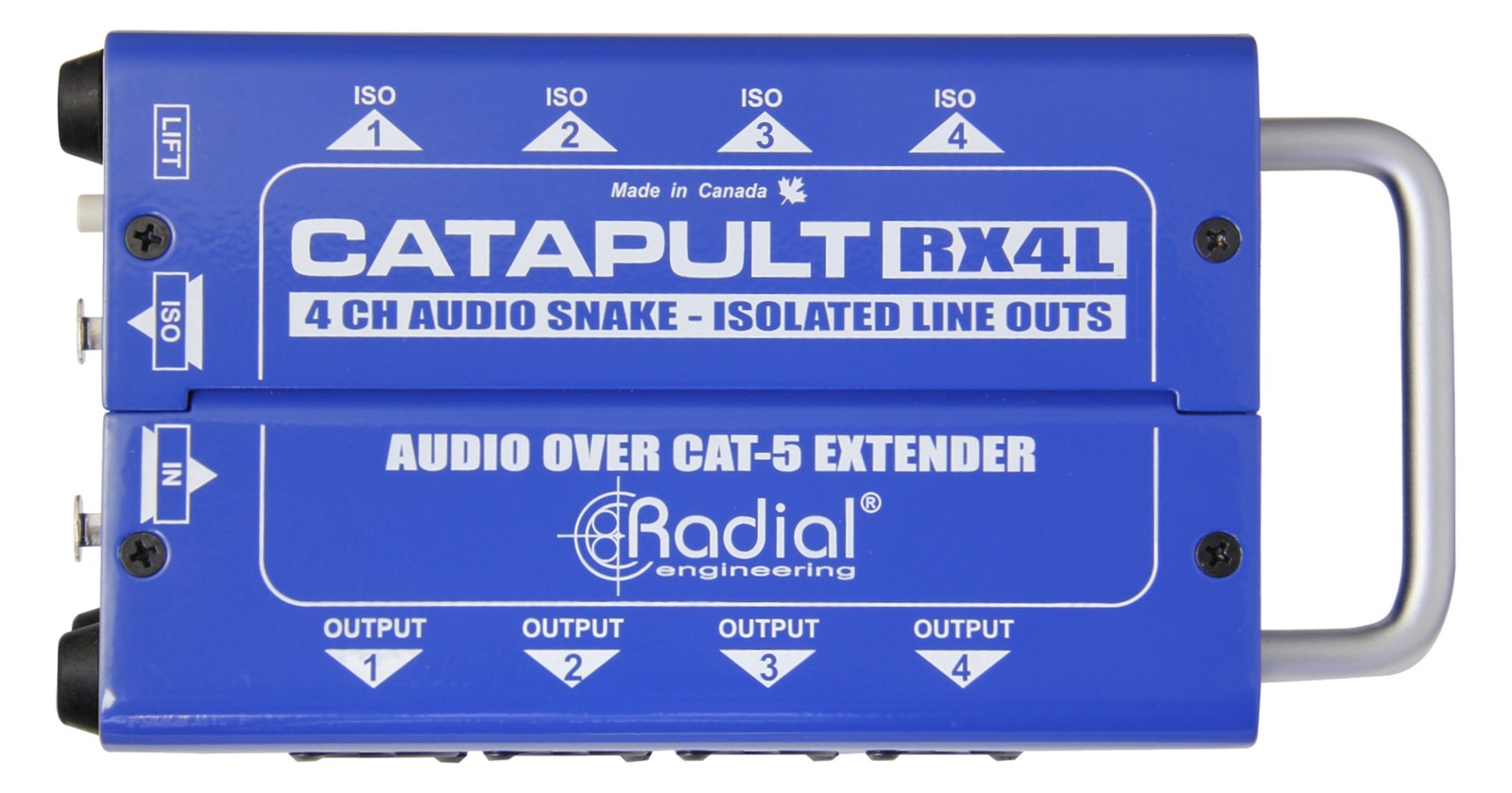
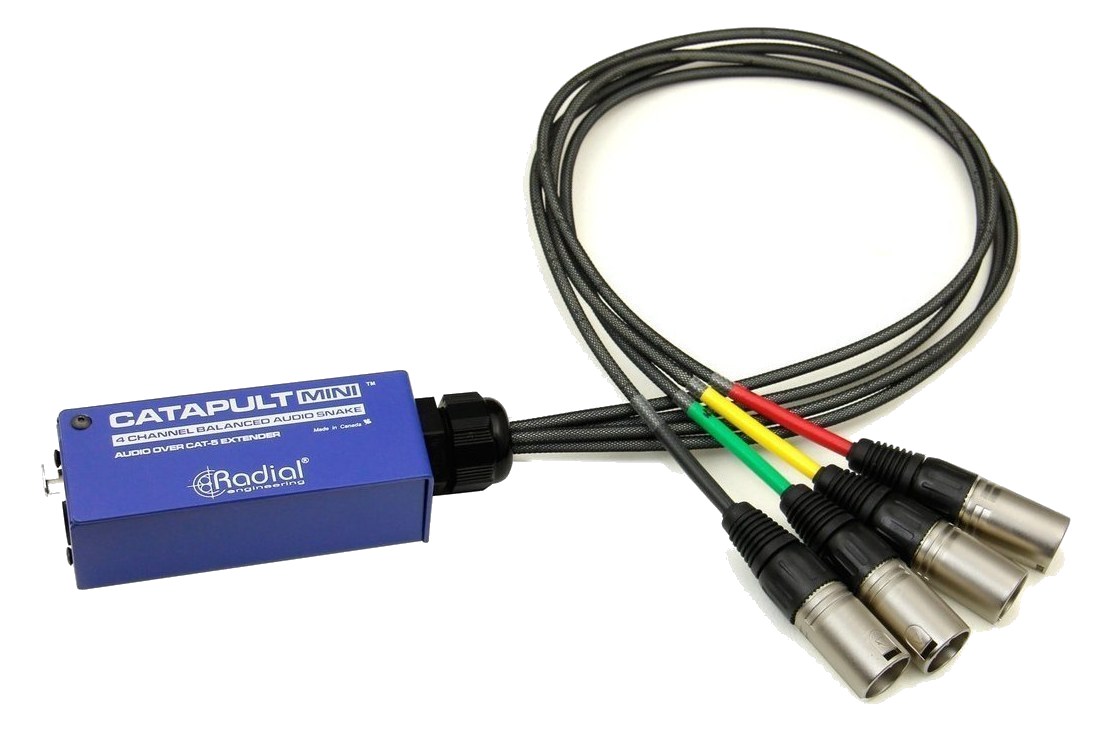
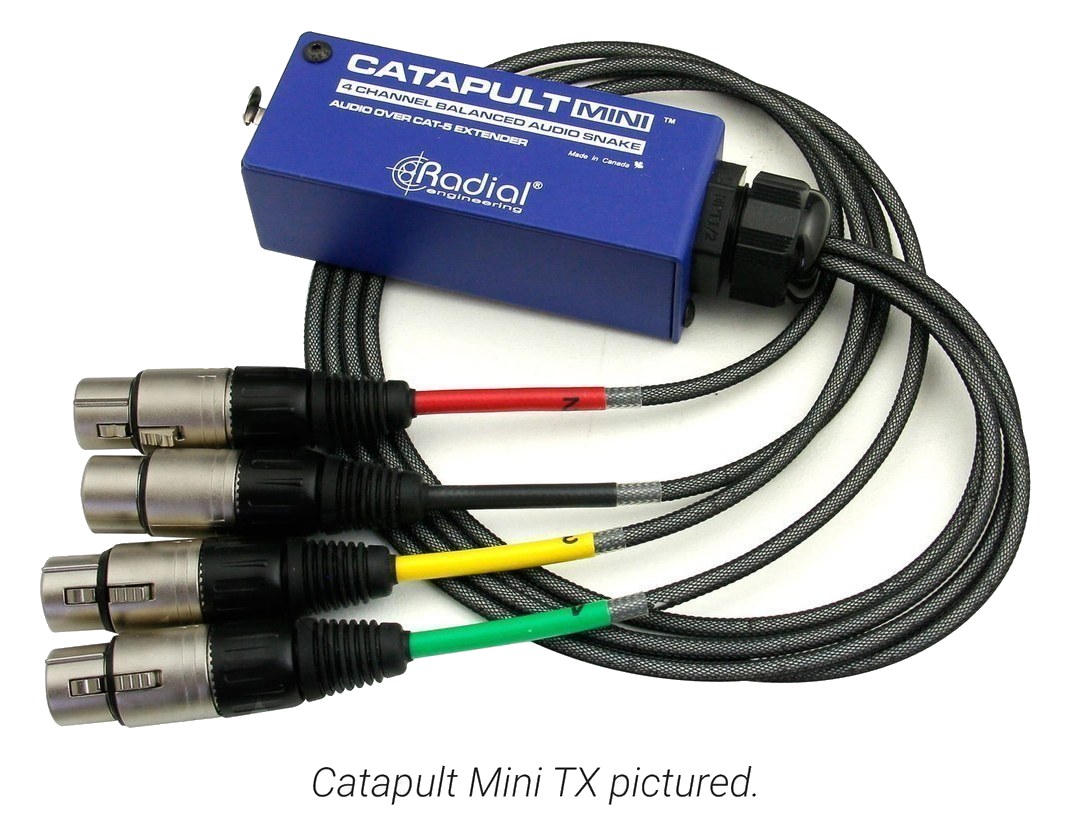
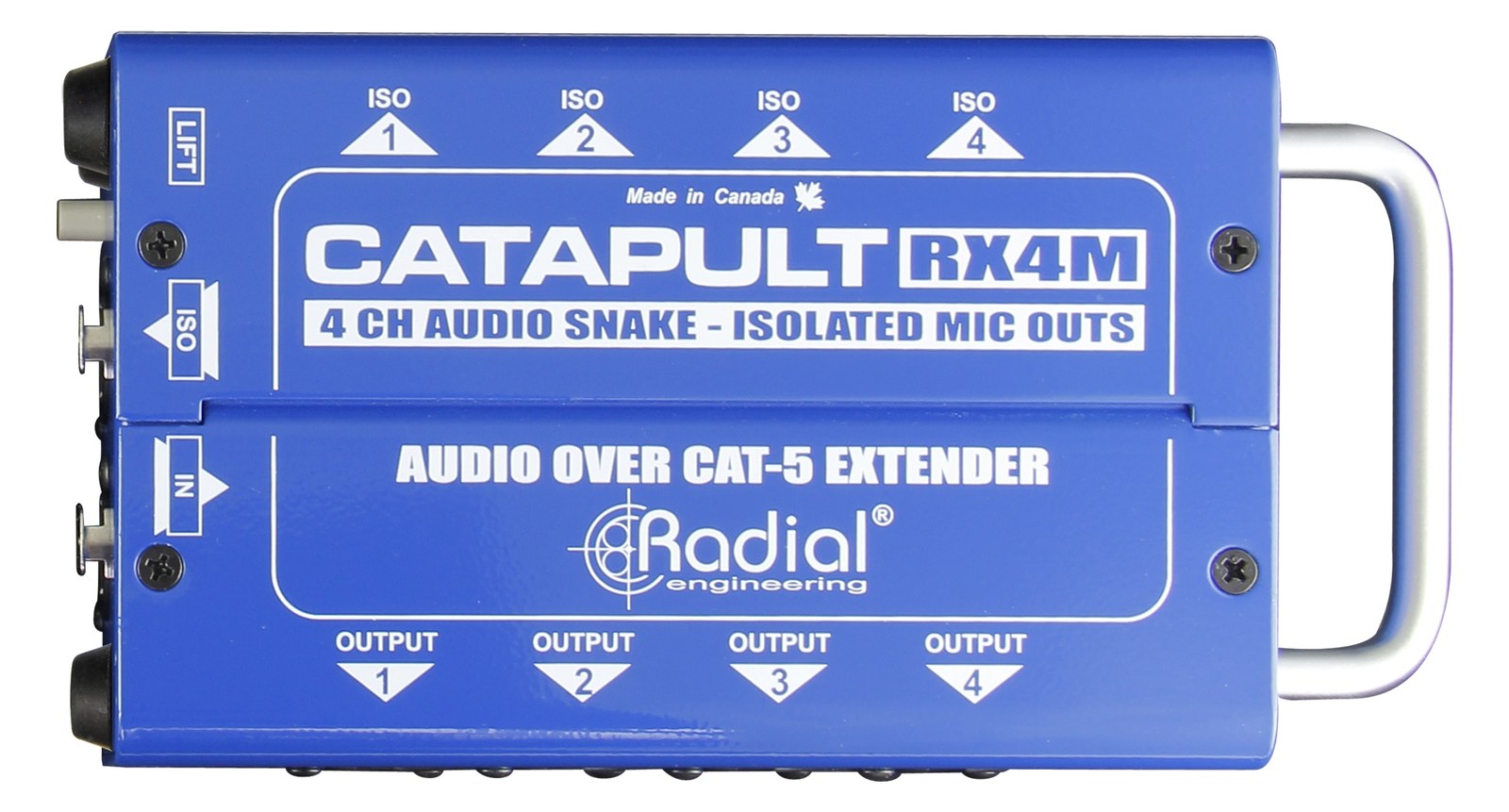
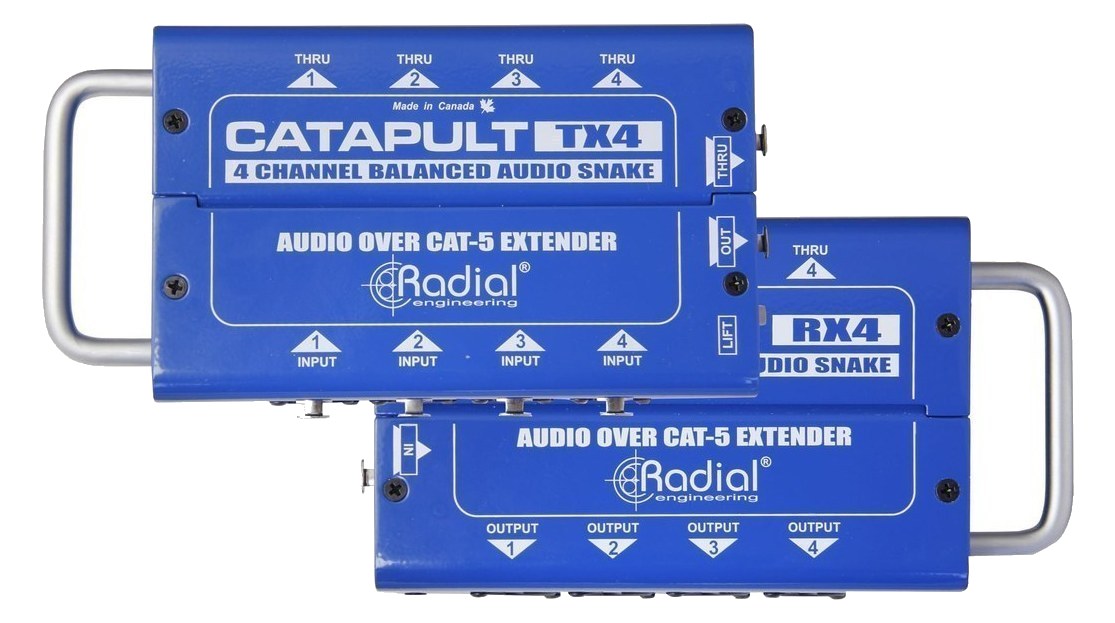
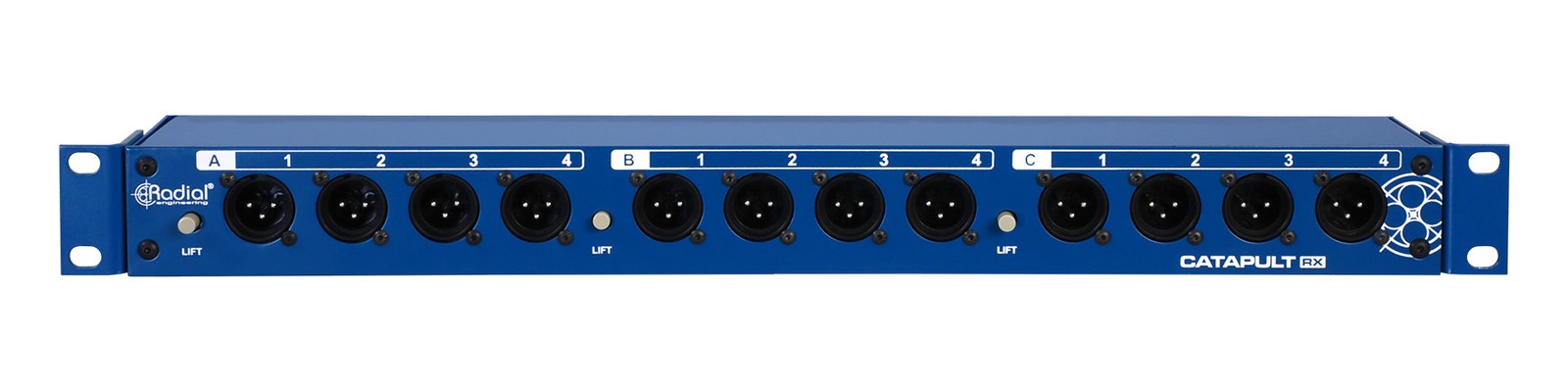
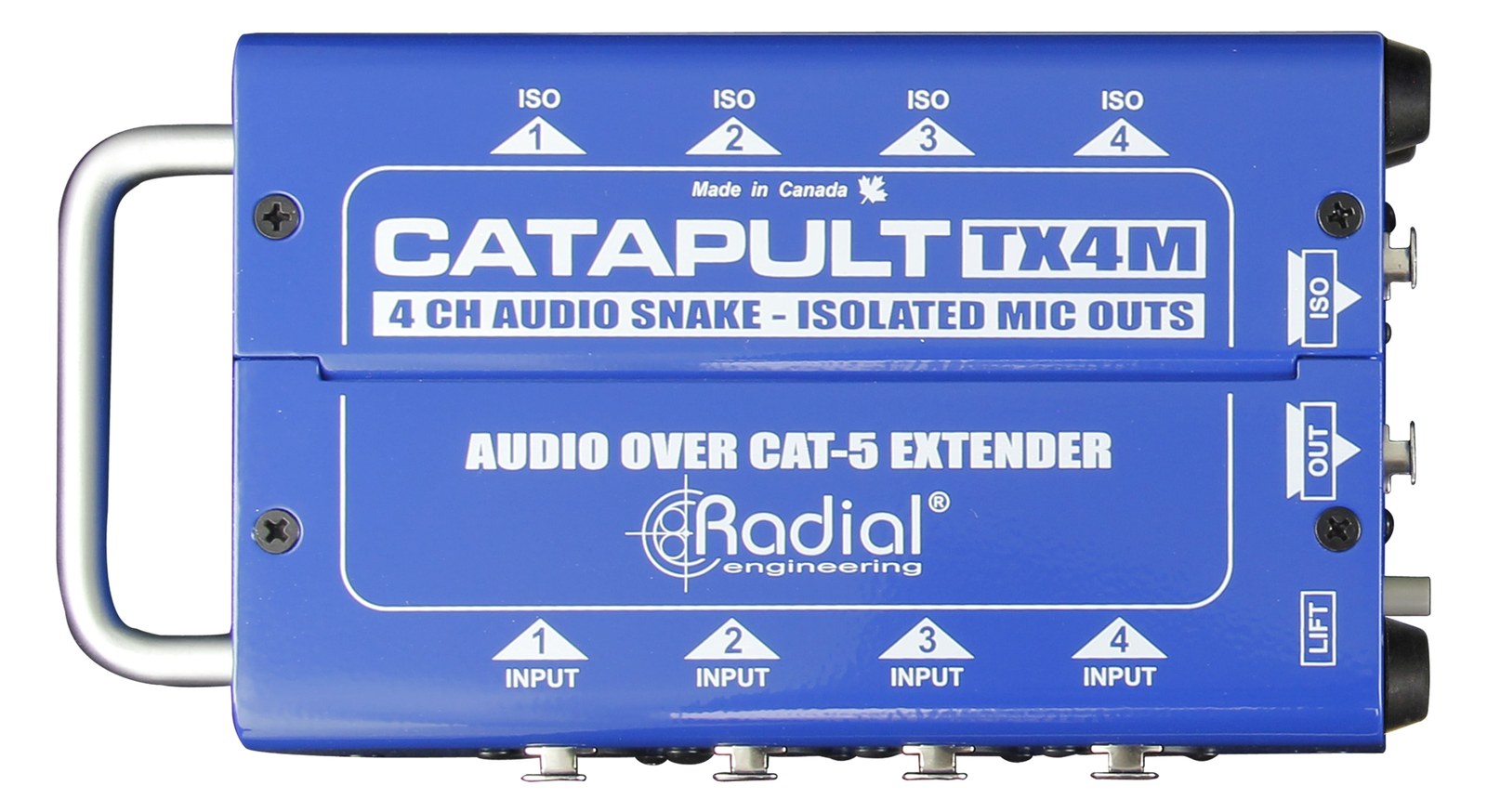
Manufacturer product photography — the drawn faceplate above stays true to panel layout; these show the hardware itself.
About the Radial Catapult TX4M
The Radial Catapult TX4M is the mic-optimized isolated transmit module of the Catapult family, providing ground-lifted audio transmission over Cat5Standard network cable grades. In an audio rig one cheap Cat5e run can replace a 48-channel copper snake; AES50 wants it shielded. cable. The isolation transformersA magnetic coupling that passes audio between two windings with no wire contact — isolates splits and kills ground-loop hum, no power needed. eliminate ground loopHum from gear seeing two ground paths at slightly different voltage — the classic buzz when two racks share audio and power. hum that can occur when connecting audio between different locations on stage, making this the professional choice for permanent installations and touring rigs. Pair it with a Catapult RX at the receive end for a complete isolated analog snakeA multicore cable bundling many channels into one stage-to-console run. A sub-snake collects one corner of the stage into a drop box..
The Catapult TX4M is the transmit half of Radial's passive analog snakeA multicore cable bundling many channels into one stage-to-console run. A sub-snake collects one corner of the stage into a drop box. system, taking four mic-levelThe tiny signal straight out of a microphone — roughly a thousandth of line level. It needs a preamp before anything else touches it. XLRThe standard 3-pin locking connector for mics and balanced line signals — pin 1 is the shield, pins 2 and 3 carry the balanced pair. inputs and bundling them onto a single Cat5Standard network cable grades. In an audio rig one cheap Cat5e run can replace a 48-channel copper snake; AES50 wants it shielded. run to a matching Catapult RX receiver at the other end. No power, no digital conversion, no latencyThe delay between sound entering and leaving a digital system. IEM rigs fight to keep the whole chain down to a few milliseconds. — just transformer-isolatedA magnetic coupling that passes audio between two windings with no wire contact — isolates splits and kills ground-loop hum, no power needed. analog audio riding borrowed infrastructure. In an IEMIn-Ear Monitor — earpieces that replace floor wedges, feeding each player their own mix. The reason this whole rack exists. or playback rig where you're pulling sources from the stage lip, a drum riser, or a keyboard rig and routing them back to a rack at FOHFront Of House — the main mix the audience hears, and the console position out in the room where it gets mixed. or at the side of stage, this solves the "how do I run four channels without laying a full multi" problem cleanly and cheaply.
The transformer isolationA magnetic coupling that passes audio between two windings with no wire contact — isolates splits and kills ground-loop hum, no power needed. is the point. Ground loopsHum from gear seeing two ground paths at slightly different voltage — the classic buzz when two racks share audio and power. between stage power and FOHFront Of House — the main mix the audience hears, and the console position out in the room where it gets mixed. power are a real, recurring problem, and the TX4M's isolators cut that path before the hum ever reaches your console or playback system. It draws zero watts, weighs 1.8 kg, and takes no rack space in the traditional sense — the catalog lists it as rackmountable but at 0U, meaning it mounts to a rack rail or lives in a case pocket rather than consuming a rack unitThe standard slice of rack height: 1U = 1.75″. A 3U box takes three slices; half-rack gear pairs two units side by side in one.. At mic levelThe tiny signal straight out of a microphone — roughly a thousandth of line level. It needs a preamp before anything else touches it. in, it's optimized for dynamic and condenser microphone sources rather than line-levelThe strong signal that runs between pieces of gear (about a volt) — hotter than mic level, far below speaker level. sends, so mind that distinction when planning your signal chain. Cat5Standard network cable grades. In an audio rig one cheap Cat5e run can replace a 48-channel copper snake; AES50 wants it shielded. runs of 100 meters and beyond are generally reliable with the Catapult system, which is meaningful on large stages where infrastructure cable is already in the walls or floors.
This box belongs in your rig if you're regularly dealing with multi-source analog feeds over distance and you're tired of carrying heavy copper snakeA multicore cable bundling many channels into one stage-to-console run. A sub-snake collects one corner of the stage into a drop box.. It's a strong fit for a touring keyboard or drum tech who needs a tidy four-channel tie-line back to the monitor worldThe side-stage domain of the monitor engineer — console, IEM racks, and everything feeding the band’s ears instead of the audience.. What it is not: a line-levelThe strong signal that runs between pieces of gear (about a volt) — hotter than mic level, far below speaker level. utility device, a replacement for a proper digital snake when you need more than four channels or want remote gainHow much the preamp amplifies the incoming signal. Too low and you’re hunting through hiss; too high and peaks clip. control, and emphatically not a standalone solution — you must have the Catapult RX on the receive end or this does nothing. If your sources are already at line level, look at the TX4L variant instead.
In the rack
- Label the Cat5Standard network cable grades. In an audio rig one cheap Cat5e run can replace a 48-channel copper snake; AES50 wants it shielded. output with both channel count and signal type at the connector — Cat5 carrying analog audio looks identical to network cable and will get patched into a switch by a well-meaning stagehand at the worst possible moment.
- Mic-levelThe tiny signal straight out of a microphone — roughly a thousandth of line level. It needs a preamp before anything else touches it. trim at the source still matters; the TX4M passes what you give it, so overdriving the transformersA magnetic coupling that passes audio between two windings with no wire contact — isolates splits and kills ground-loop hum, no power needed. with a hot active DIDirect Injection box — converts an instrument’s unbalanced signal to a balanced mic-level XLR so it can run long cables without noise. output will cost you headroomThe margin between your normal level and where things clip — headroom is what absorbs the snare hit you didn’t see coming. before the signal even reaches the snakeA multicore cable bundling many channels into one stage-to-console run. A sub-snake collects one corner of the stage into a drop box..
- When mounting in a rack rail without consuming a rack unitThe standard slice of rack height: 1U = 1.75″. A 3U box takes three slices; half-rack gear pairs two units side by side in one., secure it above or below a 1U blank rather than letting it float — the RJ45 connector takes real mechanical stress from repeated tour packing.
- Keep a tested, dedicated Cat5Standard network cable grades. In an audio rig one cheap Cat5e run can replace a 48-channel copper snake; AES50 wants it shielded. cable coiled and bagged with this unit rather than relying on venue infrastructure; Catapult's performance depends on cable quality, and a borrowed patch cable of unknown condition is a troubleshooting headache you don't need at 30 minutes to show.
4-channel Cat5Standard network cable grades. In an audio rig one cheap Cat5e run can replace a 48-channel copper snake; AES50 wants it shielded. transmit module with mic-levelThe tiny signal straight out of a microphone — roughly a thousandth of line level. It needs a preamp before anything else touches it. transformer isolationA magnetic coupling that passes audio between two windings with no wire contact — isolates splits and kills ground-loop hum, no power needed. (TX4M).
I/O Ports (5)
| Port | Connector | Direction | Signal | Channels |
|---|---|---|---|---|
| XLR In 1 | XLR FEMALE | input | analog audio | — |
| XLR In 2 | XLR FEMALE | input | analog audio | — |
| XLR In 3 | XLR FEMALE | input | analog audio | — |
| XLR In 4 | XLR FEMALE | input | analog audio | — |
| Cat5 Out | RJ45 | output | analog audio | — |
Deciding between two?
Rack space, watts, weight and every connector, side by side.
Related gear


Related articles
Guides from our library that cover planning around analog snake gear.
A plain-English guide to writing the input list, stage plot, and patch sheet that house engineers want — without the jargon, with examples, and with a free way to generate one.
How to split mic signals between FOH and your IEM rack: transformer-isolated splitters, phantom power rules, and where to place the split in the chain.