
Radial Catapult TX4
Radial·Model Catapult TX4·radial-catapult-tx4
Photos
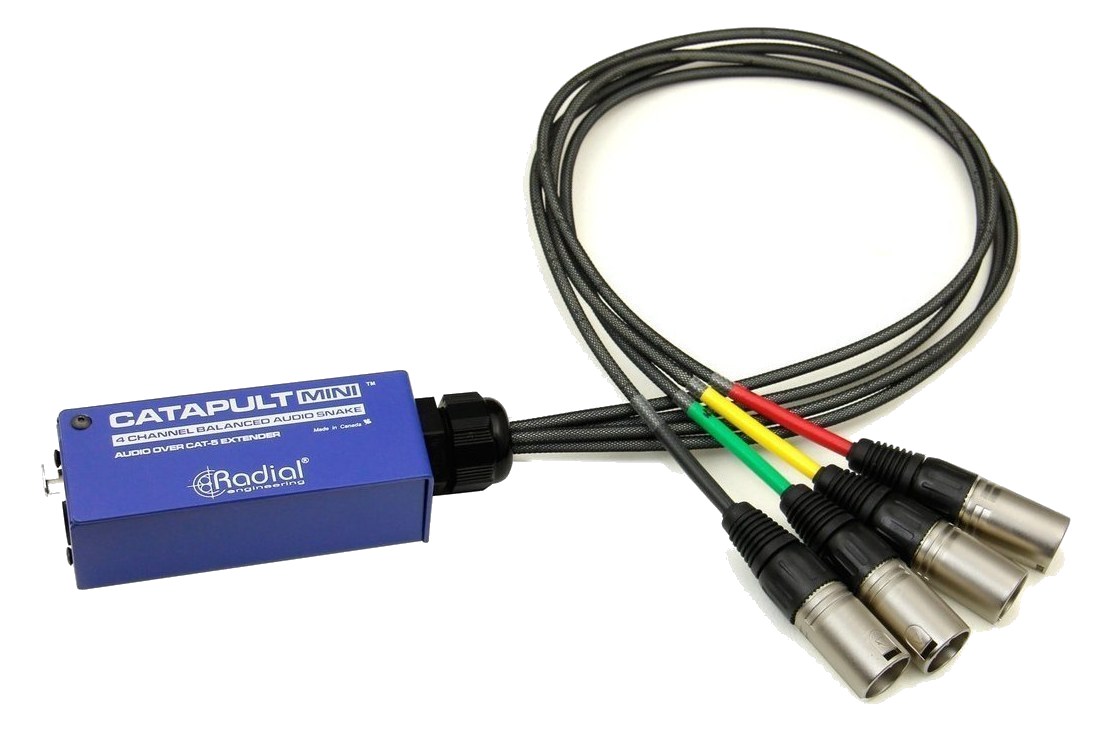
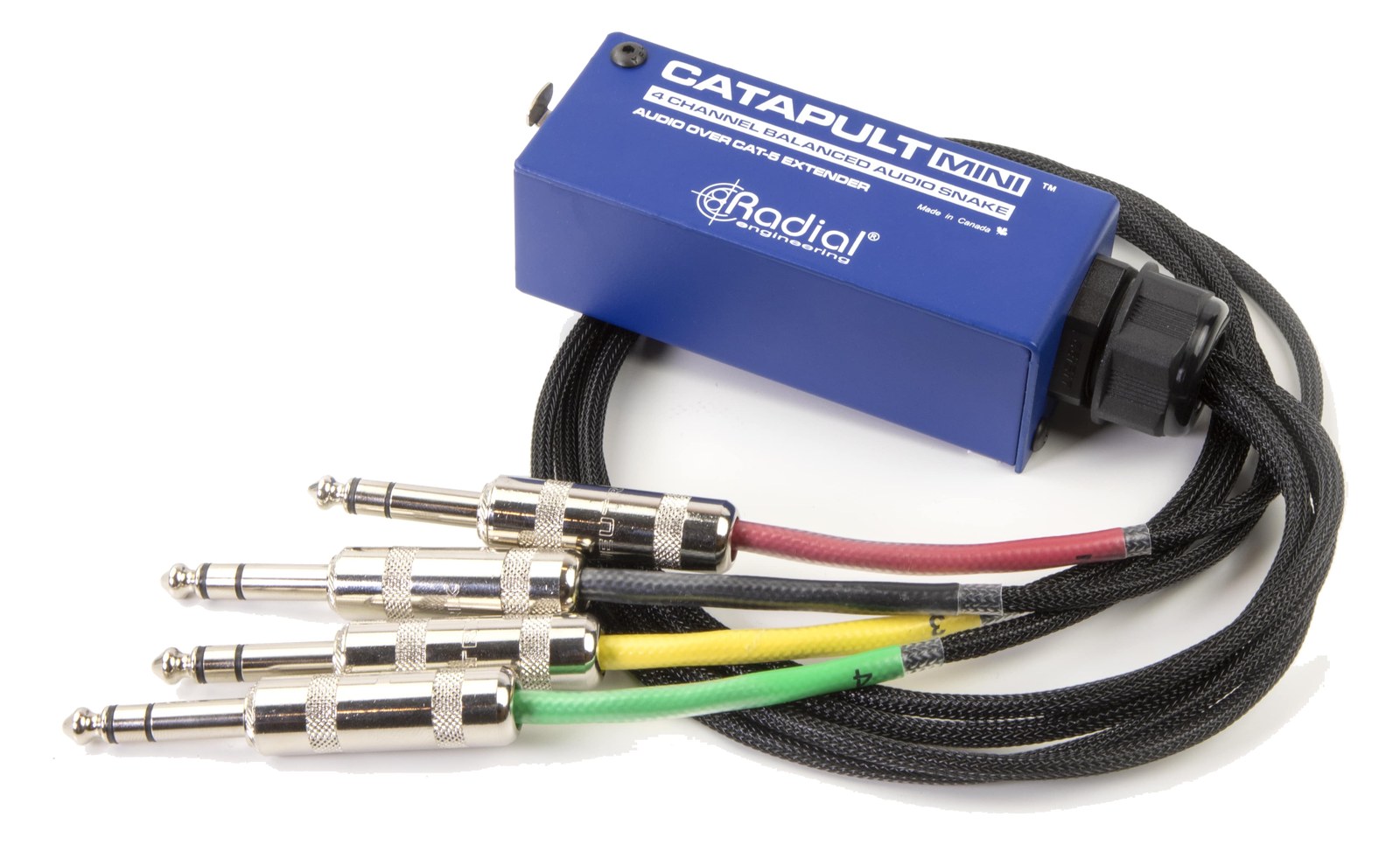
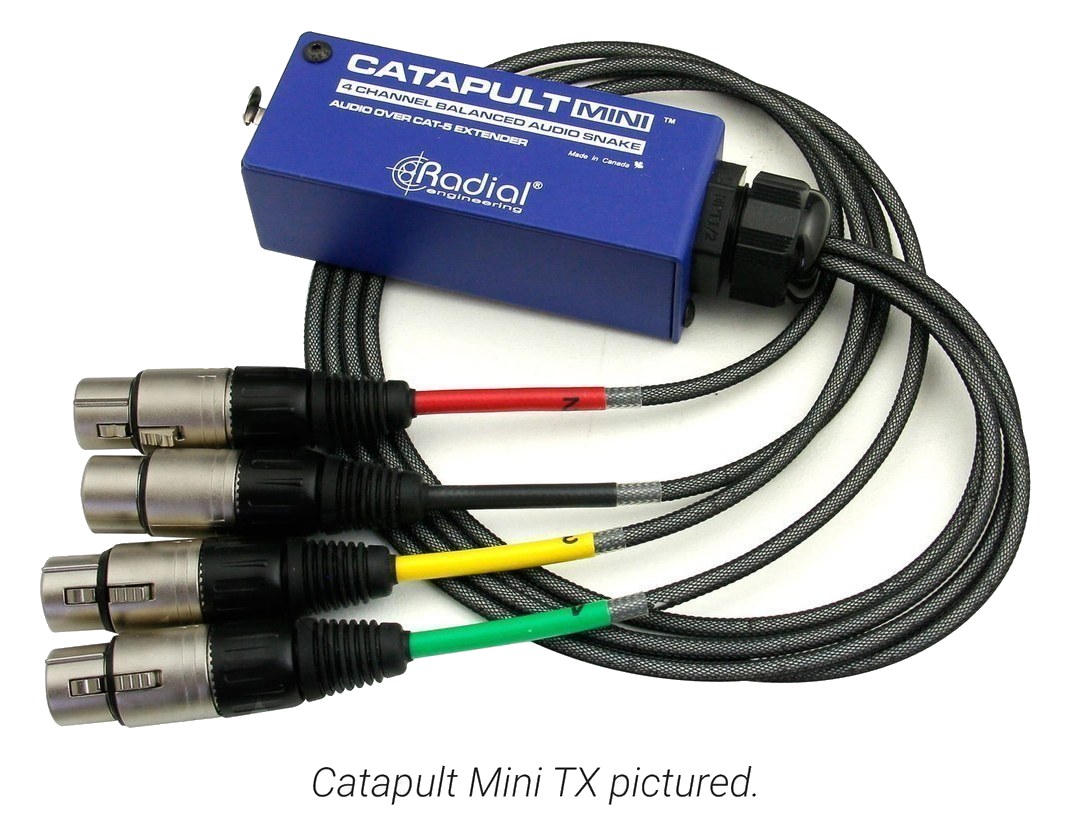
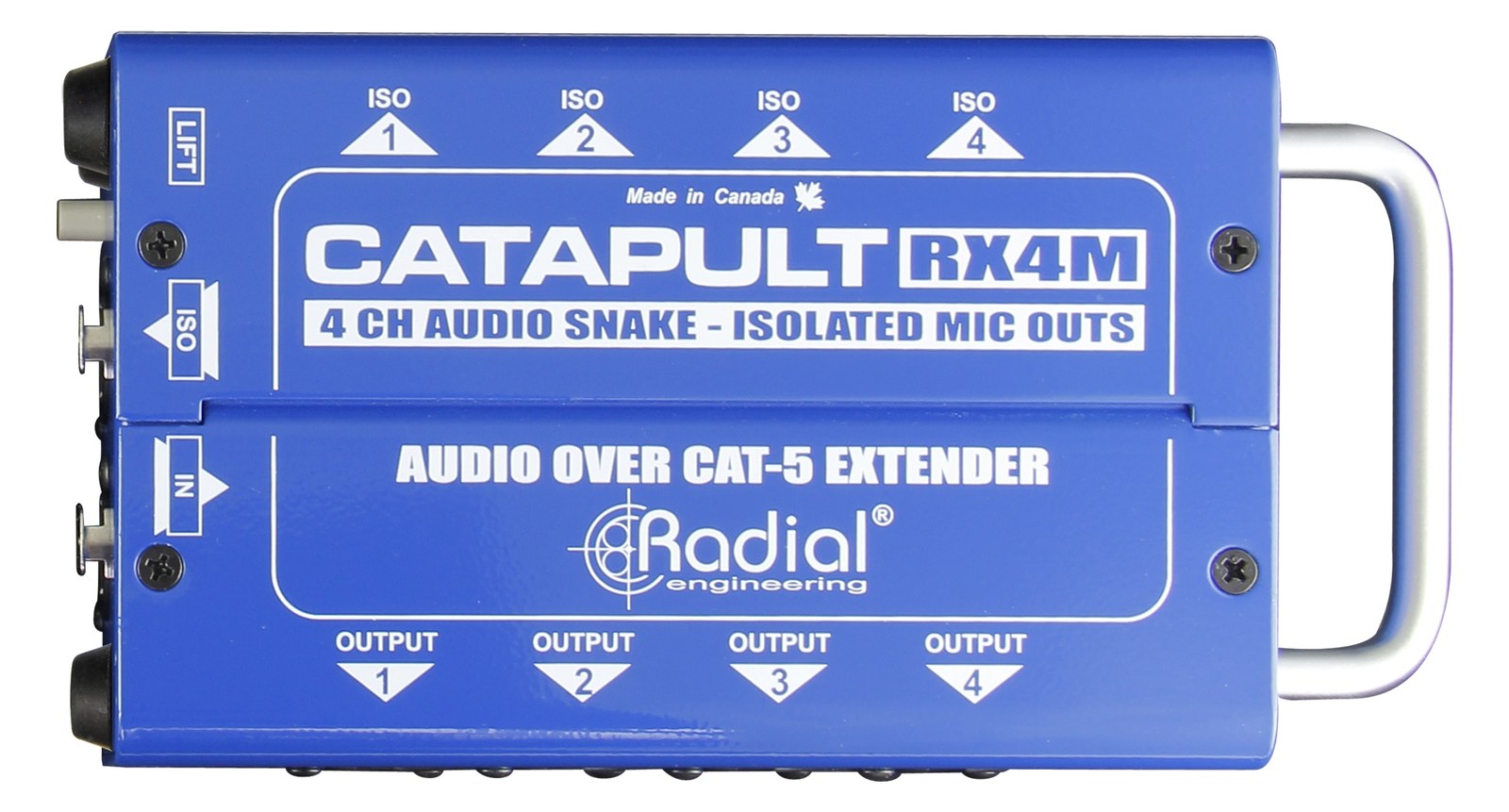
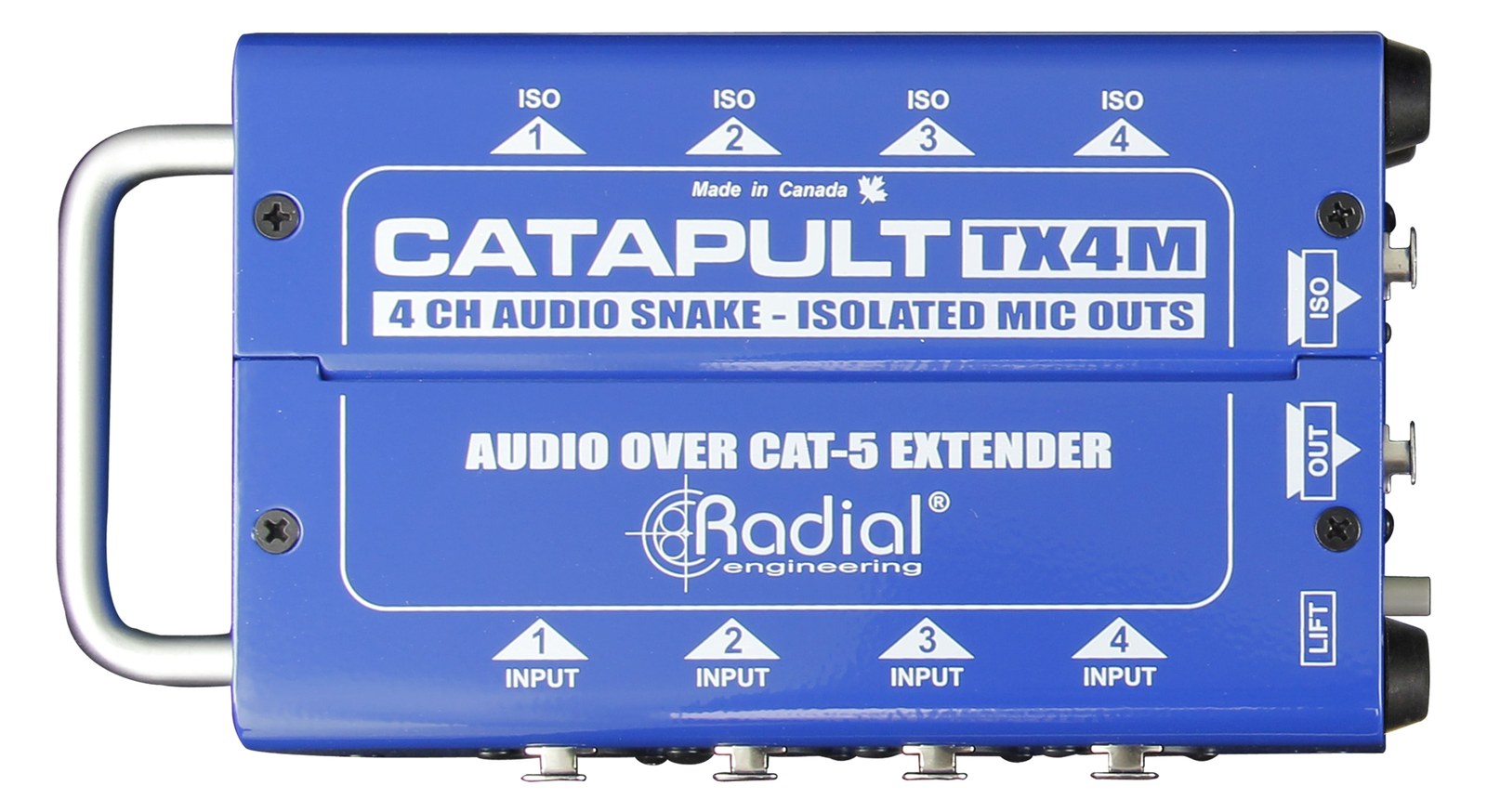
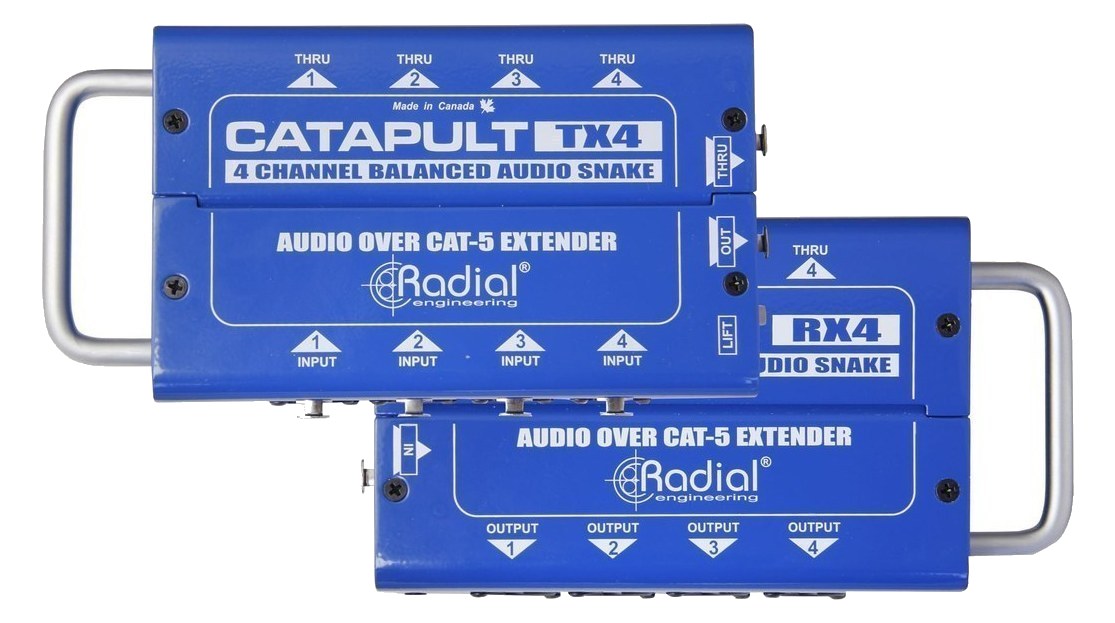
Manufacturer product photography — the drawn faceplate above stays true to panel layout; these show the hardware itself.
About the Radial Catapult TX4
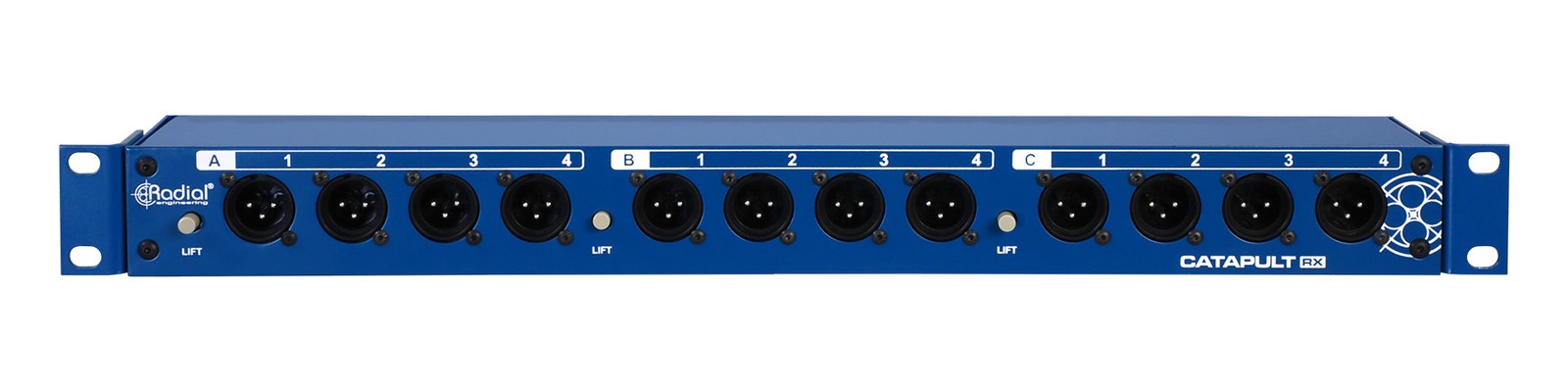
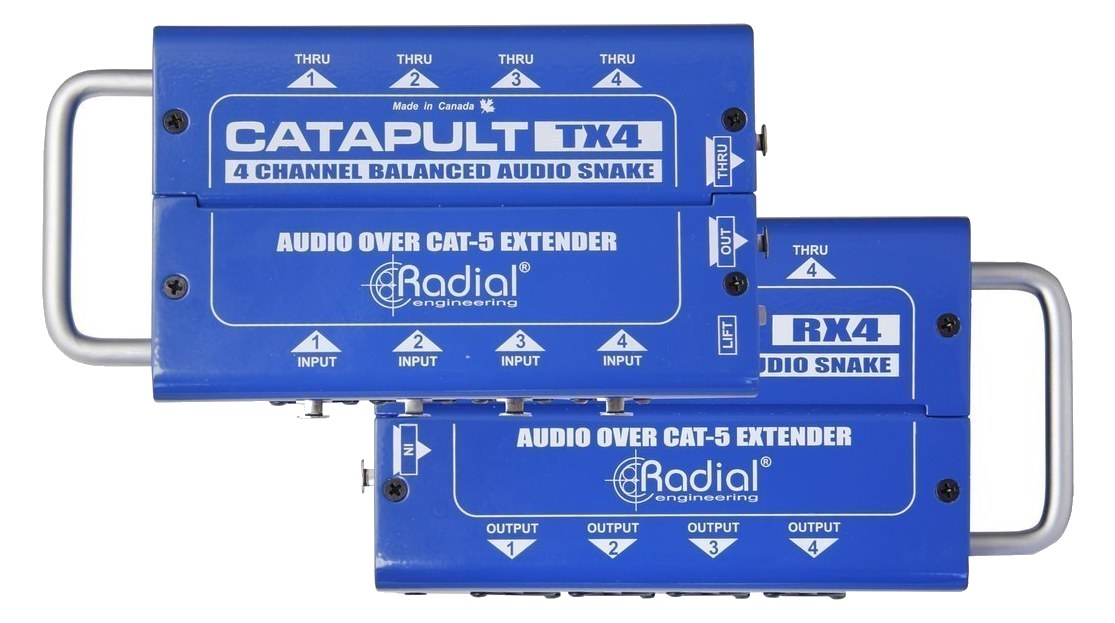
The Radial Catapult TX4 is the transmit end of Radial's modular Cat5Standard network cable grades. In an audio rig one cheap Cat5e run can replace a 48-channel copper snake; AES50 wants it shielded. snakeA multicore cable bundling many channels into one stage-to-console run. A sub-snake collects one corner of the stage into a drop box. system, collecting four XLRThe standard 3-pin locking connector for mics and balanced line signals — pin 1 is the shield, pins 2 and 3 carry the balanced pair. feeds onto a single shielded Cat5 run in a rugged floor-box format. Both male and female XLRs on each channel mean it works for sends or returns, and the thru connectors can split a feed to a monitor console at the same time. Pair it with an RX4 or Catapult Rack RX and you have a four-channel analog snake over cable you can buy anywhere.
The Catapult TX4 is the send end of Radial's passive Cat5Standard network cable grades. In an audio rig one cheap Cat5e run can replace a 48-channel copper snake; AES50 wants it shielded. snakeA multicore cable bundling many channels into one stage-to-console run. A sub-snake collects one corner of the stage into a drop box. system — its one job is to collect four balancedCarries the signal on two wires and cancels whatever noise both pick up — why mic cables can run hundreds of feet hum-free. XLRThe standard 3-pin locking connector for mics and balanced line signals — pin 1 is the shield, pins 2 and 3 carry the balanced pair. signals and put them down a single Cat5 cable to an RX4 or Catapult rack receiver on the other end. No power, no conversion, no latencyThe delay between sound entering and leaving a digital system. IEM rigs fight to keep the whole chain down to a few milliseconds., just a clever passive multiplexing scheme inside a rugged steel chassis. In a monitor worldThe side-stage domain of the monitor engineer — console, IEM racks, and everything feeding the band’s ears instead of the audience. where stage real estate is tight and running four separate XLR lines across a stage is a mess nobody wants to deal with, consolidating to a single Cat5 is genuinely useful. This is the floor-box half of that solution.
The thru connectors are the detail worth understanding at load-in. Each channel has both a female XLRThe standard 3-pin locking connector for mics and balanced line signals — pin 1 is the shield, pins 2 and 3 carry the balanced pair. input and a male XLR thru, which means the TX4 can sit between a source and a local destination simultaneously — feed it from a splitter, pass one output to a floor wedgeA floor monitor speaker angled up at the performer — the thing IEMs replace, and the thing you fall back on when they die. amp or local IEMIn-Ear Monitor — earpieces that replace floor wedges, feeding each player their own mix. The reason this whole rack exists. transmitter, and send the other down the Cat5Standard network cable grades. In an audio rig one cheap Cat5e run can replace a 48-channel copper snake; AES50 wants it shielded. run to the rack. That saves a splitter on channels where you only need two destinations. The passive design also means any standard Cat5 or Cat6 cable works, which matters on a festival where you're borrowing cable from a stranger's trunkThe main multichannel run between stage and console — one fat multicore (or one Cat5e, these days) carrying everything at once..
This belongs in your rig if you're running a compact IEMIn-Ear Monitor — earpieces that replace floor wedges, feeding each player their own mix. The reason this whole rack exists. or monitor setup and want to minimize the cable run to the rack without committing to a full digital snakeA multicore cable bundling many channels into one stage-to-console run. A sub-snake collects one corner of the stage into a drop box. ecosystem. It's a smart, affordable answer for four-piece bands, small theater, or fly datesA gig you fly to instead of driving — the whole rig has to shrink into checkable cases and carry-ons. where packing light matters. It is not the right call if you need more than four channels — you'd stack TX4 units, which gets awkward — or if your infrastructure already has a proper analog or digital multicore sorted. And if you're working rooms where cable runs regularly exceed 100 meters, verify your specific Cat5Standard network cable grades. In an audio rig one cheap Cat5e run can replace a 48-channel copper snake; AES50 wants it shielded. cable quality before counting on clean audio.
In the rack
- Label the Cat5Standard network cable grades. In an audio rig one cheap Cat5e run can replace a 48-channel copper snake; AES50 wants it shielded. output end of the cable at both ends with channel assignment before the gig — when your RX4 is buried in the rack and your TX4 is under a keyboard stand, you will not remember which pair is which under pressure.
- Use the XLRThe standard 3-pin locking connector for mics and balanced line signals — pin 1 is the shield, pins 2 and 3 carry the balanced pair. thru outputs to feed local IEMIn-Ear Monitor — earpieces that replace floor wedges, feeding each player their own mix. The reason this whole rack exists. transmitters on stage, keeping the Cat5Standard network cable grades. In an audio rig one cheap Cat5e run can replace a 48-channel copper snake; AES50 wants it shielded. run carrying clean splits to the rack without needing a separate passive splitter box for those channels.
- Carry a short stock of standard Cat5eStandard network cable grades. In an audio rig one cheap Cat5e run can replace a 48-channel copper snake; AES50 wants it shielded. patch cables in your kit — the TX4's value is that any IT cable works, so a busted run is a hardware-store fix, not a gear emergency.
- The TX4 is floor-box format rather than rack-mount despite the catalog noting rackmountability — plan its physical placement at stage level near the inputs, not inside the rack itself, and secure it with gaff so it doesn't travel during the set.
4-channel Cat5Standard network cable grades. In an audio rig one cheap Cat5e run can replace a 48-channel copper snake; AES50 wants it shielded. transmit module — 4x XLRThe standard 3-pin locking connector for mics and balanced line signals — pin 1 is the shield, pins 2 and 3 carry the balanced pair. onto one Cat5, with XLR thru.
I/O Ports (9)
| Port | Connector | Direction | Signal | Channels |
|---|---|---|---|---|
| XLR In 1 | XLR FEMALE | input | analog audio | — |
| XLR In 2 | XLR FEMALE | input | analog audio | — |
| XLR In 3 | XLR FEMALE | input | analog audio | — |
| XLR In 4 | XLR FEMALE | input | analog audio | — |
| XLR Thru 1 | XLR MALE | output | analog audio | — |
| XLR Thru 2 | XLR MALE | output | analog audio | — |
| XLR Thru 3 | XLR MALE | output | analog audio | — |
| XLR Thru 4 | XLR MALE | output | analog audio | — |
| Cat5 Out | RJ45 | output | analog audio | — |
Deciding between two?
Rack space, watts, weight and every connector, side by side.
Related gear


Related articles
Guides from our library that cover planning around analog snake gear.
A plain-English guide to writing the input list, stage plot, and patch sheet that house engineers want — without the jargon, with examples, and with a free way to generate one.
How to split mic signals between FOH and your IEM rack: transformer-isolated splitters, phantom power rules, and where to place the split in the chain.