
Analog Snake

Radial Catapult Mini TRS

Radial·Model Catapult Mini TRS·radial-catapult-mini-trs

Photos

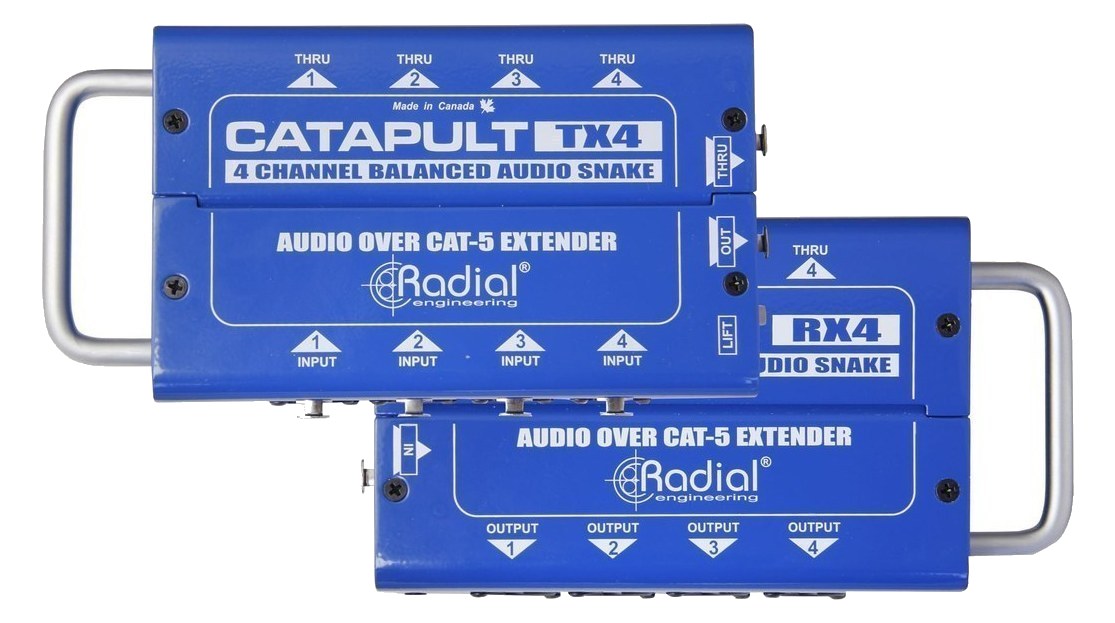
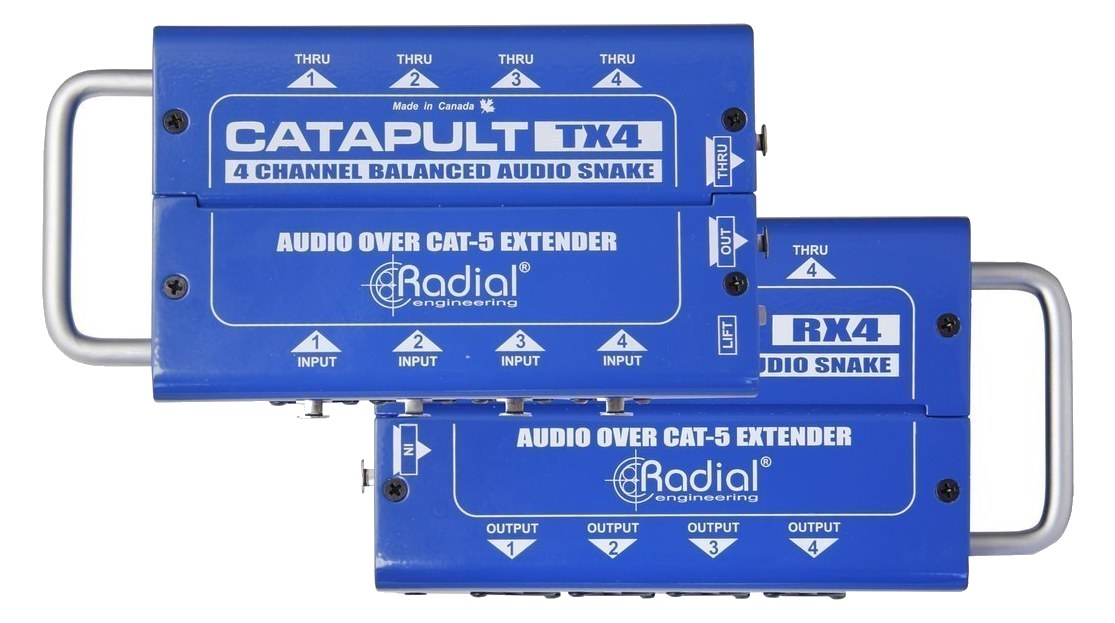
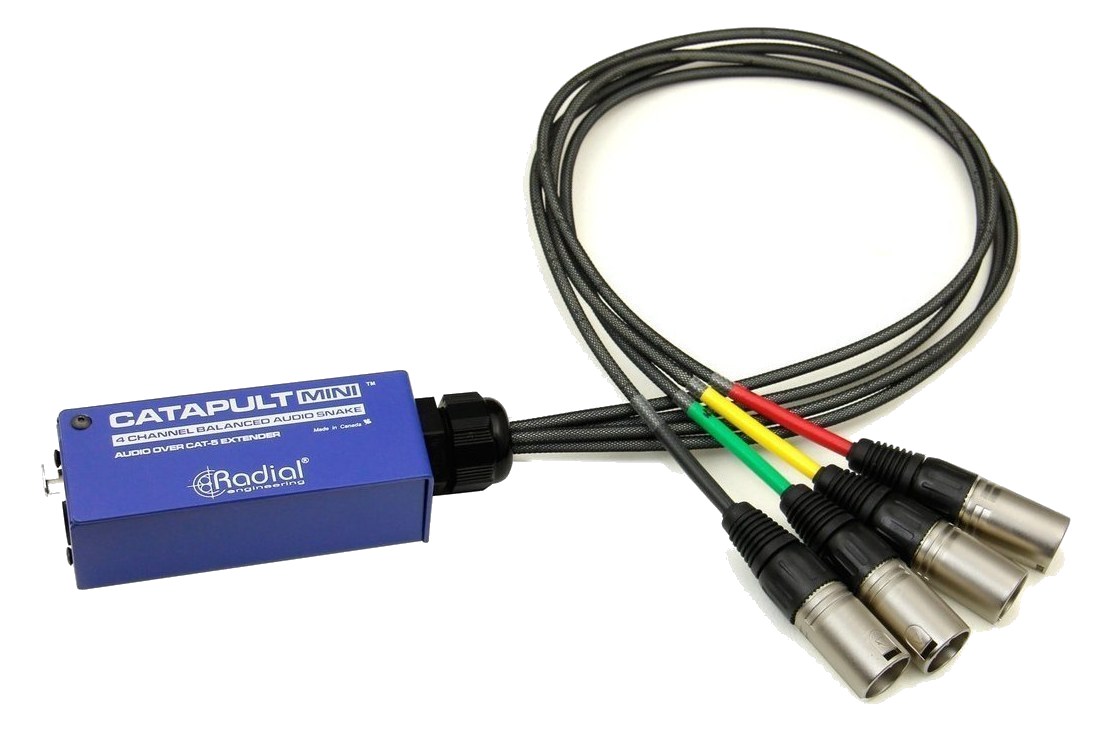
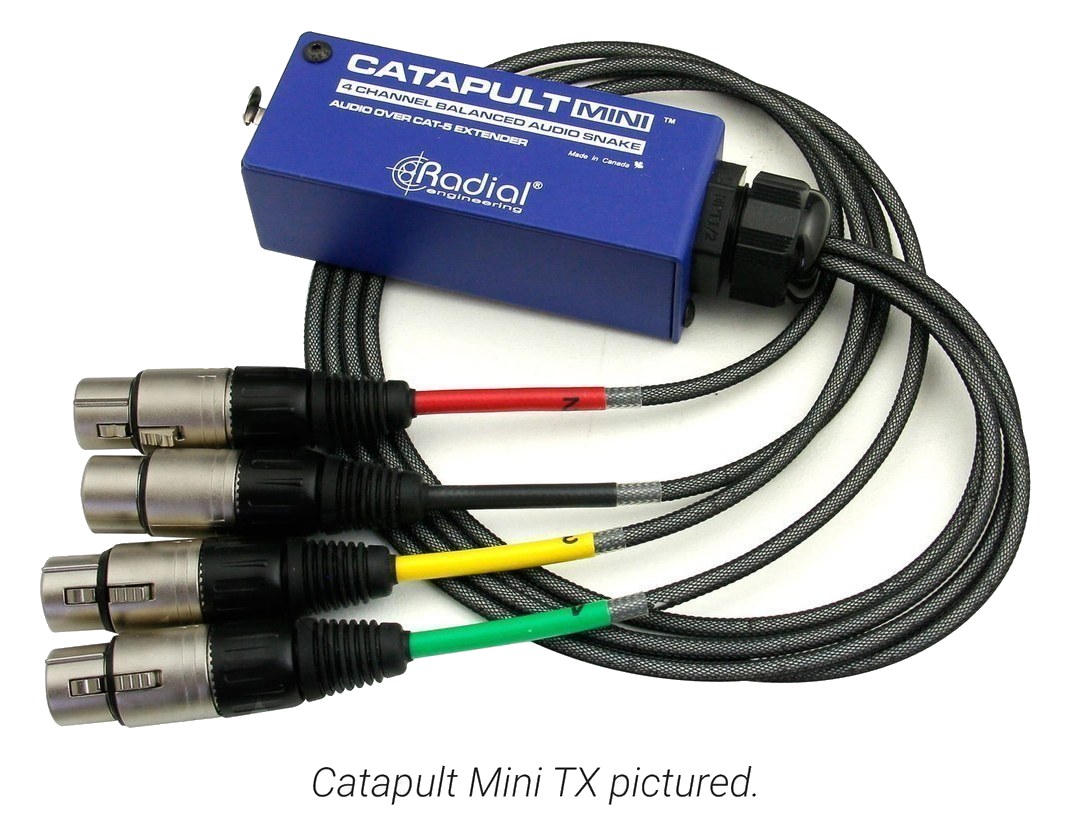
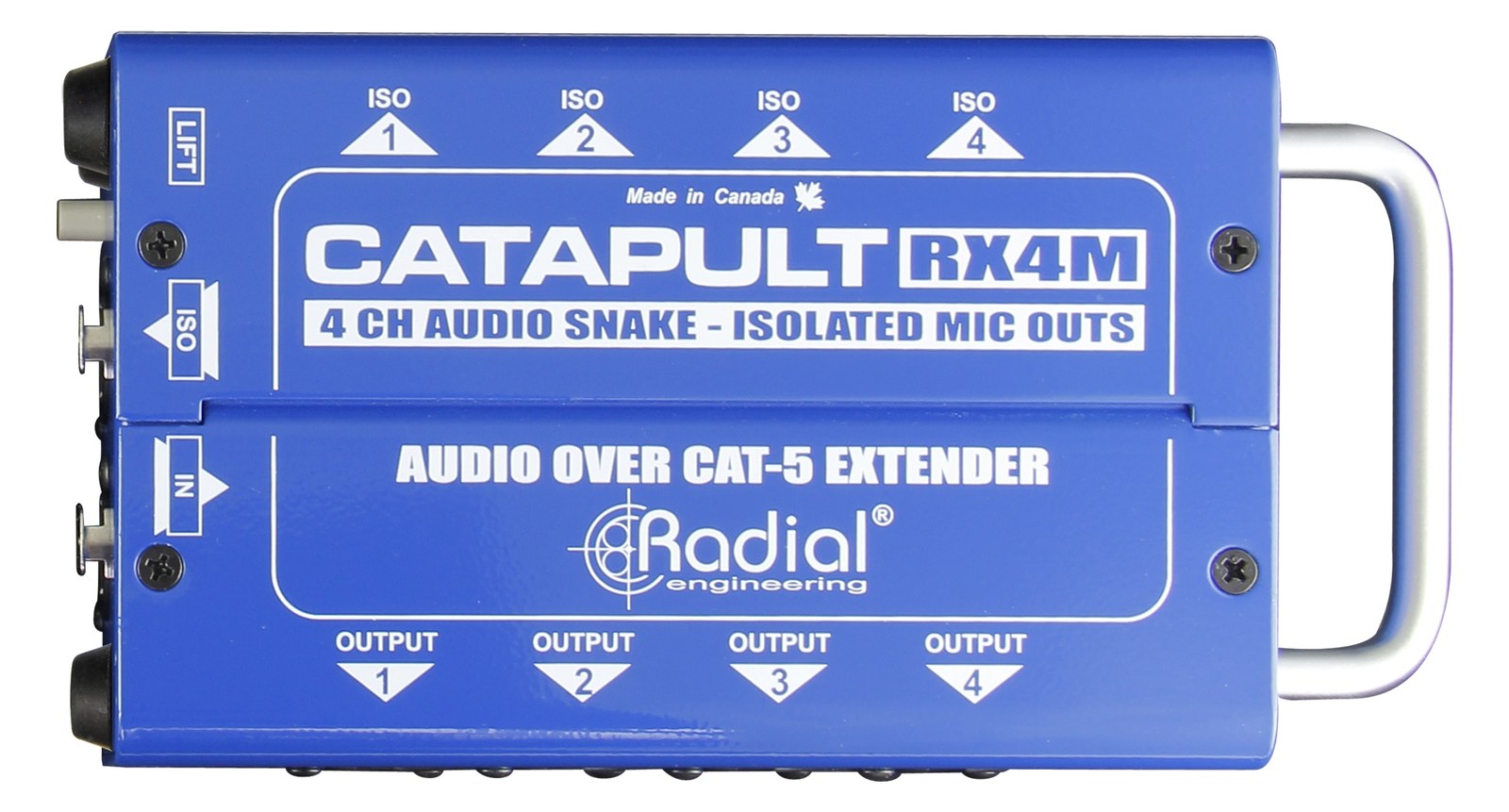
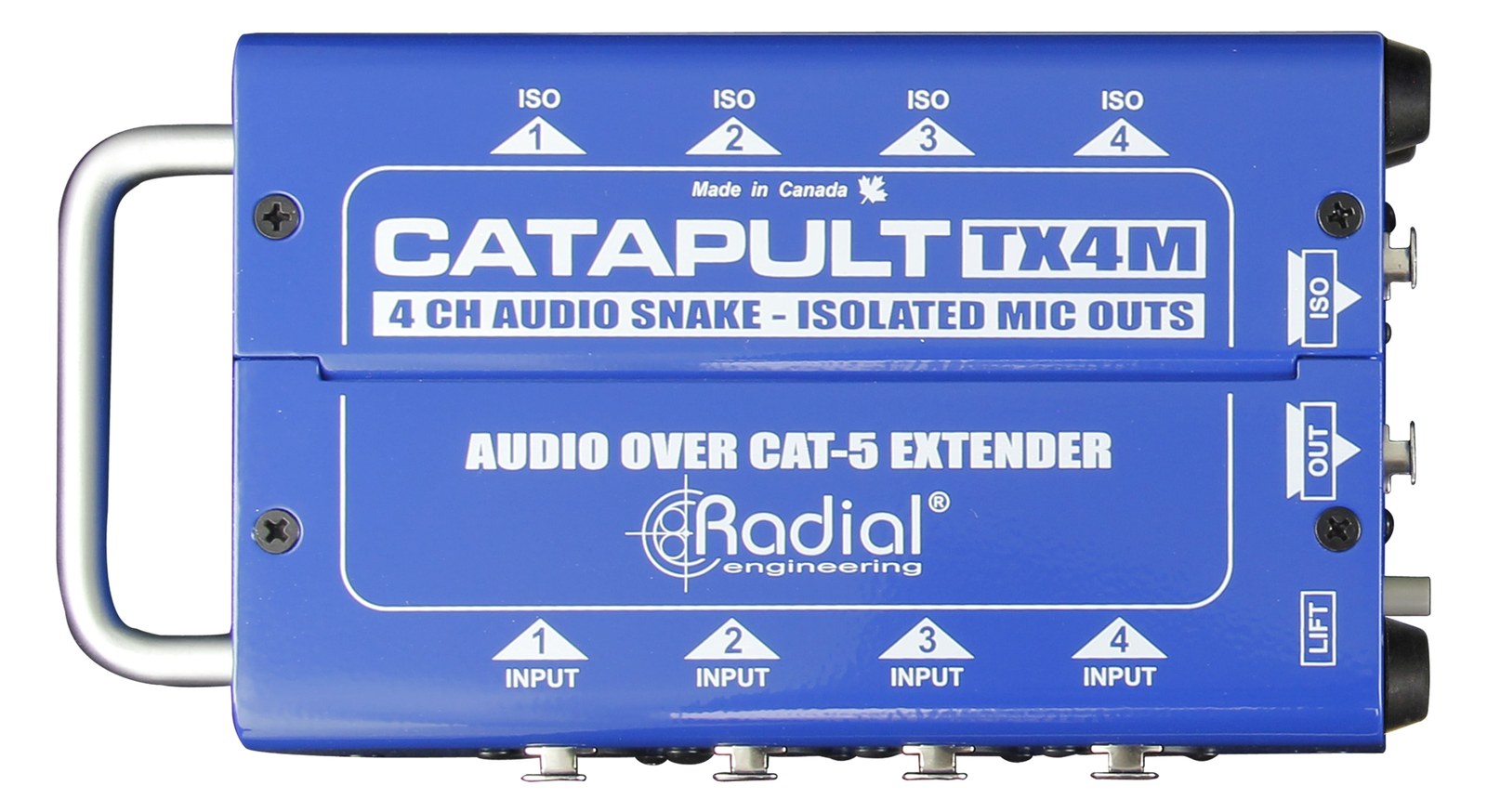
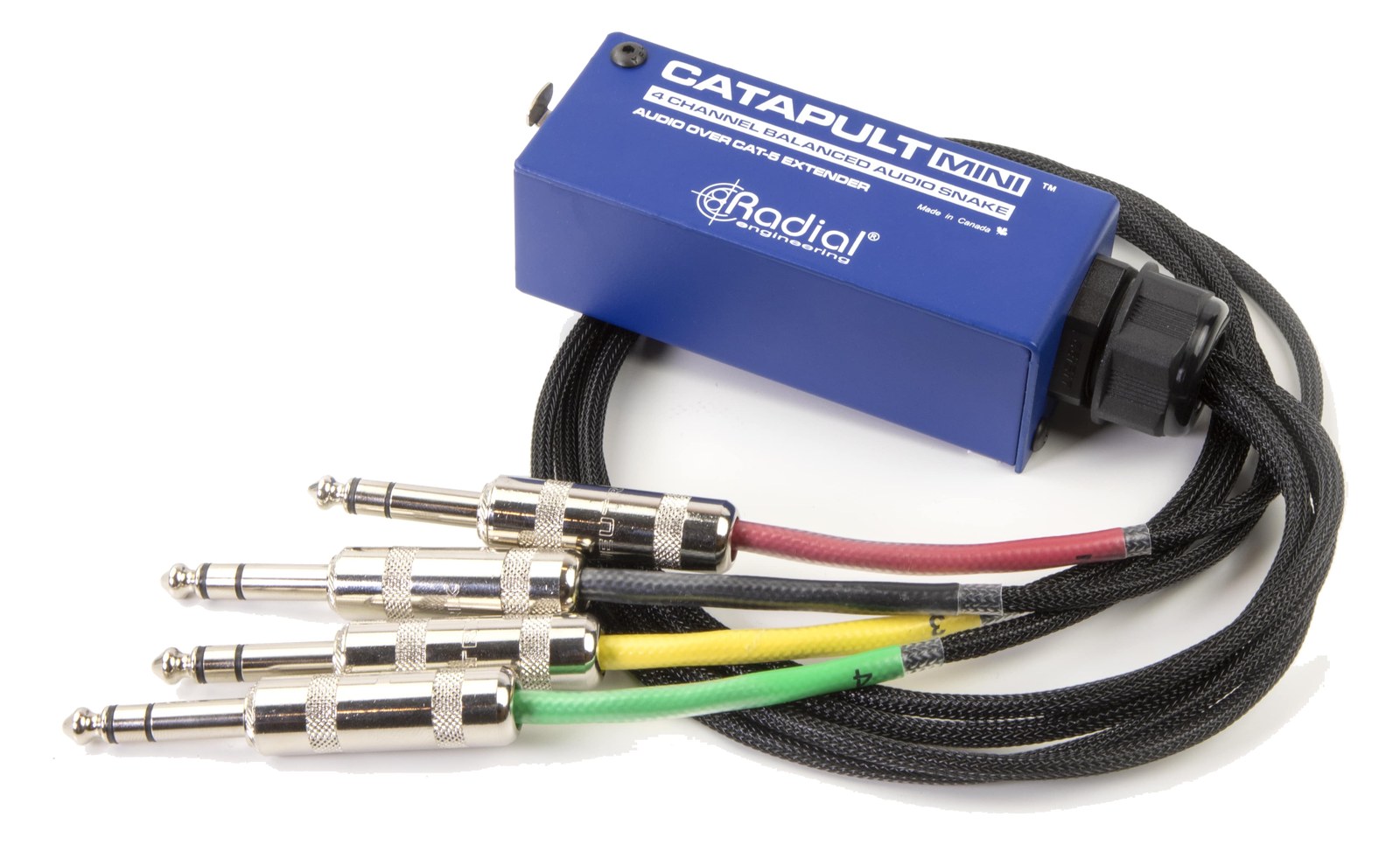
Manufacturer product photography — the drawn faceplate above stays true to panel layout; these show the hardware itself.

Photo: Radial Engineering1 / 2

About the Radial Catapult Mini TRS

The Radial Catapult Mini TRS puts four balanced 1/4-inch TRS connectors on the Cat5 snake system, matching the jacks found on rackmount interfaces and playback rigs. Use it at the rack end to lift four interface outputs onto one Cat5 run to stage, with a Mini RX or RX4 breaking out to XLR at the other end. Passive, compact, and interchangeable with every other Catapult module.

The Catapult Mini TRS is a passive, four-channel Cat5 interface module that converts balanced quarter-inch TRS connections onto a single RJ45 run. Its job is simple and specific: you have a rack full of interface outputs or playback device sends on TRS jacks, and you need to move those signals across the stage without running four individual cables. One Cat5 does it. On the far end, a paired Catapult receiver — a Mini RX or RX4 — breaks the signal back out to XLR for drive racks, splitters, or wireless systems. No power, no transformers, no latency.

Four bidirectional TRS jacks and one RJ45 is the entire port count, which tells you exactly what this thing is and is not. Passive means signal integrity lives or dies on cable quality and run length — Cat5e or Cat6 in good condition over stage-reasonable distances behaves well, but this is not a digital system and it is not immune to noise pickup on a long or poorly shielded run. At one kilogram and zero rack units, the Mini TRS is meant to live on the back of a rack shelf, zip-tied to a rail, or mounted in Radial's own Catapult rack frame rather than eating a rack space of its own. Power draw is zero, which matters when you're budgeting a conditioner.
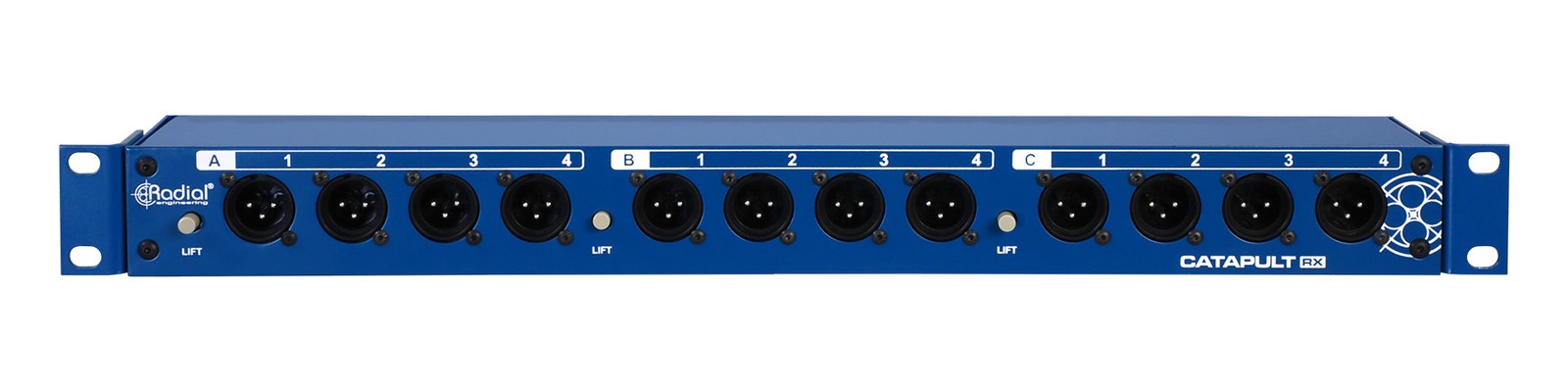
If your playback rig or IEM rack uses an interface with TRS line outputs — an RME, MOTU, or similar — and you need those signals to travel any real distance to stage, this is a clean, affordable answer. The interchangeability across the Catapult system is genuinely useful: you can mix TRS and XLR modules at each end depending on what the destination gear requires. Skip it if your interface already has XLR outputs, since a standard Catapult XLR module covers that without any adapter chaining. Also skip it if your run is very long or in a high-RF environment — a digital snake will serve you better there.

In the rack

  • Mount the Mini TRS directly on the back of your rack's top or bottom shelf using Radial's Catapult rack frame — keeping it mechanically secure prevents TRS cables from wiggling the RJ45 seat loose mid-show.
  • Label both ends of the Cat5 run with the same color tape before load-in; the RJ45 connection is not keyed for direction, and grabbing the wrong end in a dark wing is a real risk.
  • Use the bidirectional nature intentionally — if your interface needs to receive a cue feed from FOH on two channels and send playback on the other two, a single Cat5 run with this module at the rack handles all four in one cable.
  • Always carry a spare patch-length Cat5e; if the snake goes quiet, the cable is the first suspect and swapping it takes thirty seconds.

4-channel Cat5 module with 1/4" TRS — for line-level interface I/O.

I/O Ports (5)

PortConnectorDirectionSignalChannels
TRS 1TRS QUARTERbidirectionalanalog audio
TRS 2TRS QUARTERbidirectionalanalog audio
TRS 3TRS QUARTERbidirectionalanalog audio
TRS 4TRS QUARTERbidirectionalanalog audio
Cat5RJ45bidirectionalanalog audio

Deciding between two?

Rack space, watts, weight and every connector, side by side.

Related gear

Related articles

Guides from our library that cover planning around analog snake gear.