
Whirlwind Catdusa CT-F
Whirlwind·Model Catdusa CT-F·whirlwind-catdusa-ct-f
Photos
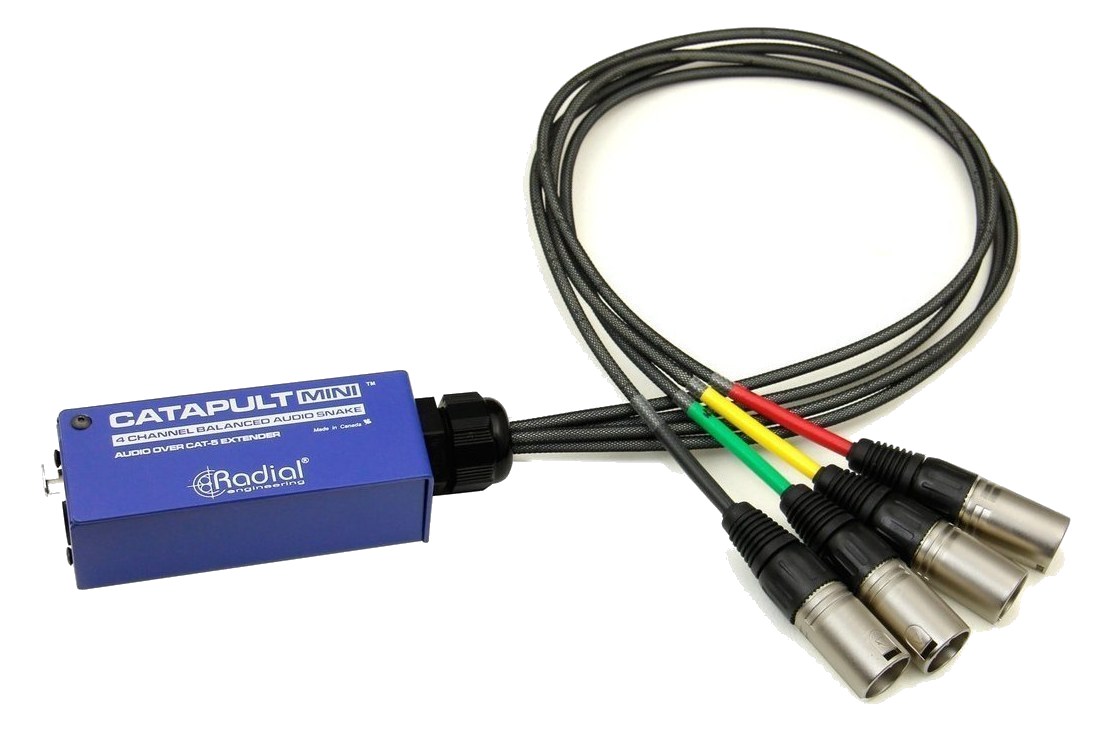
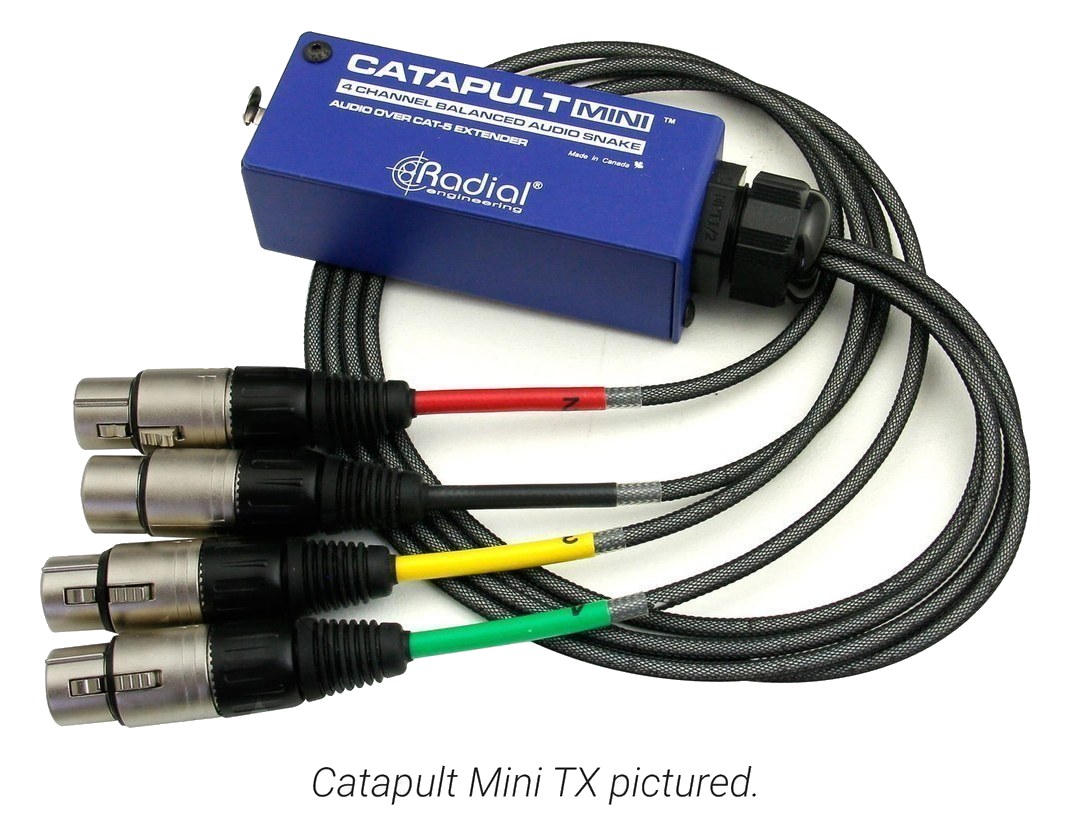
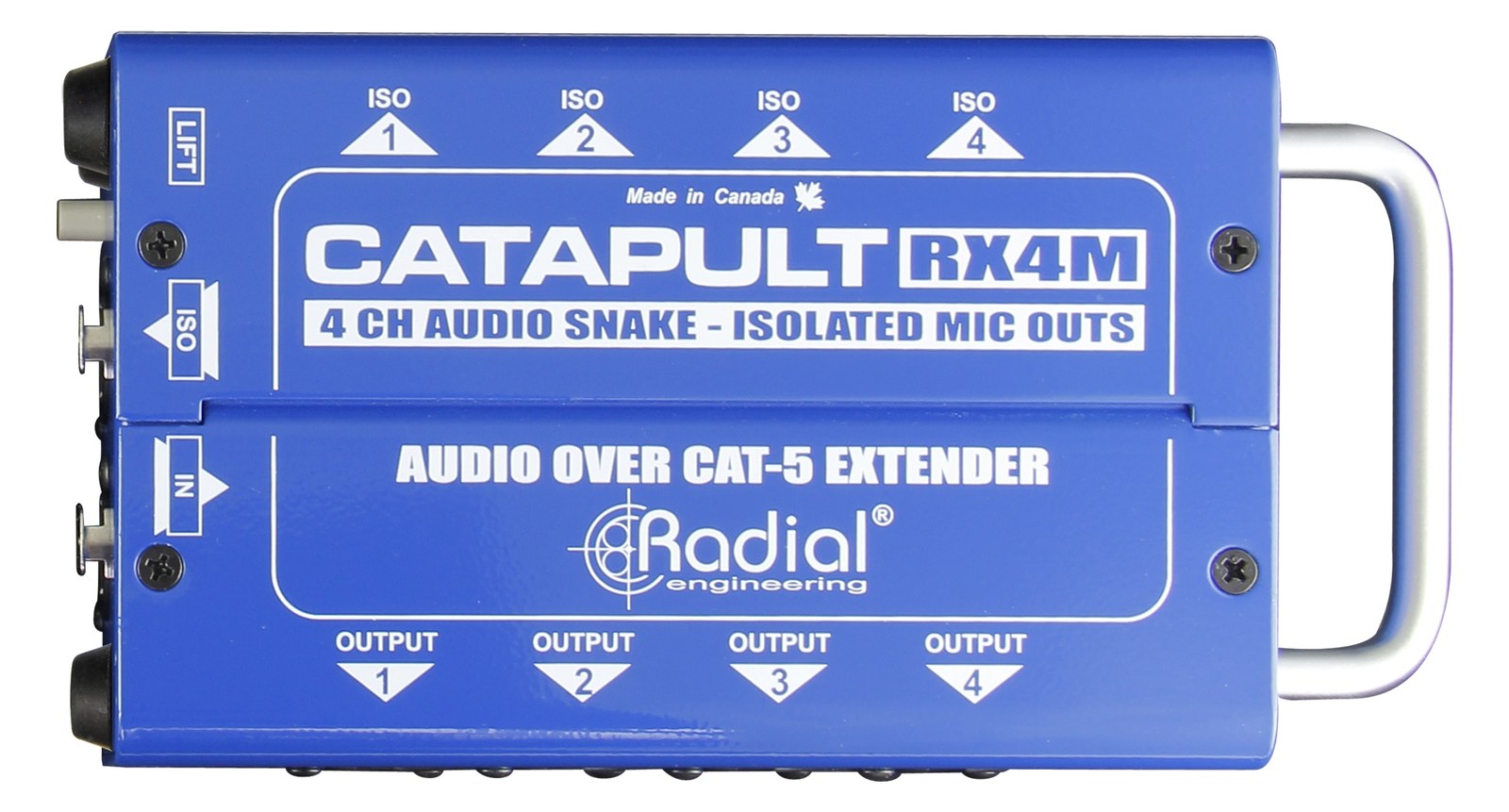
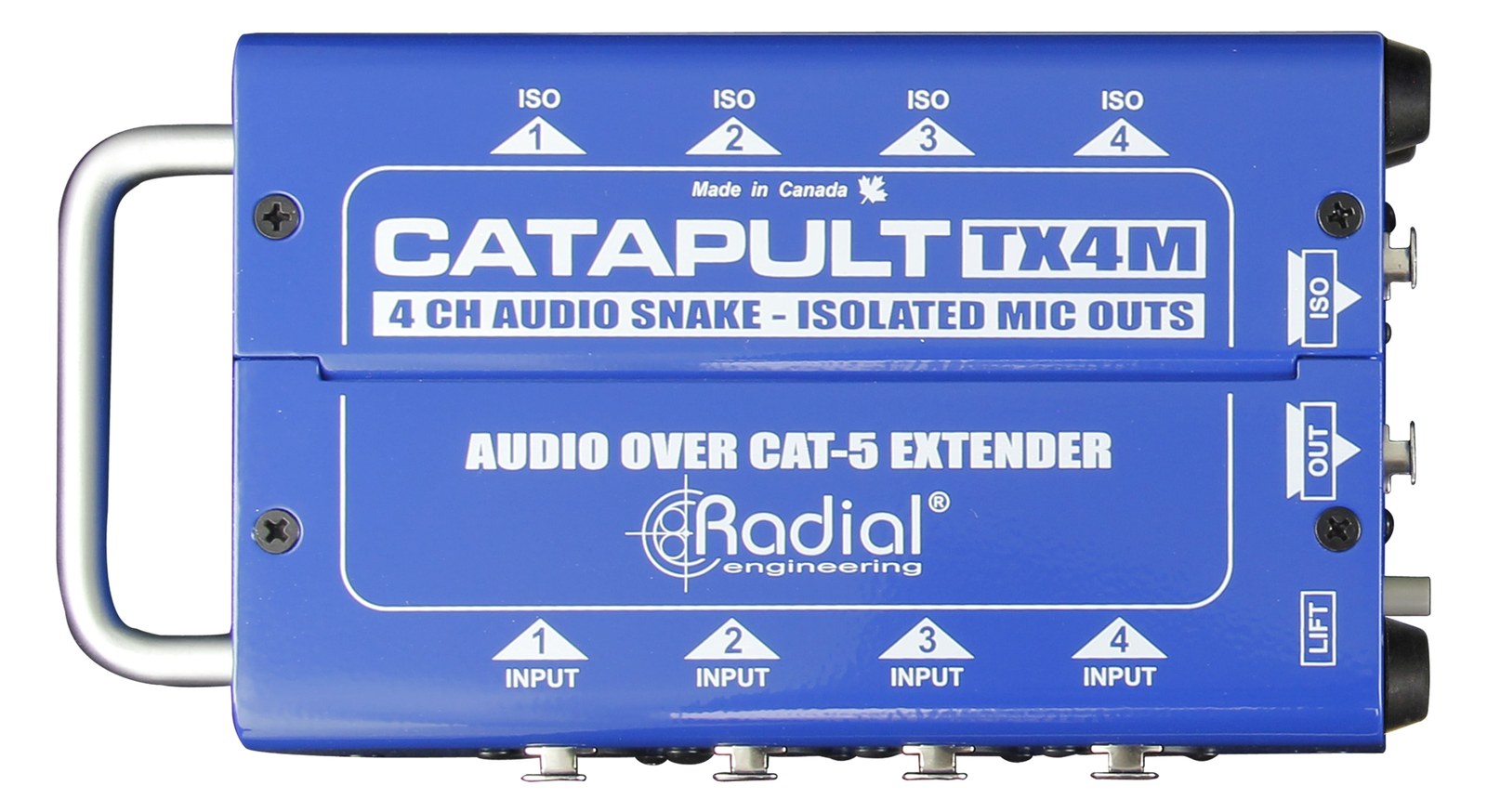
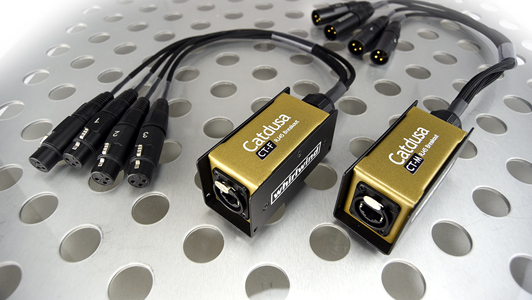
Manufacturer product photography — the drawn faceplate above stays true to panel layout; these show the hardware itself.
About the Whirlwind Catdusa CT-F
The Whirlwind Catdusa CT-F is the collect side of the Catdusa system, taking four sources on female XLRThe standard 3-pin locking connector for mics and balanced line signals — pin 1 is the shield, pins 2 and 3 carry the balanced pair. tails onto a single Cat5eStandard network cable grades. In an audio rig one cheap Cat5e run can replace a 48-channel copper snake; AES50 wants it shielded. etherCONAn Ethernet plug inside a rugged XLR-style locking shell — tour-grade network connections that can’t be yanked loose. run. Pair it with a CT-M at the far end for a four-channel snakeA multicore cable bundling many channels into one stage-to-console run. A sub-snake collects one corner of the stage into a drop box. over cable you can source anywhere, and daisy-chain additional boxes through the second etherCON jack. Shielded Cat cable carries phantomThe +48 V a console sends up the mic cable to power condenser mics and active DI boxes — invisible to gear that doesn’t need it., and the 110-ohm wiring keeps AES and DMX clean.
The Catdusa CT-F is the stage end of Whirlwind's Catdusa system — a passive, four-channel analog fan that takes four XLRThe standard 3-pin locking connector for mics and balanced line signals — pin 1 is the shield, pins 2 and 3 carry the balanced pair. sources and routes them down a single Cat5eStandard network cable grades. In an audio rig one cheap Cat5e run can replace a 48-channel copper snake; AES50 wants it shielded. run to the CT-M at the far end. There's no power supply, no DSPDigital Signal Processing — the number-crunching that does EQ, compression, and effects inside a box. More DSP means more processing at once., no rack unitThe standard slice of rack height: 1U = 1.75″. A 3U box takes three slices; half-rack gear pairs two units side by side in one. to account for; it's pure copper, passive, and dumb in exactly the right way. The job it does is simple: replace a four-channel analog snakeA multicore cable bundling many channels into one stage-to-console run. A sub-snake collects one corner of the stage into a drop box. loomSeveral cables bundled and run as one — keeps rack interconnects tidy and makes load-in one grab instead of eight. with a single Cat5e cable you can pull from almost any venue's spare bin or buy at a hardware store in a pinch.
Four female XLRThe standard 3-pin locking connector for mics and balanced line signals — pin 1 is the shield, pins 2 and 3 carry the balanced pair. tails collect your sources — vocals, instrument DIsDirect Injection box — converts an instrument’s unbalanced signal to a balanced mic-level XLR so it can run long cables without noise., monitor reference lines, whatever the count calls for — and the etherCONAn Ethernet plug inside a rugged XLR-style locking shell — tour-grade network connections that can’t be yanked loose. Out carries all four down the run. The Thru jack is the part that earns its keep on larger stages: you can daisy-chain a second CT-F box onto the same cable path, doubling your channel count without running a second home run. Shielded Cat cable is required to pass phantomThe +48 V a console sends up the mic cable to power condenser mics and active DI boxes — invisible to gear that doesn’t need it., and Whirlwind specifies 110-ohm wiring inside, so the same cable can carry AES-3 or DMX on other systems without crosstalk concerns. At 0.7 kg, it goes in a pouch, tapes to a mic stand base, or sits in a drum riser pocket without drama.
This belongs in any rig where you're tired of rolling heavy copper or where venue infrastructure only gives you Cat runs between stage and rack. It's a natural fit for IEMIn-Ear Monitor — earpieces that replace floor wedges, feeding each player their own mix. The reason this whole rack exists. rigs that need a few monitor reference feeds sent back from stage, or for lean playback setups that need a couple of instrument inputs without a dedicated analog snakeA multicore cable bundling many channels into one stage-to-console run. A sub-snake collects one corner of the stage into a drop box.. What it isn't: a solution for eight or more channels without chaining multiple boxes, and it won't work with unshielded Cat if your sources need phantomThe +48 V a console sends up the mic cable to power condenser mics and active DI boxes — invisible to gear that doesn’t need it.. If your whole console workflow depends on a dense analog split, a proper analog snake still makes more sense, but for four channels and a long pull, the Catdusa system is hard to argue with at this price.
In the rack
- Use shielded Cat5eStandard network cable grades. In an audio rig one cheap Cat5e run can replace a 48-channel copper snake; AES50 wants it shielded. or Cat6 exclusively — unshielded cable will drop phantom powerThe +48 V a console sends up the mic cable to power condenser mics and active DI boxes — invisible to gear that doesn’t need it. and can introduce noise on long runs. Keep a labeled spool of the right cable with the box so a borrowed venue cable doesn't cause a troubleshoot at show time.
- When daisy-chaining a second CT-F through the Thru jack, label each box and its XLRThe standard 3-pin locking connector for mics and balanced line signals — pin 1 is the shield, pins 2 and 3 carry the balanced pair. tails clearly before load-in; at stage level in low light, four identical female tails from two boxes look the same.
- The CT-F has no rack earsThe flanges that bolt gear to the rack rails. Desktop boxes without them need a shelf, tray, or drawer to live in the case. and zero rack unitsThe standard slice of rack height: 1U = 1.75″. A 3U box takes three slices; half-rack gear pairs two units side by side in one., so plan its physical placement before the show: it works well cable-tied to a mic stand base, velcroed to the underside of a keyboard riser, or tucked in a small utility pouch clipped to your rack case.
- Pair it with the CT-M mounted directly to your rack's rear panel or cable bay so the etherCONAn Ethernet plug inside a rugged XLR-style locking shell — tour-grade network connections that can’t be yanked loose. home run terminates cleanly — this keeps the analog signal path short on the rack side and avoids an extra XLRThe standard 3-pin locking connector for mics and balanced line signals — pin 1 is the shield, pins 2 and 3 carry the balanced pair. patch between the CT-M tails and your inputs.
4-channel Cat5eStandard network cable grades. In an audio rig one cheap Cat5e run can replace a 48-channel copper snake; AES50 wants it shielded. etherCONAn Ethernet plug inside a rugged XLR-style locking shell — tour-grade network connections that can’t be yanked loose. fan to 4x XLRF tails; IN/THRU daisy chain; passes phantomThe +48 V a console sends up the mic cable to power condenser mics and active DI boxes — invisible to gear that doesn’t need it. on shielded Cat.
I/O Ports (6)
| Port | Connector | Direction | Signal | Channels |
|---|---|---|---|---|
| XLR 1 | XLR FEMALE | input | analog audio | — |
| XLR 2 | XLR FEMALE | input | analog audio | — |
| XLR 3 | XLR FEMALE | input | analog audio | — |
| XLR 4 | XLR FEMALE | input | analog audio | — |
| etherCON Out | ETHERCON | output | analog audio | — |
| etherCON Thru | ETHERCON | output | analog audio | — |
Related gear


Related articles
Guides from our library that cover planning around analog snake gear.
A plain-English guide to writing the input list, stage plot, and patch sheet that house engineers want — without the jargon, with examples, and with a free way to generate one.
How to split mic signals between FOH and your IEM rack: transformer-isolated splitters, phantom power rules, and where to place the split in the chain.