The ART S8 gives you eight passive Y-splits in a single rack space. Without transformer isolation it does NOT prevent ground loops between the two outputs, so it is best used when both destinations share a common ground (e.g. a stage rack feeding a monitor mixer + a recording rig on the same console). For broadcast or FOH-vs-monitors splits, choose a transformer-isolated splitter instead.
~$249Use retailer rows for current price and stock
01 · What it does—and what that changes in your rig.
Product overview
Start with the payoff, then work through how it functions, where it fits, and the details that change a real build.
The payoff
Splitter decisions, organized around the whole rig.
The ART S8 is a straightforward piece of infrastructure: eight channels of passive Y-splitting in a single 1UThe standard slice of rack height: 1U = 1.75″. A 3U box takes three slices; half-rack gear pairs two units side by side in one. rack space. You feed it a signal, and it hands that same signal to two destinations simultaneously — Output A and Output B — with no active electronics, no power supply, and nothing in the signal path but wire and connectors. At $249 for eight channels, it exists to solve a specific, common problem: you have one source and two places that need to hear it, and you need a clean, permanent solution that doesn't live on the back of a Y-cable taped to a snakeA multicore cable bundling many channels into one stage-to-console run. A sub-snake collects one corner of the stage into a drop box..
Documented outputs
1616 destination connections
Documented inputs
8Based on documented inputs
Rack space
1UBuilder checks available rail space
ART product panel1U · 0W
Function
How it works in the path
The critical spec here isn't the channel count — it's what's absent. There are no transformersA magnetic coupling that passes audio between two windings with no wire contact — isolates splits and kills ground-loop hum, no power needed.. That means the S8 does zero ground isolation between its two output legs, so whatever ground relationship exists between your two destination devices is exactly what gets passed through. It draws no power, weighs 1.8 kg, and sits only 150 mm deep, so it fits in a shallow stage rack without complaint. The passive topology also means there's no noise floorThe constant background hiss a device produces on its own. Everything you pass through it sits on top — lower is better. added, no phantom powerThe +48 V a console sends up the mic cable to power condenser mics and active DI boxes — invisible to gear that doesn’t need it. complications to manage, and nothing to fail mid-show electronically. What you put in is what comes out, on both busesA path where multiple channels sum into one signal — mixes, groups, and mains are all buses. A 25-bus console can build 25 blends at once., every time.
Best fit
Where it earns its place in the rack
This box belongs in your rig when both downstream destinations share a common ground — a stage rack splitting to a monitor console and a recording interface both fed from the same power distribution, for example. It is genuinely not the right tool when you're splitting between FOHFront Of House — the main mix the audience hears, and the console position out in the room where it gets mixed. and monitors on separate power systems, or feeding a broadcast truck, or anywhere a ground loopHum from gear seeing two ground paths at slightly different voltage — the classic buzz when two racks share audio and power. between destinations would be a real risk. For those situations, a transformer-isolatedA magnetic coupling that passes audio between two windings with no wire contact — isolates splits and kills ground-loop hum, no power needed. splitter is the correct answer and there's no workaround. If your topology is clean, though, the S8 is honest, reliable, and hard to beat at the price.
In the rack
Details worth deciding before load-in.
Label both output banks clearly at patch time — 'A = Monitor Console, B = Recording' taped to the rack face saves real confusion during a fast line checkThe quick pre-show pass confirming every input reaches the console, one line at a time. Not a soundcheck — just does it work. when someone else is patching.
If you discover a ground hum after installing the S8, lift the ground on one of the destination devices before reaching for a different splitter — sometimes that's all it takes when the topology is otherwise clean.
At 150 mm depth, the S8 can sit in a shallow utility rack without forcing a deeper shell, but the 24 XLRThe standard 3-pin locking connector for mics and balanced line signals — pin 1 is the shield, pins 2 and 3 carry the balanced pair. connections on the rear will add real cable bulk — leave a cable management lane behind it.
Use the S8 for your most stable, predictable splits (click, timecodeA clock signal (SMPTE) shared between systems so playback, lights, and video all chase the same position in the song., playback stemsSub-mixes of a session grouped by instrument (drums, keys, vocals) — how playback rigs run tracks with live control over each group.) rather than mic-levelThe tiny signal straight out of a microphone — roughly a thousandth of line level. It needs a preamp before anything else touches it. vocal splits where ground isolation failure would be most audible and most costly.
02 · Know the whole path before you buy.
Signal path
Learn the route as a block diagram: source, product function, transport, and destination. Select any block to see what enters, what changes, and what leaves.
Interactive block diagramAuto-looping · hover, focus, or tap to hold a stage
Port-type signalProduct functionSystem boundary
Follow one signal from source to destination
Each block answers the same three questions: what arrives, what changes here, and what leaves.
01 · Source · selected
XLR female
XLR male
01 · Source
8 documented inputs
XLR female
Arrives as
8 documented inputs
Connector
XLR female
Signal
analog audio
03 · What this product asks of the rest of the system.
Compatibility
Treat connector names as the start of the check—not the answer. These are the boundaries that determine a complete working path.
Best fit · Splitter
Use it when 1U and 150 mm of depth fit the case.
Plan the companion path
Complete the path with upstream and downstream gear that matches connector, direction, signal type, protocol, and wiring standard.
Connector boundary
Documented connectors: XLR female, XLR male. Match connector, direction, and signal type—not shape alone.
04 · Every connector, grouped by job.
I/O ports
Switch the product view and the documented port inventory updates with it—hardware and data stay side by side.
Every connector, grouped by job.
Switch panels to keep the hardware view and the documented port list in sync.
Front panelRear panel
All documented ports for ART S8 Passive Splitter
Port
Panel
Connector
Direction
Signal
Channels
Input 1 (XLR)
rear
XLR female
input
analog audio
—
Input 2 (XLR)
rear
XLR female
input
analog audio
—
Input 3 (XLR)
rear
XLR female
input
analog audio
—
Input 4 (XLR)
rear
XLR female
input
analog audio
—
Input 5 (XLR)
rear
XLR female
input
analog audio
—
Input 6 (XLR)
rear
XLR female
input
analog audio
—
Input 7 (XLR)
rear
XLR female
input
analog audio
—
Input 8 (XLR)
rear
XLR female
input
analog audio
—
Output A 1 (XLR)
rear
XLR male
output
analog audio
—
Output A 2 (XLR)
rear
XLR male
output
analog audio
—
Output A 3 (XLR)
rear
XLR male
output
analog audio
—
Output A 4 (XLR)
rear
XLR male
output
analog audio
—
Output A 5 (XLR)
rear
XLR male
output
analog audio
—
Output A 6 (XLR)
rear
XLR male
output
analog audio
—
Output A 7 (XLR)
rear
XLR male
output
analog audio
—
Output A 8 (XLR)
rear
XLR male
output
analog audio
—
Output B 1 (XLR)
rear
XLR male
output
analog audio
—
Output B 2 (XLR)
rear
XLR male
output
analog audio
—
Output B 3 (XLR)
rear
XLR male
output
analog audio
—
Output B 4 (XLR)
rear
XLR male
output
analog audio
—
Output B 5 (XLR)
rear
XLR male
output
analog audio
—
Output B 6 (XLR)
rear
XLR male
output
analog audio
—
Output B 7 (XLR)
rear
XLR male
output
analog audio
—
Output B 8 (XLR)
rear
XLR male
output
analog audio
—
Showing 24 of 24 documented physical ports. Scroll to review the remaining rows.
05 · Compare the decision, not just the price.
Alternatives
The rows are organized around fit, power, I/O, and system role so a cheaper unit cannot hide a more expensive workflow.
S8The ART S8 gives you eight passive Y-splits in a single rack space. Without transformer isolation it does NOT prevent ground loops between the two outputs, so it is best used when both destinations share a common ground (e.g. a stage rack feeding a monitor mixer + a recording rig on the same console). For broadcast or FOH-vs-monitors splits, choose a transformer-isolated splitter instead.View gear →
S8-3WAYThe ART S8-3WAY splits eight mic channels three ways in one rack space: a direct output plus two transformer-isolated feeds per channel, with ground lifts on the isolated banks. It is the affordable answer when FOH, monitors, and a recording rig all need the same eight inputs. Users searched for it by its full product name before this add — high-intent demand fulfilled.View gear →
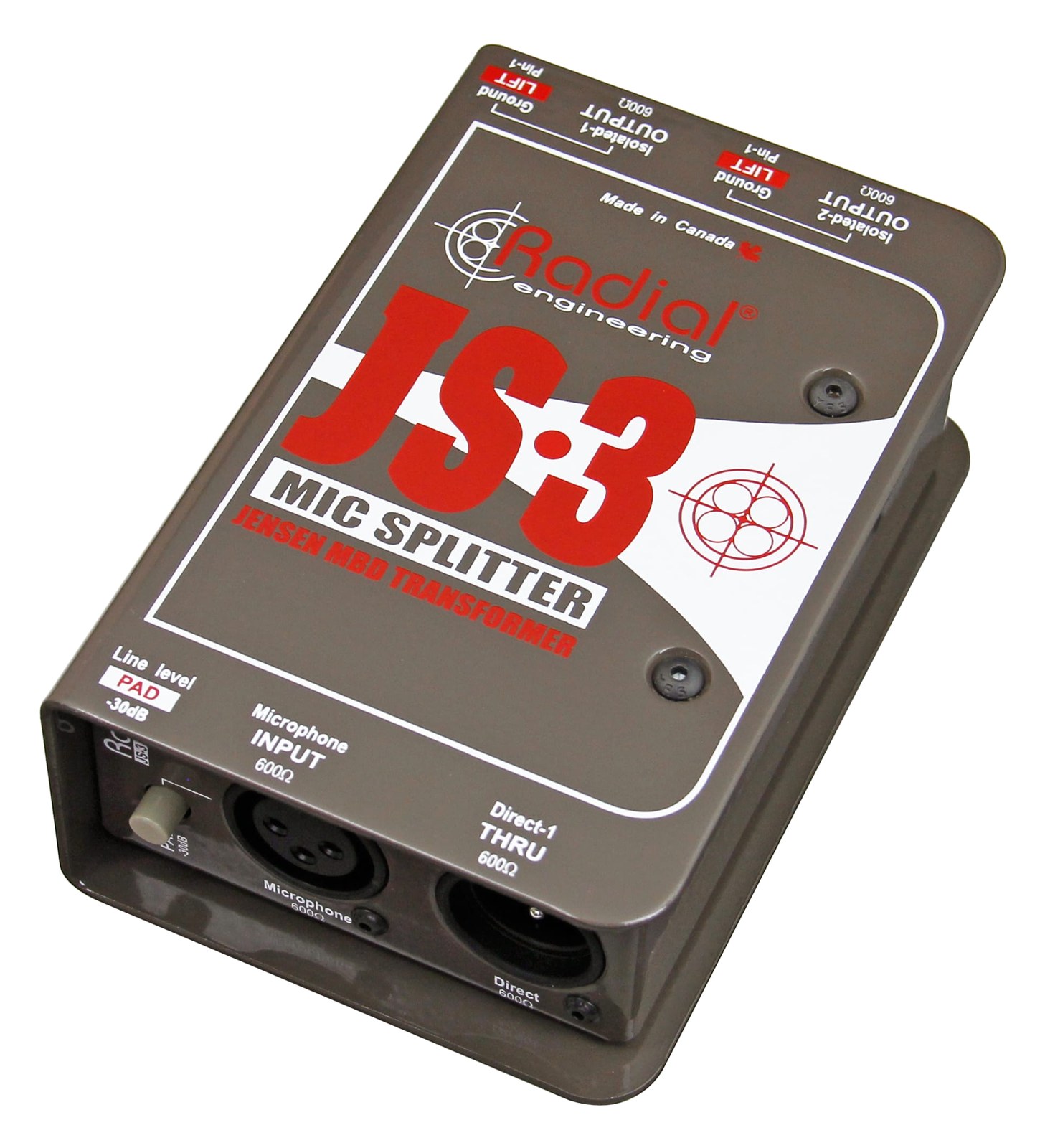
JS3The Radial JS3 is a premium single-channel mic splitter with Jensen transformer isolation that cleanly splits one microphone signal to three destinations without ground loops or signal degradation. Use it to feed a mic signal simultaneously to FOH, monitors, and a recording rig. The passive design with transformer isolation is the gold standard for preventing hum and buzz between separate audio systems.View gear →
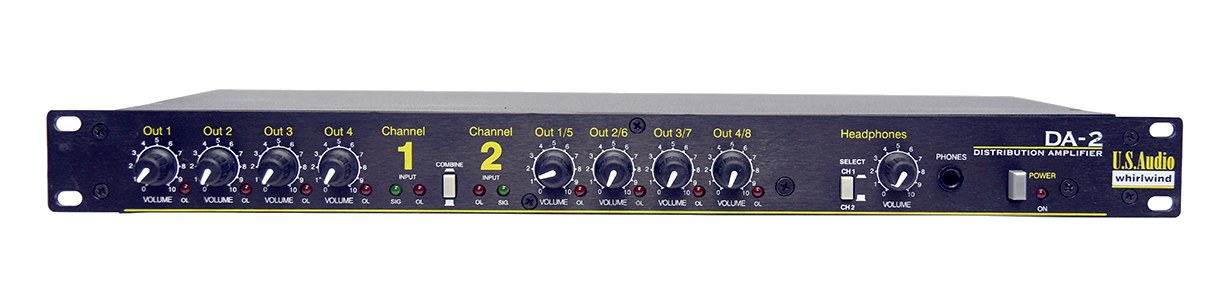
DA-2The Whirlwind DA-2 is a simple, reliable audio distribution amplifier for splitting or combining balanced audio signals. Use it to take a single stereo output from your playback rig and distribute it to multiple destinations, or to sum two sources into one feed. Its straightforward design and rugged build make it a dependable utility piece in any rack.View gear →
Placement is only the start. Builder checks space · depth · weight, power headroom, dependencies, and compatible signal paths around this exact catalog item.Open in Builder