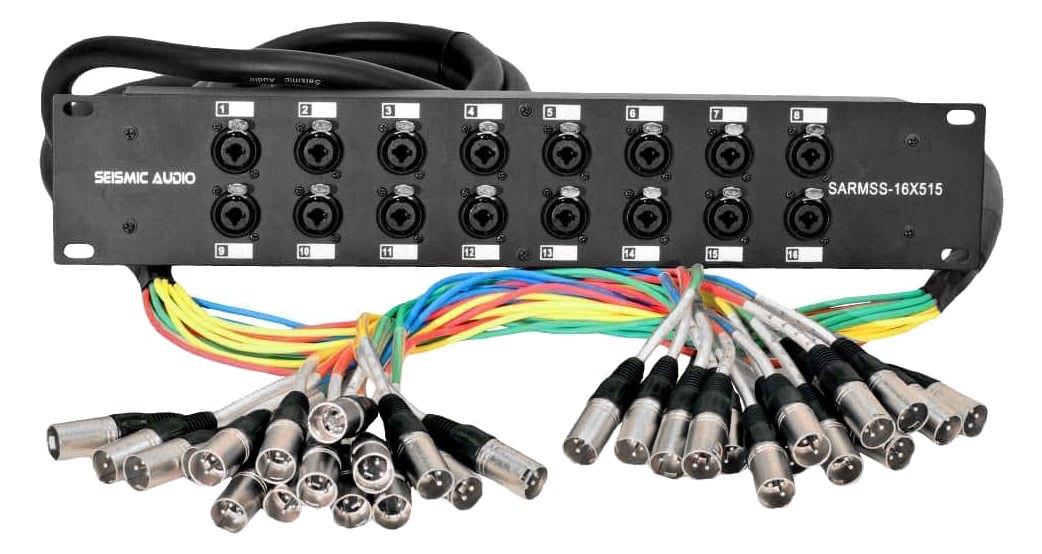
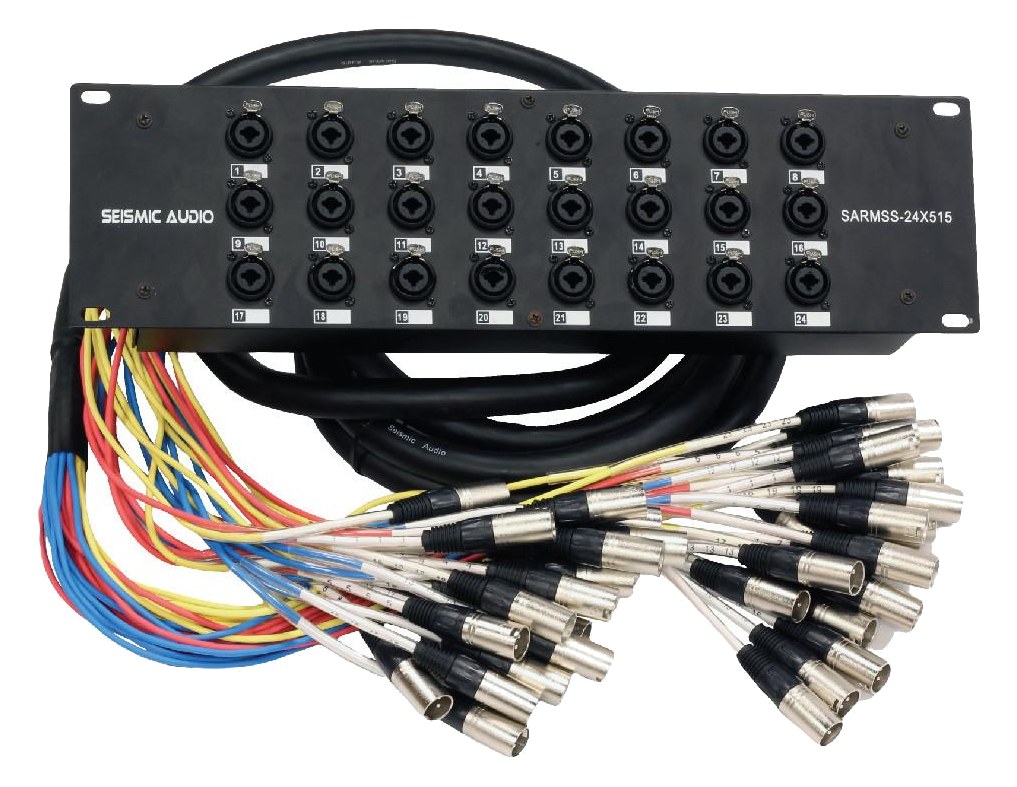
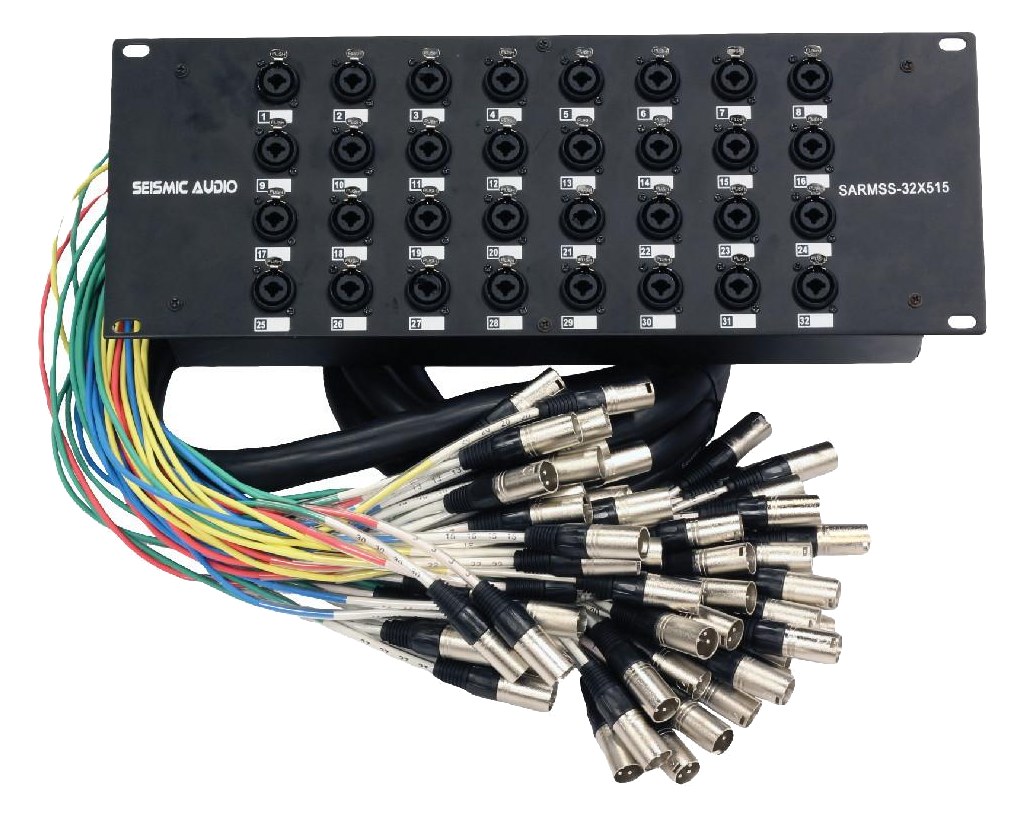
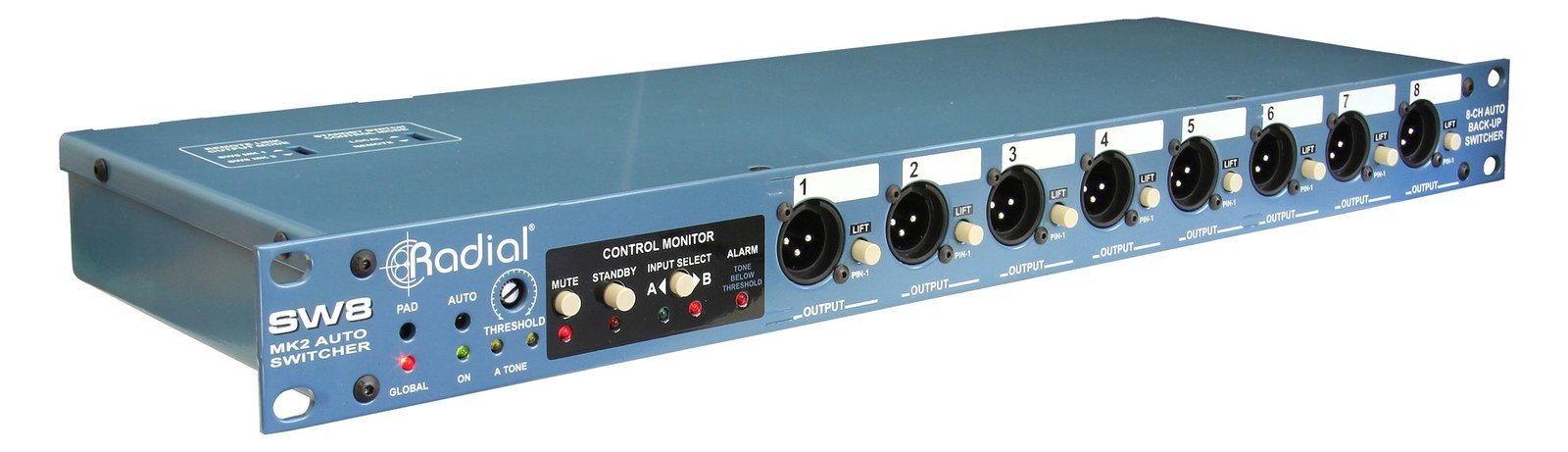
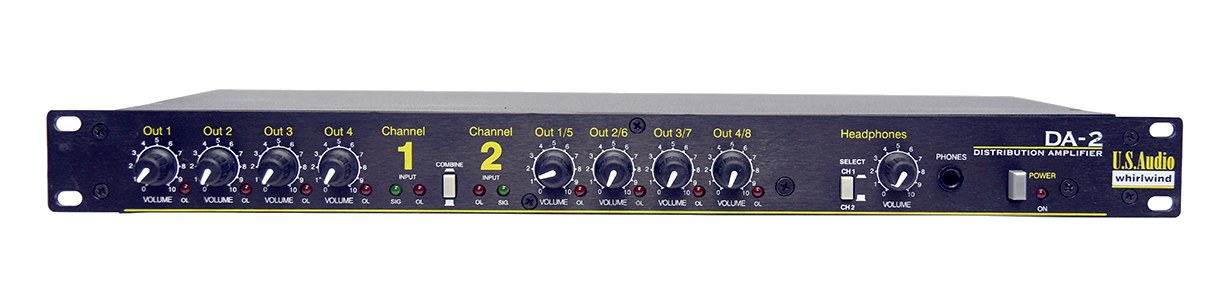
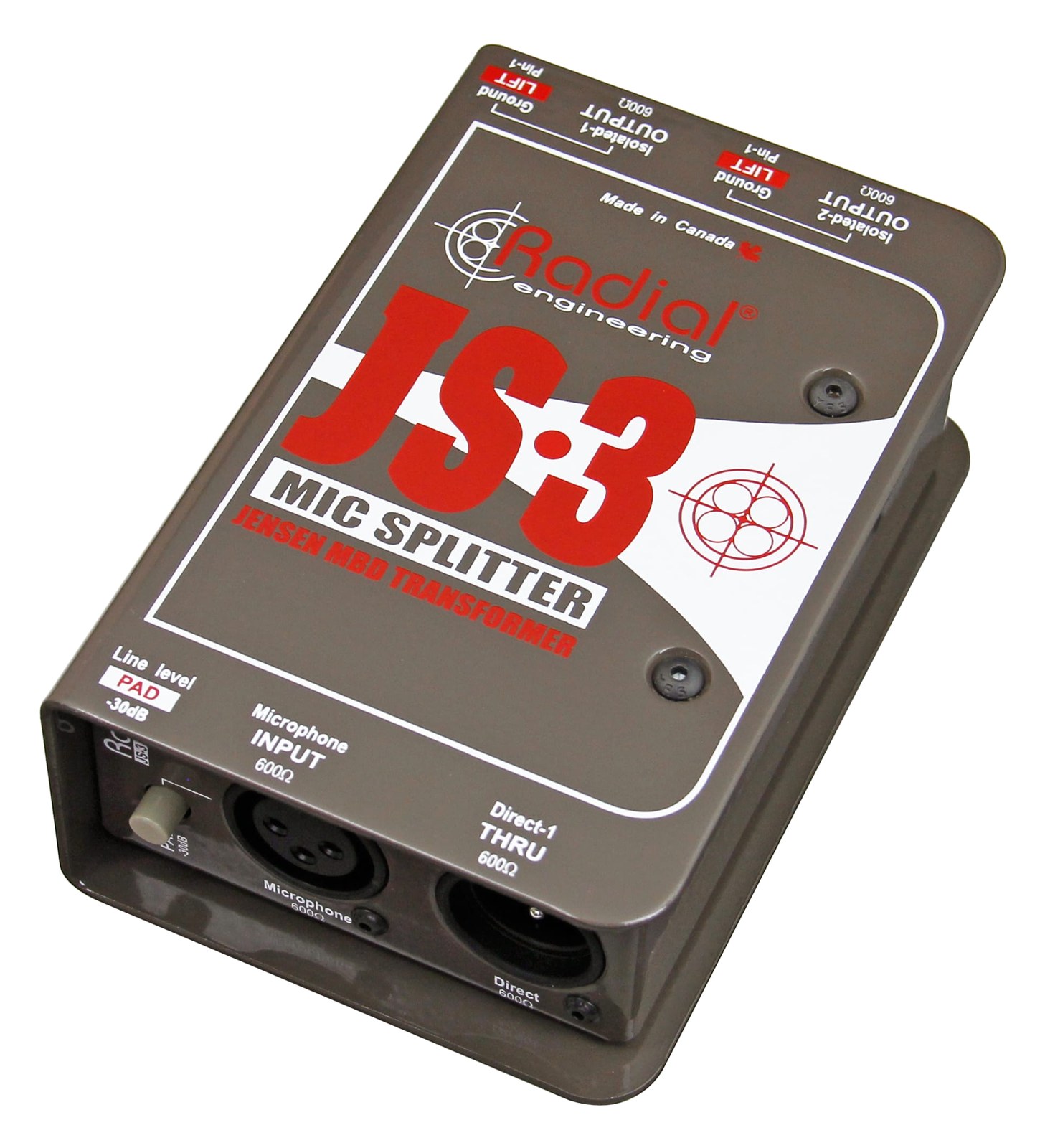
A budget-tier 8-channel mic splitter with transformer isolation on the secondary outputs, providing ground-loop immunity between the FOH console (direct out) and the monitor or recording rig (isolated out). Specs are not in the same league as the Jensen-equipped premium offerings, but for project-tier touring and rehearsal rigs the SA-RMSS-8 lands the basics at a fraction of the price.
~$349Use retailer rows for current price and stock
01 · What it does—and what that changes in your rig.
Product overview
Start with the payoff, then work through how it functions, where it fits, and the details that change a real build.
The payoff
Splitter decisions, organized around the whole rig.
The SA-RMSS-8 is an 8-channel passive mic splitter that solves one of the most fundamental problems in a multi-console rig: getting the same microphone signal to FOHFront Of House — the main mix the audience hears, and the console position out in the room where it gets mixed. and your monitor or recording world without dragging a ground loopHum from gear seeing two ground paths at slightly different voltage — the classic buzz when two racks share audio and power. between them. Each of the eight inputs feeds two output paths — a direct out that passes the signal straight through, and a transformer-isolatedA magnetic coupling that passes audio between two windings with no wire contact — isolates splits and kills ground-loop hum, no power needed. out that breaks the ground reference between the two destinations. At $349 for eight channels of isolation in 2UThe standard slice of rack height: 1U = 1.75″. A 3U box takes three slices; half-rack gear pairs two units side by side in one., it sits squarely in the budget tier, and Seismic Audio is transparent about that positioning.
Documented outputs
1616 destination connections
Documented inputs
8Based on documented inputs
Rack space
2UBuilder checks available rail space
Seismic Audio product panel2U · 0W
Function
How it works in the path
Passive means zero power draw, which is genuinely convenient — no IECThe standard three-prong appliance power inlet on rack gear — the kettle lead. C13/C14 in spec-sheet speak. cable to route, no slot on your power conditionerFilters venue AC, clamps surges, and gives the rack one tidy inlet. Not a voltage regulator and not a battery — just cleaner power. to reserve. The 180mm depth is shallow enough to fit most shallow-depth tour racks without drama, and 3.2kg won't punish a two-person carry. What you need to be honest about is the transformerA magnetic coupling that passes audio between two windings with no wire contact — isolates splits and kills ground-loop hum, no power needed. quality. The isolation transformers here are not Jensen or Lundahl units, so if your rig has a particularly noisy ground environment or you're splitting into a high-headroomThe margin between your normal level and where things clip — headroom is what absorbs the snare hit you didn’t see coming. analog console that will expose subtle coloration, you may hear the difference. For a rehearsal studio, a project touring rig, or a monitor worldThe side-stage domain of the monitor engineer — console, IEM racks, and everything feeding the band’s ears instead of the audience. that's pulling signals from a reasonably clean snakeA multicore cable bundling many channels into one stage-to-console run. A sub-snake collects one corner of the stage into a drop box., it does the job.
Best fit
Where it earns its place in the rack
This belongs in a rig where the alternative is no splitter at all, or where budget constraints are real and the signal chain isn't being recorded to a release-quality multitrack. Touring engineers running premium analog consoles on both ends of the split, or anyone feeding a DAWDigital Audio Workstation — the recording and playback software (Logic, Ableton Live, Pro Tools) at the center of a computer rig. for broadcast or album capture, should look harder at splitters built around Jensen transformersA magnetic coupling that passes audio between two windings with no wire contact — isolates splits and kills ground-loop hum, no power needed. — the cost gap closes fast when you factor in what's at stake. But for a club residency, a rehearsal facility rack, or a production company building out a second IEMIn-Ear Monitor — earpieces that replace floor wedges, feeding each player their own mix. The reason this whole rack exists. rig on a tight budget, the SA-RMSS-8 is a defensible call.
In the rack
Details worth deciding before load-in.
Assign the direct outputs to FOHFront Of House — the main mix the audience hears, and the console position out in the room where it gets mixed. so phantom powerThe +48 V a console sends up the mic cable to power condenser mics and active DI boxes — invisible to gear that doesn’t need it. from the FOH console passes through unimpeded — the isolated outputs block DC, which means your monitor desk cannot supply phantom through the isolated path on most passive designs like this one.
Label both output banks at patch time, not during soundcheck. With 16 male XLRsThe standard 3-pin locking connector for mics and balanced line signals — pin 1 is the shield, pins 2 and 3 carry the balanced pair. on the rear of a 2UThe standard slice of rack height: 1U = 1.75″. A 3U box takes three slices; half-rack gear pairs two units side by side in one. box, distinguishing direct from isolated outputs by feel alone in a dark rack bay is a fast way to wire the wrong console into the wrong path.
Keep this away from switching power supplies in the rack — passive transformersA magnetic coupling that passes audio between two windings with no wire contact — isolates splits and kills ground-loop hum, no power needed. can pick up interference from cheap SMPS units at close range, and at this transformer spec you have less headroomThe margin between your normal level and where things clip — headroom is what absorbs the snare hit you didn’t see coming. to absorb it than you would with a premium unit.
If you're using this in a rehearsal facility where multiple engineers plug in over time, thread a short piece of colored cable tie through the direct-out row and a different color through the isolated-out row so the split orientation survives every changeover.
02 · Know the whole path before you buy.
Signal path
Learn the route as a block diagram: source, product function, transport, and destination. Select any block to see what enters, what changes, and what leaves.
Interactive block diagramAuto-looping · hover, focus, or tap to hold a stage
Port-type signalProduct functionSystem boundary
Follow one signal from source to destination
Each block answers the same three questions: what arrives, what changes here, and what leaves.
01 · Source · selected
XLR female
XLR male
01 · Source
8 documented inputs
XLR female
Arrives as
8 documented inputs
Connector
XLR female
Signal
analog audio
03 · What this product asks of the rest of the system.
Compatibility
Treat connector names as the start of the check—not the answer. These are the boundaries that determine a complete working path.
Best fit · Splitter
Use it when 2U and 180 mm of depth fit the case.
Plan the companion path
Complete the path with upstream and downstream gear that matches connector, direction, signal type, protocol, and wiring standard.
Connector boundary
Documented connectors: XLR female, XLR male. Match connector, direction, and signal type—not shape alone.
04 · Every connector, grouped by job.
I/O ports
Switch the product view and the documented port inventory updates with it—hardware and data stay side by side.
Every connector, grouped by job.
Switch panels to keep the hardware view and the documented port list in sync.
Front panelRear panel
All documented ports for Seismic Audio SA-RMSS-8 Mic Splitter
Port
Panel
Connector
Direction
Signal
Channels
Input 1 (XLR)
front
XLR female
input
analog audio
—
Input 2 (XLR)
front
XLR female
input
analog audio
—
Input 3 (XLR)
front
XLR female
input
analog audio
—
Input 4 (XLR)
front
XLR female
input
analog audio
—
Input 5 (XLR)
front
XLR female
input
analog audio
—
Input 6 (XLR)
front
XLR female
input
analog audio
—
Input 7 (XLR)
front
XLR female
input
analog audio
—
Input 8 (XLR)
front
XLR female
input
analog audio
—
Direct Out 1 (XLR)
rear
XLR male
output
analog audio
—
Direct Out 2 (XLR)
rear
XLR male
output
analog audio
—
Direct Out 3 (XLR)
rear
XLR male
output
analog audio
—
Direct Out 4 (XLR)
rear
XLR male
output
analog audio
—
Direct Out 5 (XLR)
rear
XLR male
output
analog audio
—
Direct Out 6 (XLR)
rear
XLR male
output
analog audio
—
Direct Out 7 (XLR)
rear
XLR male
output
analog audio
—
Direct Out 8 (XLR)
rear
XLR male
output
analog audio
—
Isolated Out 1 (XLR)
rear
XLR male
output
analog audio
—
Isolated Out 2 (XLR)
rear
XLR male
output
analog audio
—
Isolated Out 3 (XLR)
rear
XLR male
output
analog audio
—
Isolated Out 4 (XLR)
rear
XLR male
output
analog audio
—
Isolated Out 5 (XLR)
rear
XLR male
output
analog audio
—
Isolated Out 6 (XLR)
rear
XLR male
output
analog audio
—
Isolated Out 7 (XLR)
rear
XLR male
output
analog audio
—
Isolated Out 8 (XLR)
rear
XLR male
output
analog audio
—
Showing 24 of 24 documented physical ports. Scroll to review the remaining rows.
05 · Compare the decision, not just the price.
Alternatives
The rows are organized around fit, power, I/O, and system role so a cheaper unit cannot hide a more expensive workflow.
SA-RMSS-8A budget-tier 8-channel mic splitter with transformer isolation on the secondary outputs, providing ground-loop immunity between the FOH console (direct out) and the monitor or recording rig (isolated out). Specs are not in the same league as the Jensen-equipped premium offerings, but for project-tier touring and rehearsal rigs the SA-RMSS-8 lands the basics at a fraction of the price.View gear →
SA-RMSS-16Sixteen channels of transformer-isolated splitting in a 3U chassis — enough to fan a full drum kit + backline into a separate monitor world without dropping back to a stage box. Same isolation tradeoffs as the 8-channel sibling: solid ground-loop immunity, but transformer fidelity is a step below the boutique offerings.View gear →
SA-RMSS-24Twenty-four channels of transformer-isolated splitting in a 4U chassis. Lands in the gap between the 16-ch SA-RMSS-16 (full band) and the 32-ch SA-RMSS-32 (festival-grade headroom): typical use is a six- or seven-piece band with horns or a multi-keys rig where 16 channels would require the engineer to make hard choices about what gets a monitor split.View gear →
SA-RMSS-32Thirty-two channels of transformer-isolated splitting in a 5U chassis. The "no compromises" rig pick — every drum mic, every backline DI, every vocal mic has its own direct + iso trunk to FOH and a recording rig, with margin left over. Heavy enough that you only carry it when the rig calls for it.View gear →
Placement is only the start. Builder checks space · depth · weight, power headroom, dependencies, and compatible signal paths around this exact catalog item.Open in Builder