
Radial JS3 Splitter
Radial·Model JS3·radial-js3
Photos
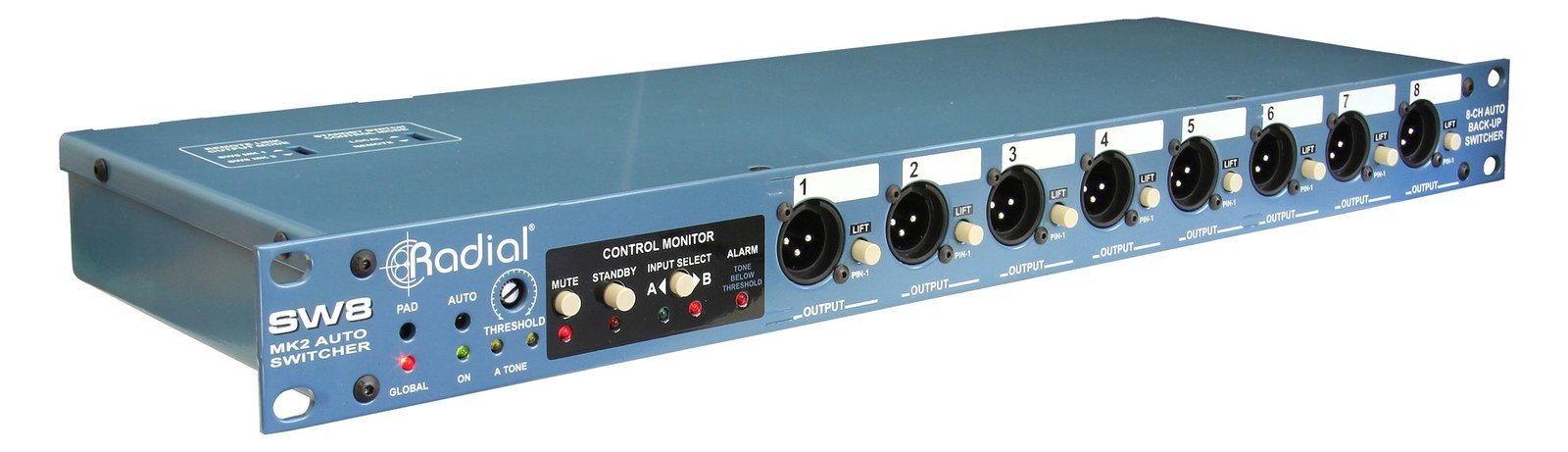
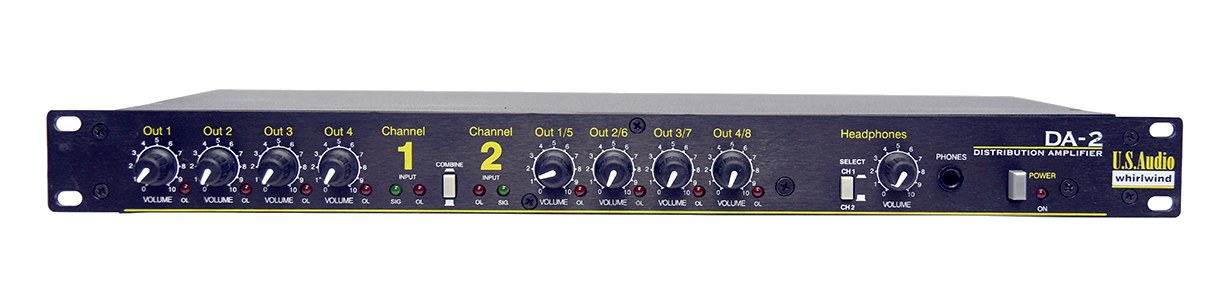
Manufacturer product photography — the drawn faceplate above stays true to panel layout; these show the hardware itself.
About the Radial JS3
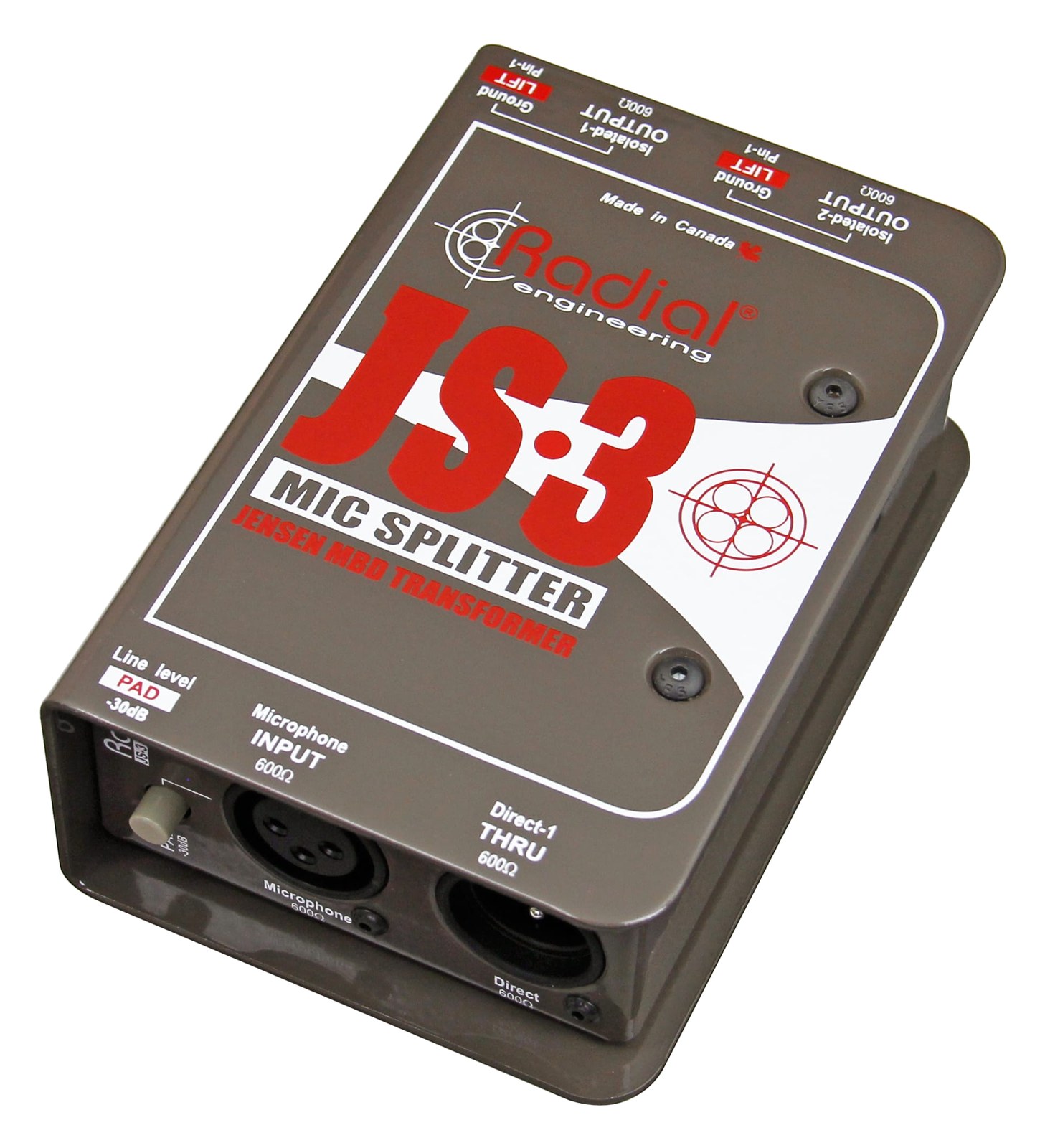
The Radial JS3 is a premium single-channel mic splitter with Jensen transformer isolationA magnetic coupling that passes audio between two windings with no wire contact — isolates splits and kills ground-loop hum, no power needed. that cleanly splits one microphone signal to three destinations without ground loopsHum from gear seeing two ground paths at slightly different voltage — the classic buzz when two racks share audio and power. or signal degradation. Use it to feed a mic signal simultaneously to FOHFront Of House — the main mix the audience hears, and the console position out in the room where it gets mixed., monitors, and a recording rig. The passive design with transformer isolation is the gold standard for preventing hum and buzz between separate audio systems.
The JS3 is a single-channel passive mic splitter that takes one microphone input and feeds it cleanly to three destinations simultaneously — one direct output and two transformer-isolatedA magnetic coupling that passes audio between two windings with no wire contact — isolates splits and kills ground-loop hum, no power needed. outputs. In a live rig that requires a single source to reach FOHFront Of House — the main mix the audience hears, and the console position out in the room where it gets mixed., a monitor console, and a recording or broadcast feed at the same time, this is exactly the device that sits in the chain and keeps those three worlds from interfering with each other. The Jensen transformers doing the isolation work are widely regarded as the benchmark for this application, which is why the JS3 appears on professional touring rigs rather than just budget builds.
Passive operation means zero power draw and no wall-wart to forget — that matters at load-in when you're tracing a ground hum at 30 minutes to doors. The Jensen-isolated outputs break the ground path between consoles, which is where hum and buzz between separate systems almost always originates. The direct output passes the signal without isolation and should go to whichever console holds phantom powerThe +48 V a console sends up the mic cable to power condenser mics and active DI boxes — invisible to gear that doesn’t need it. for the mic; the isolated outputs can accept phantom from their respective consoles independently without conflict. At 1.5 kg and 150 mm deep, it's compact enough to surface-mount or fit in a shallow utility drawer, though it is rackmountable despite having no rack-unit height of its own.
If you're splitting a single mic to two or more consoles on the same show — any combination of FOHFront Of House — the main mix the audience hears, and the console position out in the room where it gets mixed., monitors, and recording — the JS3 earns its place immediately. Where it doesn't make sense is if you need to split multiple channels: one JS3 per channel adds up fast in cost and space, and a purpose-built multi-channel split snakeA multicore cable bundling many channels into one stage-to-console run. A sub-snake collects one corner of the stage into a drop box. will be a more practical answer once you're past two or three sources. It's also overkill if all destinations are on a single console or a single gainHow much the preamp amplifies the incoming signal. Too low and you’re hunting through hiss; too high and peaks clip.-sharing digital network where splitting is handled internally.
In the rack
- Always send the direct (non-isolated) output to the console that supplies phantom powerThe +48 V a console sends up the mic cable to power condenser mics and active DI boxes — invisible to gear that doesn’t need it. for the mic — this keeps the phantom path clean and unbroken.
- Label which output goes where with colored heat-shrink or flagging tape on the XLRThe standard 3-pin locking connector for mics and balanced line signals — pin 1 is the shield, pins 2 and 3 carry the balanced pair. connectors before the gig; under stage lighting, all three outputs look identical.
- If a downstream console is also sending phantomThe +48 V a console sends up the mic cable to power condenser mics and active DI boxes — invisible to gear that doesn’t need it. on an isolated output, verify the JS3's Jensen transformersA magnetic coupling that passes audio between two windings with no wire contact — isolates splits and kills ground-loop hum, no power needed. block it from reaching the other consoles — they do, but it's worth confirming with a quick continuity check the first time you use an unfamiliar rental unit.
- Surface-mount or velcro the JS3 near the mic's first point of entry into the rack system rather than burying it mid-rack — shorter cable runs to the split point reduce the opportunity for noise pickup before isolation happens.
3-way mic splitter, passive with Jensen transformer isolationA magnetic coupling that passes audio between two windings with no wire contact — isolates splits and kills ground-loop hum, no power needed..
I/O Ports (4)
| Port | Connector | Direction | Signal | Channels |
|---|---|---|---|---|
| Input (XLR) | XLR FEMALE | input | analog audio | — |
| Direct Out (XLR) | XLR MALE | output | analog audio | — |
| Isolated Out 1 (XLR) | XLR MALE | output | analog audio | — |
| Isolated Out 2 (XLR) | XLR MALE | output | analog audio | — |
Deciding between two?
Rack space, watts, weight and every connector, side by side.
Related gear
Related articles
Guides from our library that cover planning around splitter gear.
A walking tour of the signal path from microphone to in-ear monitor, with what every box in the rack actually does to the audio along the way.
A plain-English guide to writing the input list, stage plot, and patch sheet that house engineers want — without the jargon, with examples, and with a free way to generate one.
How to split mic signals between FOH and your IEM rack: transformer-isolated splitters, phantom power rules, and where to place the split in the chain.