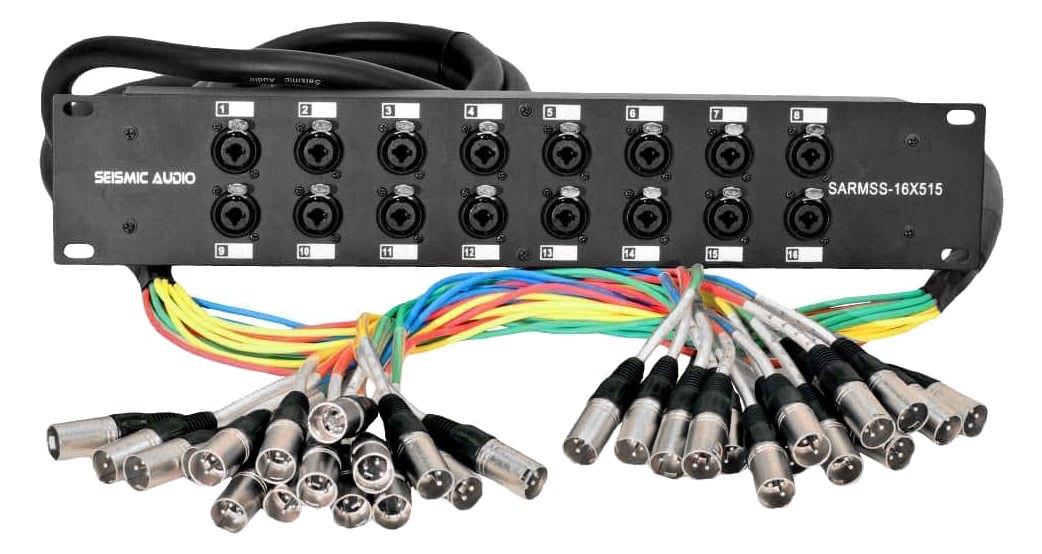
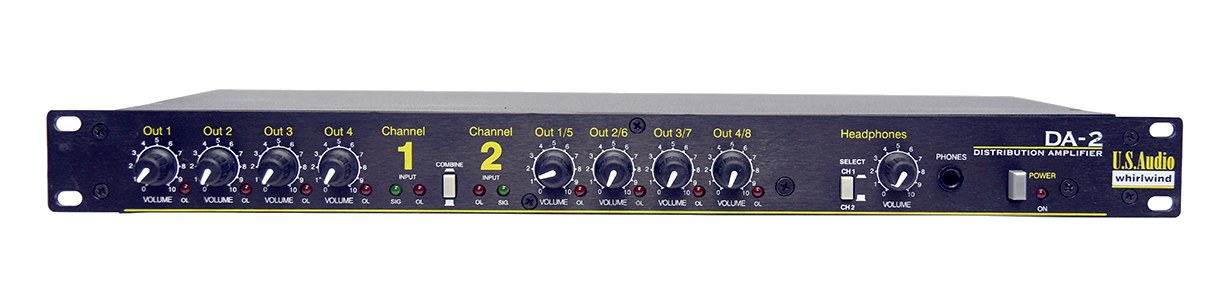
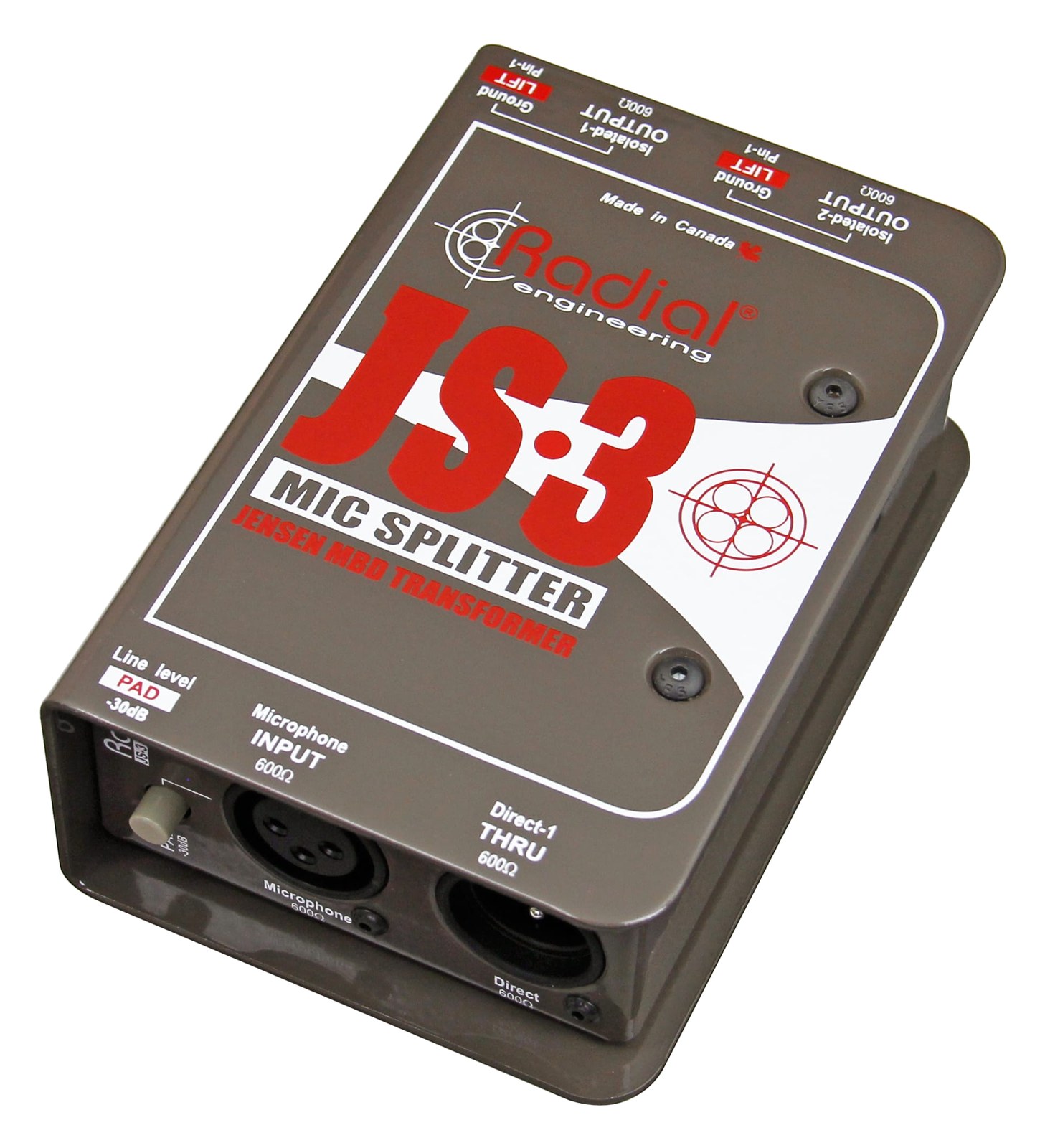
Sixteen channels of transformer-isolated splitting in a 3U chassis — enough to fan a full drum kit + backline into a separate monitor world without dropping back to a stage box. Same isolation tradeoffs as the 8-channel sibling: solid ground-loop immunity, but transformer fidelity is a step below the boutique offerings.
~$599Use retailer rows for current price and stock
01 · What it does—and what that changes in your rig.
Product overview
Start with the payoff, then work through how it functions, where it fits, and the details that change a real build.
The payoff
Splitter decisions, organized around the whole rig.
The SA-RMSS-16 is a passive, transformer-isolatedA magnetic coupling that passes audio between two windings with no wire contact — isolates splits and kills ground-loop hum, no power needed. mic splitter that takes 16 mic-levelThe tiny signal straight out of a microphone — roughly a thousandth of line level. It needs a preamp before anything else touches it. inputs and fans each one into a direct output and a transformer-isolated output — meaning one mic feed the FOHFront Of House — the main mix the audience hears, and the console position out in the room where it gets mixed. console while a fully decoupled signal heads to the monitor worldThe side-stage domain of the monitor engineer — console, IEM racks, and everything feeding the band’s ears instead of the audience., or your IEMIn-Ear Monitor — earpieces that replace floor wedges, feeding each player their own mix. The reason this whole rack exists. rack, without either engineer touching the other's gainHow much the preamp amplifies the incoming signal. Too low and you’re hunting through hiss; too high and peaks clip. structure. At $599 for 16 channels of transformer isolation in a 3UThe standard slice of rack height: 1U = 1.75″. A 3U box takes three slices; half-rack gear pairs two units side by side in one. chassis, it occupies a real and useful price point: above the Y-cable workarounds that haunt smaller productions, well below the Radial or Whirlwind transformer rigs that touring engineers carry on arena shows. This is the box that makes a mid-size stage actually work as two independent signal domains.
Documented outputs
3232 destination connections
Documented inputs
16Based on documented inputs
Rack space
3UBuilder checks available rail space
Seismic Audio product panel3U · 0W
Function
How it works in the path
Passive operation means zero power draw and nothing to fail electronically at load-in — you will never chase a splitter power supply at 2pm. The transformer isolationA magnetic coupling that passes audio between two windings with no wire contact — isolates splits and kills ground-loop hum, no power needed. on each isolated output breaks the ground path between consoles, which is the practical weapon against the ground loopsHum from gear seeing two ground paths at slightly different voltage — the classic buzz when two racks share audio and power. that appear whenever two separate mixing positions share mics across a long stage run. The direct outputs pass signal without a transformer, so FOHFront Of House — the main mix the audience hears, and the console position out in the room where it gets mixed. typically gets those while monitors take the isolated side, preserving the cleanest possible path to the house. At 5.4 kg and 180 mm deep, it fits a standard shallow rack without complaint, and 3UThe standard slice of rack height: 1U = 1.75″. A 3U box takes three slices; half-rack gear pairs two units side by side in one. means it anchors the rack without eating all your real estate.
Best fit
Where it earns its place in the rack
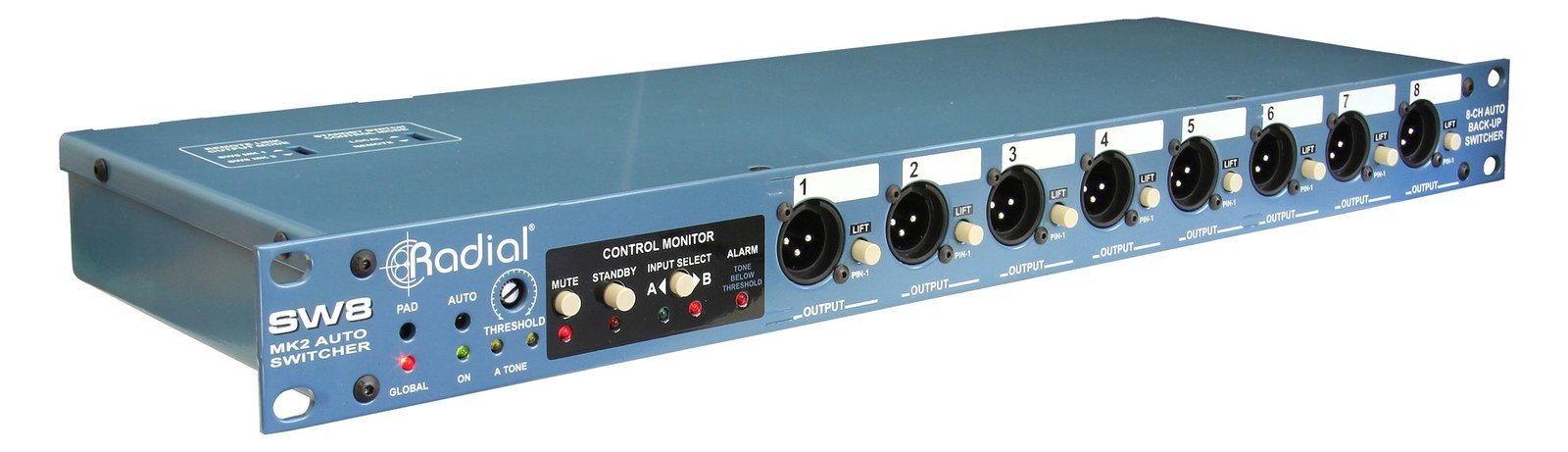
This unit earns its place in a dedicated monitor rack or a combined IEMIn-Ear Monitor — earpieces that replace floor wedges, feeding each player their own mix. The reason this whole rack exists./playback rig on any show where both FOHFront Of House — the main mix the audience hears, and the console position out in the room where it gets mixed. and monitors need independent mic access across a full backlineThe band’s on-stage instrument gear — amps, drums, keys. What a venue or festival sometimes supplies so you can travel light. — drum kit, keys, multiple guitars, the whole spread. If you are running eight channels or fewer, the 8-channel sibling saves rack space and money. If your production demands the transformerA magnetic coupling that passes audio between two windings with no wire contact — isolates splits and kills ground-loop hum, no power needed. fidelity that studio-grade touring splitters provide, or if you need a third output for broadcast, look at Radial's SW8 or Whirlwind's E series — you will pay significantly more, but the transformer specs are demonstrably tighter. For club, theater, and regional touring budgets where solid ground-loop immunity matters more than transformer pedigree, the SA-RMSS-16 is a straightforward answer.
In the rack
Details worth deciding before load-in.
Route the direct outputs to FOHFront Of House — the main mix the audience hears, and the console position out in the room where it gets mixed. and the isolated outputs to your monitor position — this keeps the transformerless path (lowest insertion loss) on the console that drives the house, where any subtle coloration is more audible.
Label both the input and both output rows with the same channel numbering before the first show; with 48 XLRThe standard 3-pin locking connector for mics and balanced line signals — pin 1 is the shield, pins 2 and 3 carry the balanced pair. connectors on one box, an unlabeled panel becomes a troubleshooting nightmare in a dark wing.
Because it draws no power, it can live on a non-switched circuit or even a separate power strip without affecting your rack's load calculations — just don't let it share a cable run with anything generating RFRadio Frequency — the wireless part of wireless. RF planning is why big rigs scan, coordinate, and combine antennas instead of hoping. interference directly behind it.
Verify ground continuity on your stage boxThe I/O endpoint on stage: mics plug in there and one digital line (AES50, Dante) carries everything to the console. The snake, digitized. before relying on the isolated outputs to solve a hum problem — a broken shield elsewhere in the chain will defeat what the transformersA magnetic coupling that passes audio between two windings with no wire contact — isolates splits and kills ground-loop hum, no power needed. accomplish inside this box.
02 · Know the whole path before you buy.
Signal path
Learn the route as a block diagram: source, product function, transport, and destination. Select any block to see what enters, what changes, and what leaves.
Interactive block diagramAuto-looping · hover, focus, or tap to hold a stage
Port-type signalProduct functionSystem boundary
Follow one signal from source to destination
Each block answers the same three questions: what arrives, what changes here, and what leaves.
01 · Source · selected
XLR female
XLR male
01 · Source
16 documented inputs
XLR female
Arrives as
16 documented inputs
Connector
XLR female
Signal
analog audio
03 · What this product asks of the rest of the system.
Compatibility
Treat connector names as the start of the check—not the answer. These are the boundaries that determine a complete working path.
Best fit · Splitter
Use it when 3U and 180 mm of depth fit the case.
Plan the companion path
Complete the path with upstream and downstream gear that matches connector, direction, signal type, protocol, and wiring standard.
Connector boundary
Documented connectors: XLR female, XLR male. Match connector, direction, and signal type—not shape alone.
04 · Every connector, grouped by job.
I/O ports
Switch the product view and the documented port inventory updates with it—hardware and data stay side by side.
Every connector, grouped by job.
Switch panels to keep the hardware view and the documented port list in sync.
Front panelRear panel
All documented ports for Seismic Audio SA-RMSS-16 Mic Splitter
Port
Panel
Connector
Direction
Signal
Channels
Input 1 (XLR)
front
XLR female
input
analog audio
—
Input 2 (XLR)
front
XLR female
input
analog audio
—
Input 3 (XLR)
front
XLR female
input
analog audio
—
Input 4 (XLR)
front
XLR female
input
analog audio
—
Input 5 (XLR)
front
XLR female
input
analog audio
—
Input 6 (XLR)
front
XLR female
input
analog audio
—
Input 7 (XLR)
front
XLR female
input
analog audio
—
Input 8 (XLR)
front
XLR female
input
analog audio
—
Input 9 (XLR)
front
XLR female
input
analog audio
—
Input 10 (XLR)
front
XLR female
input
analog audio
—
Input 11 (XLR)
front
XLR female
input
analog audio
—
Input 12 (XLR)
front
XLR female
input
analog audio
—
Input 13 (XLR)
front
XLR female
input
analog audio
—
Input 14 (XLR)
front
XLR female
input
analog audio
—
Input 15 (XLR)
front
XLR female
input
analog audio
—
Input 16 (XLR)
front
XLR female
input
analog audio
—
Direct Out 1 (XLR)
rear
XLR male
output
analog audio
—
Direct Out 2 (XLR)
rear
XLR male
output
analog audio
—
Direct Out 3 (XLR)
rear
XLR male
output
analog audio
—
Direct Out 4 (XLR)
rear
XLR male
output
analog audio
—
Direct Out 5 (XLR)
rear
XLR male
output
analog audio
—
Direct Out 6 (XLR)
rear
XLR male
output
analog audio
—
Direct Out 7 (XLR)
rear
XLR male
output
analog audio
—
Direct Out 8 (XLR)
rear
XLR male
output
analog audio
—
Direct Out 9 (XLR)
rear
XLR male
output
analog audio
—
Direct Out 10 (XLR)
rear
XLR male
output
analog audio
—
Direct Out 11 (XLR)
rear
XLR male
output
analog audio
—
Direct Out 12 (XLR)
rear
XLR male
output
analog audio
—
Direct Out 13 (XLR)
rear
XLR male
output
analog audio
—
Direct Out 14 (XLR)
rear
XLR male
output
analog audio
—
Direct Out 15 (XLR)
rear
XLR male
output
analog audio
—
Direct Out 16 (XLR)
rear
XLR male
output
analog audio
—
Isolated Out 1 (XLR)
rear
XLR male
output
analog audio
—
Isolated Out 2 (XLR)
rear
XLR male
output
analog audio
—
Isolated Out 3 (XLR)
rear
XLR male
output
analog audio
—
Isolated Out 4 (XLR)
rear
XLR male
output
analog audio
—
Isolated Out 5 (XLR)
rear
XLR male
output
analog audio
—
Isolated Out 6 (XLR)
rear
XLR male
output
analog audio
—
Isolated Out 7 (XLR)
rear
XLR male
output
analog audio
—
Isolated Out 8 (XLR)
rear
XLR male
output
analog audio
—
Isolated Out 9 (XLR)
rear
XLR male
output
analog audio
—
Isolated Out 10 (XLR)
rear
XLR male
output
analog audio
—
Isolated Out 11 (XLR)
rear
XLR male
output
analog audio
—
Isolated Out 12 (XLR)
rear
XLR male
output
analog audio
—
Isolated Out 13 (XLR)
rear
XLR male
output
analog audio
—
Isolated Out 14 (XLR)
rear
XLR male
output
analog audio
—
Isolated Out 15 (XLR)
rear
XLR male
output
analog audio
—
Isolated Out 16 (XLR)
rear
XLR male
output
analog audio
—
Showing 48 of 48 documented physical ports. Scroll to review the remaining rows.
05 · Compare the decision, not just the price.
Alternatives
The rows are organized around fit, power, I/O, and system role so a cheaper unit cannot hide a more expensive workflow.
SA-RMSS-16Sixteen channels of transformer-isolated splitting in a 3U chassis — enough to fan a full drum kit + backline into a separate monitor world without dropping back to a stage box. Same isolation tradeoffs as the 8-channel sibling: solid ground-loop immunity, but transformer fidelity is a step below the boutique offerings.View gear →
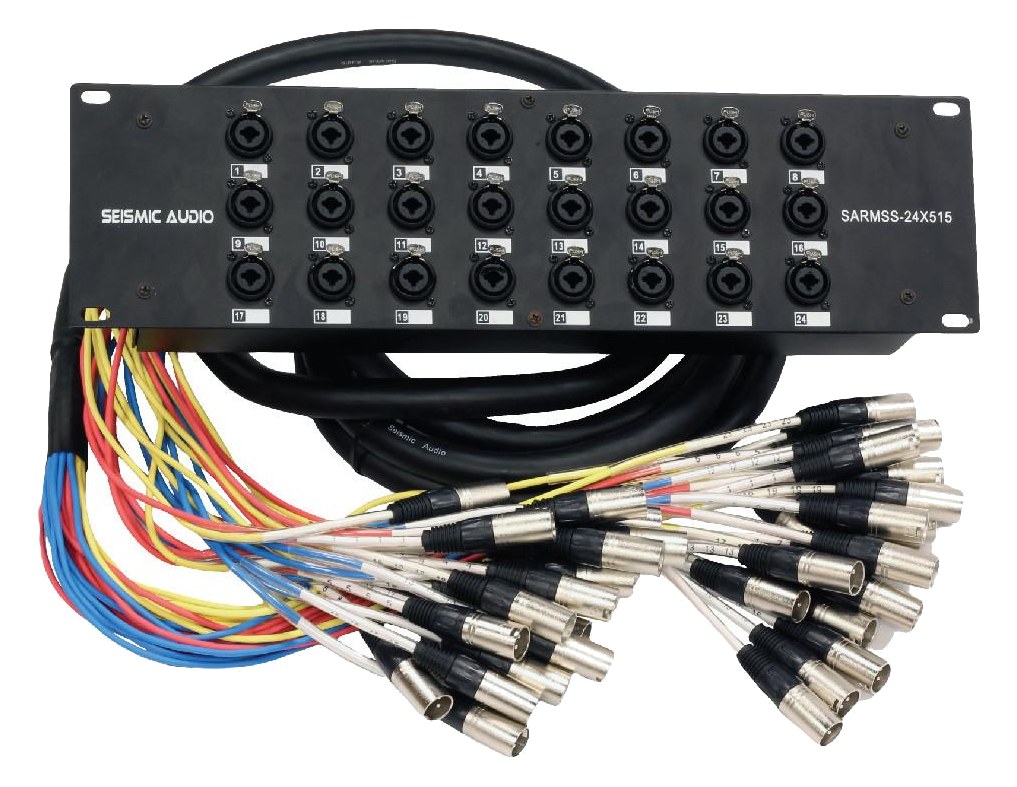
SA-RMSS-24Twenty-four channels of transformer-isolated splitting in a 4U chassis. Lands in the gap between the 16-ch SA-RMSS-16 (full band) and the 32-ch SA-RMSS-32 (festival-grade headroom): typical use is a six- or seven-piece band with horns or a multi-keys rig where 16 channels would require the engineer to make hard choices about what gets a monitor split.View gear →
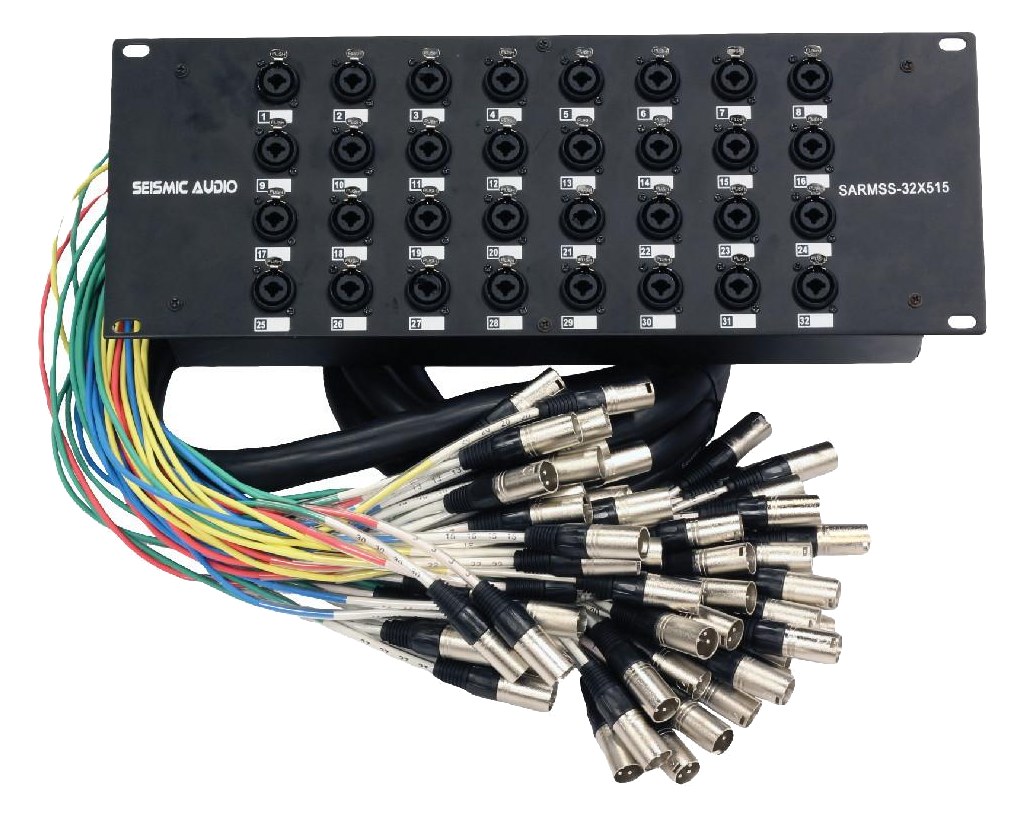
SA-RMSS-32Thirty-two channels of transformer-isolated splitting in a 5U chassis. The "no compromises" rig pick — every drum mic, every backline DI, every vocal mic has its own direct + iso trunk to FOH and a recording rig, with margin left over. Heavy enough that you only carry it when the rig calls for it.View gear →
SA-RMSS-8A budget-tier 8-channel mic splitter with transformer isolation on the secondary outputs, providing ground-loop immunity between the FOH console (direct out) and the monitor or recording rig (isolated out). Specs are not in the same league as the Jensen-equipped premium offerings, but for project-tier touring and rehearsal rigs the SA-RMSS-8 lands the basics at a fraction of the price.View gear →
Placement is only the start. Builder checks space · depth · weight, power headroom, dependencies, and compatible signal paths around this exact catalog item.Open in Builder