
Seismic Audio SA-RMSS-24 Mic Splitter
Seismic Audio·Model SA-RMSS-24·seismic-sa-rmss-24
Photos
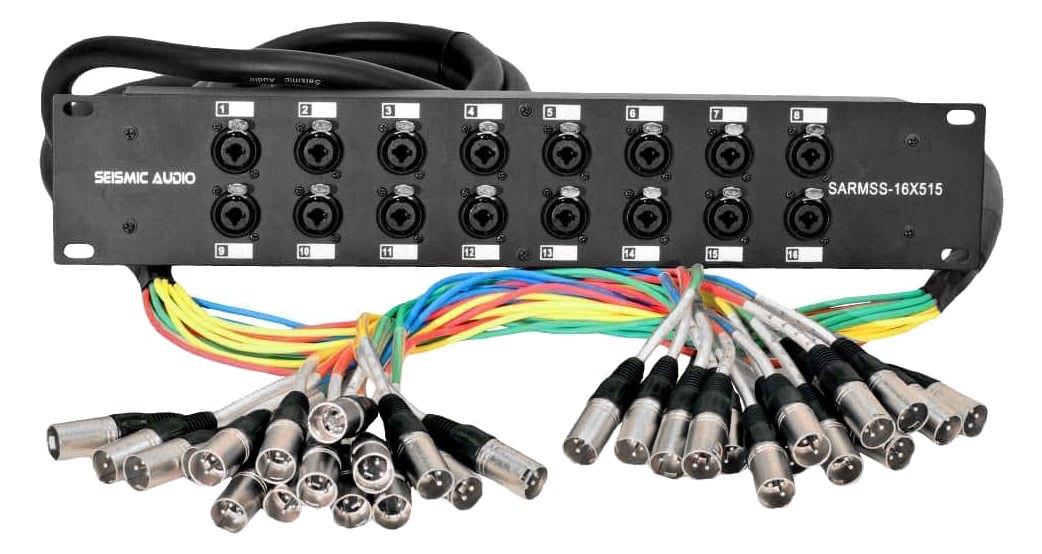
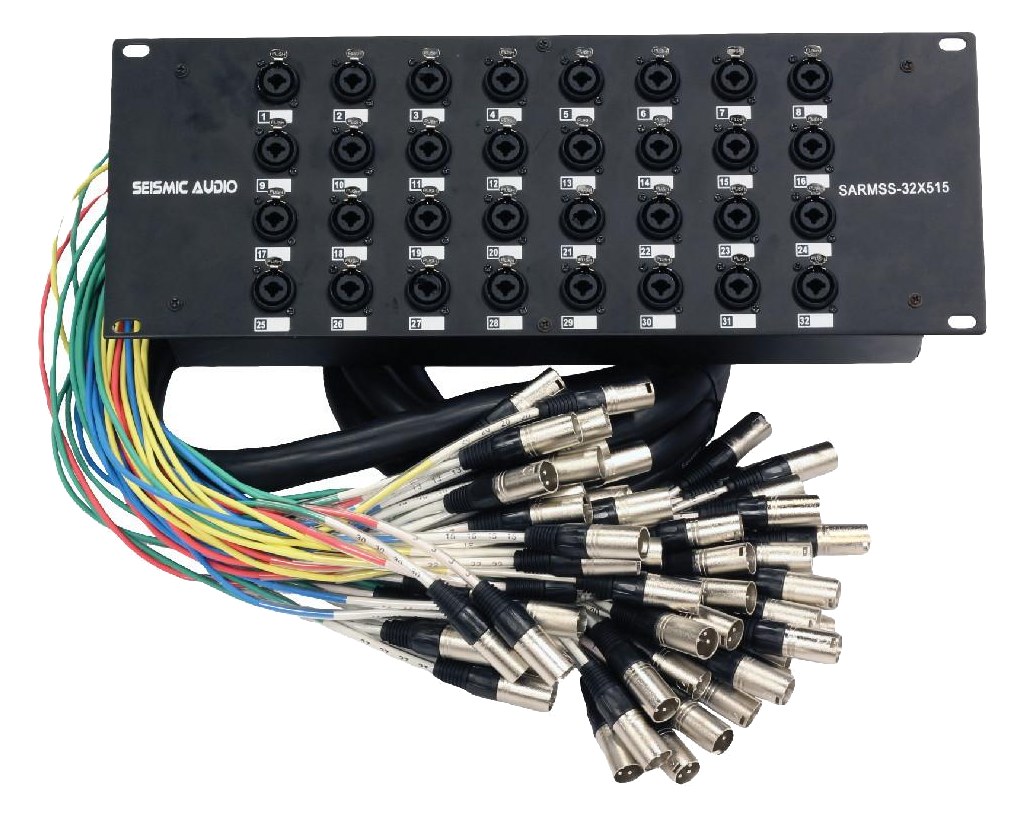
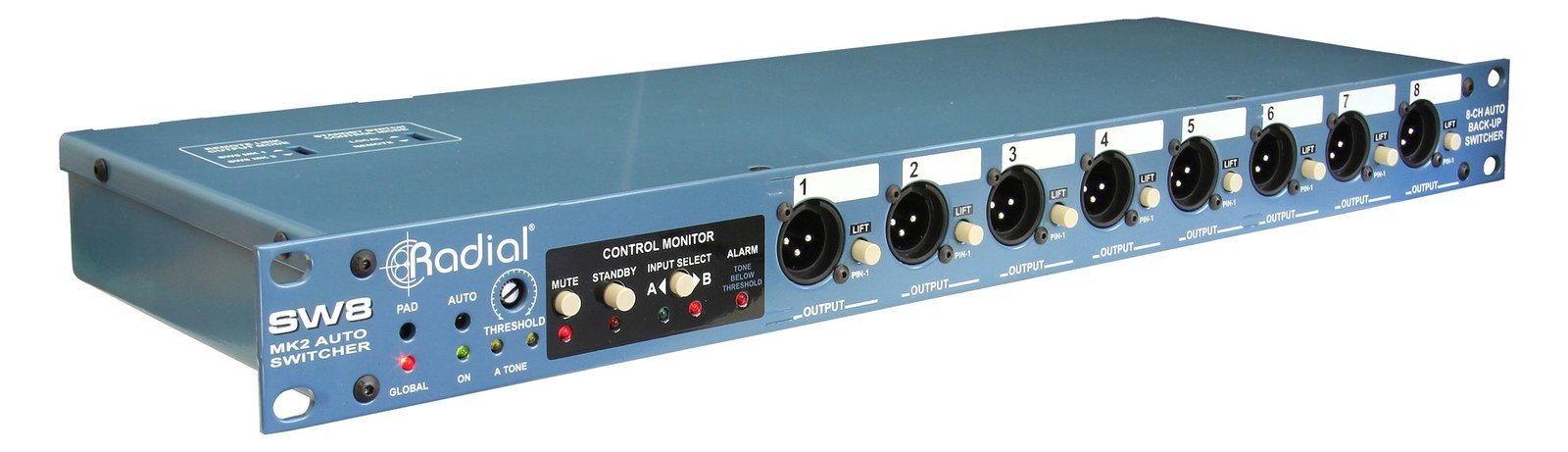
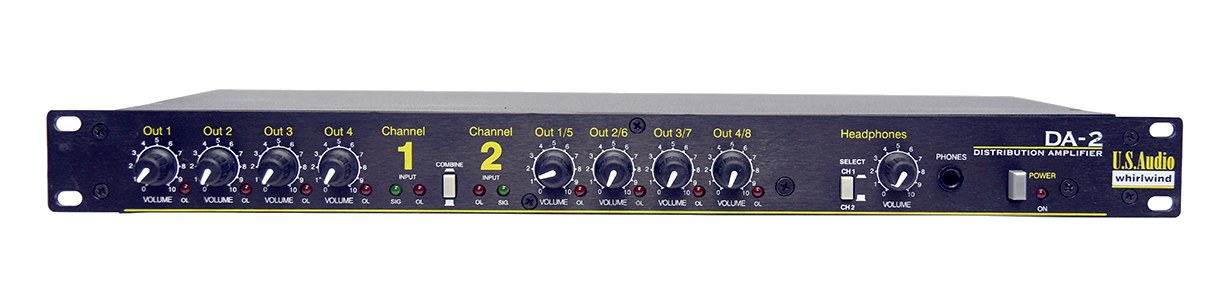
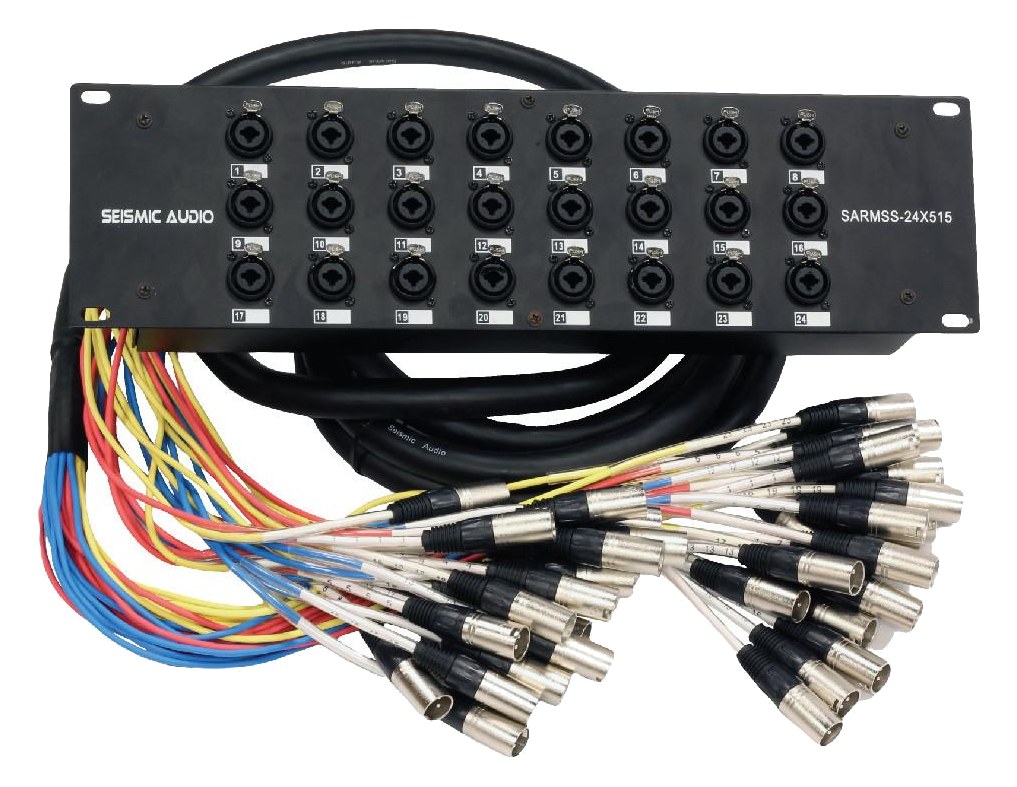
Manufacturer product photography — the drawn faceplate above stays true to panel layout; these show the hardware itself.
About the Seismic Audio SA-RMSS-24
Twenty-four channels of transformer-isolatedA magnetic coupling that passes audio between two windings with no wire contact — isolates splits and kills ground-loop hum, no power needed. splitting in a 4UThe standard slice of rack height: 1U = 1.75″. A 3U box takes three slices; half-rack gear pairs two units side by side in one. chassis. Lands in the gap between the 16-ch SA-RMSS-16 (full band) and the 32-ch SA-RMSS-32 (festival-grade headroomThe margin between your normal level and where things clip — headroom is what absorbs the snare hit you didn’t see coming.): typical use is a six- or seven-piece band with horns or a multi-keys rig where 16 channels would require the engineer to make hard choices about what gets a monitor splitFeeding one mic to two consoles at once (FOH + monitors, or a record rig) through a splitter — both get the identical source..
The SA-RMSS-24 sits at the practical center of Seismic Audio's rack-mount splitter line — 24 channels of transformer-isolatedA magnetic coupling that passes audio between two windings with no wire contact — isolates splits and kills ground-loop hum, no power needed. splitting in a 4UThe standard slice of rack height: 1U = 1.75″. A 3U box takes three slices; half-rack gear pairs two units side by side in one. chassis for $849. Its job is straightforward and non-negotiable: take every mic and line input from the stage and give FOHFront Of House — the main mix the audience hears, and the console position out in the room where it gets mixed. and monitors their own independent, isolated feed of each signal. The transformer isolation is what separates this from a passive Y-split — each isolated output breaks the ground path between consoles, which means a ground loopHum from gear seeing two ground paths at slightly different voltage — the classic buzz when two racks share audio and power. on the FOH side stays on the FOH side and doesn't crawl into the monitor worldThe side-stage domain of the monitor engineer — console, IEM racks, and everything feeding the band’s ears instead of the audience..
In practice, 24 channels lands you comfortably in a six- or seven-piece band with horns, a multi-keys rig with several sources, or any setup where a 16-channel unit would force you to choose which inputs skip the split. The chassis draws zero power, so it adds nothing to your power budget and can sit on a non-switched outlet without concern. At 7.7 kg and 200 mm deep it's dense but not unreasonable — a standard 12U shelfed rack handles it without drama. The direct outputs pass signal without touching the transformersA magnetic coupling that passes audio between two windings with no wire contact — isolates splits and kills ground-loop hum, no power needed., so one console sees the unaltered feed while the isolated outputs serve the other.
This unit is the right call for a monitor engineer who has outgrown 16 channels but doesn't need the 32-channel headroomThe margin between your normal level and where things clip — headroom is what absorbs the snare hit you didn’t see coming. — or the freight weight — of a festival-grade box. If your input count reliably sits between 17 and 24, this is the cleanest fit. If you're regularly at 25 or above, step up; half-measures with splitter capacity tend to surface at the worst moment. Engineers running fully digital splits via a stageboxThe I/O endpoint on stage: mics plug in there and one digital line (AES50, Dante) carries everything to the console. The snake, digitized. who only occasionally go analog should think carefully about whether a passive transformerA magnetic coupling that passes audio between two windings with no wire contact — isolates splits and kills ground-loop hum, no power needed. splitter at any channel count is the right tool, or whether a smaller utility splitter handles the edge cases better.
In the rack
- Route direct outputs to whichever console holds phantom powerThe +48 V a console sends up the mic cable to power condenser mics and active DI boxes — invisible to gear that doesn’t need it. responsibility for the stage — typically FOHFront Of House — the main mix the audience hears, and the console position out in the room where it gets mixed. — since phantom passes through the direct path and not the isolated outputs on transformerA magnetic coupling that passes audio between two windings with no wire contact — isolates splits and kills ground-loop hum, no power needed.-split designs.
- Label both the input row and the two output rows with the same channel numbering before the gig; 72 XLRThe standard 3-pin locking connector for mics and balanced line signals — pin 1 is the shield, pins 2 and 3 carry the balanced pair. connectors on one faceplate will cost you real time at load-in if the labeling isn't done at home.
- At 4UThe standard slice of rack height: 1U = 1.75″. A 3U box takes three slices; half-rack gear pairs two units side by side in one. and 7.7 kg, place this toward the bottom third of the rack to keep the center of gravity low, especially in a shelfed touring rack that gets tilted on dollies.
- If you're splitting to a broadcast or recording truck, use the isolated outputs for that feed — the transformerA magnetic coupling that passes audio between two windings with no wire contact — isolates splits and kills ground-loop hum, no power needed. barrier protects your stage signal from whatever ground reference the truck brings to the party.
24-channel transformer-isolatedA magnetic coupling that passes audio between two windings with no wire contact — isolates splits and kills ground-loop hum, no power needed. splitter — six-piece+ rigs.
I/O Ports (72)
| Port | Connector | Direction | Signal | Channels |
|---|---|---|---|---|
| Input 1 (XLR) | XLR FEMALE | input | analog audio | — |
| Input 2 (XLR) | XLR FEMALE | input | analog audio | — |
| Input 3 (XLR) | XLR FEMALE | input | analog audio | — |
| Input 4 (XLR) | XLR FEMALE | input | analog audio | — |
| Input 5 (XLR) | XLR FEMALE | input | analog audio | — |
| Input 6 (XLR) | XLR FEMALE | input | analog audio | — |
| Input 7 (XLR) | XLR FEMALE | input | analog audio | — |
| Input 8 (XLR) | XLR FEMALE | input | analog audio | — |
| Input 9 (XLR) | XLR FEMALE | input | analog audio | — |
| Input 10 (XLR) | XLR FEMALE | input | analog audio | — |
| Input 11 (XLR) | XLR FEMALE | input | analog audio | — |
| Input 12 (XLR) | XLR FEMALE | input | analog audio | — |
| Input 13 (XLR) | XLR FEMALE | input | analog audio | — |
| Input 14 (XLR) | XLR FEMALE | input | analog audio | — |
| Input 15 (XLR) | XLR FEMALE | input | analog audio | — |
| Input 16 (XLR) | XLR FEMALE | input | analog audio | — |
| Input 17 (XLR) | XLR FEMALE | input | analog audio | — |
| Input 18 (XLR) | XLR FEMALE | input | analog audio | — |
| Input 19 (XLR) | XLR FEMALE | input | analog audio | — |
| Input 20 (XLR) | XLR FEMALE | input | analog audio | — |
| Input 21 (XLR) | XLR FEMALE | input | analog audio | — |
| Input 22 (XLR) | XLR FEMALE | input | analog audio | — |
| Input 23 (XLR) | XLR FEMALE | input | analog audio | — |
| Input 24 (XLR) | XLR FEMALE | input | analog audio | — |
| Direct Out 1 (XLR) | XLR MALE | output | analog audio | — |
| Direct Out 2 (XLR) | XLR MALE | output | analog audio | — |
| Direct Out 3 (XLR) | XLR MALE | output | analog audio | — |
| Direct Out 4 (XLR) | XLR MALE | output | analog audio | — |
| Direct Out 5 (XLR) | XLR MALE | output | analog audio | — |
| Direct Out 6 (XLR) | XLR MALE | output | analog audio | — |
| Direct Out 7 (XLR) | XLR MALE | output | analog audio | — |
| Direct Out 8 (XLR) | XLR MALE | output | analog audio | — |
| Direct Out 9 (XLR) | XLR MALE | output | analog audio | — |
| Direct Out 10 (XLR) | XLR MALE | output | analog audio | — |
| Direct Out 11 (XLR) | XLR MALE | output | analog audio | — |
| Direct Out 12 (XLR) | XLR MALE | output | analog audio | — |
| Direct Out 13 (XLR) | XLR MALE | output | analog audio | — |
| Direct Out 14 (XLR) | XLR MALE | output | analog audio | — |
| Direct Out 15 (XLR) | XLR MALE | output | analog audio | — |
| Direct Out 16 (XLR) | XLR MALE | output | analog audio | — |
| Direct Out 17 (XLR) | XLR MALE | output | analog audio | — |
| Direct Out 18 (XLR) | XLR MALE | output | analog audio | — |
| Direct Out 19 (XLR) | XLR MALE | output | analog audio | — |
| Direct Out 20 (XLR) | XLR MALE | output | analog audio | — |
| Direct Out 21 (XLR) | XLR MALE | output | analog audio | — |
| Direct Out 22 (XLR) | XLR MALE | output | analog audio | — |
| Direct Out 23 (XLR) | XLR MALE | output | analog audio | — |
| Direct Out 24 (XLR) | XLR MALE | output | analog audio | — |
| Isolated Out 1 (XLR) | XLR MALE | output | analog audio | — |
| Isolated Out 2 (XLR) | XLR MALE | output | analog audio | — |
| Isolated Out 3 (XLR) | XLR MALE | output | analog audio | — |
| Isolated Out 4 (XLR) | XLR MALE | output | analog audio | — |
| Isolated Out 5 (XLR) | XLR MALE | output | analog audio | — |
| Isolated Out 6 (XLR) | XLR MALE | output | analog audio | — |
| Isolated Out 7 (XLR) | XLR MALE | output | analog audio | — |
| Isolated Out 8 (XLR) | XLR MALE | output | analog audio | — |
| Isolated Out 9 (XLR) | XLR MALE | output | analog audio | — |
| Isolated Out 10 (XLR) | XLR MALE | output | analog audio | — |
| Isolated Out 11 (XLR) | XLR MALE | output | analog audio | — |
| Isolated Out 12 (XLR) | XLR MALE | output | analog audio | — |
| Isolated Out 13 (XLR) | XLR MALE | output | analog audio | — |
| Isolated Out 14 (XLR) | XLR MALE | output | analog audio | — |
| Isolated Out 15 (XLR) | XLR MALE | output | analog audio | — |
| Isolated Out 16 (XLR) | XLR MALE | output | analog audio | — |
| Isolated Out 17 (XLR) | XLR MALE | output | analog audio | — |
| Isolated Out 18 (XLR) | XLR MALE | output | analog audio | — |
| Isolated Out 19 (XLR) | XLR MALE | output | analog audio | — |
| Isolated Out 20 (XLR) | XLR MALE | output | analog audio | — |
| Isolated Out 21 (XLR) | XLR MALE | output | analog audio | — |
| Isolated Out 22 (XLR) | XLR MALE | output | analog audio | — |
| Isolated Out 23 (XLR) | XLR MALE | output | analog audio | — |
| Isolated Out 24 (XLR) | XLR MALE | output | analog audio | — |
Deciding between two?
Rack space, watts, weight and every connector, side by side.
Related gear
Community rigs using this gear (1)
Browse all rigs →Related articles
Guides from our library that cover planning around splitter gear.
A walking tour of the signal path from microphone to in-ear monitor, with what every box in the rack actually does to the audio along the way.
A plain-English guide to writing the input list, stage plot, and patch sheet that house engineers want — without the jargon, with examples, and with a free way to generate one.
How to split mic signals between FOH and your IEM rack: transformer-isolated splitters, phantom power rules, and where to place the split in the chain.