
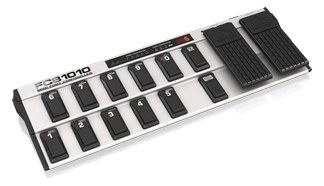
Behringer FCB1010 MIDI Foot Controller
Behringer·Model FCB1010·behringer-fcb1010
Photos
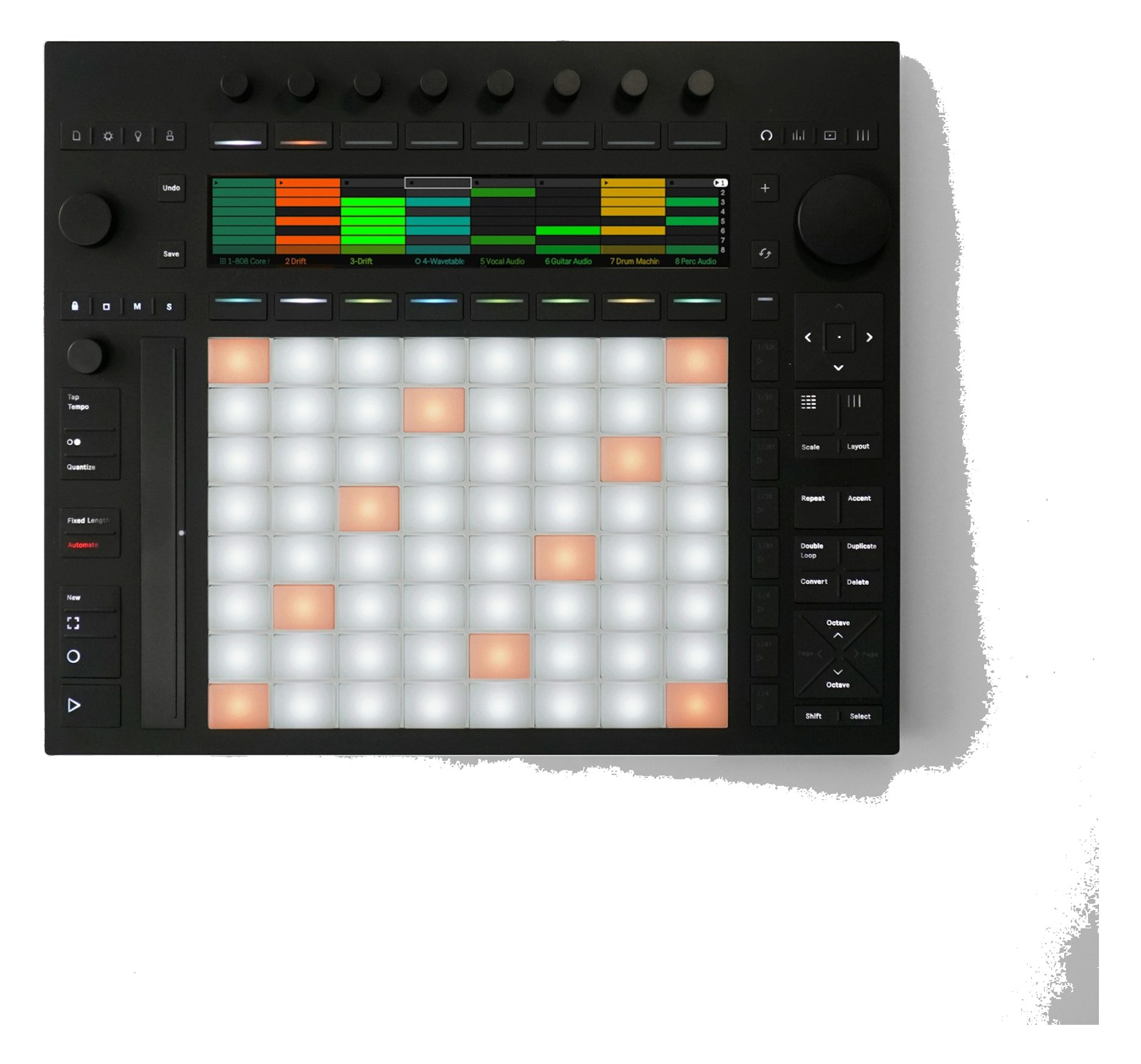
Manufacturer product photography — the drawn faceplate above stays true to panel layout; these show the hardware itself.
About the Behringer FCB1010
The Behringer FCB1010 is a full-featured MIDI foot controller at a budget price, offering ten footswitches and two expression pedals in a pedalboard-style format. It sends MIDI program changes, control changes, and note messages, making it versatile for controlling playback software, effects processors, or lighting cues from the stage floor. The two expression pedals add real-time parameter control that simpler foot controllers lack.
The FCB1010 is a floor-based MIDI foot controller — ten numbered footswitches, two expression pedals, and enough programmability to trigger program changes, control changes, and note messages across multiple MIDI channels. In a live rig context it sits on the stage floor and lets a performer or tech send commands up to the rack without touching anything by hand: switching patches on a guitar processor, cueing playback banks, toggling effects states, or even firing lighting scenes if your show controller is listening on MIDI. For the price, nothing else in this category gives you two expression pedals out of the box.
At load-in the FCB1010 connects to your rack via a single TRSTip-Ring-Sleeve — a 1/4″ jack with three contacts carrying a balanced signal or a stereo pair. A guitar plug with one extra ring.-to-MIDI-DINThe round 5-pin connector classic MIDI uses — the original way synths, pedals, and playback rigs talk to each other. cable from its quarter-inch MIDI out — make sure your receiving device has a TRS MIDI in or you have the right adapter in your kit, because it is not a standard five-pin DIN on the controller end. Programming banks can take time on the hardware itself; the unit is well-known for a somewhat tedious native editor, and most engineers invest an evening with a third-party editor app before the first show. Power draw is minimal at five watts, and at 3.7 kg it is sturdy enough for consistent nightly use without feeling delicate underfoot.
The FCB1010 earns its place in budget and mid-tier rigs where you need floor control over a rack device and do not want to spend on a proprietary controller. It is a sensible choice for a backlineThe band’s on-stage instrument gear — amps, drums, keys. What a venue or festival sometimes supplies so you can travel light. tech running patches for a guitarist's effects rack, or a keys player who needs to switch playback banks hands-free. If you need deep integration with a specific platform — Ableton, for example — confirm your MIDI routing can accommodate the FCB1010's output before committing. Players who need wireless floor control or a more streamlined programming experience should look at dedicated controllers from Line 6 or RJM, which carry significantly higher price tags but reflect that investment in usability.
In the rack
- Keep a pre-programmed backup FCB1010 in the trailer if this is your only floor controller — at $149 it is the cheapest insurance you will buy, and swapping one requires only a cable change.
- Label each footswitch with a P-touch or Dymo strip before doors open; the numbered layout is logical in rehearsal and invisible under stage lighting.
- Route its MIDI out through a MIDI thru box if you need to control more than one rack device simultaneously — the FCB1010 has a single output and does not split on its own.
- Program all show-critical patches in bank order and run a floor-to-rack MIDI monitor test at soundcheck to confirm no switched channels or missing CCs before the room fills.
MIDI foot controller with 2 expression pedals.
I/O Ports (1)
| Port | Connector | Direction | Signal | Channels |
|---|---|---|---|---|
| MIDI Out | TRS QUARTER | output | data | — |
Deciding between two?
Rack space, watts, weight and every connector, side by side.
Related gear

Related articles
Guides from our library that cover planning around midi controller gear.
How to build a live-performance playback rig that runs click + backing tracks reliably — interface sizing, routing rules, software comparison, and what to do when the laptop crashes.
How to build a fail-safe live playback rig with primary + backup laptops, an auto-switching audio interface, and a failover workflow you can actually trust on a Sunday morning.