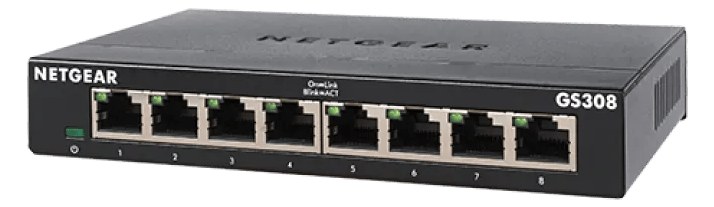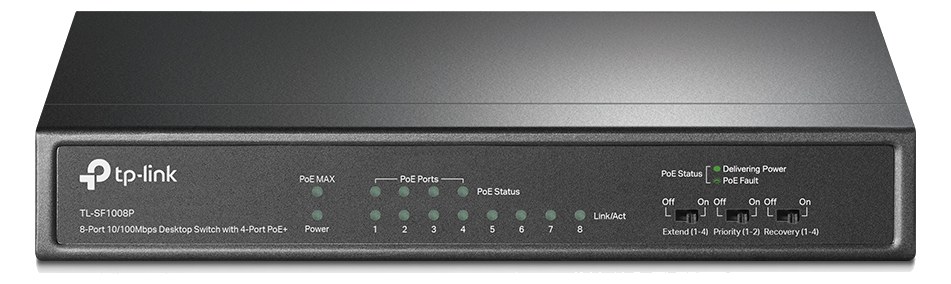

Cisco SG350-28 Managed Switch
Cisco·Model SG350-28·cisco-sg350-28
About the Cisco SG350-28
The Cisco SG350-28 is a managed gigabit switchA network switch you can configure — VLANs, QoS, IGMP — so audio traffic gets priority. Dante rigs beyond a few boxes want one. that is well-proven in DanteThe most common audio-over-network standard: dozens of channels of uncompressed digital audio down one ordinary Ethernet cable between Dante boxes. audio network deployments. Its QoSQuality of Service — switch settings that let time-critical packets (like Dante’s clock) jump the queue ahead of bulk traffic., IGMP snoopingThe switch feature (IGMP snooping) that keeps multicast audio streams from flooding every port on the network., and VLANVirtual LAN — slicing one physical switch into separate isolated networks, like keeping Dante away from lighting and guest WiFi. support let you properly prioritize audio traffic and segment your network for reliable low-latencyThe delay between sound entering and leaving a digital system. IEM rigs fight to keep the whole chain down to a few milliseconds. performance. With 28 ports including SFPA small module slot on pro switches that takes fiber-optic links — how audio networks cross long or electrically noisy cable runs. uplinks, it handles medium to large Dante networks with room to grow.
The Cisco SG350-28 is the network switch that shows up in serious touring and installation DanteThe most common audio-over-network standard: dozens of channels of uncompressed digital audio down one ordinary Ethernet cable between Dante boxes. rigs, and for good reason. It gives you 24 copper gigabit ports plus four combo SFPA small module slot on pro switches that takes fiber-optic links — how audio networks cross long or electrically noisy cable runs. uplinks in a single rack unitThe standard slice of rack height: 1U = 1.75″. A 3U box takes three slices; half-rack gear pairs two units side by side in one. — enough to connect a full IEMIn-Ear Monitor — earpieces that replace floor wedges, feeding each player their own mix. The reason this whole rack exists. rig, a Dante-networked console, stage boxesThe I/O endpoint on stage: mics plug in there and one digital line (AES50, Dante) carries everything to the console. The snake, digitized., and personal mixers without running out of ports mid-tour. This is a managed switchA network switch you can configure — VLANs, QoS, IGMP — so audio traffic gets priority. Dante rigs beyond a few boxes want one., which means it's not plug-and-play in the way a cheap unmanaged box is, but that management layer is exactly what makes it appropriate for audio work where timing and traffic priority are non-negotiable.
The specs that matter at show time are QoSQuality of Service — switch settings that let time-critical packets (like Dante’s clock) jump the queue ahead of bulk traffic., IGMP snoopingThe switch feature (IGMP snooping) that keeps multicast audio streams from flooding every port on the network., and VLANVirtual LAN — slicing one physical switch into separate isolated networks, like keeping Dante away from lighting and guest WiFi. support. QoS lets you tag and prioritize DanteThe most common audio-over-network standard: dozens of channels of uncompressed digital audio down one ordinary Ethernet cable between Dante boxes. audio packets so a burst of control traffic from a tablet or laptop doesn't eat into your audio bandwidth. IGMP snooping keeps multicastOne network stream delivered to many receivers at once — efficient for audio networks, but it needs IGMP snooping to stay polite. Dante streams from flooding every port on the switch, which matters once your device count climbs. VLANs let you separate your audio network from any shared production or venue infrastructure on the same physical switch — cleaner and more reliable than hoping nothing bleeds over. At 20 watts nominal draw and 257mm depth, it fits comfortably in a shallow rack and barely registers on your power budget.
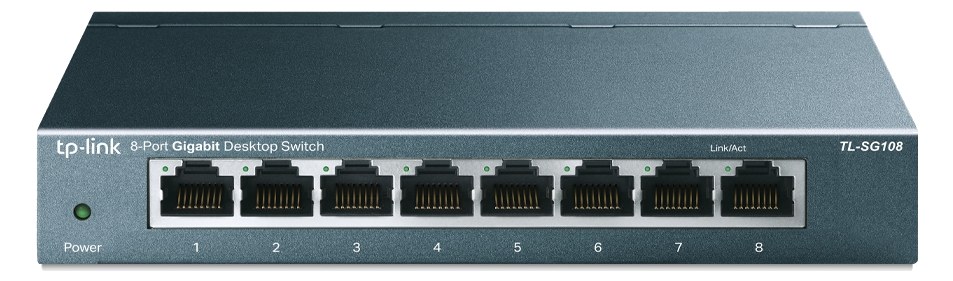
If you're running more than a handful of DanteThe most common audio-over-network standard: dozens of channels of uncompressed digital audio down one ordinary Ethernet cable between Dante boxes. devices and you want a configuration that will behave the same way at every show, this is a well-proven choice with a huge base of working templates and forum knowledge behind it. The learning curve is real — you'll need to spend time in the web UI setting up QoSQuality of Service — switch settings that let time-critical packets (like Dante’s clock) jump the queue ahead of bulk traffic. and IGMPThe switch feature (IGMP snooping) that keeps multicast audio streams from flooding every port on the network. before the first gig, not during load-in. If your rig is two or three Dante devices and you just need them to talk to each other, a properly configured smaller managed switchA network switch you can configure — VLANs, QoS, IGMP — so audio traffic gets priority. Dante rigs beyond a few boxes want one. costs less. If you're wiring a campus installation or a fixed install with more than 24 audio endpoints, look at the larger siblings in the SG350 family or step up to a stackable solution.
In the rack
- Configure QoSQuality of Service — switch settings that let time-critical packets (like Dante’s clock) jump the queue ahead of bulk traffic. and IGMP snoopingThe switch feature (IGMP snooping) that keeps multicast audio streams from flooding every port on the network. at home on your bench before it ever goes in a road case — load-in is not the time to learn the Cisco web UI.
- Use one of the four SFPA small module slot on pro switches that takes fiber-optic links — how audio networks cross long or electrically noisy cable runs. ports as your uplink to a second switch or a redundantA second copy of anything critical — supply, computer, network path — already running so one failure can’t stop the show. DanteThe most common audio-over-network standard: dozens of channels of uncompressed digital audio down one ordinary Ethernet cable between Dante boxes. network segment rather than burning copper ports on long fiber runs backstage.
- Label every port with a P-touch before the first show: console, stage boxThe I/O endpoint on stage: mics plug in there and one digital line (AES50, Dante) carries everything to the console. The snake, digitized., IEMIn-Ear Monitor — earpieces that replace floor wedges, feeding each player their own mix. The reason this whole rack exists. transmitters, laptop. Twenty-four RJ45 ports look identical in a dark monitor worldThe side-stage domain of the monitor engineer — console, IEM racks, and everything feeding the band’s ears instead of the audience..
- Keep a saved config backup on a USB drive in your kit — if the switch ever needs a factory reset mid-tour, you can restore your full QoSQuality of Service — switch settings that let time-critical packets (like Dante’s clock) jump the queue ahead of bulk traffic. and VLANVirtual LAN — slicing one physical switch into separate isolated networks, like keeping Dante away from lighting and guest WiFi. setup in minutes rather than rebuilding from scratch.
28-port Gigabit managed switchA network switch you can configure — VLANs, QoS, IGMP — so audio traffic gets priority. Dante rigs beyond a few boxes want one.. Good for DanteThe most common audio-over-network standard: dozens of channels of uncompressed digital audio down one ordinary Ethernet cable between Dante boxes. networks.
I/O Ports (3)
| Port | Connector | Direction | Signal | Channels |
|---|---|---|---|---|
| Ethernet 1-24 (RJ45) | RJ45 | bidirectional | data | 24 |
| SFP 1-4 | RJ45 | bidirectional | data | 4 |
- Power (IEC) (IEC C14)
Deciding between two?
Rack space, watts, weight and every connector, side by side.
Related gear


Community rigs using this gear (1)
Browse all rigs →Related articles
Guides from our library that cover planning around network switch gear.