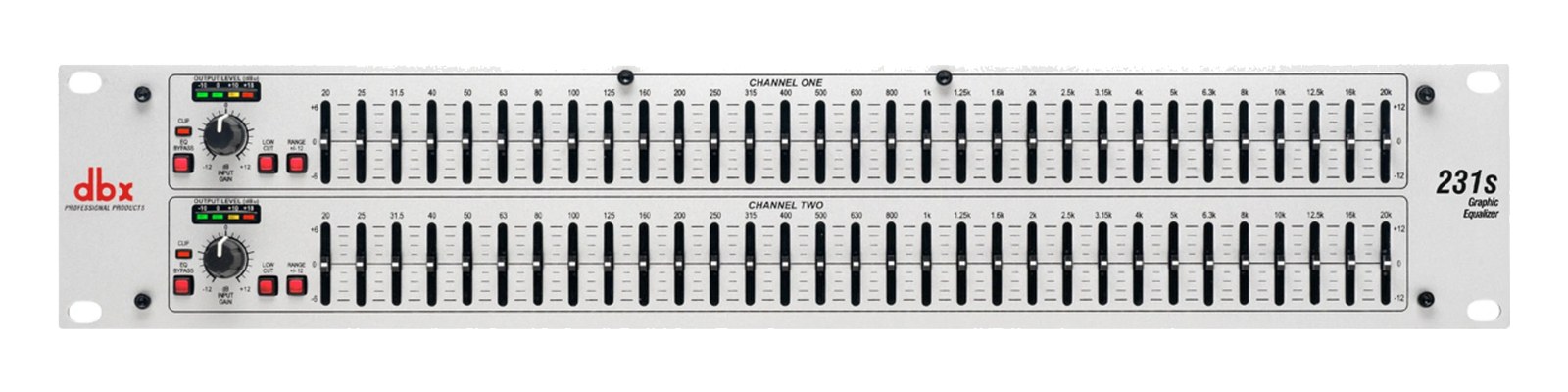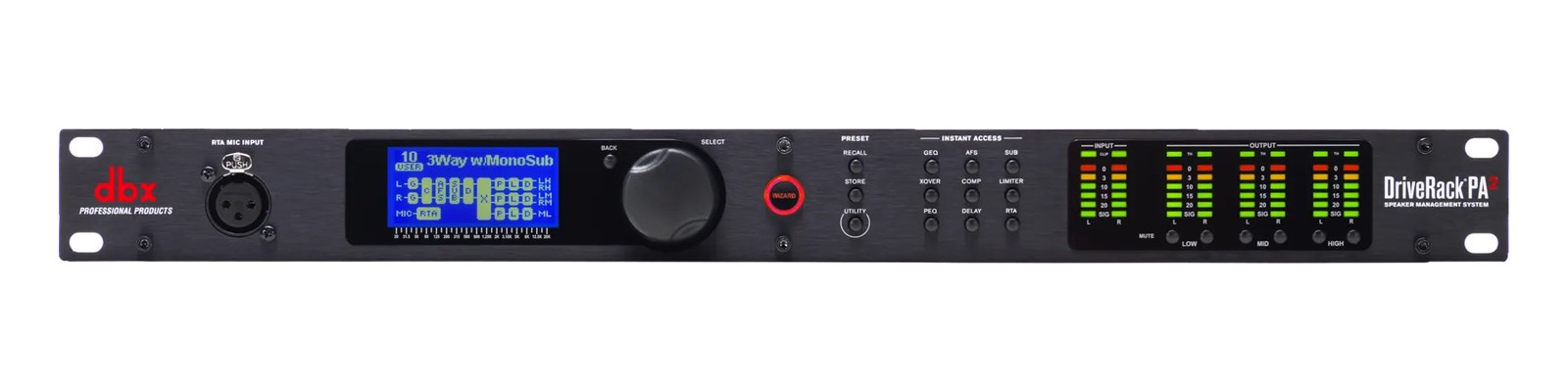

Compressor

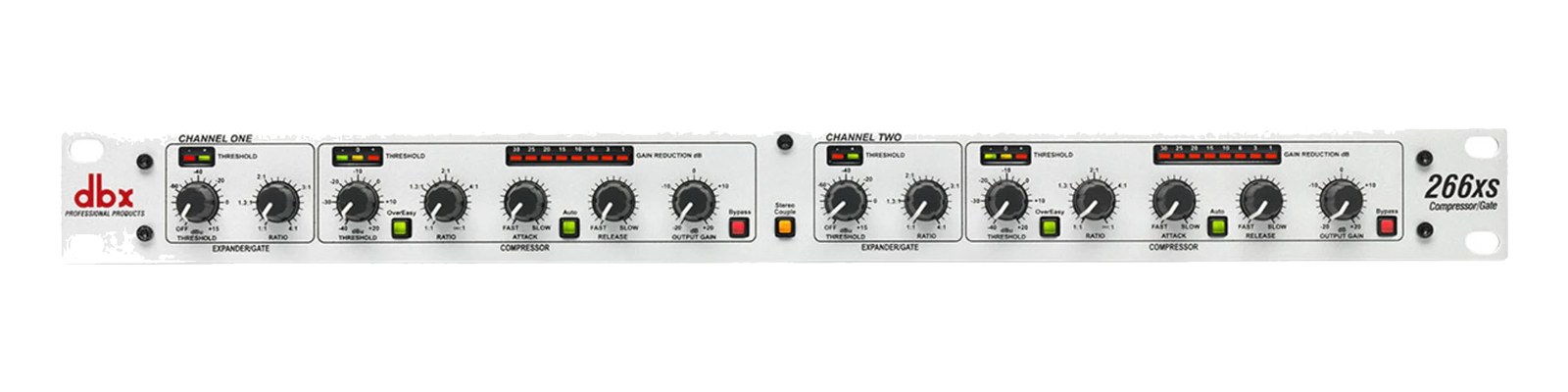
dbx 266xs Compressor/Gate

The dbx 266xs is the compressor that shows up in more racks than any other: two channels of OverEasy compression plus gating for under three hundred dollars. In an IEM or playback rig it earns a slot taming hot playback stems or protecting a house feed, with XLR and TRS on every channel and true stereo linking. Not fancy — dependable.

Compare

Photos

Manufacturer product photography — the drawn faceplate stays true to panel layout; these show the hardware itself.

Photo: dbx1 / 2
Documented outputs
22 destination connections
Documented inputs
5Based on documented inputs
Rack space
1UBuilder checks available rail space
Power draw
15W20W documented maximum
Catalog estimate
~$280Use retailer rows for current price and stock

01 · What it does—and what that changes in your rig.

Product overview

Start with the payoff, then work through how it functions, where it fits, and the details that change a real build.

The payoff

Compressor decisions, organized around the whole rig.

The dbx 266xs is the compressor that earns its rack slot through sheer reliability rather than any particular glamour. Two independent channels of OverEasy compression with per-channel gating, all in a single 1U frame — it exists to keep dynamics under control and protect whatever is downstream from whatever is upstream. In an IEM or playback rig that might mean taming a particularly hot click stem, reining in a vocalist's dynamic range before the signal hits your IEM mix bus, or sitting on a house feed so your FOH engineer isn't chasing peaks. It does one job and does it without complaint.

Documented outputs
22 destination connections
Documented inputs
5Based on documented inputs
Rack space
1UBuilder checks available rail space
dbx 266xs Compressor/Gate — rear panel with IEC mains and XLR/TRS input and output per channel
Photo: dbx1U · 15W
Function

How it works in the path

At load-in, the all-XLR signal path means you're patching with the same connectors you're already running everywhere else — no adapters, no surprises. The quarter-inch sidechain inserts on both channels are genuinely useful if you need frequency-conscious compression, and the stereo link means you can run it as a true two-channel stereo processor when the application calls for it. At 146mm deep it clears most shallow rack shelves, and at 15 watts nominal it's barely a rounding error on your power budget. The controls are straightforward enough that you can set it in the dark by feel after a few shows.
Best fit

Where it earns its place in the rack

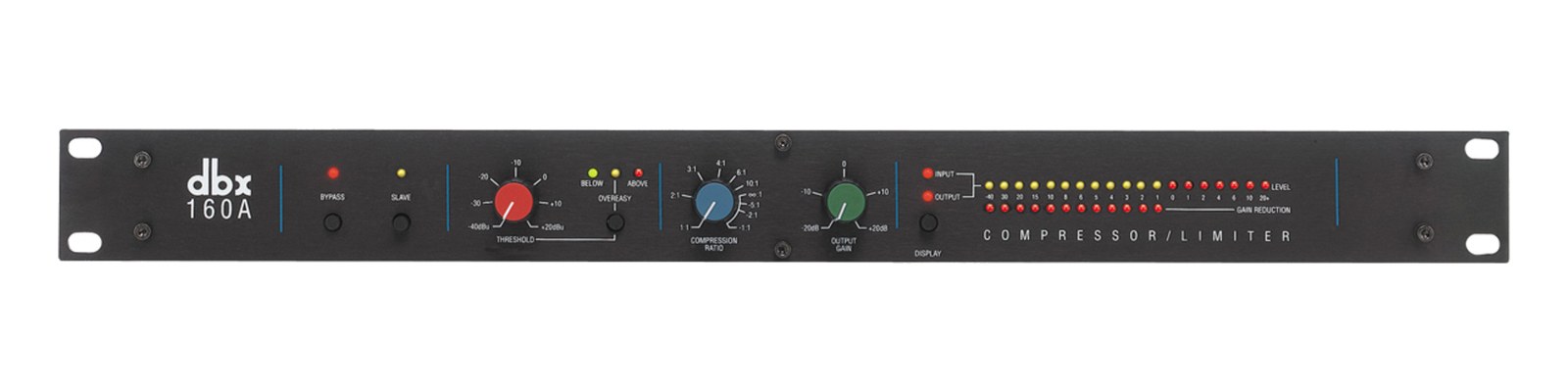
The 266xs belongs in budget-conscious working rigs where you need functional, predictable dynamics processing and you're not prepared to spend five times more for marginally cleaner electronics. It is not the right call if you're running a high-end artist IEM rig where transparency is paramount — something like the dbx 160A or a higher-tier stereo unit will serve you better there. If your chain is already modest or your budget is fixed, the 266xs holds its own and won't become the weak link. Buy it knowing what it is: a working tool, not a studio centerpiece.

In the rack

Details worth deciding before load-in.

  • Use the stereo link to run both channels as a single stereo compressor on a paired stem — engage it before you set your attack and release, because linking changes how the detector behaves and your settings will need a slight re-tweak.
  • The sidechain inserts are normalled — signal passes through without a plug inserted. If you're patching a sidechain source, make sure your TRS plug is fully seated; a half-seated plug will interrupt the main signal path on that channel.
  • At 146mm depth, this unit fits comfortably in a standard 14-inch deep rack rail without a rear support rail, but verify your specific case before assuming — a floating 1U compressor rattling on its front ears mid-show is a bad day.
  • Label the input and output XLRs at patch time, not after the rack is dressed. Both channels are identical front and back, and swapping inputs or outputs under pressure at stage volume is a preventable mistake.

02 · Know the whole path before you buy.

Signal path

Learn the route as a block diagram: source, product function, transport, and destination. Select any block to see what enters, what changes, and what leaves.

Interactive block diagramAuto-looping · hover, focus, or tap to hold a stage
Port-type signalProduct functionSystem boundary
Follow one signal from source to destination

Each block answers the same three questions: what arrives, what changes here, and what leaves.

01 · Source · selected
01 · Source

5 documented inputs

XLR female + ¼-inch TRS

Arrives as
5 documented inputs
Connector
XLR female + ¼-inch TRS
Signal
analog audio

03 · What this product asks of the rest of the system.

Compatibility

Treat connector names as the start of the check—not the answer. These are the boundaries that determine a complete working path.

Best fit · Compressor

Use it when 1U and 146 mm of depth fit the case.

Plan the companion path

Complete the path with upstream and downstream gear that matches connector, direction, signal type, protocol, and wiring standard.

Connector boundary

Documented connectors: XLR female, XLR male, ¼-inch TRS, IEC C14. Match connector, direction, and signal type—not shape alone.

04 · Every connector, grouped by job.

I/O ports

Switch the product view and the documented port inventory updates with it—hardware and data stay side by side.

Every connector, grouped by job.

Switch panels to keep the hardware view and the documented port list in sync.

Front panel
dbxCompressor / GateEXPANDER/GATECOMPRESSOR · CH 1EXPANDER/GATECOMPRESSOR · CH 2266xs
Rear panel
POWEROUTPUTSINPUTSSIDECHAIN INSERTOUTPUTSINPUTSSIDECHAIN INSERT
All documented ports for dbx 266xs Compressor/Gate
PortPanelConnectorDirectionSignalChannels
Input 1rearXLR female inputanalog audio
Input 2rearXLR female inputanalog audio
Output 1rearXLR male outputanalog audio
Output 2rearXLR male outputanalog audio
Sidechain 1rear¼-inch TRS inputanalog audio
Sidechain 2rear¼-inch TRS inputanalog audio
PowerrearIEC C14 inputpower

Showing 7 of 7 documented physical ports.

05 · Compare the decision, not just the price.

Alternatives

The rows are organized around fit, power, I/O, and system role so a cheaper unit cannot hide a more expensive workflow.

Compare
dbx 266xs Compressor/Gate — front panel
dbx 160A compressor — front panel
Fit📐 1U📐 1U · half-rack
Power⚡ 15W⚡ 12W
Weight⚖️ 4.9 lb⚖️ 6.0 lb
I/O🔌 7🔌 4
Estimate💵 ~$280💵 ~$769
Deep diveCurrent selectionFull comparison →

06 · Resolve the questions that can change the purchase or build plan.

Planning questions

Short, source-backed answers surface rack fit, power, cabling, and connection details before they become surprises.

How will the dbx 266xs Compressor/Gate affect rack fit and case depth?

It occupies 1U. Its documented depth is 146 mm.

How much power does the dbx 266xs Compressor/Gate draw?

Typical draw is 15W and documented maximum draw is 20W.

What connections does the dbx 266xs Compressor/Gate have?

7 documented physical ports, including Input 1, Input 2, Output 1, Output 2, Sidechain 1, Sidechain 2.

07 · See this unit inside a real rack plan.

Builder preview

Placement is only the start. Builder checks space · depth · weight, power headroom, dependencies, and compatible signal paths around this exact catalog item.Open in Builder
266xs Compressor/Gate positioned in a rack planA simplified plan shows the unit taking 1 rack units, with its documented connection path continuing to a planned destination.dbx266xsCONNECTED GEARnext signal destination1U · 146 mm deep

08 · Related gear, in the order you may need it.

Planning guides for compressor systems.