
Galaxy Audio AS-1200T IEM Transmitter
Galaxy Audio·Model AS-1200T·galaxy-audio-as-1200t
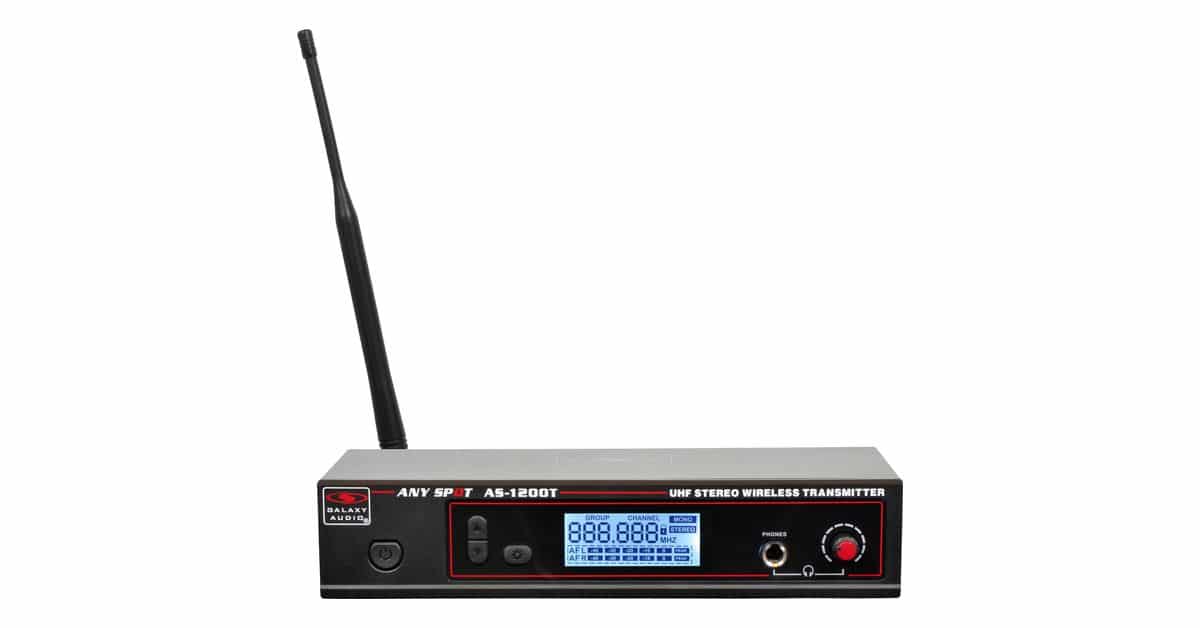
About the Galaxy Audio AS-1200T
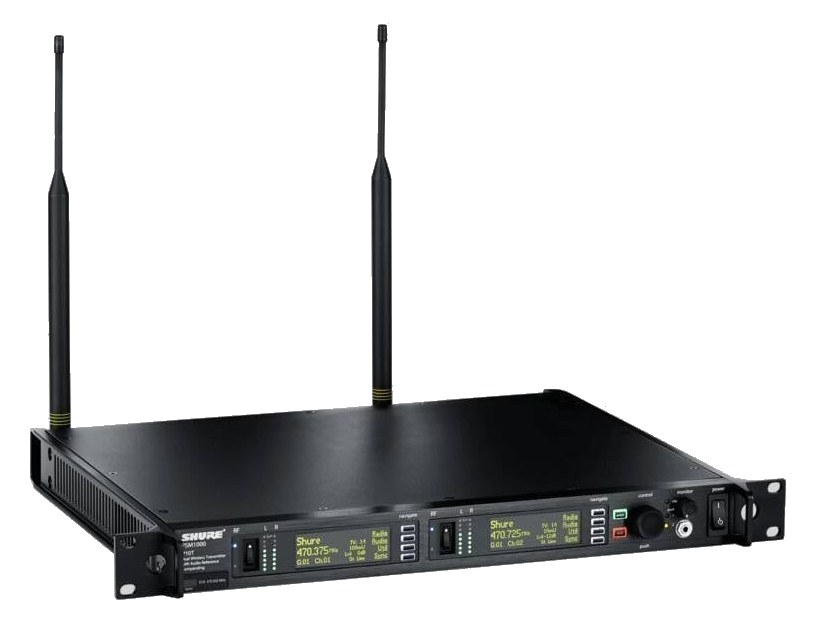
The Galaxy Audio AS-1200T is the working-band budget pick for wireless ears: a half-rackThe standard slice of rack height: 1U = 1.75″. A 3U box takes three slices; half-rack gear pairs two units side by side in one. stereo transmitter that ships with rack earsThe flanges that bolt gear to the rack rails. Desktop boxes without them need a shelf, tray, or drawer to live in the case., antenna, and power supply for well under 300 dollars. Small venues and rehearsal rigs use it where a Sennheiser or Shure system per musician is out of reach. Honest entry-tier RFRadio Frequency — the wireless part of wireless. RF planning is why big rigs scan, coordinate, and combine antennas instead of hoping. with the essentials done right.
The AS-1200T is Galaxy Audio's answer to a straightforward question: what do you put in the rack when a Sennheiser G4 or Shure PSM300 per musician isn't in the budget? It's a half-rackThe standard slice of rack height: 1U = 1.75″. A 3U box takes three slices; half-rack gear pairs two units side by side in one. stereo IEMIn-Ear Monitor — earpieces that replace floor wedges, feeding each player their own mix. The reason this whole rack exists. transmitter occupying half a rack unit, shipping with rack earsThe flanges that bolt gear to the rack rails. Desktop boxes without them need a shelf, tray, or drawer to live in the case., antenna, and power supply already in the box. That matters at the $230 price point — you're not hunting for accessories before the first rehearsal. It fits small venue house rigs, rehearsal setups, and touring situations where one or two secondary performers need ears and the budget is simply fixed.
Two combo XLRThe standard 3-pin locking connector for mics and balanced line signals — pin 1 is the shield, pins 2 and 3 carry the balanced pair./TRSTip-Ring-Sleeve — a 1/4″ jack with three contacts carrying a balanced signal or a stereo pair. A guitar plug with one extra ring. inputs handle left and right, so you can feed it directly from an aux sendAn auxiliary mix output — each aux is its own independent blend of the channels, typically one per monitor mix or effects send. on your console without adapters. The front-panel monitor phones output is a practical touch — you can verify what's actually transmitting before the beltpack ever leaves the case. Power draw sits between 10 and 20 watts depending on load, well within what any standard rack power strip handles. At 240mm deep and 2kg, it won't stress a shallow utility rack. What you're getting is entry-tier RFRadio Frequency — the wireless part of wireless. RF planning is why big rigs scan, coordinate, and combine antennas instead of hoping.: functional range for smaller stages, honest signal quality, and nothing exotic under the hood.
Pick this if you're building a rehearsal room rig, supporting a background vocalist or keyboard player who just needs a basic mix in their ears, or if you're a regional act stretching a tight gear budget. Don't pick it if you're running a dense multi-transmitter festival environment, expecting long throw RFRadio Frequency — the wireless part of wireless. RF planning is why big rigs scan, coordinate, and combine antennas instead of hoping. performance, or if the performer is critically dependent on rock-solid dropoutfree reception in an RF-heavy room. In those cases the step up to a dedicated pro-tier system pays for itself fast. But for what it is and what it costs, the AS-1200T does the job without pretending to be something it isn't.
In the rack
- Mount it with the front panel accessible — that headphone monitor output is only useful if you can actually plug in and check your mix at line checkThe quick pre-show pass confirming every input reaches the console, one line at a time. Not a soundcheck — just does it work. without pulling anything from the rack.
- Pair it with a half-rackThe standard slice of rack height: 1U = 1.75″. A 3U box takes three slices; half-rack gear pairs two units side by side in one. blank or a second AS-1200T in the same 1U rack slot; the included rack earsThe flanges that bolt gear to the rack rails. Desktop boxes without them need a shelf, tray, or drawer to live in the case. are designed for single or mirrored half-rack mounting, so plan your rack panel accordingly.
- Run the antenna output to an externally mounted antenna positioned clear of metal rack frames and power supplies — the included antenna works, but placement makes a measurable difference in a half-rackThe standard slice of rack height: 1U = 1.75″. A 3U box takes three slices; half-rack gear pairs two units side by side in one. budget unit like this.
- Feed it from a dedicated auxAn auxiliary mix output — each aux is its own independent blend of the channels, typically one per monitor mix or effects send. on your console rather than a post-fader send if the mix is going to a performer who needs level independence from FOHFront Of House — the main mix the audience hears, and the console position out in the room where it gets mixed. — the combo inputs accept both XLRThe standard 3-pin locking connector for mics and balanced line signals — pin 1 is the shield, pins 2 and 3 carry the balanced pair. and TRSTip-Ring-Sleeve — a 1/4″ jack with three contacts carrying a balanced signal or a stereo pair. A guitar plug with one extra ring., so patching is flexible whatever your snakeA multicore cable bundling many channels into one stage-to-console run. A sub-snake collects one corner of the stage into a drop box. situation looks like.
Budget half-rackThe standard slice of rack height: 1U = 1.75″. A 3U box takes three slices; half-rack gear pairs two units side by side in one. IEMIn-Ear Monitor — earpieces that replace floor wedges, feeding each player their own mix. The reason this whole rack exists. transmitter with rack earsThe flanges that bolt gear to the rack rails. Desktop boxes without them need a shelf, tray, or drawer to live in the case. and antenna included.
I/O Ports (5)
| Port | Connector | Direction | Signal | Channels |
|---|---|---|---|---|
| Input L | COMBO XLR TRS | input | analog audio | — |
| Input R | COMBO XLR TRS | input | analog audio | — |
| Antenna | BNC | output | antenna | — |
| Monitor Phones (front, 6.3mm) | TRS QUARTER | output | analog audio | — |
- DC In (12-18V) (DC BARREL)
Deciding between two?
Rack space, watts, weight and every connector, side by side.
Related gear


Related articles
Guides from our library that cover planning around iem transmitter gear.
What an IEM rig actually is, the components that go into one, and how to plan your first one without overspending or blowing a circuit.
A plain-English plan for bands switching from floor wedges to in-ear monitors — what to buy, what to expect at the first rehearsal, and how to not hate it.
A walking tour of the signal path from microphone to in-ear monitor, with what every box in the rack actually does to the audio along the way.
A feedback squeal in a sealed ear can hit 130 dB SPL instantly. Where the limiter goes, what thresholds make sense, and the daily soundcheck habit that verifies it actually catches.