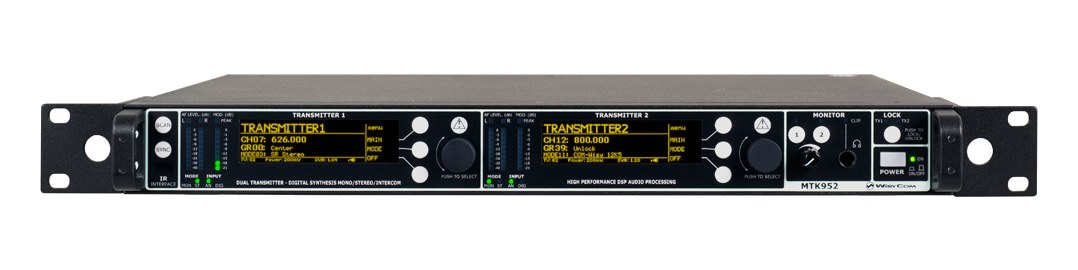
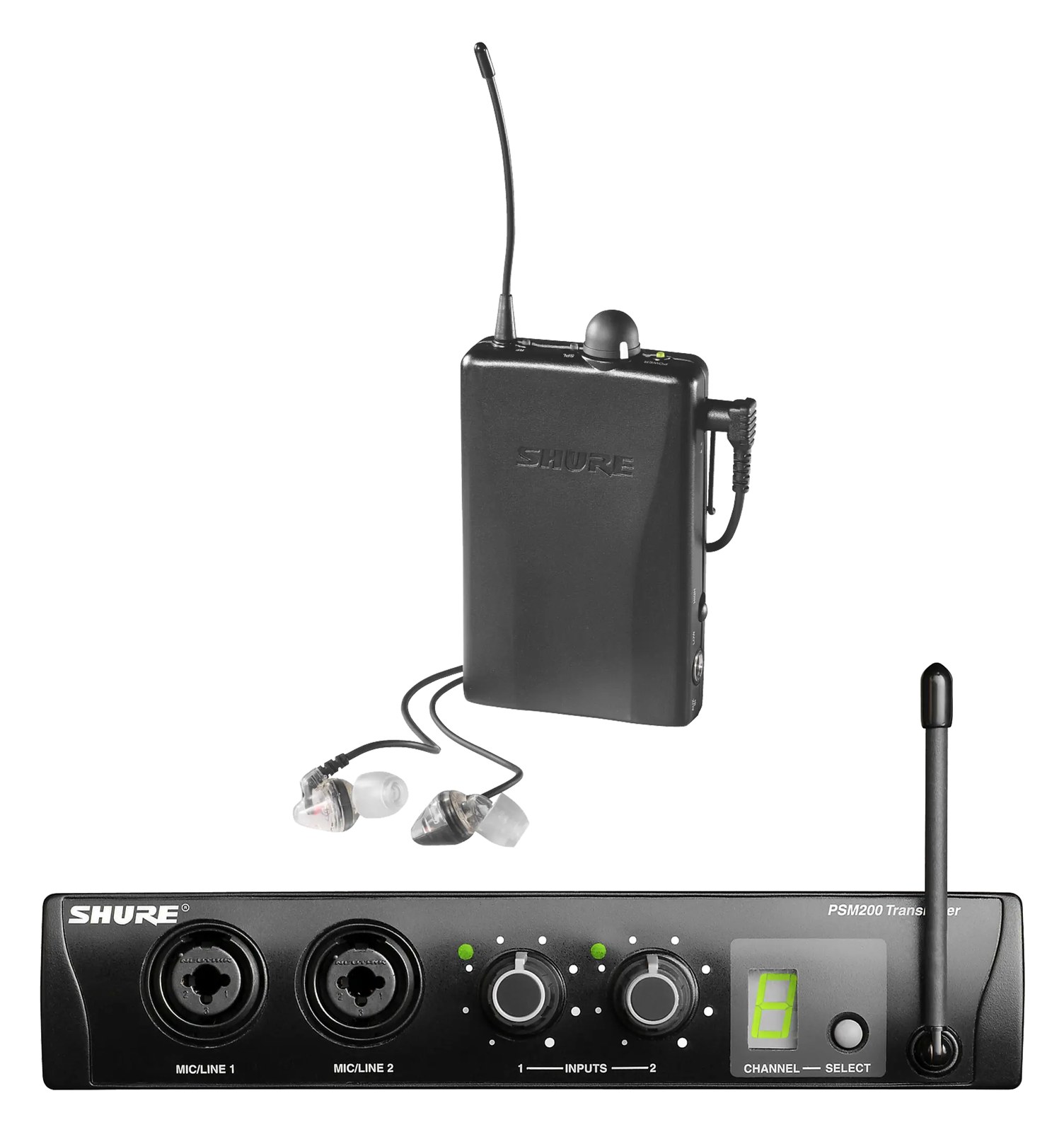
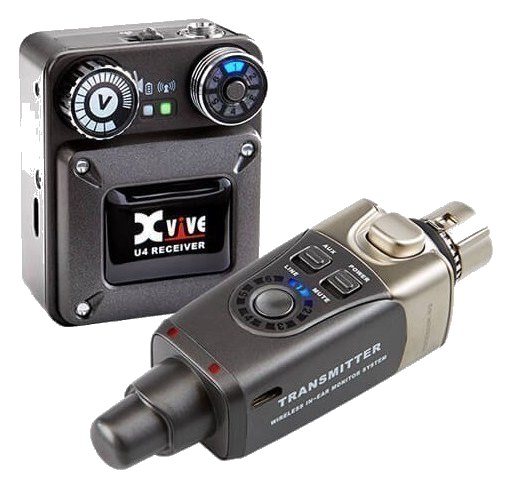
The Wisycom MTK952 is a premium IEM transmitter favored on top-tier tours and broadcast productions where RF performance is paramount. Its wideband tuning range simplifies frequency coordination in dense RF environments, and AES3 digital input eliminates the need for D/A conversion in all-digital signal chains. If budget allows, this is one of the most capable IEM transmitters on the market.
~$5,499Use retailer rows for current price and stock
01 · What it does—and what that changes in your rig.
Product overview
Start with the payoff, then work through how it functions, where it fits, and the details that change a real build.
The payoff
IEM Transmitter decisions, organized around the whole rig.
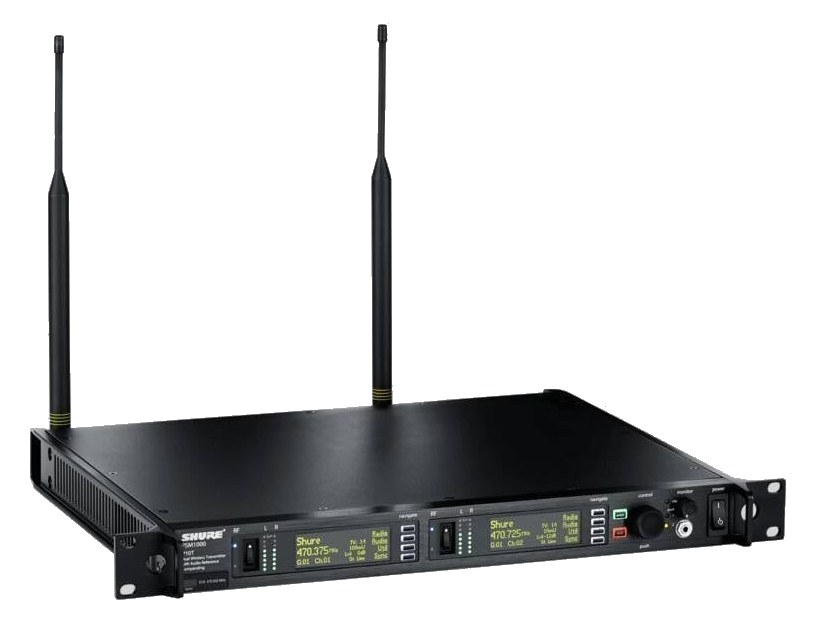
The Wisycom MTK952 is a full-rack, dual-channel IEMIn-Ear Monitor — earpieces that replace floor wedges, feeding each player their own mix. The reason this whole rack exists. transmitter built for environments where RFRadio Frequency — the wireless part of wireless. RF planning is why big rigs scan, coordinate, and combine antennas instead of hoping. failure is simply not an option. It sits at the top of the IEM transmitter category — the kind of unit you find in the wings on major touring productions and broadcast stages where spectrum is contested and the monitor engineer needs every technical advantage available. Each of its two transmitter channels gets its own antenna output pair, its own audio path, and its own coordination headroomThe margin between your normal level and where things clip — headroom is what absorbs the snare hit you didn’t see coming., all packed into a single rack unitThe standard slice of rack height: 1U = 1.75″. A 3U box takes three slices; half-rack gear pairs two units side by side in one. that pulls a modest 40 watts under typical load.
Documented outputs
22 destination connections
Documented inputs
4Based on documented inputs
Rack space
1UBuilder checks available rail space
Photo: Wisycom1U · 40W
Function
How it works in the path
The wideband tuning range is the practical headline here: when a venue's RFRadio Frequency — the wireless part of wireless. RF planning is why big rigs scan, coordinate, and combine antennas instead of hoping. coordinator hands you a list of available slots an hour before doors, you're not fighting the limits of a narrow-band unit. The AES3The pro standard for stereo digital audio over an XLR cable — balanced, so it runs much farther than consumer S/PDIF. input is equally important in modern rigs — you can route directly from a digital console's AES output or a monitor matrixA routing grid that builds extra outputs from any mix of mixes or channels — fills, lobby, stream feeds — without touching the main mix. without touching a D/A converterThe circuitry that turns analog audio into digital data and back (A/D and D/A). Converter quality sets a digital rig’s sound ceiling., keeping the signal path clean and removing one failure point. Two discrete XLRThe standard 3-pin locking connector for mics and balanced line signals — pin 1 is the shield, pins 2 and 3 carry the balanced pair. analog inputs are also on board, so the unit works equally well in hybrid or fully analog signal chains. At 270mm deep it fits most standard rack shelves without drama, and the 2 kg weight won't unbalance a shallow touring rack.
Best fit
Where it earns its place in the rack
If you're building a riderThe document attached to a booking that lists what the band needs — inputs, monitors, power, backline (and the green-room snacks).-friendly, advance-anywhere IEMIn-Ear Monitor — earpieces that replace floor wedges, feeding each player their own mix. The reason this whole rack exists. rig for high-production touring, television, or festival work with dense RFRadio Frequency — the wireless part of wireless. RF planning is why big rigs scan, coordinate, and combine antennas instead of hoping. environments, the MTK952 is purpose-built for exactly that. The $5,499 price point means it belongs in a professional inventory, not a weekend rental package or a regional club rig where simpler, narrower units will do the job for far less. Engineers running a single-artist stereo mix and working in cooperative RF environments should look at more affordable dual-channel options. But if your name is on the mix and the production budget reflects that, this is the transmitter you stop worrying about.
In the rack
Details worth deciding before load-in.
If you're feeding from a digital console's AES output, patch directly into the AES3The pro standard for stereo digital audio over an XLR cable — balanced, so it runs much farther than consumer S/PDIF. input and bypass both analog XLRThe standard 3-pin locking connector for mics and balanced line signals — pin 1 is the shield, pins 2 and 3 carry the balanced pair. inputs entirely — fewer conversions, fewer potential gain-stagingSetting sensible levels at every step of the chain so nothing clips and nothing drowns in hiss — the unglamorous secret to clean mixes. discrepancies between channels.
Plan your antenna placement before the unit goes in the rack: both BNCThe twist-lock coax connector used for word clock and antenna runs — it locks, so it can’t be pulled out mid-show. outputs need clean runs to active distroOne pair of antennas feeding many receivers through an amplified splitter — replaces the forest of whips and keeps RF levels consistent. or a paddleA directional antenna (paddle, LPDA, helical) aimed at the stage — focuses coverage where the performers are and rejects RF from elsewhere. antenna position, so patch bayA panel of front-facing jacks wired to everything behind it — re-route any signal with a short cable instead of climbing behind the rack. your BNC paths the same way you'd pre-plan audio snakesA multicore cable bundling many channels into one stage-to-console run. A sub-snake collects one corner of the stage into a drop box..
Budget a full frequency coordinationCalculating a set of wireless frequencies that won’t interfere with each other or local TV — the homework behind a clean RF night. session before each new market on a tour — the wideband range is an asset, but only if you've actually scanned and assigned clean frequencies rather than defaulting to saved presets from the last city.
At 270mm depth, verify your rack's usable interior depth including any rear cable management bars before the advance — some shallow touring racks will put this unit right at the limit when you add BNCThe twist-lock coax connector used for word clock and antenna runs — it locks, so it can’t be pulled out mid-show. and IECThe standard three-prong appliance power inlet on rack gear — the kettle lead. C13/C14 in spec-sheet speak. cable bend radius.
02 · Know the whole path before you buy.
Signal path
Learn the route as a block diagram: source, product function, transport, and destination. Select any block to see what enters, what changes, and what leaves.
Interactive block diagramAuto-looping · hover, focus, or tap to hold a stage
Port-type signalProduct functionSystem boundary
Follow one signal from source to destination
Each block answers the same three questions: what arrives, what changes here, and what leaves.
01 · Source · selected
XLR female + aes3 xlr
aes3 xlr
bnc
01 · Source
4 documented inputs
XLR female + aes3 xlr
Arrives as
4 documented inputs
Connector
XLR female + aes3 xlr
Signal
analog audio
03 · What this product asks of the rest of the system.
Compatibility
Treat connector names as the start of the check—not the answer. These are the boundaries that determine a complete working path.
Best fit · IEM Transmitter
Use it when 1U and 407 mm of depth fit the case.
Plan the companion path
Complete the path with upstream and downstream gear that matches connector, direction, signal type, protocol, and wiring standard.
Connector boundary
Documented connectors: XLR female, aes3 xlr, bnc, IEC C14. Match connector, direction, and signal type—not shape alone.
04 · Every connector, grouped by job.
I/O ports
Switch the product view and the documented port inventory updates with it—hardware and data stay side by side.
Every connector, grouped by job.
Switch panels to keep the hardware view and the documented port list in sync.
Front panelRear panel
All documented ports for Wisycom MTK952 Dual Transmitter
Port
Panel
Connector
Direction
Signal
Channels
Audio In 1 (XLR)
rear
XLR female
input
analog audio
—
Audio In 2 (XLR)
rear
XLR female
input
analog audio
—
AES3 In
rear
aes3 xlr
input
digital audio
2
Antenna A (BNC)
rear
bnc
output
antenna
—
Antenna B (BNC)
rear
bnc
output
antenna
—
Power (IEC)
rear
IEC C14
input
power
—
Showing 6 of 6 documented physical ports.
05 · Compare the decision, not just the price.
Alternatives
The rows are organized around fit, power, I/O, and system role so a cheaper unit cannot hide a more expensive workflow.
MTK952The Wisycom MTK952 is a premium IEM transmitter favored on top-tier tours and broadcast productions where RF performance is paramount. Its wideband tuning range simplifies frequency coordination in dense RF environments, and AES3 digital input eliminates the need for D/A conversion in all-digital signal chains. If budget allows, this is one of the most capable IEM transmitters on the market.View gear →
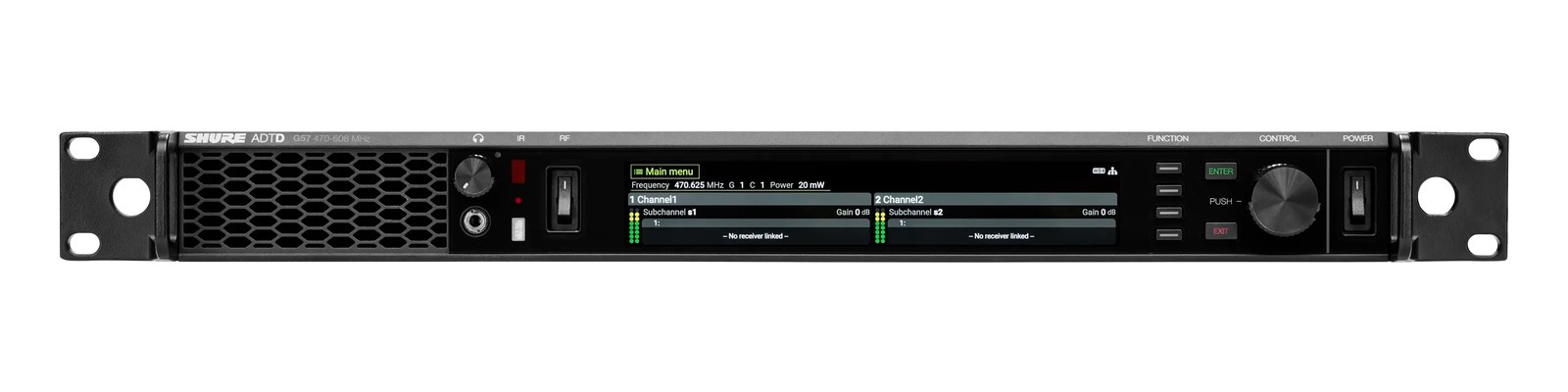
ADTDThe Shure ADTD is the dual-channel transmitter of the Axient Digital PSM platform: two stereo IEM channels of wideband digital RF with Dante and analog inputs, networked control, and the spectral efficiency that lets big shows stack channels where analog PSM could not. It is the direct successor tier to the PSM1000 and the unit users requested by name. Pair with ADXR bodypacks and an antenna combiner.View gear →
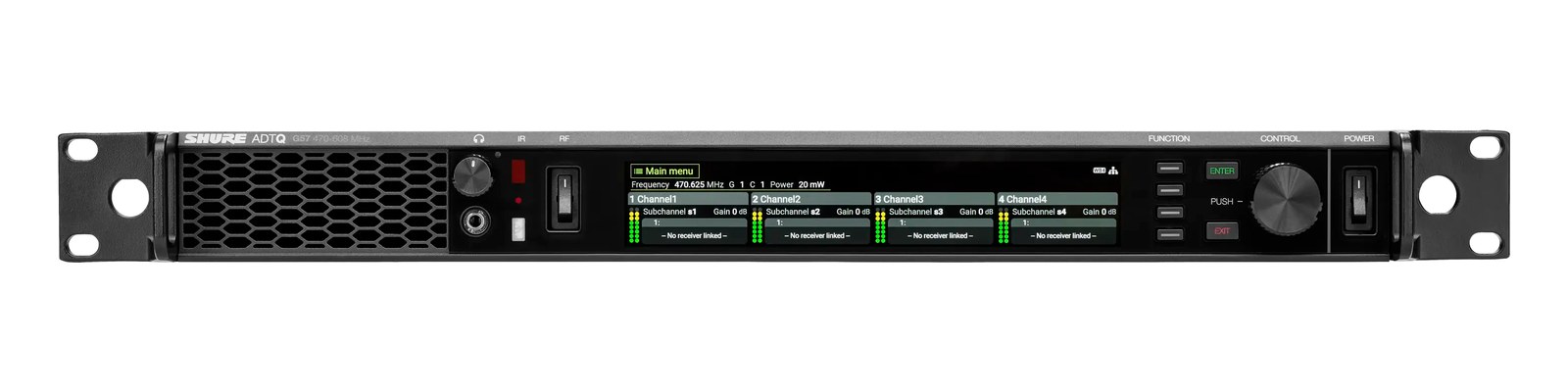
ADTQThe Shure ADTQ packs four stereo channels of Axient Digital PSM into a single rack space - the densest IEM transmission Shure makes. Wideband digital RF, Dante and analog inputs per channel, and Wireless Workbench control make it the monitor-world backbone for arena-scale channel counts. One ADTQ replaces a full rack of analog transmitters plus their combiner losses.View gear →
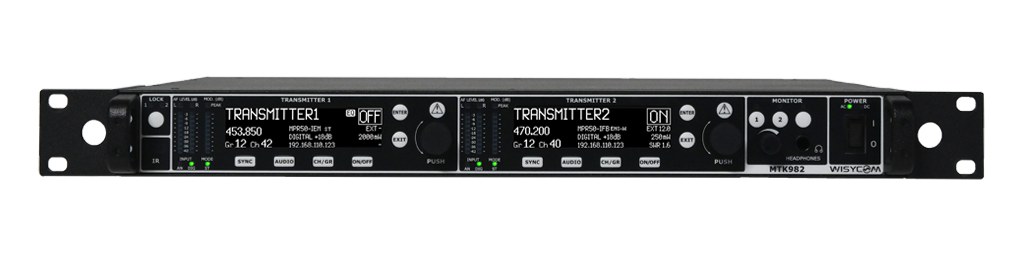
MTK982The Wisycom MTK982 succeeds the MTK952 as the broadcast-grade dual IEM/IFB transmitter: two stereo channels tunable across 230 MHz of spectrum with up to two watts of output for long-throw applications. Film, broadcast, and top-tier touring rigs run it where frequency agility across borders is the job. Dealer-channel pricing; found by the gear-fit auditor succession check.View gear →
06 · Resolve the questions that can change the purchase or build plan.
Planning questions
Short, source-backed answers surface rack fit, power, cabling, and connection details before they become surprises.
How will the Wisycom MTK952 Dual Transmitter affect rack fit and case depth?
It occupies 1U. Its documented depth is 407 mm.
How much power does the Wisycom MTK952 Dual Transmitter draw?
Typical draw is 40W and documented maximum draw is 50W.
What connections does the Wisycom MTK952 Dual Transmitter have?
6 documented physical ports, including Audio In 1 (XLR), Audio In 2 (XLR), AES3 In, Antenna A (BNC), Antenna B (BNC), Power (IEC).
Is the Wisycom MTK952 Dual Transmitter discontinued?
Superseded by MTK982 (wideband, 2W). Kept for owners.
07 · See this unit inside a real rack plan.
Builder preview
Placement is only the start. Builder checks space · depth · weight, power headroom, dependencies, and compatible signal paths around this exact catalog item.Open in Builder