Sennheiser's workhorse wireless IEM transmitter offers dependable UHF performance at a mid-range price point. The half-rack form factor keeps your rack footprint small, and the G4 platform is widely supported with a large install base. A solid alternative to Shure's PSM line for engineers already invested in the Sennheiser ecosystem or looking for a cost-effective IEM solution.
~$649Use retailer rows for current price and stock
01 · What it does—and what that changes in your rig.
Product overview
Start with the payoff, then work through how it functions, where it fits, and the details that change a real build.
The payoff
IEM Transmitter decisions, organized around the whole rig.
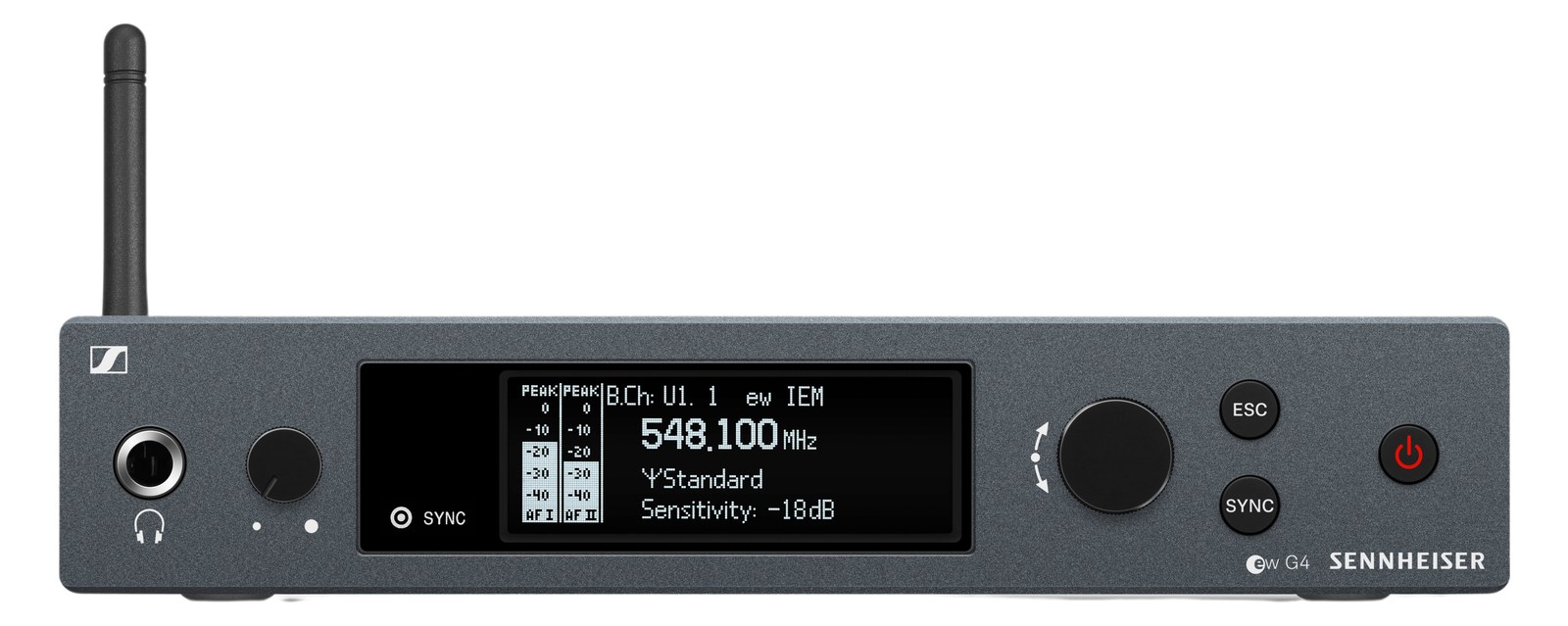
The SR IEMIn-Ear Monitor — earpieces that replace floor wedges, feeding each player their own mix. The reason this whole rack exists. G4 is Sennheiser's half-rackThe standard slice of rack height: 1U = 1.75″. A 3U box takes three slices; half-rack gear pairs two units side by side in one.UHFThe TV-band radio range (roughly 470–608 MHz in the US) where serious wireless mics and IEMs live — better behaved than crowded 2.4 GHz. IEM transmitter — the box that takes your stereo mix off the console and puts it wirelessly into a performer's ears. It sits in the rack alongside your monitor console output or playback rig, receives a stereo feed (XLRThe standard 3-pin locking connector for mics and balanced line signals — pin 1 is the shield, pins 2 and 3 carry the balanced pair. on the left channel, quarter-inch TRSTip-Ring-Sleeve — a 1/4″ jack with three contacts carrying a balanced signal or a stereo pair. A guitar plug with one extra ring. on the right), and broadcasts to the corresponding EK IEM G4 bodypack receiver worn by the artist. This is the core transaction of any wireless IEM system, and the G4 handles it reliably across a large installed base worldwide, which matters when you need a spare unit at 2 AM in a foreign city.
Documented outputs
44 destination connections
Documented inputs
3Based on documented inputs
Rack space
1U · half-rackBuilder checks available rail space
Photo: Sennheiser1U · half-rack · 14W
Function
How it works in the path
Half-rackThe standard slice of rack height: 1U = 1.75″. A 3U box takes three slices; half-rack gear pairs two units side by side in one. width means two units share a single rack unit, which is genuinely useful when you're running IEMIn-Ear Monitor — earpieces that replace floor wedges, feeding each player their own mix. The reason this whole rack exists. sends for a full band. At 14 watts nominal draw with an 18-watt ceiling, power budgeting is straightforward — a standard 20-amp circuit handles a healthy complement of these without drama. The asymmetric input configuration (XLRThe standard 3-pin locking connector for mics and balanced line signals — pin 1 is the shield, pins 2 and 3 carry the balanced pair. left, TRSTip-Ring-Sleeve — a 1/4″ jack with three contacts carrying a balanced signal or a stereo pair. A guitar plug with one extra ring. right) is worth noting at patch time: it's not a standard matched pair, so label your cables and build a consistent patching habit or you will chase a phantomThe +48 V a console sends up the mic cable to power condenser mics and active DI boxes — invisible to gear that doesn’t need it. phase issue under pressure. The BNCThe twist-lock coax connector used for word clock and antenna runs — it locks, so it can’t be pulled out mid-show. antenna output gives you the flexibility to run coax to remotely mounted antennas when stage geometry makes direct radiation from the rack impractical.
Best fit
Where it earns its place in the rack
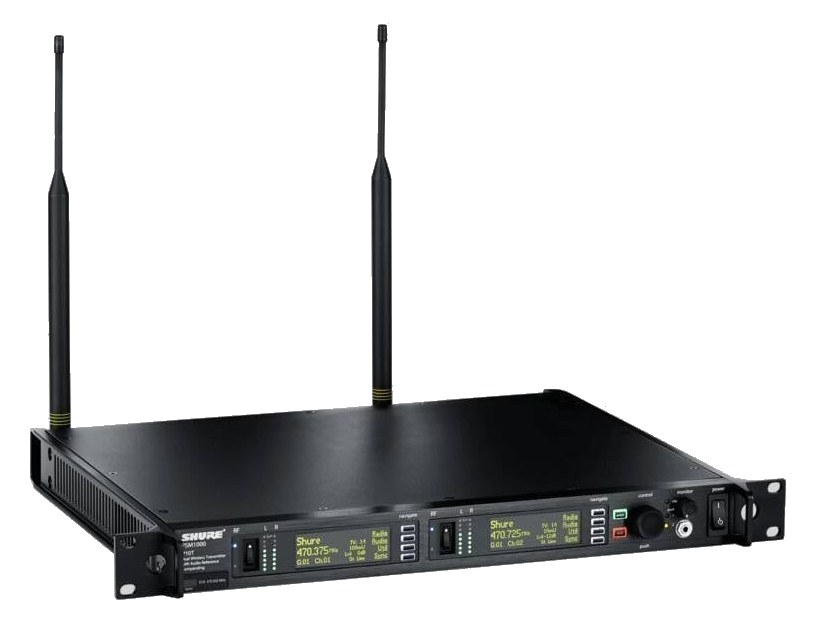
The G4 is the right call if your performers or your organization are already in the Sennheiser ecosystem, if you need a proven, widely-serviced platform without writing a check for a Shure PSM 300 or 900 system, or if you're building out a multi-channel IEMIn-Ear Monitor — earpieces that replace floor wedges, feeding each player their own mix. The reason this whole rack exists. rig where rack space efficiency actually matters. It is not the answer if you're in a dense RFRadio Frequency — the wireless part of wireless. RF planning is why big rigs scan, coordinate, and combine antennas instead of hoping. environment and need the more sophisticated coordination and filtering tools found in higher-tier systems, or if your inputs are exclusively XLRThe standard 3-pin locking connector for mics and balanced line signals — pin 1 is the shield, pins 2 and 3 carry the balanced pair. and you'd rather not manage the mixed connector situation on the right channel.
Sennheiser EW IEM G4 Transmitter — front and rear panels togetherPhoto: Sennheiser
In the rack
Details worth deciding before load-in.
Pair units in adjacent half-rackThe standard slice of rack height: 1U = 1.75″. A 3U box takes three slices; half-rack gear pairs two units side by side in one. slots and label the front panel with artist name and frequency before the rig ever leaves the shop — swapping a failed unit mid-show in a dark wing is no time to be reading fine print.
The asymmetric inputs (XLRThe standard 3-pin locking connector for mics and balanced line signals — pin 1 is the shield, pins 2 and 3 carry the balanced pair. left, TRSTip-Ring-Sleeve — a 1/4″ jack with three contacts carrying a balanced signal or a stereo pair. A guitar plug with one extra ring. right) make a gender-mismatched patch easy to overlook; build a short dedicated TRS-to-XLR adapter for the right channel and tie it to the unit so it can't walk.
Run coax from the BNCThe twist-lock coax connector used for word clock and antenna runs — it locks, so it can’t be pulled out mid-show. antenna output to a remotely mounted antenna whenever the rack lives more than a few meters offstage — cabinet metal and rack neighbors will absorb more RFRadio Frequency — the wireless part of wireless. RF planning is why big rigs scan, coordinate, and combine antennas instead of hoping. than you expect at distance.
If you're stacking multiple G4 transmitters, do your frequency coordinationCalculating a set of wireless frequencies that won’t interfere with each other or local TV — the homework behind a clean RF night. before load-in using Sennheiser's WWB6 software rather than scanning on the unit itself — the on-board scan is functional but software coordination gives you a cleaner picture across the full band.
02 · Know the whole path before you buy.
Signal path
Learn the route as a block diagram: source, product function, transport, and destination. Select any block to see what enters, what changes, and what leaves.
Interactive block diagramAuto-looping · hover, focus, or tap to hold a stage
Port-type signalProduct functionSystem boundary
Follow one signal from source to destination
Each block answers the same three questions: what arrives, what changes here, and what leaves.
01 · Source · selected
XLR/TRS combo + dc barrel
RJ45
¼-inch TRS + bnc
01 · Source
3 documented inputs
XLR/TRS combo + dc barrel
Arrives as
3 documented inputs
Connector
XLR/TRS combo + dc barrel
Signal
analog audio
03 · What this product asks of the rest of the system.
Compatibility
Treat connector names as the start of the check—not the answer. These are the boundaries that determine a complete working path.
Best fit · IEM Transmitter
Use it when 1U · half-rack and 210 mm of depth fit the case.
Plan the companion path
Complete the path with upstream and downstream gear that matches connector, direction, signal type, protocol, and wiring standard.
Connector boundary
Documented connectors: XLR/TRS combo, ¼-inch TRS, RJ45, bnc. Match connector, direction, and signal type—not shape alone.
04 · Every connector, grouped by job.
I/O ports
Switch the product view and the documented port inventory updates with it—hardware and data stay side by side.
Every connector, grouped by job.
Switch panels to keep the hardware view and the documented port list in sync.
Front panelRear panel
All documented ports for Sennheiser EW IEM G4 Transmitter
Port
Panel
Connector
Direction
Signal
Channels
AF In L (I) + Mono (Combo)
rear
XLR/TRS combo
input
analog audio
—
AF In R (II) (Combo)
rear
XLR/TRS combo
input
analog audio
—
Loop Out L (I)
rear
¼-inch TRS
output
analog audio
—
Loop Out R (II)
rear
¼-inch TRS
output
analog audio
—
Ethernet (RJ-45)
rear
RJ45
bidirectional
data
—
Antenna / RF Out (BNC)
rear
bnc
output
antenna
—
DC In ⎓12V/350mA
rear
dc barrel
input
power
—
Phones (¼" front)
front
¼-inch TRS
output
analog audio
—
Showing 8 of 8 documented physical ports.
05 · Compare the decision, not just the price.
Alternatives
The rows are organized around fit, power, I/O, and system role so a cheaper unit cannot hide a more expensive workflow.
SR IEM G4Sennheiser's workhorse wireless IEM transmitter offers dependable UHF performance at a mid-range price point. The half-rack form factor keeps your rack footprint small, and the G4 platform is widely supported with a large install base. A solid alternative to Shure's PSM line for engineers already invested in the Sennheiser ecosystem or looking for a cost-effective IEM solution.View gear →
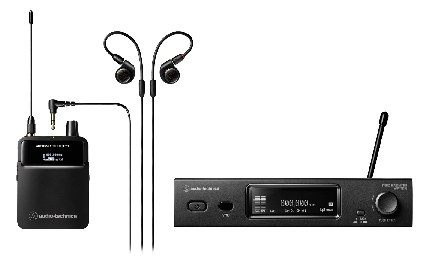
ATW-3255The Audio-Technica ATW-3255 puts 3000-series wireless engineering into in-ear monitoring: a half-rack transmitter with wide 138 MHz tuning, a metal bodypack receiver, and included monitor phones as a complete system under a thousand dollars. Multi-channel racks pair units two-up per row with joining plates. The credible third brand between budget and touring tiers.View gear →
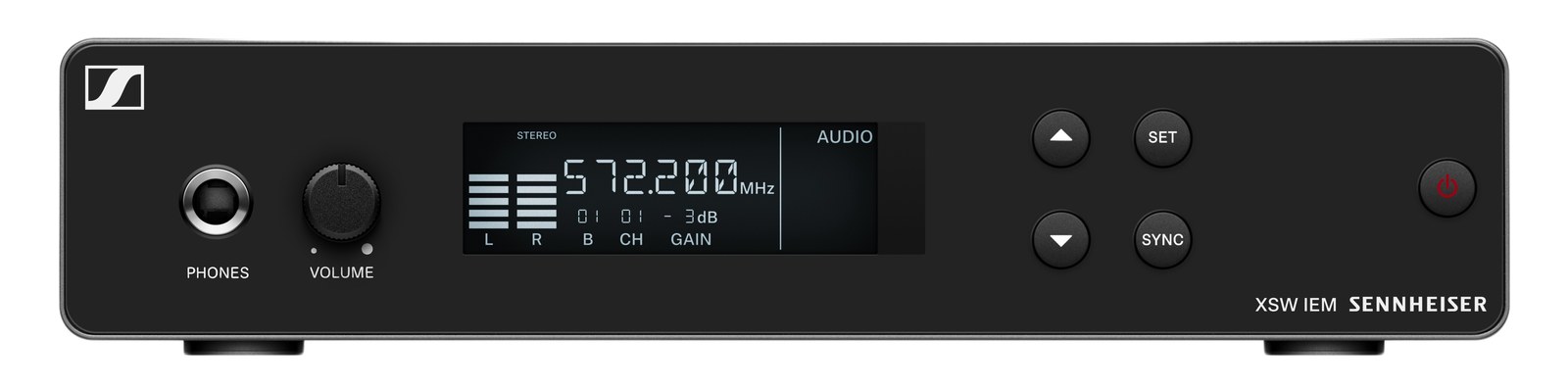
XSW IEM SRThe Sennheiser XSW IEM SR brings Sennheiser in-ear monitoring under four hundred dollars: a half-rack stereo transmitter with adjustable antenna, easy frequency sync, and Sennheiser reliability at the entry tier. It is the step between consumer systems and evolution wireless for bands buying their first ears. Surfaced repeatedly in zero-result searches before this add.View gear →
06 · Resolve the questions that can change the purchase or build plan.
Planning questions
Short, source-backed answers surface rack fit, power, cabling, and connection details before they become surprises.
How will the Sennheiser EW IEM G4 Transmitter affect rack fit and case depth?
It occupies 1U · half-rack. Its documented depth is 210 mm.
How much power does the Sennheiser EW IEM G4 Transmitter draw?
Typical draw is 14W and documented maximum draw is 18W.
What connections does the Sennheiser EW IEM G4 Transmitter have?
8 documented physical ports, including AF In L (I) + Mono (Combo), AF In R (II) (Combo), Loop Out L (I), Loop Out R (II), Ethernet (RJ-45), Antenna / RF Out (BNC).
07 · See this unit inside a real rack plan.
Builder preview
Placement is only the start. Builder checks space · depth · weight, power headroom, dependencies, and compatible signal paths around this exact catalog item.Open in Builder