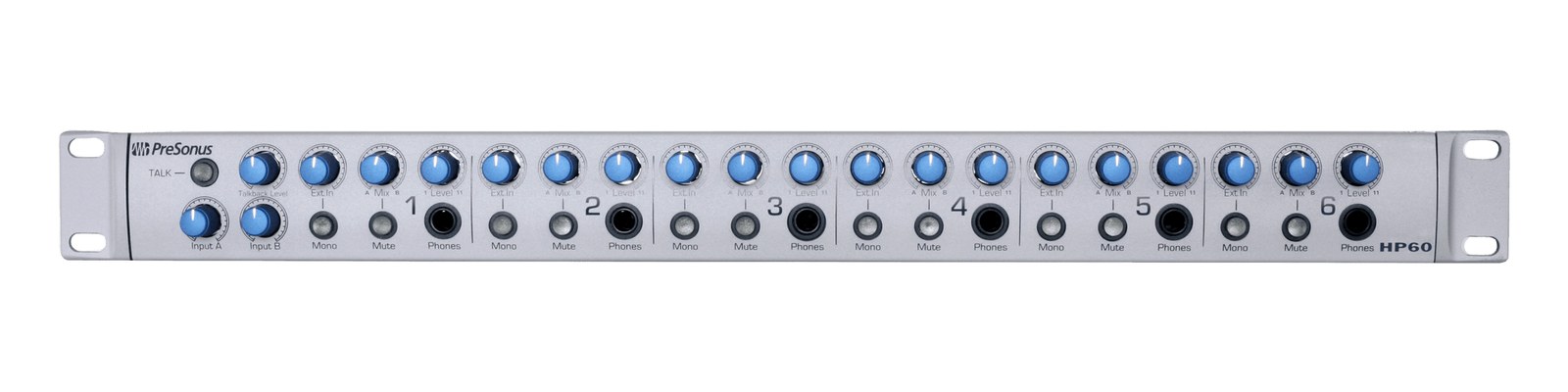
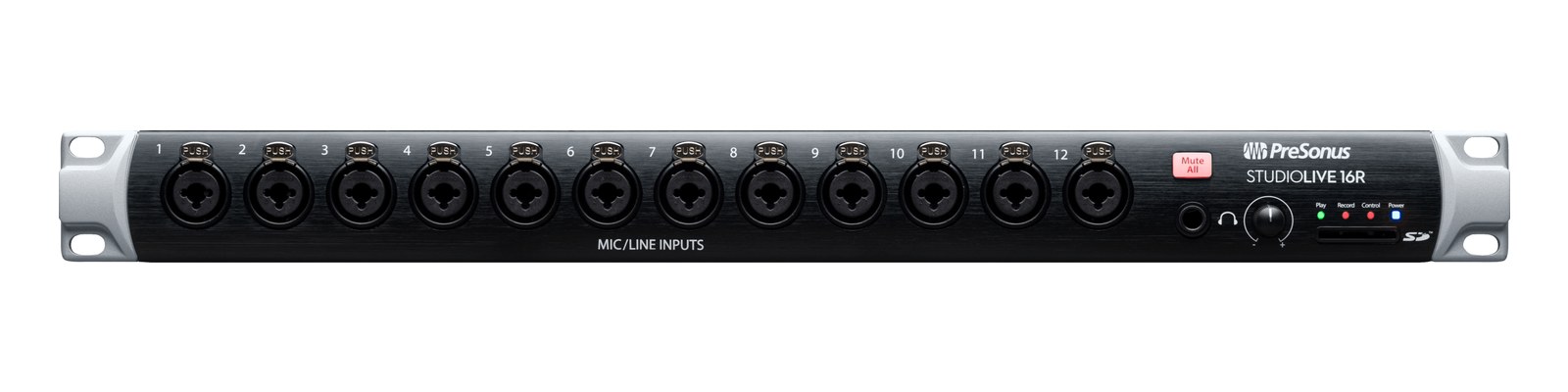
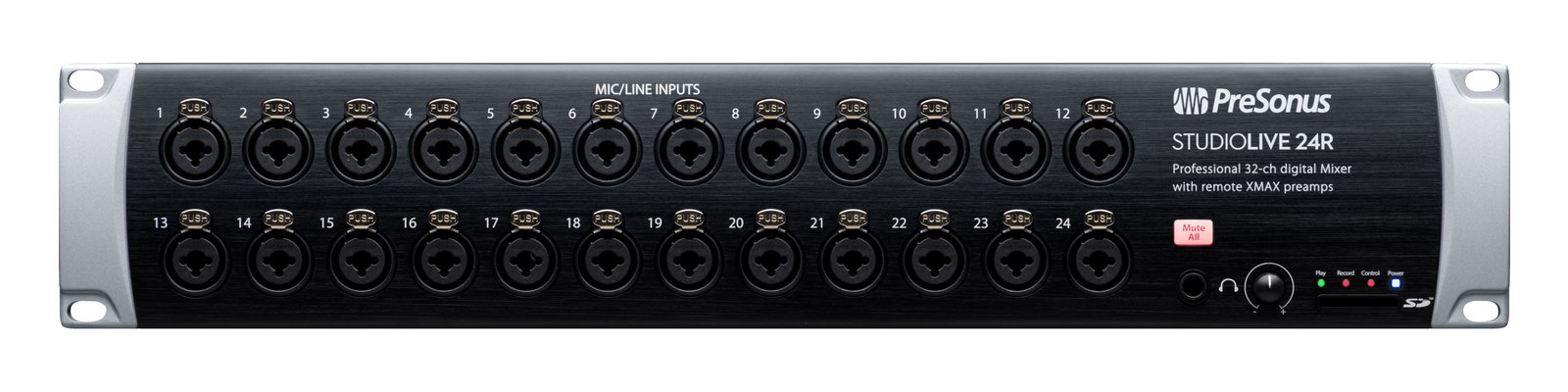
The PreSonus HP60 is a 6-channel rack-mount headphone mixer with per-channel mix between a main stereo and a cue feed, giving each performer their own balance of the band mix and the click track or talkback. Common pickup for tracking studios and houses of worship that run cue mixes alongside the main FOH feed.
~$599Use retailer rows for current price and stock
01 · What it does—and what that changes in your rig.
Product overview
Start with the payoff, then work through how it functions, where it fits, and the details that change a real build.
The payoff
Headphone Amp decisions, organized around the whole rig.
The HP60 is a single-rack-unit headphone distribution amp built around one specific problem: you have a main stereo mix and a secondary cue feed — a click, a playback stem, a talkbackThe engineer’s mic into the performers’ ears or monitors — talk to the band without leaving the console.busA path where multiple channels sum into one signal — mixes, groups, and mains are all buses. A 25-bus console can build 25 blends at once. — and you need each listener to blend those two sources independently. Six outputs, each with its own volume and main/cue balance, means six performers can have genuinely different relationships to the same two input pairs. That's not a luxury in a worship rig or a tracking session; it's the difference between a guitarist who wants more click and a vocalist who wants less of it.
Documented outputs
66 destination connections
Documented inputs
5Based on documented inputs
Rack space
1UBuilder checks available rail space
PreSonus product panel1U · 20W
Function
How it works in the path
At 1UThe standard slice of rack height: 1U = 1.75″. A 3U box takes three slices; half-rack gear pairs two units side by side in one. and 165mm deep, the HP60 fits in compact stage racks without complaint, and 20W nominal draw is low enough that it won't push a small conditioner past capacity even when stacked with a router and a playback machine. All connections are quarter-inch TRSTip-Ring-Sleeve — a 1/4″ jack with three contacts carrying a balanced signal or a stereo pair. A guitar plug with one extra ring. — main left and right, cue left and right on the input side, six headphone outputs on the front. There's no digital conversion happening here, so your signal chain stays simple and latencyThe delay between sound entering and leaving a digital system. IEM rigs fight to keep the whole chain down to a few milliseconds. is a non-issue. The flip side is that your sources need to arrive at line levelThe strong signal that runs between pieces of gear (about a volt) — hotter than mic level, far below speaker level. on TRS; anything coming from a digital console's auxAn auxiliary mix output — each aux is its own independent blend of the channels, typically one per monitor mix or effects send. will need a proper analog output feeding those inputs.
Best fit
Where it earns its place in the rack
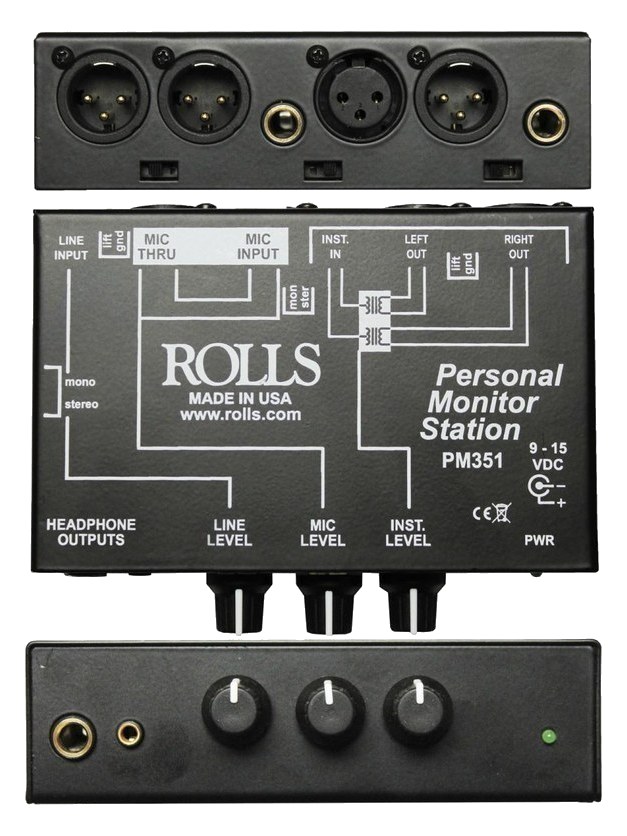
This unit earns its place in a house-of-worship IEMIn-Ear Monitor — earpieces that replace floor wedges, feeding each player their own mix. The reason this whole rack exists. or monitoring rig where you're running a consistent two-feed setup night after night — main mix plus click or guide track — and you need to hand individual control back to each musician without buying six standalone units. It's not the right call if your performers need more than two mix sources per output, if you need XLRThe standard 3-pin locking connector for mics and balanced line signals — pin 1 is the shield, pins 2 and 3 carry the balanced pair. connectivity throughout, or if you're running a full personal-mix system where each musician dials in their own channel-level mix. For those situations, a system like the Hear Technologies Hear Back or a digital personal-mix solution is a better fit. But for a clean, low-complexity two-bus distribution rig, the HP60 is a sensible, road-tested choice.
In the rack
Details worth deciding before load-in.
Feed the Main In from your console's main stereo auxAn auxiliary mix output — each aux is its own independent blend of the channels, typically one per monitor mix or effects send. and the Cue In from a dedicated click or playback output — keep these two busesA path where multiple channels sum into one signal — mixes, groups, and mains are all buses. A 25-bus console can build 25 blends at once. disciplined at the source and the per-channel blending on the HP60 becomes much more predictable for performers.
All six headphone outputs are on the front panel, which is ideal for stage-side racks where musicians are plugging in themselves; position it at a comfortable height and label each output with the performer's name using rack-mount label tape.
Because inputs are quarter-inch TRSTip-Ring-Sleeve — a 1/4″ jack with three contacts carrying a balanced signal or a stereo pair. A guitar plug with one extra ring. only, use a shorting plug or a terminated dummy plug on any unused input pair to prevent noise pickup on open jacks in electrically noisy stage environments.
At 165mm depth, this unit fits most shallow touring rack drawers, but confirm your rack's internal depth before assuming — leave at least 20mm behind the IECThe standard three-prong appliance power inlet on rack gear — the kettle lead. C13/C14 in spec-sheet speak. connector for cable clearance and airflow.
02 · Know the whole path before you buy.
Signal path
Learn the route as a block diagram: source, product function, transport, and destination. Select any block to see what enters, what changes, and what leaves.
Interactive block diagramAuto-looping · hover, focus, or tap to hold a stage
Port-type signalProduct functionSystem boundary
Follow one signal from source to destination
Each block answers the same three questions: what arrives, what changes here, and what leaves.
01 · Source · selected
¼-inch TRS + IEC C14
¼-inch TRS
01 · Source
5 documented inputs
¼-inch TRS + IEC C14
Arrives as
5 documented inputs
Connector
¼-inch TRS + IEC C14
Signal
analog audio
03 · What this product asks of the rest of the system.
Compatibility
Treat connector names as the start of the check—not the answer. These are the boundaries that determine a complete working path.
Best fit · Headphone Amp
Use it when 1U and 165 mm of depth fit the case.
Plan the companion path
Complete the path with upstream and downstream gear that matches connector, direction, signal type, protocol, and wiring standard.
Connector boundary
Documented connectors: ¼-inch TRS, IEC C14. Match connector, direction, and signal type—not shape alone.
04 · Every connector, grouped by job.
I/O ports
Switch the product view and the documented port inventory updates with it—hardware and data stay side by side.
Every connector, grouped by job.
Switch panels to keep the hardware view and the documented port list in sync.
Front panelRear panel
All documented ports for PreSonus HP60 Headphone Mixer
Port
Panel
Connector
Direction
Signal
Channels
Main In L (1/4")
rear
¼-inch TRS
input
analog audio
—
Main In R (1/4")
rear
¼-inch TRS
input
analog audio
—
Cue In L (1/4")
rear
¼-inch TRS
input
analog audio
—
Cue In R (1/4")
rear
¼-inch TRS
input
analog audio
—
Phones 1 (1/4")
rear
¼-inch TRS
output
analog audio
—
Phones 2 (1/4")
rear
¼-inch TRS
output
analog audio
—
Phones 3 (1/4")
rear
¼-inch TRS
output
analog audio
—
Phones 4 (1/4")
rear
¼-inch TRS
output
analog audio
—
Phones 5 (1/4")
rear
¼-inch TRS
output
analog audio
—
Phones 6 (1/4")
rear
¼-inch TRS
output
analog audio
—
Power (IEC)
rear
IEC C14
input
power
—
Showing 11 of 11 documented physical ports. Scroll to review the remaining rows.
05 · Compare the decision, not just the price.
Alternatives
The rows are organized around fit, power, I/O, and system role so a cheaper unit cannot hide a more expensive workflow.
HP60The PreSonus HP60 is a 6-channel rack-mount headphone mixer with per-channel mix between a main stereo and a cue feed, giving each performer their own balance of the band mix and the click track or talkback. Common pickup for tracking studios and houses of worship that run cue mixes alongside the main FOH feed.View gear →
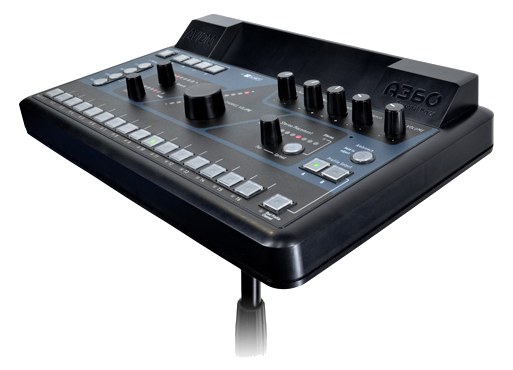
A360The Aviom A360 is a professional 36-channel personal mixer that gives musicians extensive control over their monitor mix with dedicated per-channel volume, pan, tone, and grouping. Its Pro16e networking carries all 36 channels over a single Cat5 cable, keeping stage wiring clean. This is a significant step up from basic personal mixers and is well-suited for demanding musicians who want studio-grade mix control on stage.View gear →
Hear Back Mix HubThe Hear Back Mix Hub is a rack-mount distribution hub that takes eight channels of analog audio via DB25 and distributes them to multiple personal mixer stations over Cat5 cabling. Each musician gets their own Hear Back mixer to create a custom blend, while the hub handles the conversion and distribution from a single 1U rack space. It is a cost-effective personal monitoring solution that scales well for bands of up to eight musicians.View gear →
06 · Resolve the questions that can change the purchase or build plan.
Planning questions
Short, source-backed answers surface rack fit, power, cabling, and connection details before they become surprises.
How will the PreSonus HP60 Headphone Mixer affect rack fit and case depth?
It occupies 1U. Its documented depth is 165 mm.
How much power does the PreSonus HP60 Headphone Mixer draw?
Typical draw is 20W and documented maximum draw is 30W.
What connections does the PreSonus HP60 Headphone Mixer have?
11 documented physical ports, including Main In L (1/4"), Main In R (1/4"), Cue In L (1/4"), Cue In R (1/4"), Phones 1 (1/4"), Phones 2 (1/4").
07 · See this unit inside a real rack plan.
Builder preview
Placement is only the start. Builder checks space · depth · weight, power headroom, dependencies, and compatible signal paths around this exact catalog item.Open in Builder