
PreSonus StudioLive 16R
PreSonus·Model StudioLive Series III 16R·presonus-studiolive-16r
Photos
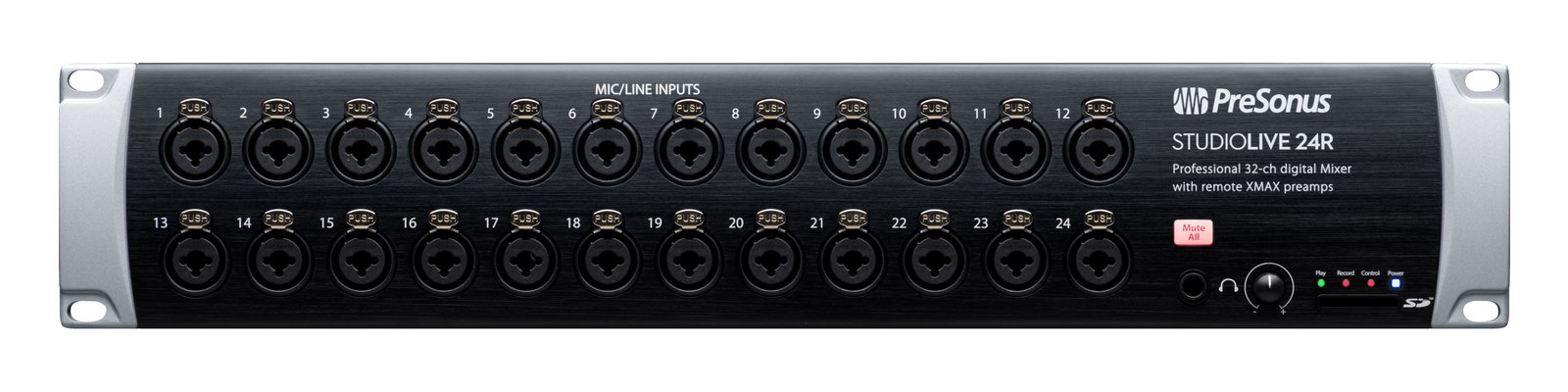
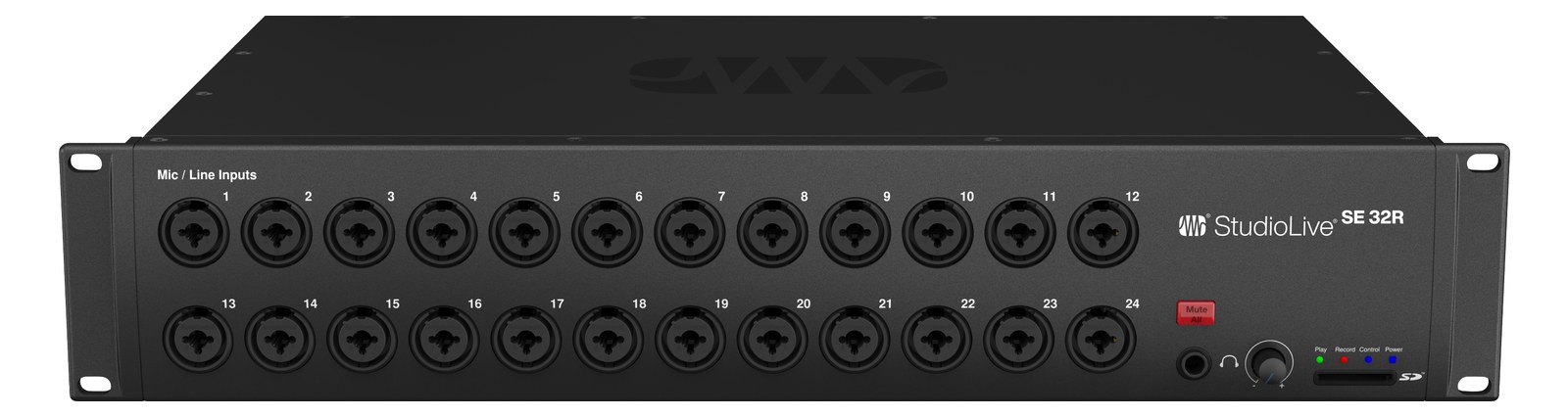
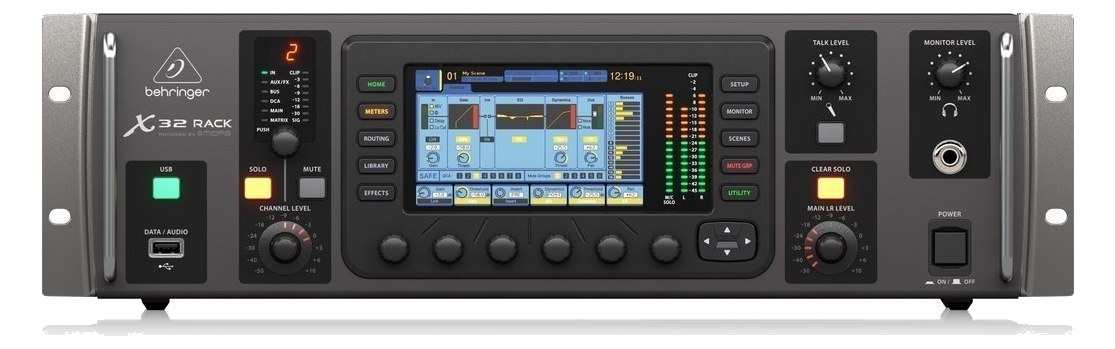
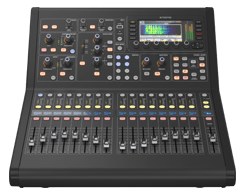
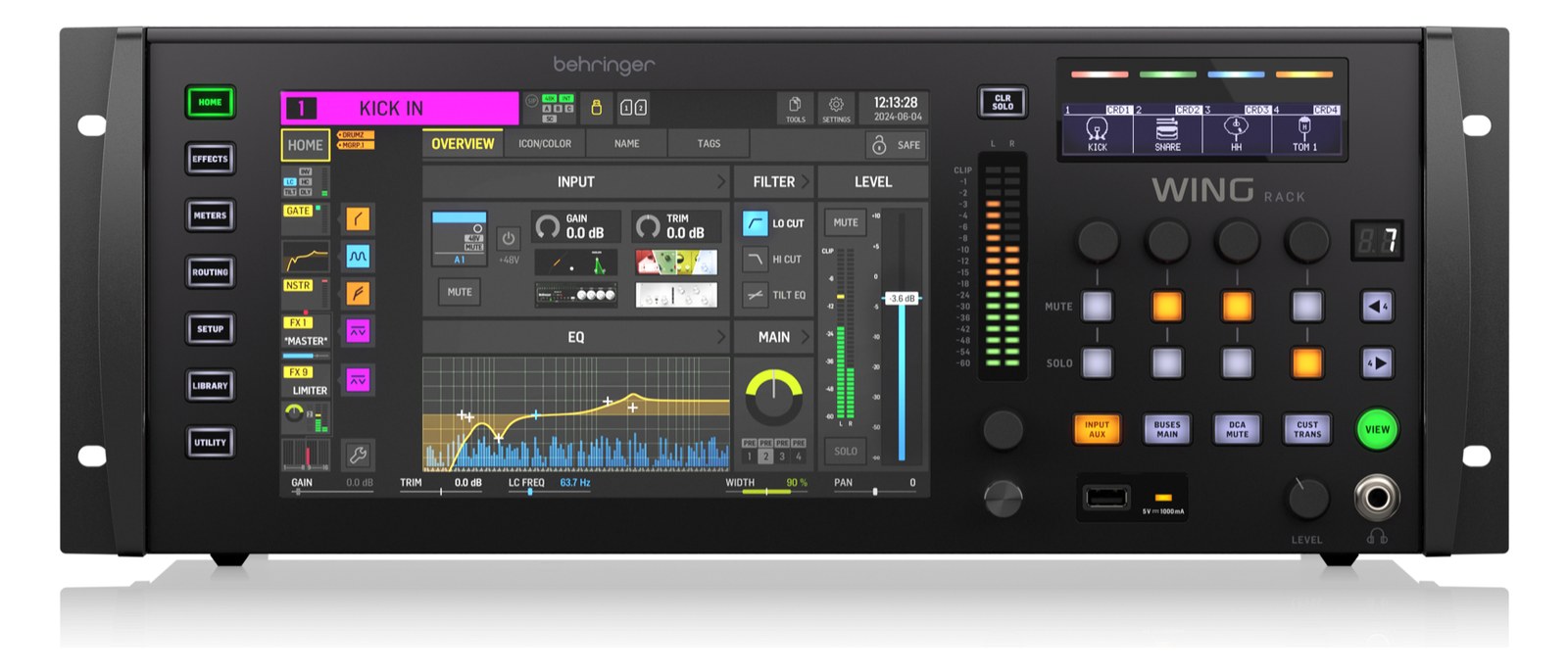
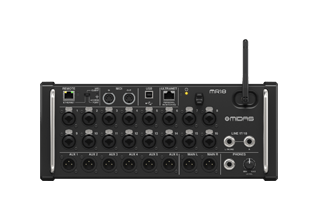
Manufacturer product photography — the drawn faceplate above stays true to panel layout; these show the hardware itself.
About the PreSonus StudioLive Series III 16R
The PreSonus StudioLive 16R is a triple-duty 1UThe standard slice of rack height: 1U = 1.75″. A 3U box takes three slices; half-rack gear pairs two units side by side in one.: a 16-preampThe gain stage that lifts a mic’s tiny signal up to line level — the first thing a signal hits, and a big part of how a console sounds. digital rack mixer, an AVBAudio Video Bridging — open network audio (MOTU, PreSonus) where the switch reserves bandwidth so streams can’t glitch. Milan is its pro profile. stage boxThe I/O endpoint on stage: mics plug in there and one digital line (AES50, Dante) carries everything to the console. The snake, digitized. for a StudioLive console, and an 18x18 USB interface. For compact IEMIn-Ear Monitor — earpieces that replace floor wedges, feeding each player their own mix. The reason this whole rack exists. rigs it mixes monitors from an iPad while multitracking rehearsals over USB. Requested by users; the smallest of the R-series rack mixers.
The StudioLive 16R earns its place by doing three things in one 1UThe standard slice of rack height: 1U = 1.75″. A 3U box takes three slices; half-rack gear pairs two units side by side in one. slot: it's a standalone 16-channel digital rack mixer you can drive from an iPad over Wi-Fi, a network stage boxThe I/O endpoint on stage: mics plug in there and one digital line (AES50, Dante) carries everything to the console. The snake, digitized. that feeds a StudioLive console over AVBAudio Video Bridging — open network audio (MOTU, PreSonus) where the switch reserves bandwidth so streams can’t glitch. Milan is its pro profile., and an 18×18 USB audio interface for multitrack recording or virtual soundcheckPlaying a recorded show back through the console as if the band were on stage — dial in mixes before anyone plugs in.. For compact IEMIn-Ear Monitor — earpieces that replace floor wedges, feeding each player their own mix. The reason this whole rack exists. rigs — the kind where the whole rack travels in a single Pelican-style case — that kind of consolidation matters. You're getting 16 combo preampsThe gain stage that lifts a mic’s tiny signal up to line level — the first thing a signal hits, and a big part of how a console sounds., a stereo main output, and six auxiliary outputs, all sitting at $800 and drawing a modest 40 watts under typical load.
In practice, those six analog auxAn auxiliary mix output — each aux is its own independent blend of the channels, typically one per monitor mix or effects send. outputs are the number to keep in mind when planning an IEMIn-Ear Monitor — earpieces that replace floor wedges, feeding each player their own mix. The reason this whole rack exists. rig. Six mixes means six discrete monitor sends — enough for a moderate-sized band running wired or wireless in-ears without an additional mix engine. The AVBAudio Video Bridging — open network audio (MOTU, PreSonus) where the switch reserves bandwidth so streams can’t glitch. Milan is its pro profile. port on an EtherConAn Ethernet plug inside a rugged XLR-style locking shell — tour-grade network connections that can’t be yanked loose. connector is genuinely useful if this unit lives at stage and ties back to a StudioLive console at FOHFront Of House — the main mix the audience hears, and the console position out in the room where it gets mixed., passing up to 32 channels of digital audio over a single Cat6Standard network cable grades. In an audio rig one cheap Cat5e run can replace a 48-channel copper snake; AES50 wants it shielded. run. At 300mm deep and 4.5kg, it fits standard shallow rack cases without drama, and the USB port lets you multitrack rehearsals directly to a laptop without touching the live signal path.
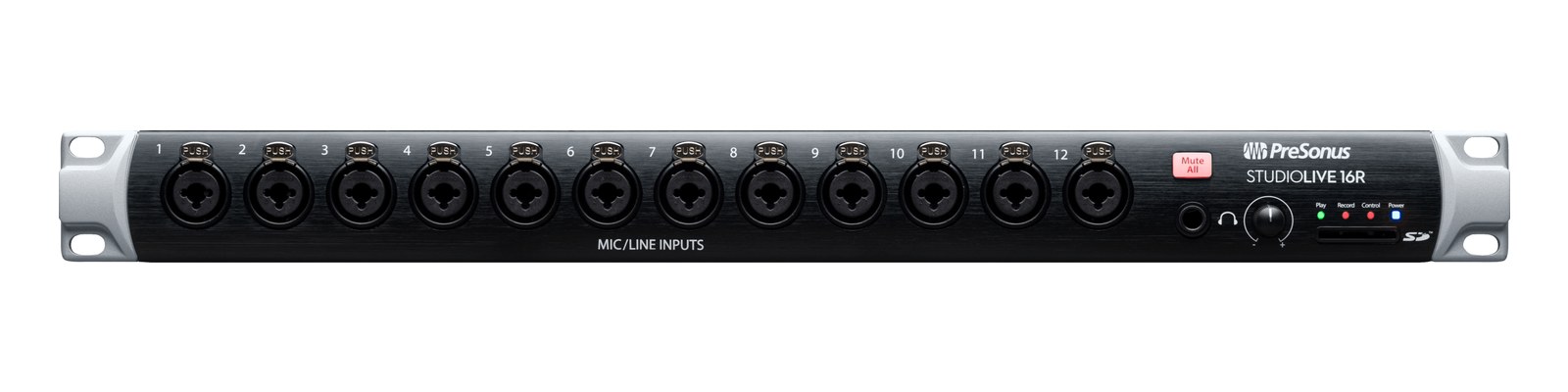
The 16R makes the most sense for a touring musician or small-production monitor engineer who needs a self-contained mix solution without dedicating a full console to the task — especially if the rest of the rig already lives in PreSonus or AVBAudio Video Bridging — open network audio (MOTU, PreSonus) where the switch reserves bandwidth so streams can’t glitch. Milan is its pro profile. ecosystem. If you need more than six monitor mixes, or if your inputs routinely exceed 16 channels, you'll be looking at the 32R or a dedicated mix engine. It's also not the right answer if your workflow depends on DanteThe most common audio-over-network standard: dozens of channels of uncompressed digital audio down one ordinary Ethernet cable between Dante boxes. or MADIA pro digital format carrying 64 channels on one coax or optical cable. Point-to-point — one sender, one receiver, no network required. networking, since AVB is the only digital transport on offer here.
In the rack
- Route your six analog auxAn auxiliary mix output — each aux is its own independent blend of the channels, typically one per monitor mix or effects send. outputs in order of priority — IEMIn-Ear Monitor — earpieces that replace floor wedges, feeding each player their own mix. The reason this whole rack exists. mixes first, then wedgeA floor monitor speaker angled up at the performer — the thing IEMs replace, and the thing you fall back on when they die. or fill mixes — so that if you ever need to patch around a fault, the most critical ears stay connected.
- Use the USB port during rehearsal to capture an 18-track multitrack, then load those files back for virtual soundcheckPlaying a recorded show back through the console as if the band were on stage — dial in mixes before anyone plugs in. at the next venue before doors; you get an accurate picture of gainHow much the preamp amplifies the incoming signal. Too low and you’re hunting through hiss; too high and peaks clip. structure without needing the band on stage.
- If you're running the 16R as a stage boxThe I/O endpoint on stage: mics plug in there and one digital line (AES50, Dante) carries everything to the console. The snake, digitized. over AVBAudio Video Bridging — open network audio (MOTU, PreSonus) where the switch reserves bandwidth so streams can’t glitch. Milan is its pro profile., label the EtherConAn Ethernet plug inside a rugged XLR-style locking shell — tour-grade network connections that can’t be yanked loose. run clearly at both ends and carry a tested spare Cat6Standard network cable grades. In an audio rig one cheap Cat5e run can replace a 48-channel copper snake; AES50 wants it shielded. patch cable in the rack drawer — AVB won't fall back gracefully if that link drops mid-show.
- Keep the IECThe standard three-prong appliance power inlet on rack gear — the kettle lead. C13/C14 in spec-sheet speak. power cable strain-relieved at the back of the rack; the C14 inlet sits close to the AVBAudio Video Bridging — open network audio (MOTU, PreSonus) where the switch reserves bandwidth so streams can’t glitch. Milan is its pro profile. and USB ports, and a yanked cable in a tight rack lane can take out your network connection at the same time.
16-ch 1UThe standard slice of rack height: 1U = 1.75″. A 3U box takes three slices; half-rack gear pairs two units side by side in one. rack mixer / stage boxThe I/O endpoint on stage: mics plug in there and one digital line (AES50, Dante) carries everything to the console. The snake, digitized. / 18x18 USB interface (AVBAudio Video Bridging — open network audio (MOTU, PreSonus) where the switch reserves bandwidth so streams can’t glitch. Milan is its pro profile.).
I/O Ports (6)
| Port | Connector | Direction | Signal | Channels |
|---|---|---|---|---|
| Mic/Line 1-16 | COMBO XLR TRS | input | analog audio | 16 |
| Main Out L/R | XLR MALE | output | analog audio | 2 |
| Aux/Monitor Out 1-6 | XLR MALE | output | analog audio | 6 |
| AVB Network | ETHERCON | bidirectional | digital audio | 32 |
| USB (18x18) | USB B | bidirectional | data | — |
- Power (IEC C14)
Deciding between two?
Rack space, watts, weight and every connector, side by side.
Related gear


Related articles
Guides from our library that cover planning around digital mixer gear.
A walking tour of the signal path from microphone to in-ear monitor, with what every box in the rack actually does to the audio along the way.
Why sealed IEMs make you feel disconnected from the room — and exactly how to put the audience back into your mix with one or two well-placed mics.
Step-by-step: linking aux buses into stereo pairs, pre-fader vs post-fader, routing buses to Ultranet vs physical XLRs vs AES50, and adding a bus-level limiter.
A practical comparison of the three audio-over-network protocols you’ll encounter in a rack rig, with guidance on when each one is the right pick.