
Behringer Wing Rack Digital Console
Behringer·Model Wing Rack·behringer-wing-rack
Photos
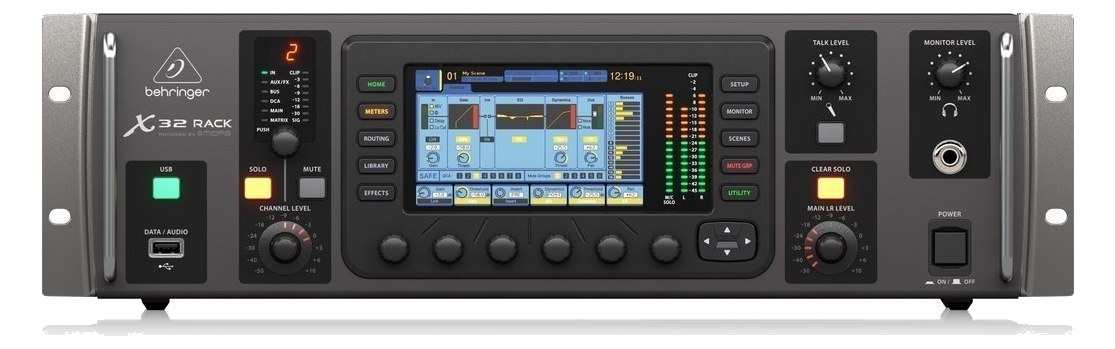
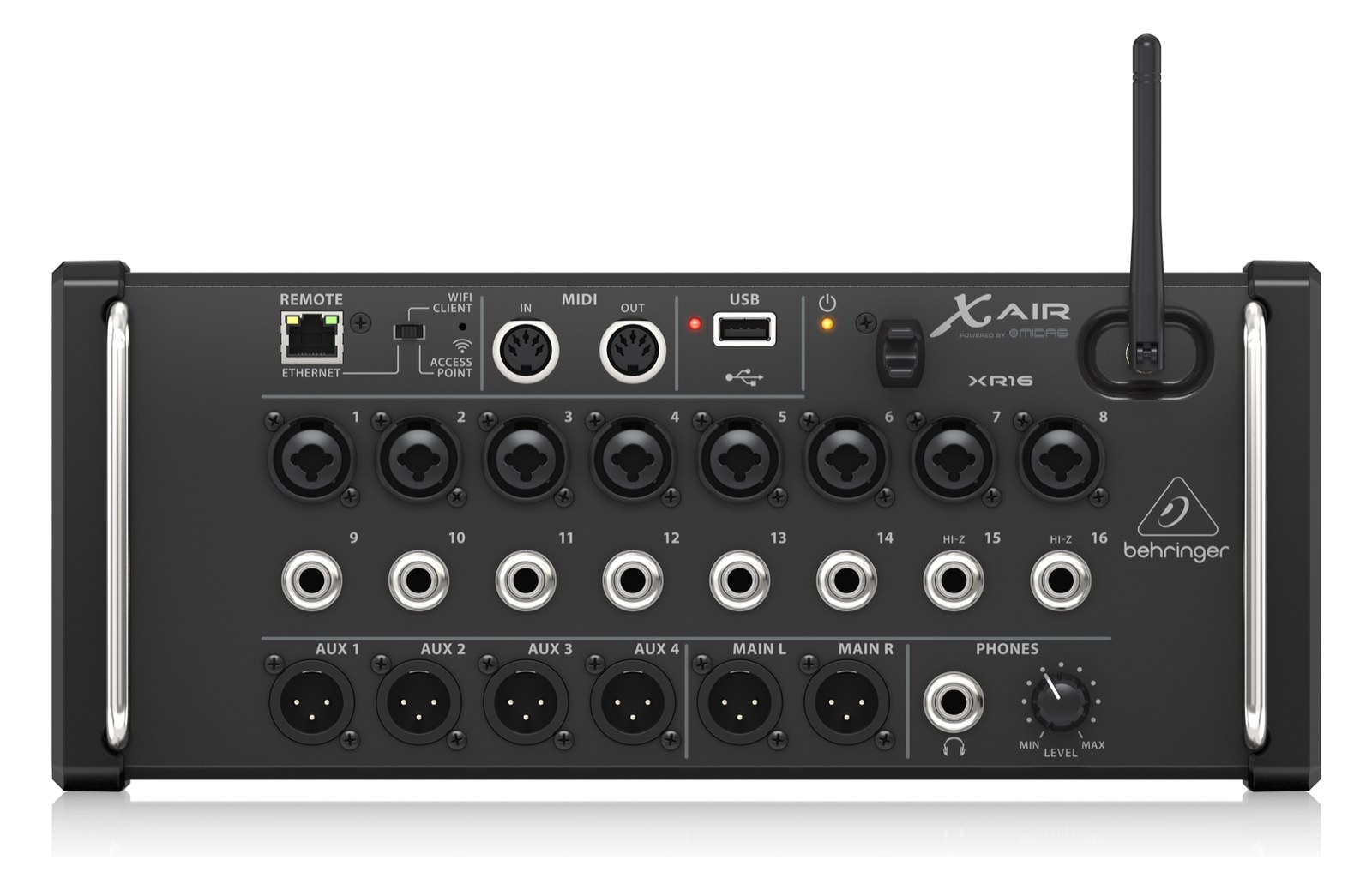
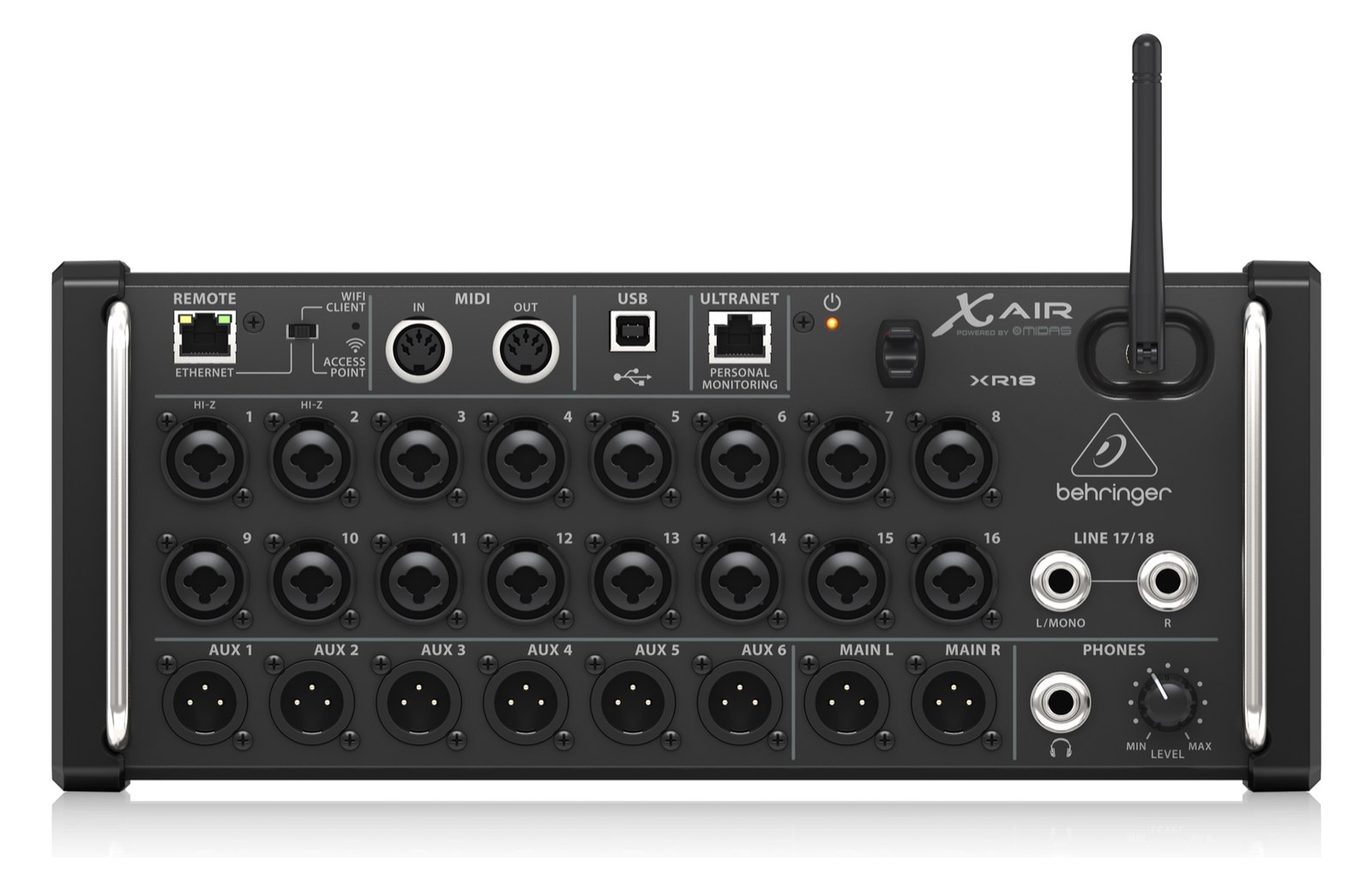
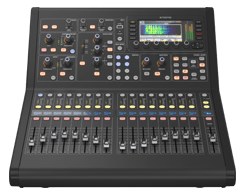
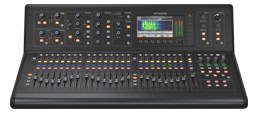
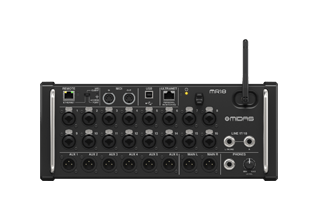
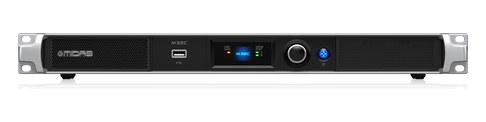
Manufacturer product photography — the drawn faceplate above stays true to panel layout; these show the hardware itself.
About the Behringer Wing Rack
The Behringer Wing Rack takes the Wing mixing engine — 48 input channels, 24 mix busesA path where multiple channels sum into one signal — mixes, groups, and mains are all buses. A 25-bus console can build 25 blends at once., 16 main buses — and packages it for a 3UThe standard slice of rack height: 1U = 1.75″. A 3U box takes three slices; half-rack gear pairs two units side by side in one. rack slot without a control surface. Three AES50The Behringer/Midas console-to-stage-box link: 48 channels each way over one shielded Cat5e cable, with near-zero latency. ports mean you can hang three DL-series or S-series stage boxesThe I/O endpoint on stage: mics plug in there and one digital line (AES50, Dante) carries everything to the console. The snake, digitized. off one console, effectively centralising 100+ stage-side preampsThe gain stage that lifts a mic’s tiny signal up to line level — the first thing a signal hits, and a big part of how a console sounds. into a single rack rig. Control is via tablet, laptop, or the dedicated Wing surface over Ethernet.
The Wing Rack is Behringer's full Wing mixing engine stripped of its control surface and bolted into 3UThe standard slice of rack height: 1U = 1.75″. A 3U box takes three slices; half-rack gear pairs two units side by side in one. of rack space. You get the same 48 input channels, 24 mix busesA path where multiple channels sum into one signal — mixes, groups, and mains are all buses. A 25-bus console can build 25 blends at once., and 16 main buses as the desktop Wing, but the interface is entirely remote — tablet, laptop, or a networked Wing surface via the Ethernet control port. That makes it a serious candidate for any monitor rig, playback rig, or compact FOHFront Of House — the main mix the audience hears, and the console position out in the room where it gets mixed. setup where a traditional console surface would be awkward or unnecessary, and where the engineer is comfortable working in software.
Those three AES50The Behringer/Midas console-to-stage-box link: 48 channels each way over one shielded Cat5e cable, with near-zero latency. ports are the real story at load-in. Each carries 48 bidirectional channels, so in theory you can feed three Behringer or Midas AES50-compatible stage boxesThe I/O endpoint on stage: mics plug in there and one digital line (AES50, Dante) carries everything to the console. The snake, digitized. simultaneously — that's a lot of remote preampThe gain stage that lifts a mic’s tiny signal up to line level — the first thing a signal hits, and a big part of how a console sounds. real estate without a single analog snakeA multicore cable bundling many channels into one stage-to-console run. A sub-snake collects one corner of the stage into a drop box. run to the console. The eight local XLRsThe standard 3-pin locking connector for mics and balanced line signals — pin 1 is the shield, pins 2 and 3 carry the balanced pair. handle anything that needs to live at the rack: a talk mic, a local test source, a confidence feed. StageConnect adds another proprietary digital path, and the AES3The pro standard for stereo digital audio over an XLR cable — balanced, so it runs much farther than consumer S/PDIF. pair gives you a clean handoff to a digital IEMIn-Ear Monitor — earpieces that replace floor wedges, feeding each player their own mix. The reason this whole rack exists. transmitter or recording device. At 90W nominal draw and a 321mm depth, it fits most standard road racks without fighting for power budget.
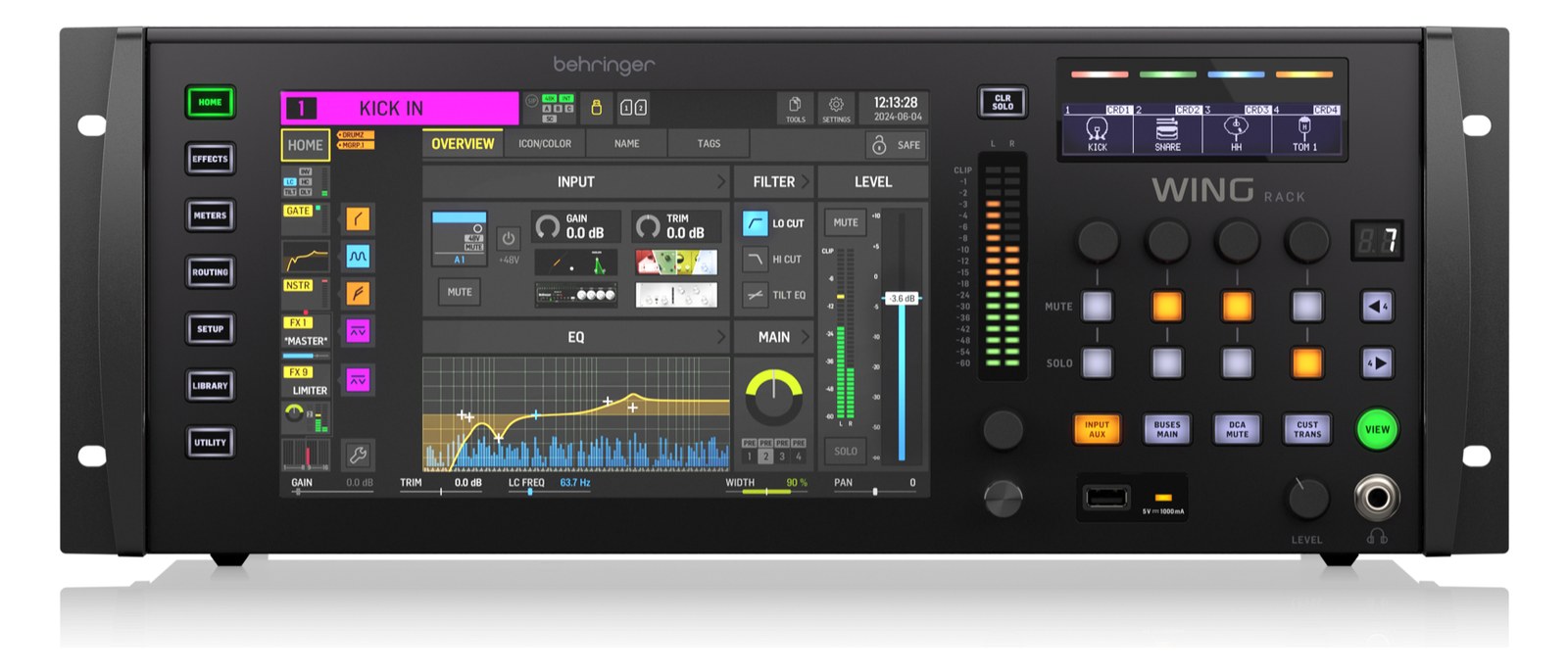
Pick the Wing Rack if you're building a purpose-made IEMIn-Ear Monitor — earpieces that replace floor wedges, feeding each player their own mix. The reason this whole rack exists. or playback rack around Behringer's ecosystem and you're not looking to add a surface — the remote workflow is the point, not a compromise. It also makes sense as a headless monitor console when the monitor engineer is working off a tablet on the stage lip. Skip it if your show requires fast, hands-on recall adjustments mid-song and you're not already fluent in Wing's touch interface, or if your stage boxesThe I/O endpoint on stage: mics plug in there and one digital line (AES50, Dante) carries everything to the console. The snake, digitized. are all analog and you have no AES50The Behringer/Midas console-to-stage-box link: 48 channels each way over one shielded Cat5e cable, with near-zero latency. infrastructure — the local I/O alone won't justify the unit.
In the rack
- Patch your AES50The Behringer/Midas console-to-stage-box link: 48 channels each way over one shielded Cat5e cable, with near-zero latency. stage boxesThe I/O endpoint on stage: mics plug in there and one digital line (AES50, Dante) carries everything to the console. The snake, digitized. before the show and label which port feeds which box on a physical cable tag — swapping A, B, and C mid-show in software is disorienting under pressure.
- Use the Ethernet control port on a dedicated switch isolated from any house network; Wing remote control traffic and general venue IT traffic on the same subnet can cause latencyThe delay between sound entering and leaving a digital system. IEM rigs fight to keep the whole chain down to a few milliseconds. spikes in the UI.
- The AES3The pro standard for stereo digital audio over an XLR cable — balanced, so it runs much farther than consumer S/PDIF. output is a clean, format-agnostic stereo feed — use it to drive a digital IEMIn-Ear Monitor — earpieces that replace floor wedges, feeding each player their own mix. The reason this whole rack exists. transmitter directly and save your local XLRThe standard 3-pin locking connector for mics and balanced line signals — pin 1 is the shield, pins 2 and 3 carry the balanced pair. outputs for mono auxAn auxiliary mix output — each aux is its own independent blend of the channels, typically one per monitor mix or effects send. or utility sends.
- At 5.9 kg in 3UThe standard slice of rack height: 1U = 1.75″. A 3U box takes three slices; half-rack gear pairs two units side by side in one., the Wing Rack is dense enough to shift a lighter rack's center of gravity — mount it low in the rack and use a proper lid panel above it to protect the I/O rear from cable stress during transport.
48-channel console. 8 local XLRThe standard 3-pin locking connector for mics and balanced line signals — pin 1 is the shield, pins 2 and 3 carry the balanced pair. inputs + triple AES50The Behringer/Midas console-to-stage-box link: 48 channels each way over one shielded Cat5e cable, with near-zero latency. + StageConnect + AES3The pro standard for stereo digital audio over an XLR cable — balanced, so it runs much farther than consumer S/PDIF. + USB audio.
I/O Ports (25)
| Port | Connector | Direction | Signal | Channels |
|---|---|---|---|---|
| Local In 1 | XLR FEMALE | input | analog audio | — |
| Local In 2 | XLR FEMALE | input | analog audio | — |
| Local In 3 | XLR FEMALE | input | analog audio | — |
| Local In 4 | XLR FEMALE | input | analog audio | — |
| Local In 5 | XLR FEMALE | input | analog audio | — |
| Local In 6 | XLR FEMALE | input | analog audio | — |
| Local In 7 | XLR FEMALE | input | analog audio | — |
| Local In 8 | XLR FEMALE | input | analog audio | — |
| Local Out 1 | XLR MALE | output | analog audio | — |
| Local Out 2 | XLR MALE | output | analog audio | — |
| Local Out 3 | XLR MALE | output | analog audio | — |
| Local Out 4 | XLR MALE | output | analog audio | — |
| Local Out 5 | XLR MALE | output | analog audio | — |
| Local Out 6 | XLR MALE | output | analog audio | — |
| Local Out 7 | XLR MALE | output | analog audio | — |
| Local Out 8 | XLR MALE | output | analog audio | — |
| AES50 A | ETHERCON | bidirectional | digital audio | 48 |
| AES50 B | ETHERCON | bidirectional | digital audio | 48 |
| AES50 C | ETHERCON | bidirectional | digital audio | 48 |
| StageConnect | XLR FEMALE | bidirectional | digital audio | 32 |
| AES3 In | AES3 XLR | input | digital audio | — |
| AES3 Out | AES3 XLR | output | digital audio | — |
| USB Audio | USB B | bidirectional | data | — |
| Ethernet (control) | RJ45 | bidirectional | data | — |
- Power (IEC) (IEC C14)
Deciding between two?
Rack space, watts, weight and every connector, side by side.
Related gear


Community rigs using this gear (4)
Browse all rigs →Related articles
Guides from our library that cover planning around digital mixer gear.
A walking tour of the signal path from microphone to in-ear monitor, with what every box in the rack actually does to the audio along the way.
Why sealed IEMs make you feel disconnected from the room — and exactly how to put the audience back into your mix with one or two well-placed mics.
Step-by-step: linking aux buses into stereo pairs, pre-fader vs post-fader, routing buses to Ultranet vs physical XLRs vs AES50, and adding a bus-level limiter.
A practical comparison of the three audio-over-network protocols you’ll encounter in a rack rig, with guidance on when each one is the right pick.