
Behringer X32 Rack Digital Mixer
Behringer·Model X32 Rack·behringer-x32-rack
Photos
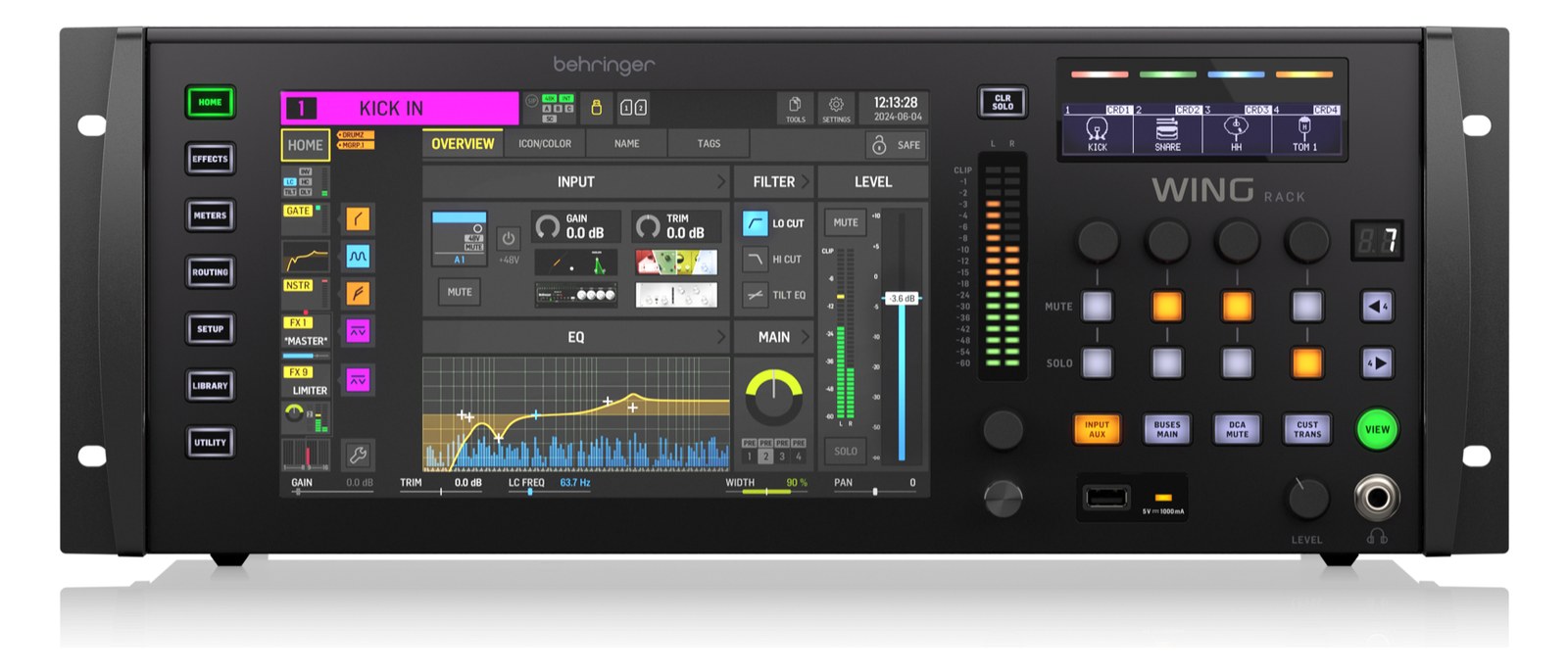
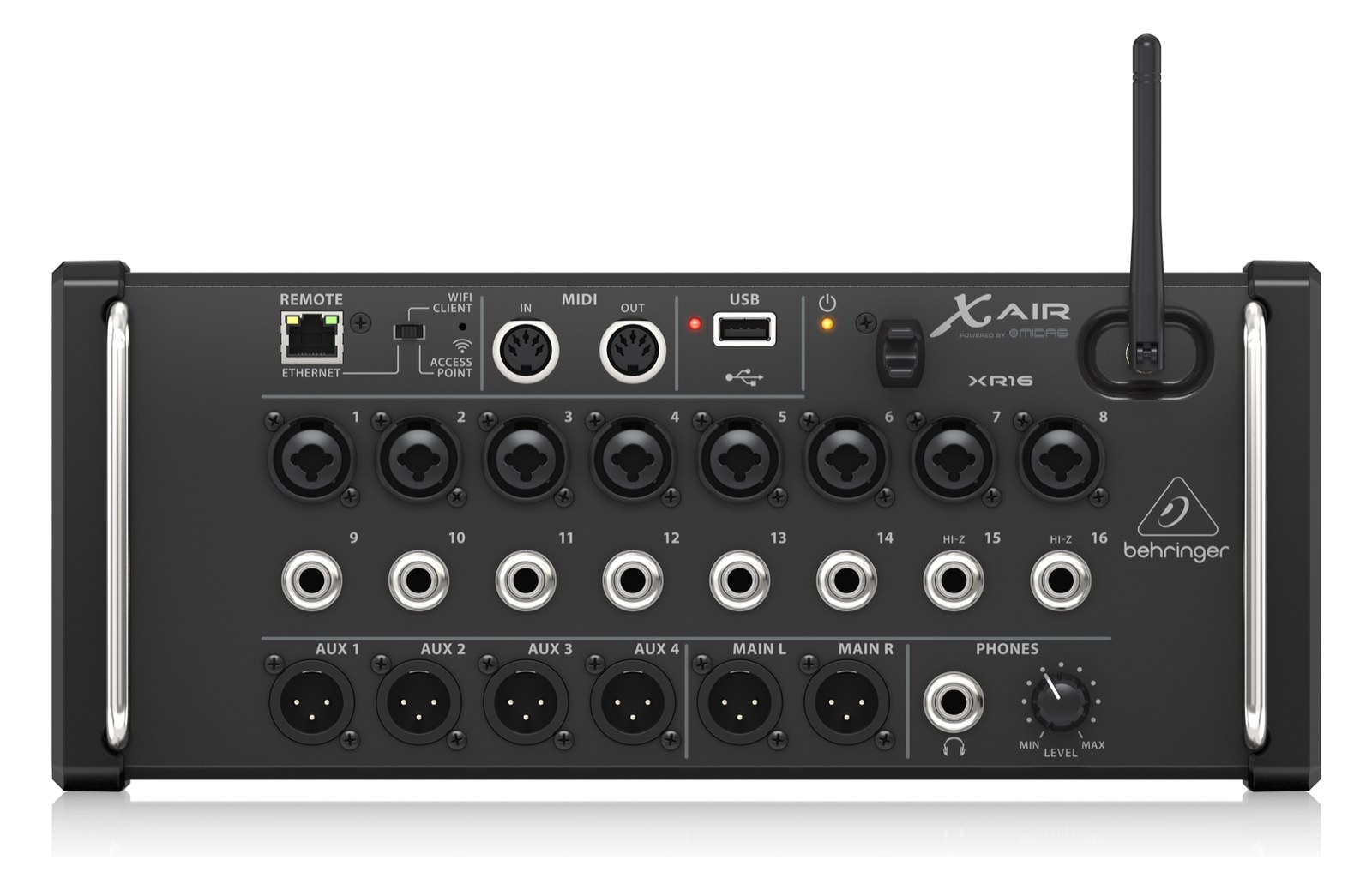
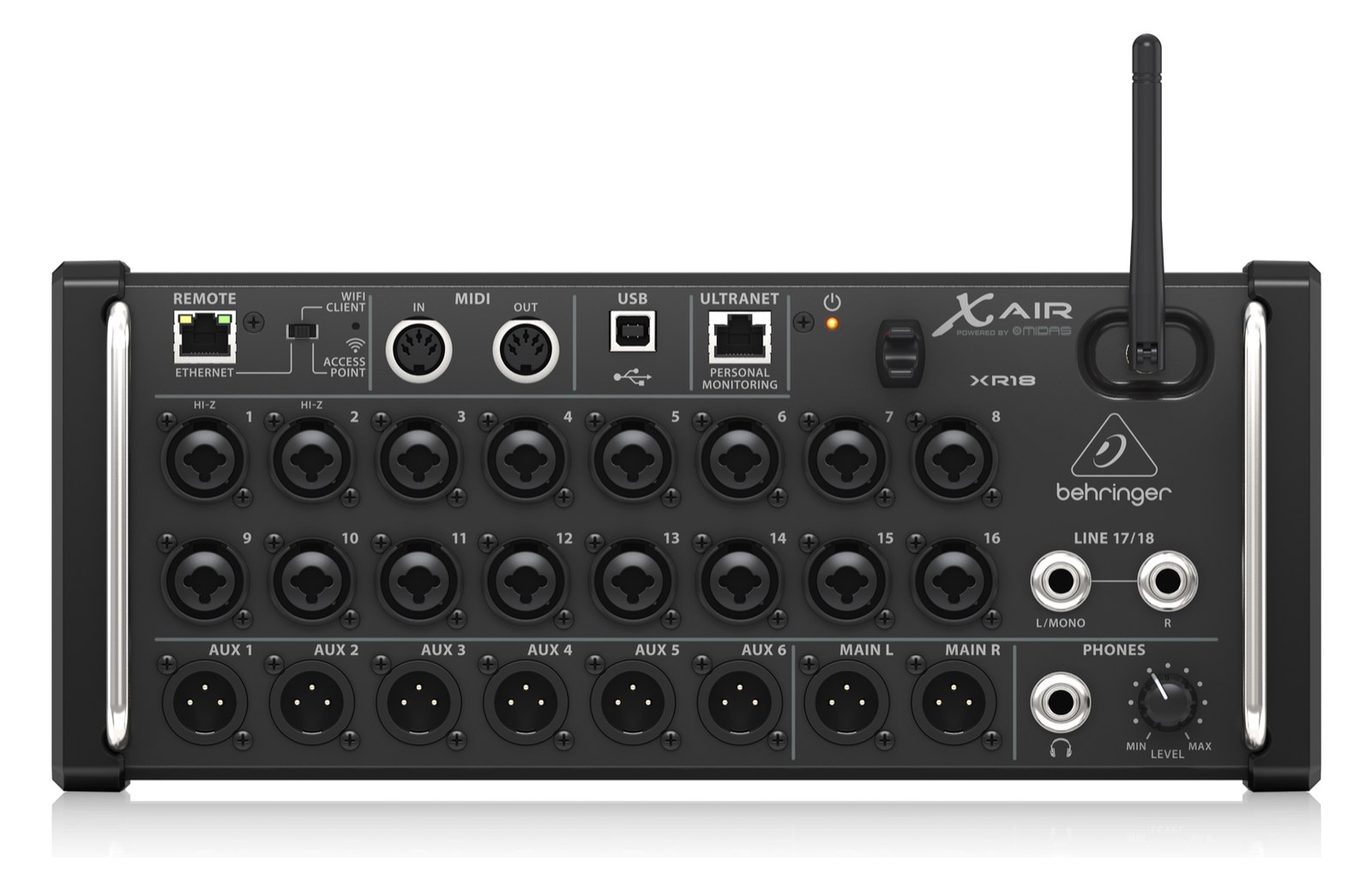
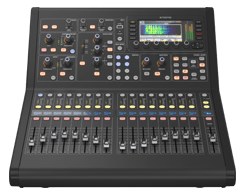
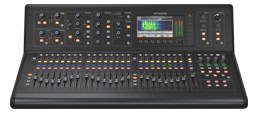
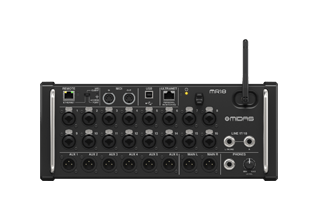
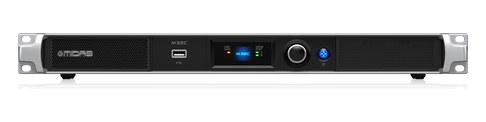
Manufacturer product photography — the drawn faceplate above stays true to panel layout; these show the hardware itself.
About the Behringer X32 Rack
The Behringer X32 Rack packs a full-featured 40-input digital mixer into a 3UThe standard slice of rack height: 1U = 1.75″. A 3U box takes three slices; half-rack gear pairs two units side by side in one. rack-mount form factor, making it a popular choice for IEMIn-Ear Monitor — earpieces that replace floor wedges, feeding each player their own mix. The reason this whole rack exists. mixing and playback rigs on a budget. It can serve as both a monitor mixer and a USB audio interface simultaneously, and optional expansion cards add DanteThe most common audio-over-network standard: dozens of channels of uncompressed digital audio down one ordinary Ethernet cable between Dante boxes. networking or additional digital I/O. The deep busA path where multiple channels sum into one signal — mixes, groups, and mains are all buses. A 25-bus console can build 25 blends at once. structure with 25 mix buses means you can create individual IEM mixes for a full band without running out of routing options.
The X32 Rack is the budget IEMIn-Ear Monitor — earpieces that replace floor wedges, feeding each player their own mix. The reason this whole rack exists. rig's center of gravity: the full 40-input, 25-bus X32 processing engine, sixteen Midas-designed preampsThe gain stage that lifts a mic’s tiny signal up to line level — the first thing a signal hits, and a big part of how a console sounds., and a screen-plus-encoders surface compressed into 3UThe standard slice of rack height: 1U = 1.75″. A 3U box takes three slices; half-rack gear pairs two units side by side in one.. A decade of firmware, an enormous user community, and the free X32-Edit / mixing-station ecosystem mean there is essentially no routing question about this console that hasn't already been answered in a forum thread — which is worth real money when you're debugging monitor worldThe side-stage domain of the monitor engineer — console, IEM racks, and everything feeding the band’s ears instead of the audience. at 11 PM.
The I/O math is what makes it work as a monitor brain: 16 local XLRThe standard 3-pin locking connector for mics and balanced line signals — pin 1 is the shield, pins 2 and 3 carry the balanced pair. inputs and 8 XLR outs cover a small stage directly, and the two AES50The Behringer/Midas console-to-stage-box link: 48 channels each way over one shielded Cat5e cable, with near-zero latency. ports each carry 48 channels both ways — add an S16 or SD16 stage boxThe I/O endpoint on stage: mics plug in there and one digital line (AES50, Dante) carries everything to the console. The snake, digitized. and you're running a full band's inputs plus every IEMIn-Ear Monitor — earpieces that replace floor wedges, feeding each player their own mix. The reason this whole rack exists. mix down one Cat5eStandard network cable grades. In an audio rig one cheap Cat5e run can replace a 48-channel copper snake; AES50 wants it shielded. run. The UltranetBehringer’s personal-monitoring link: 16 channels down a Cat5 cable to P16 mixers, so players dial their own ears without using console outputs. port feeds Behringer's P16 personal mixer system the first 16 channels without burning any of your XLR outs, and the USB interface gives you a 32×32 record/playback path to a computer for virtual soundcheckPlaying a recorded show back through the console as if the band were on stage — dial in mixes before anyone plugs in..
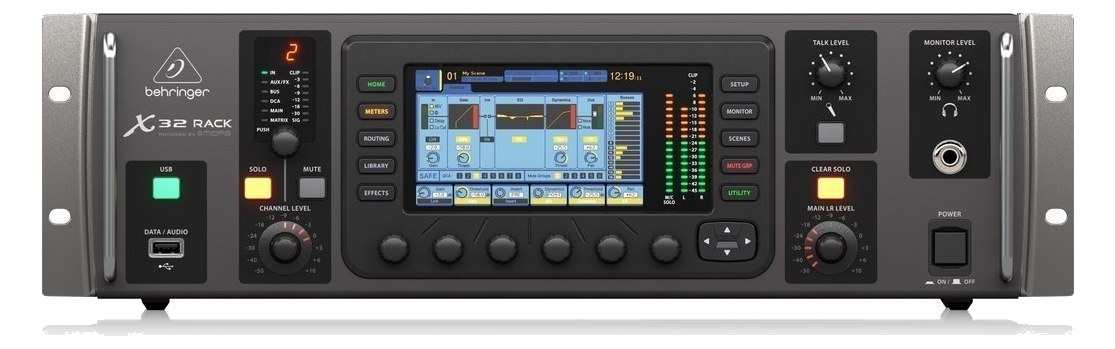
Trade-offs to plan around: it's 80–100W of always-on draw and a real fan — put it where the fan noise won't live next to an ambient mic. And at 3UThe standard slice of rack height: 1U = 1.75″. A 3U box takes three slices; half-rack gear pairs two units side by side in one. plus a stage boxThe I/O endpoint on stage: mics plug in there and one digital line (AES50, Dante) carries everything to the console. The snake, digitized., compare it honestly against the M32C-plus-stagebox route: the M32C gives you the same engine in 1U with nicer processing headroomThe margin between your normal level and where things clip — headroom is what absorbs the snare hit you didn’t see coming. per dollar if you never need local preampsThe gain stage that lifts a mic’s tiny signal up to line level — the first thing a signal hits, and a big part of how a console sounds. in the rack.
In the rack
- Both AES50The Behringer/Midas console-to-stage-box link: 48 channels each way over one shielded Cat5e cable, with near-zero latency. ports run 48×48 — keep A for the stage boxThe I/O endpoint on stage: mics plug in there and one digital line (AES50, Dante) carries everything to the console. The snake, digitized. and B for a second rack or FOH splitFeeding one mic to two consoles at once (FOH + monitors, or a record rig) through a splitter — both get the identical source..
- UltranetBehringer’s personal-monitoring link: 16 channels down a Cat5 cable to P16 mixers, so players dial their own ears without using console outputs. feeds P16 personal mixers channels 1–16 without consuming XLRThe standard 3-pin locking connector for mics and balanced line signals — pin 1 is the shield, pins 2 and 3 carry the balanced pair. outputs.
- The fan is audible in quiet rooms; rack it away from ambient mics and acoustic sources.
- Virtual soundcheckPlaying a recorded show back through the console as if the band were on stage — dial in mixes before anyone plugs in. over the 32×32 USB card is the fastest way to dial IEMIn-Ear Monitor — earpieces that replace floor wedges, feeding each player their own mix. The reason this whole rack exists. mixes before the band arrives.
40-input, 25-bus digital mixer. 16 Midas preampsThe gain stage that lifts a mic’s tiny signal up to line level — the first thing a signal hits, and a big part of how a console sounds., USB/DanteThe most common audio-over-network standard: dozens of channels of uncompressed digital audio down one ordinary Ethernet cable between Dante boxes. expandable.
I/O Ports (54)
| Port | Connector | Direction | Signal | Channels |
|---|---|---|---|---|
| Mic In 1 | XLR FEMALE | input | analog audio | — |
| Mic In 2 | XLR FEMALE | input | analog audio | — |
| Mic In 3 | XLR FEMALE | input | analog audio | — |
| Mic In 4 | XLR FEMALE | input | analog audio | — |
| Mic In 5 | XLR FEMALE | input | analog audio | — |
| Mic In 6 | XLR FEMALE | input | analog audio | — |
| Mic In 7 | XLR FEMALE | input | analog audio | — |
| Mic In 8 | XLR FEMALE | input | analog audio | — |
| Mic In 9 | XLR FEMALE | input | analog audio | — |
| Mic In 10 | XLR FEMALE | input | analog audio | — |
| Mic In 11 | XLR FEMALE | input | analog audio | — |
| Mic In 12 | XLR FEMALE | input | analog audio | — |
| Mic In 13 | XLR FEMALE | input | analog audio | — |
| Mic In 14 | XLR FEMALE | input | analog audio | — |
| Mic In 15 | XLR FEMALE | input | analog audio | — |
| Mic In 16 | XLR FEMALE | input | analog audio | — |
| Talkback Mic In (XLR) | XLR FEMALE | input | analog audio | — |
| XLR Out 1 | XLR MALE | output | analog audio | — |
| XLR Out 2 | XLR MALE | output | analog audio | — |
| XLR Out 3 | XLR MALE | output | analog audio | — |
| XLR Out 4 | XLR MALE | output | analog audio | — |
| XLR Out 5 | XLR MALE | output | analog audio | — |
| XLR Out 6 | XLR MALE | output | analog audio | — |
| XLR Out 7 | XLR MALE | output | analog audio | — |
| XLR Out 8 | XLR MALE | output | analog audio | — |
| AES50 A | ETHERCON | bidirectional | digital audio | 48 |
| AES50 B (redundant) | ETHERCON | bidirectional | digital audio | 48 |
| Aux In 1 (TRS) | TRS QUARTER | input | analog audio | — |
| Aux In 2 (TRS) | TRS QUARTER | input | analog audio | — |
| Aux In 3 (TRS) | TRS QUARTER | input | analog audio | — |
| Aux In 4 (TRS) | TRS QUARTER | input | analog audio | — |
| Aux In 5 (TRS) | TRS QUARTER | input | analog audio | — |
| Aux In 6 (TRS) | TRS QUARTER | input | analog audio | — |
| Aux In L (RCA) | RCA | input | analog audio | — |
| Aux In R (RCA) | RCA | input | analog audio | — |
| Aux Out 1 (TRS) | TRS QUARTER | output | analog audio | — |
| Aux Out 2 (TRS) | TRS QUARTER | output | analog audio | — |
| Aux Out 3 (TRS) | TRS QUARTER | output | analog audio | — |
| Aux Out 4 (TRS) | TRS QUARTER | output | analog audio | — |
| Aux Out 5 (TRS) | TRS QUARTER | output | analog audio | — |
| Aux Out 6 (TRS) | TRS QUARTER | output | analog audio | — |
| Aux Out L (RCA) | RCA | output | analog audio | — |
| Aux Out R (RCA) | RCA | output | analog audio | — |
| Monitor Out L (TRS) | TRS QUARTER | output | analog audio | — |
| Monitor Out R (TRS) | TRS QUARTER | output | analog audio | — |
| MIDI In | MIDI DIN5 | input | data | — |
| MIDI Out | MIDI DIN5 | output | data | — |
| Ultranet (P-16) | RJ45 | output | digital audio | 16 |
| AES/EBU Out (retired — no such jack) | AES3 XLR | output | digital audio | — |
| USB Audio (X-USB, USB-B) | USB B | bidirectional | data | — |
| USB Data/Audio (front, USB-A) | USB A | bidirectional | data | — |
| Ethernet (remote) | RJ45 | bidirectional | data | — |
| Headphones (front) | TRS QUARTER | output | analog audio | — |
- Power (IEC) (IEC C14)
Deciding between two?
Rack space, watts, weight and every connector, side by side.
Related gear


Community rigs using this gear (6)
Browse all rigs →
Related articles
Guides from our library that cover planning around digital mixer gear.
A walking tour of the signal path from microphone to in-ear monitor, with what every box in the rack actually does to the audio along the way.
Why sealed IEMs make you feel disconnected from the room — and exactly how to put the audience back into your mix with one or two well-placed mics.
Step-by-step: linking aux buses into stereo pairs, pre-fader vs post-fader, routing buses to Ultranet vs physical XLRs vs AES50, and adding a bus-level limiter.
A practical comparison of the three audio-over-network protocols you’ll encounter in a rack rig, with guidance on when each one is the right pick.