
Digital Mixer

Behringer X Air XR16

Behringer·Model XR16·behringer-xr16

Photos

Manufacturer product photography — the drawn faceplate above stays true to panel layout; these show the hardware itself.

Photo: BehringerClick to zoom

About the Behringer XR16

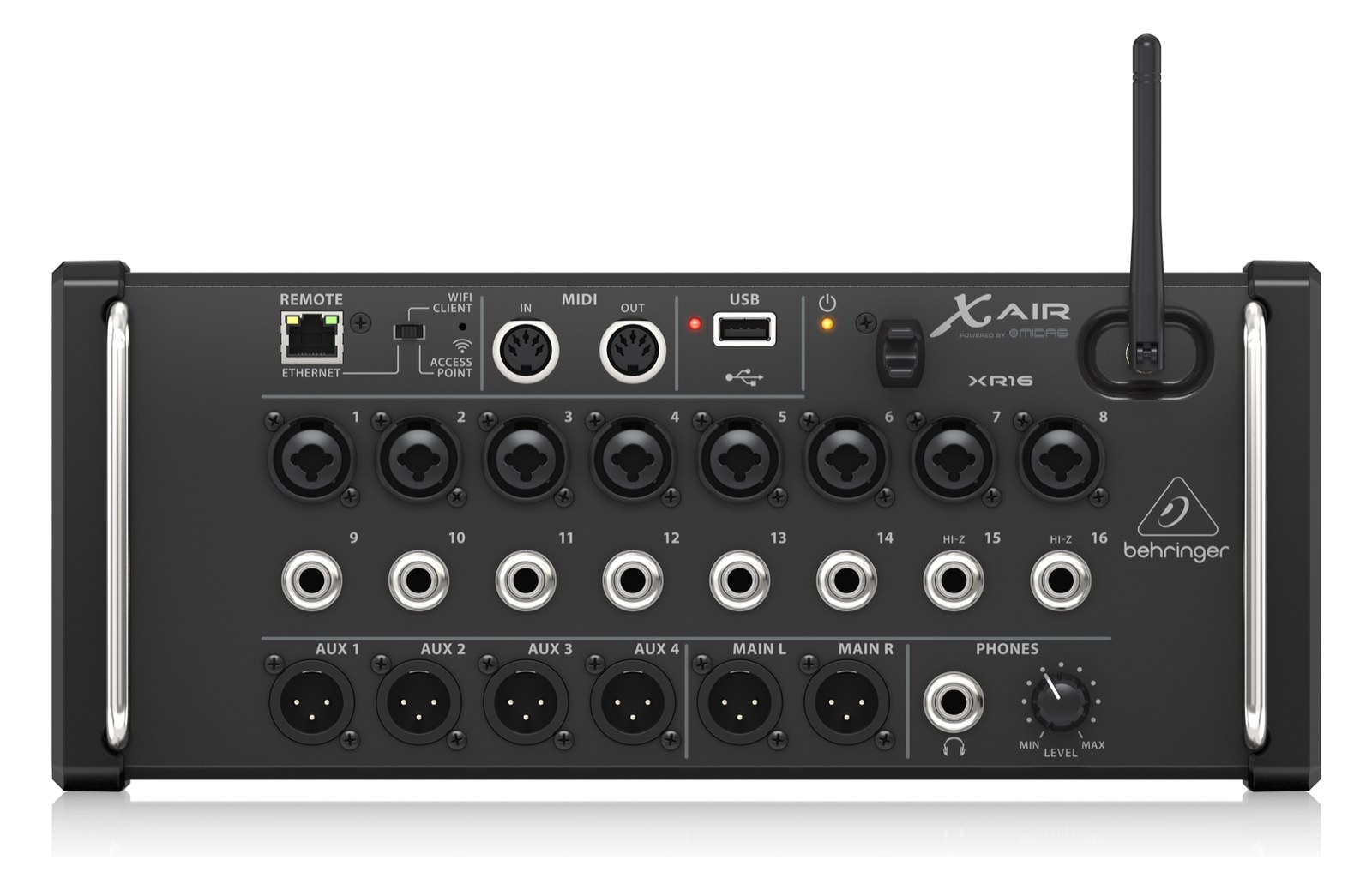
The Behringer XR16 is the budget door into tablet mixing: eight Midas-designed preamps, 16 inputs, built-in tri-mode Wi-Fi, and rack ears in the box. The chassis is not a 19" panel — it is the same 333 mm box as the XR18, and the included ear kit bridges it to the rails across about three rack-spaces. Small IEM rigs run four stereo mixes from a phone with nothing else in the rack. Surfaced repeatedly in zero-result searches before this add.

The XR16 is Behringer's mid-tier entry in the X Air tablet-controlled mixer line — 16 inputs, four aux buses, and built-in Wi-Fi, all in a compact desktop unit that also rack-mounts with the included ears. Its core job in a live rig is simple: get inputs from the stage, route mixes to ears or wedges, and let an engineer or a self-mixing musician run it from a phone or tablet without a console taking up floor space. For small IEM rigs — a three- or four-piece band running their own monitors — it punches well above its $429 price point, especially given the eight Midas-designed preamps on channels 1–8.

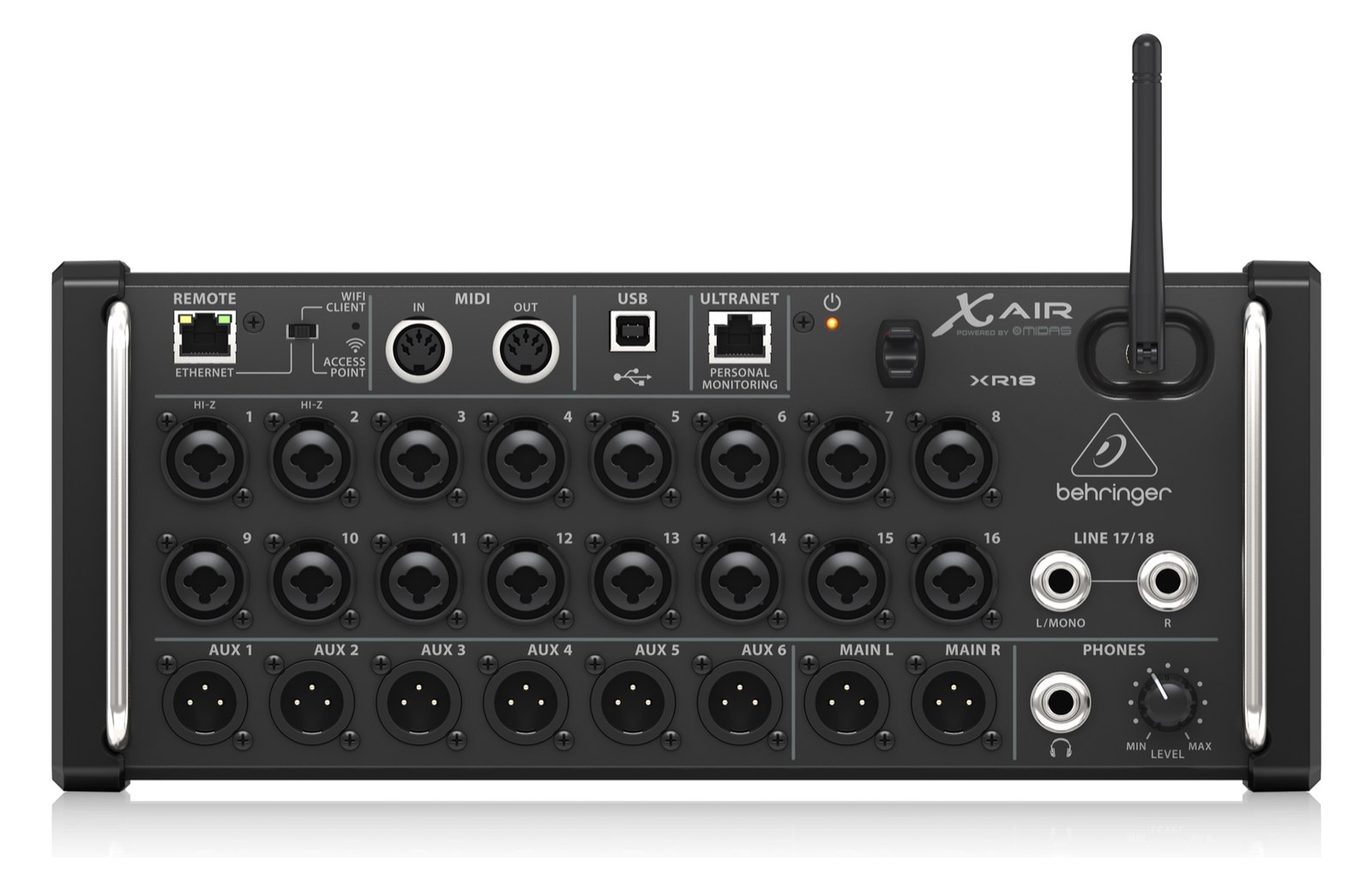
The port layout tells you exactly where the limits are. Channels 1–8 give you combo XLR/TRS with real preamp headroom; channels 9–16 are TRS line-level only, so anything coming in there needs to already be at line level — no plugging a dynamic mic directly into channel 12. You get four XLR aux outputs, which means four mono mixes or two stereo IEM feeds maximum. That's plenty for a small act, tight for a six-piece with individual mix demands. At 40 watts nominal draw and 4.5 kg, it's light on the power budget and light in the bag. The USB port handles stereo recording to a thumb drive or host computer, not multitrack — keep expectations calibrated.
This belongs in a rack where the whole rig is built around wireless control and compactness matters more than deep I/O. A solo artist flying with a keyboard rig, a small touring band doing self-mixing from phones, or a rehearsal studio wanting a permanent monitor solution — the XR16 earns its spot. It is not the move if you need more than four discrete output buses, if your inputs exceed eight mic-level sources, or if your workflow depends on a wired connection to a DAW or a physical control surface. For those needs, step up to the XR18 for more buses and AES50, or look at a dedicated stagebox-and-console pairing.

In the rack

  • Channels 9–16 are TRS line-level only — pre-plan which sources land there (keyboards, playback, DI boxes) and which mic sources must hit channels 1–8, or you'll be re-patching at soundcheck.
  • The rack ears are included but the unit is described as desktop format — verify your rack depth clears 300 mm before load-in, and leave the rear accessible for cable management since all I/O lives back there.
  • Wi-Fi is the primary control path; if your venue has heavy RF congestion, connect a dedicated router to the XR16's ethernet port and run your own isolated network rather than relying on the built-in access point.
  • USB stereo recording is a useful backup — plug in a thumb drive before doors and capture the main L/R mix as a show record without involving a laptop or any extra hardware.

16-input tablet-mixed stage-box mixer. Compact 333 mm chassis, racks 3U on the included ears.

I/O Ports (6)

PortConnectorDirectionSignalChannels
Mic/Line 1-8COMBO XLR TRSinputanalog audio8
Line In 9-16TRS QUARTERinputanalog audio8
Main Out L/RXLR MALEoutputanalog audio2
Aux Out 1-4XLR MALEoutputanalog audio4
USB (stereo rec)USB Abidirectionaldata
Power
  • Power (IEC C14)

Deciding between two?

Rack space, watts, weight and every connector, side by side.

Related gear

Related articles

Guides from our library that cover planning around digital mixer gear.