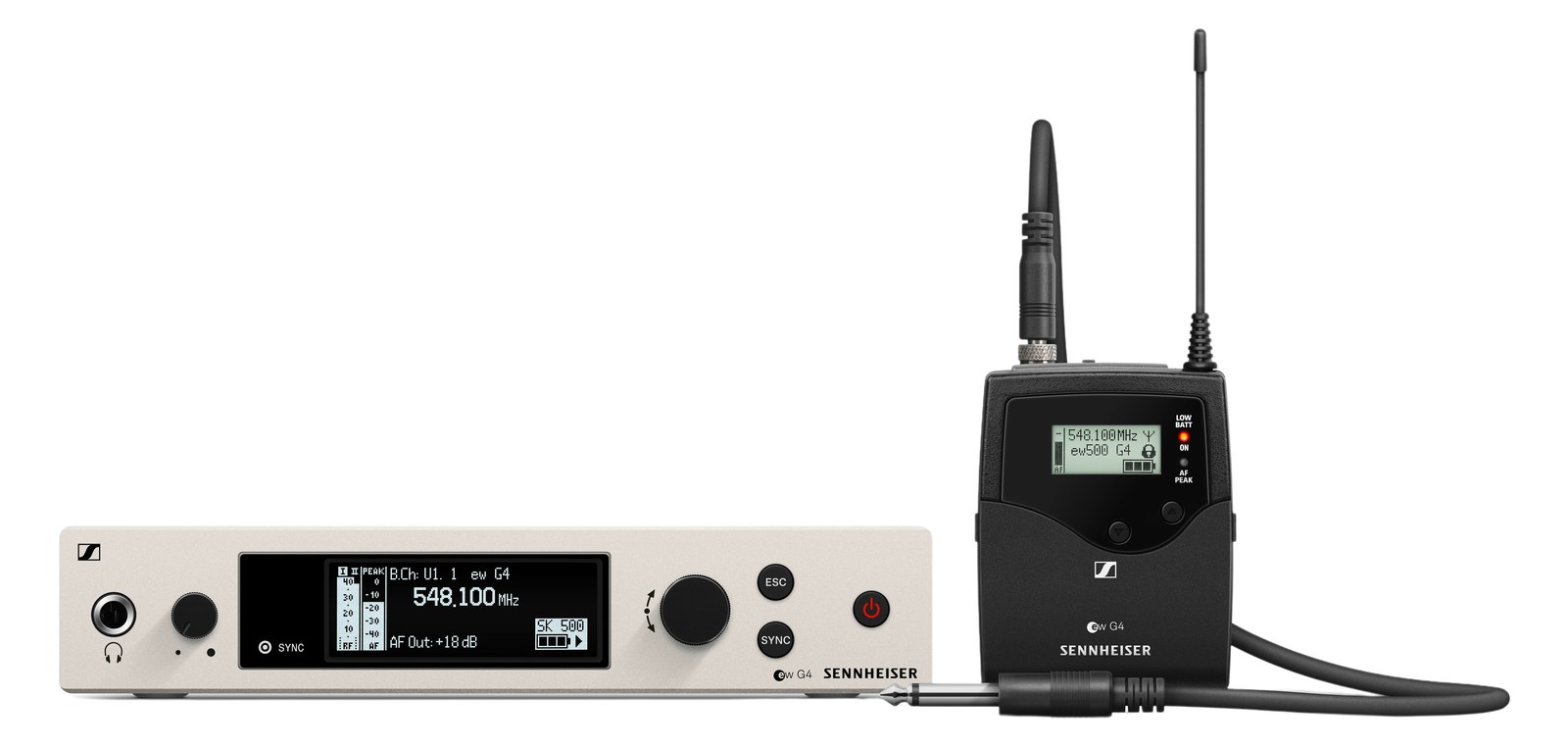
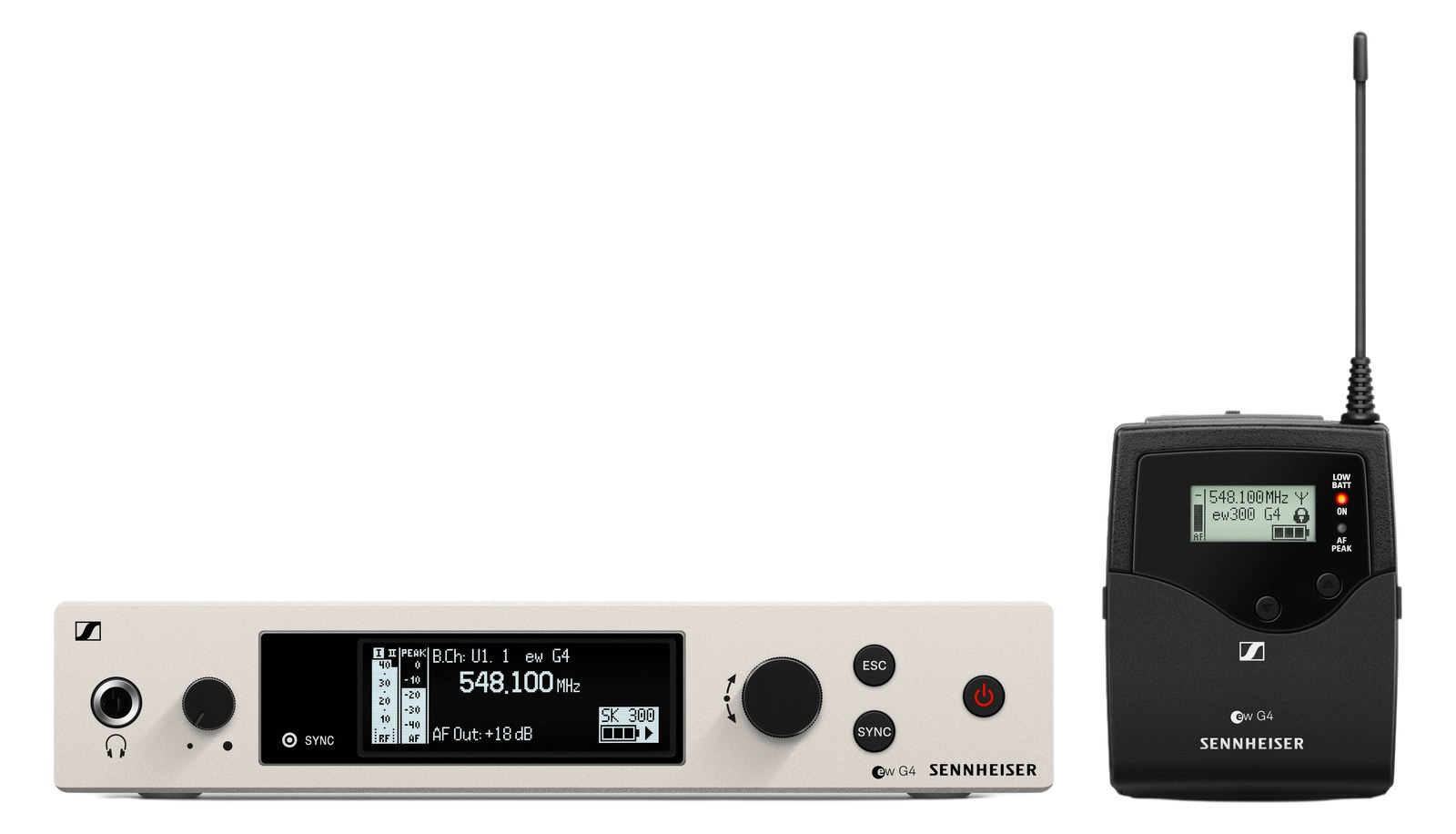
The EW 500 G4-CI1 steps up from the 300 series with enhanced RF stability and extended operating range, making it better suited for larger stages and more challenging wireless environments. The Pro-level receiver features improved filtering and sensitivity that can make the difference between reliable reception and dropouts at distance. Worth the upgrade over the 300 series for touring acts who play larger venues regularly.
~$899Use retailer rows for current price and stock
01 · What it does—and what that changes in your rig.
Product overview
Start with the payoff, then work through how it functions, where it fits, and the details that change a real build.
The payoff
Wireless Guitar decisions, organized around the whole rig.
The EW 500 G4-CI1 is Sennheiser's Evolution Wireless G4 Pro-tier instrument receiver, built specifically for guitar and bass going direct into a rack. It occupies half a rack unitThe standard slice of rack height: 1U = 1.75″. A 3U box takes three slices; half-rack gear pairs two units side by side in one., so two can sit side by side in a single 1U slot — a meaningful efficiency win when you're running multiple wireless channels. The receiver handles the RFRadio Frequency — the wireless part of wireless. RF planning is why big rigs scan, coordinate, and combine antennas instead of hoping. side while the CI1 bodypack transmitter connects directly to a passive instrument via a standard instrument cable jack. The output side gives you both XLRThe standard 3-pin locking connector for mics and balanced line signals — pin 1 is the shield, pins 2 and 3 carry the balanced pair. and quarter-inch simultaneously, which means you have a clean path to the console and a parallel feed to an amp or tuner without any extra splitting.
Documented outputs
22 destination connections
Documented inputs
3Based on documented inputs
Rack space
1U · half-rackBuilder checks available rail space
Sennheiser product panel1U · half-rack · 6W
Function
How it works in the path
At 6–8 watts, this receiver barely registers on a power budget, but the spec that matters at load-in is the Pro-level RFRadio Frequency — the wireless part of wireless. RF planning is why big rigs scan, coordinate, and combine antennas instead of hoping. filtering and sensitivity. On a busy festival stage or in an arena with dense wireless traffic, the 500 series' enhanced RF stability is the reason to step up from the 300 series. The dual BNCThe twist-lock coax connector used for word clock and antenna runs — it locks, so it can’t be pulled out mid-show. antenna inputs support proper diversityA receiver with two antennas and two radio sections that continuously picks the stronger one — the difference between a dropout and a show. reception, and remote antenna placement with active antenna combinersThe transmit-side twin of a distro: merges several IEM transmitters into one antenna without letting them intermodulate. is straightforward when the stage is deep or the guitar player wanders. Both outputs are active at the same time, so feeding FOHFront Of House — the main mix the audience hears, and the console position out in the room where it gets mixed. on XLRThe standard 3-pin locking connector for mics and balanced line signals — pin 1 is the shield, pins 2 and 3 carry the balanced pair. while the amp tech takes the quarter-inch requires no menu diving — it just works.
Best fit
Where it earns its place in the rack
If you're touring mid-size to large venues, playing stages with crowded RFRadio Frequency — the wireless part of wireless. RF planning is why big rigs scan, coordinate, and combine antennas instead of hoping. environments, or simply can't afford a dropoutA brief audio gap when the radio link fails — the thing diversity, distros, and coordination all exist to prevent. during a show, this is the tier of wireless system that earns its place in a permanent rack build. At $899 it's a serious investment, and if your gigs are small clubs with cooperative RF, the 300 series likely covers you for less. Equally, if you need the absolute ceiling of Sennheiser's instrument wireless, the 6000 series exists — but for the majority of working touring musicians, the 500 G4 sits in the practical sweet spot between price, reliability, and RF performance.
In the rack
Details worth deciding before load-in.
Pair two CI1 receivers side by side in a single 1UThe standard slice of rack height: 1U = 1.75″. A 3U box takes three slices; half-rack gear pairs two units side by side in one. slot using a Sennheiser rack-mount kit — it keeps the build tight and leaves the freed rack space for a tuner or power distribution.
Run antennas on BNCThe twist-lock coax connector used for word clock and antenna runs — it locks, so it can’t be pulled out mid-show. extensions and mount them at the stage lip or on a remote antenna stand rather than letting them sit on the rack in a side-stage position — the 500 series' sensitivity is wasted if the rack is behind a stack or a curtain.
Use the XLRThe standard 3-pin locking connector for mics and balanced line signals — pin 1 is the shield, pins 2 and 3 carry the balanced pair. output to FOHFront Of House — the main mix the audience hears, and the console position out in the room where it gets mixed. and the quarter-inch output to a tuner or amp; both are live simultaneously, so there's no secondary routing needed and you eliminate a passive splitter from the signal chain.
When scanning for a clean frequency at load-in, do it with all other wireless systems powered on — the 500 G4's bank-and-channel scan is only meaningful against the actual RFRadio Frequency — the wireless part of wireless. RF planning is why big rigs scan, coordinate, and combine antennas instead of hoping. environment you'll be working in.
02 · Know the whole path before you buy.
Signal path
Learn the route as a block diagram: source, product function, transport, and destination. Select any block to see what enters, what changes, and what leaves.
Interactive block diagramAuto-looping · hover, focus, or tap to hold a stage
Port-type signalProduct functionSystem boundary
Follow one signal from source to destination
Each block answers the same three questions: what arrives, what changes here, and what leaves.
01 · Source · selected
bnc + dc barrel
RJ45
XLR male + ¼-inch TRS
01 · Source
3 documented inputs
bnc + dc barrel
Arrives as
3 documented inputs
Connector
bnc + dc barrel
Signal
antenna
03 · What this product asks of the rest of the system.
Compatibility
Treat connector names as the start of the check—not the answer. These are the boundaries that determine a complete working path.
Best fit · Wireless Guitar
Use it when 1U · half-rack and 210 mm of depth fit the case.
Plan the companion path
Complete the path with upstream and downstream gear that matches connector, direction, signal type, protocol, and wiring standard.
Connector boundary
Documented connectors: XLR male, ¼-inch TRS, bnc, RJ45. Match connector, direction, and signal type—not shape alone.
04 · Every connector, grouped by job.
I/O ports
Switch the product view and the documented port inventory updates with it—hardware and data stay side by side.
Every connector, grouped by job.
Switch panels to keep the hardware view and the documented port list in sync.
Front panelRear panel
All documented ports for Sennheiser EW 500 G4-CI1 Wireless Guitar
Port
Panel
Connector
Direction
Signal
Channels
XLR Out
rear
XLR male
output
analog audio
—
1/4" Out
rear
¼-inch TRS
output
analog audio
—
Antenna A
rear
bnc
input
antenna
—
Antenna B
rear
bnc
input
antenna
—
Ethernet (RJ-45)
rear
RJ45
bidirectional
data
—
DC In (12V)
rear
dc barrel
input
power
—
Showing 6 of 6 documented physical ports.
05 · Compare the decision, not just the price.
Alternatives
The rows are organized around fit, power, I/O, and system role so a cheaper unit cannot hide a more expensive workflow.
EW 500 G4-CI1The EW 500 G4-CI1 steps up from the 300 series with enhanced RF stability and extended operating range, making it better suited for larger stages and more challenging wireless environments. The Pro-level receiver features improved filtering and sensitivity that can make the difference between reliable reception and dropouts at distance. Worth the upgrade over the 300 series for touring acts who play larger venues regularly.View gear →
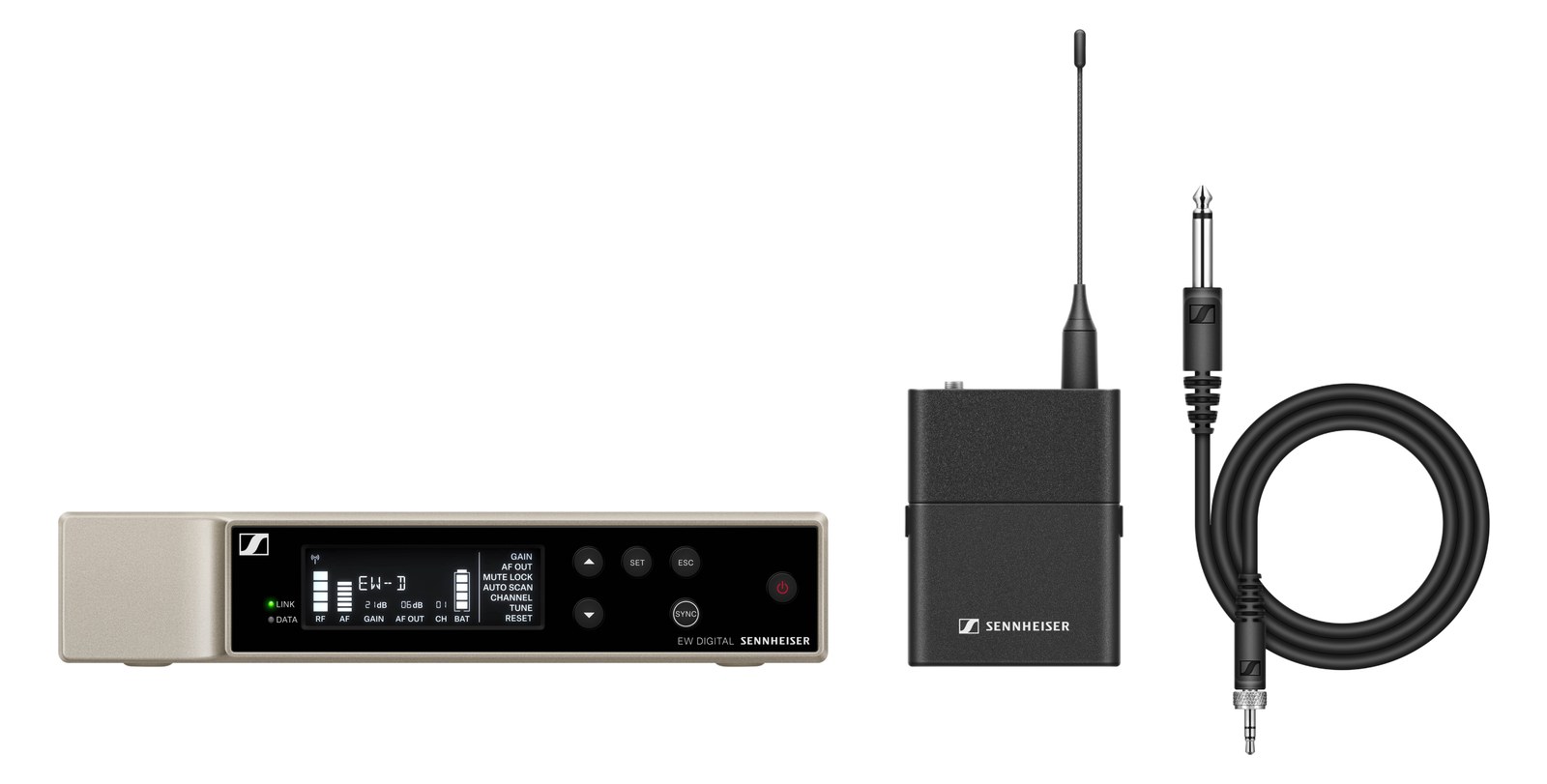
EW-D CI1The Sennheiser EW-D CI1 brings digital wireless to the instrument market at an accessible price point, with ultra-low 1.9ms latency that is imperceptible to even the most sensitive guitarists. The digital transmission eliminates companding artifacts that analog wireless systems introduce, delivering a cleaner, more transparent tone. With support for up to 90 simultaneous channels, it scales well for productions with multiple wireless instruments.View gear →
06 · Resolve the questions that can change the purchase or build plan.
Planning questions
Short, source-backed answers surface rack fit, power, cabling, and connection details before they become surprises.
How will the Sennheiser EW 500 G4-CI1 Wireless Guitar affect rack fit and case depth?
It occupies 1U · half-rack. Its documented depth is 210 mm.
How much power does the Sennheiser EW 500 G4-CI1 Wireless Guitar draw?
Typical draw is 6W and documented maximum draw is 8W.
What connections does the Sennheiser EW 500 G4-CI1 Wireless Guitar have?
6 documented physical ports, including XLR Out, 1/4" Out, Antenna A, Antenna B, Ethernet (RJ-45), DC In (12V).
Is the Sennheiser EW 500 G4-CI1 Wireless Guitar discontinued?
evolution wireless G4 300/500 series discontinued June 2024 — succeeded by EW-DX. Kept for owners.
07 · See this unit inside a real rack plan.
Builder preview
Placement is only the start. Builder checks space · depth · weight, power headroom, dependencies, and compatible signal paths around this exact catalog item.Open in Builder