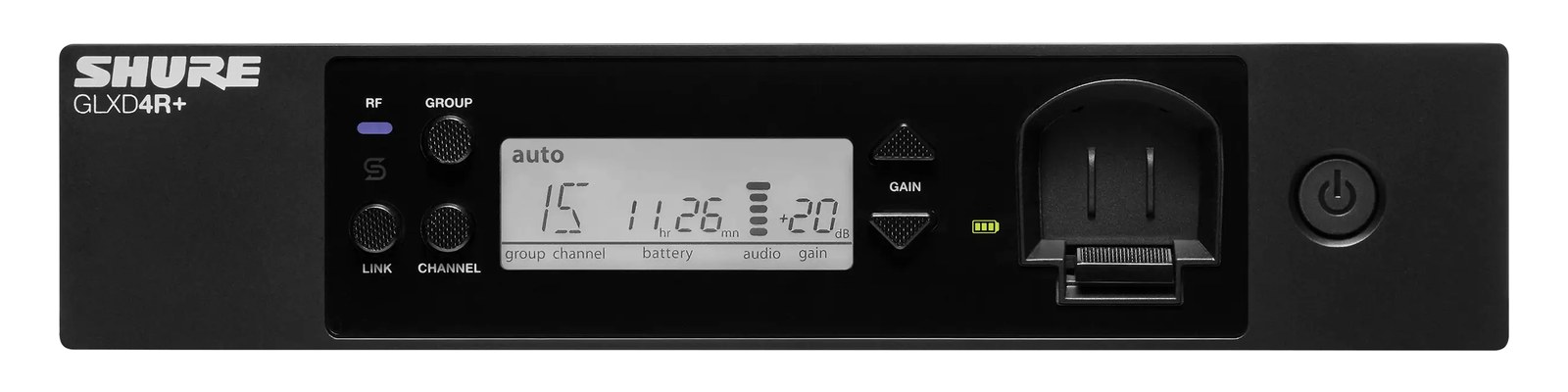
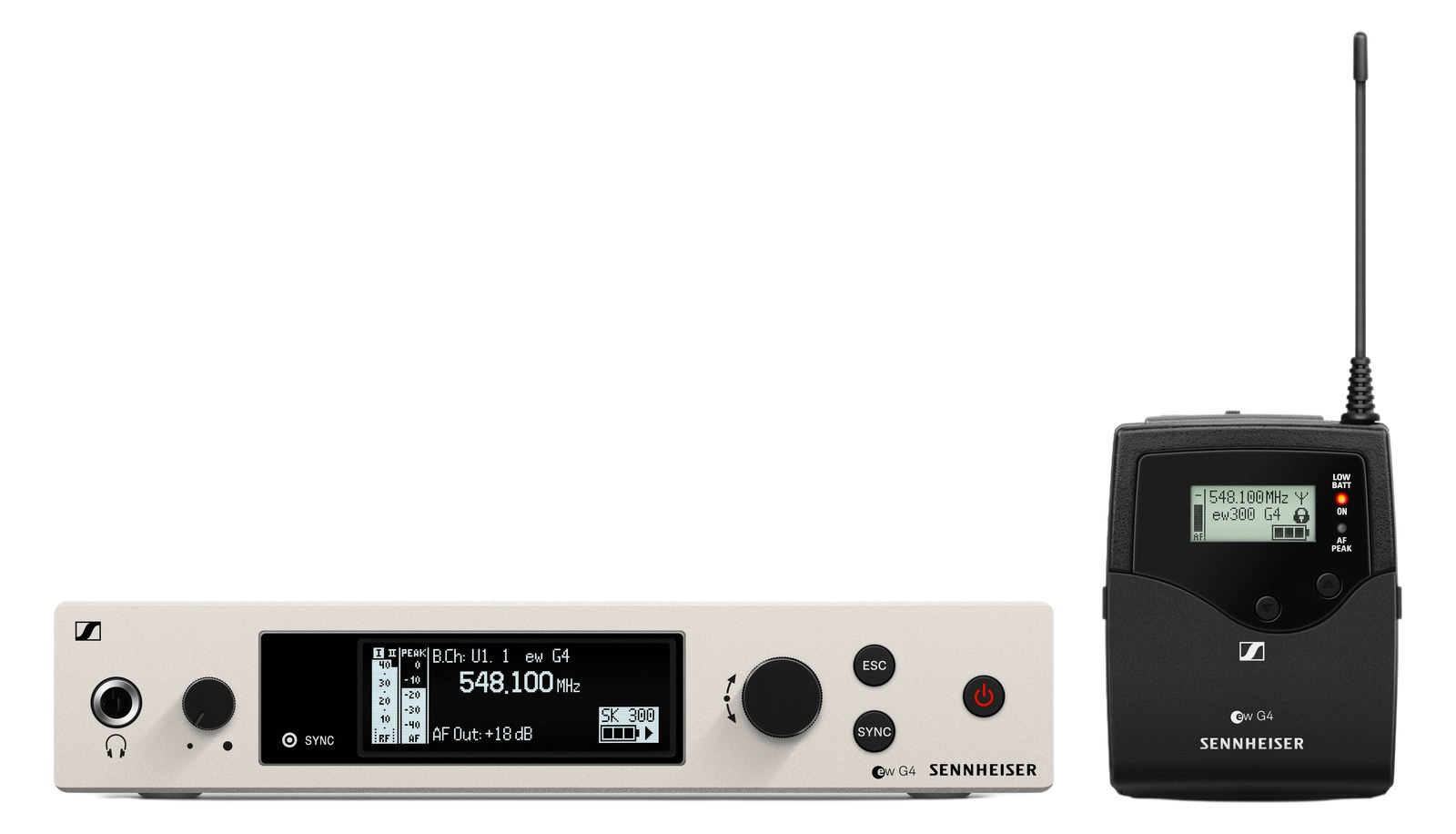
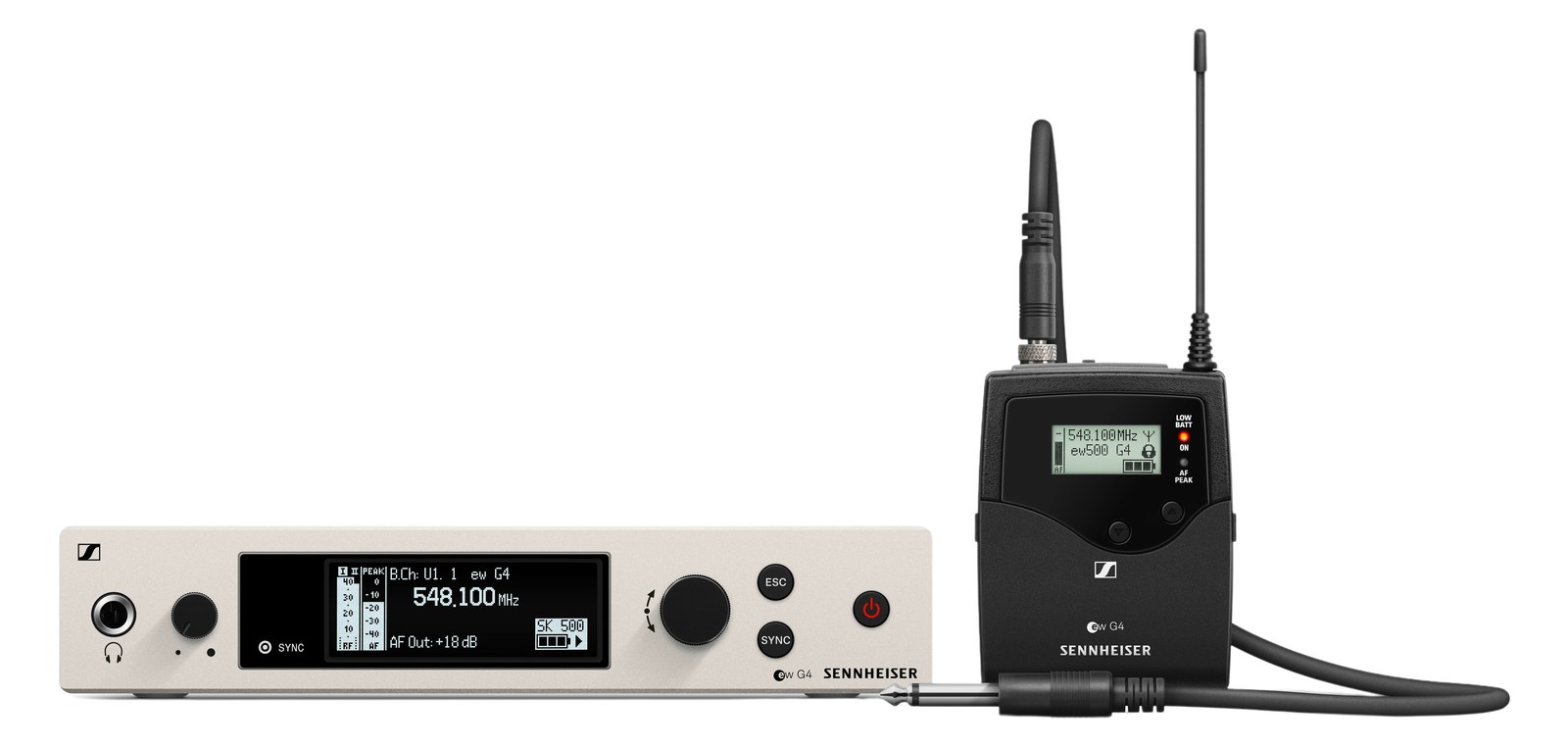
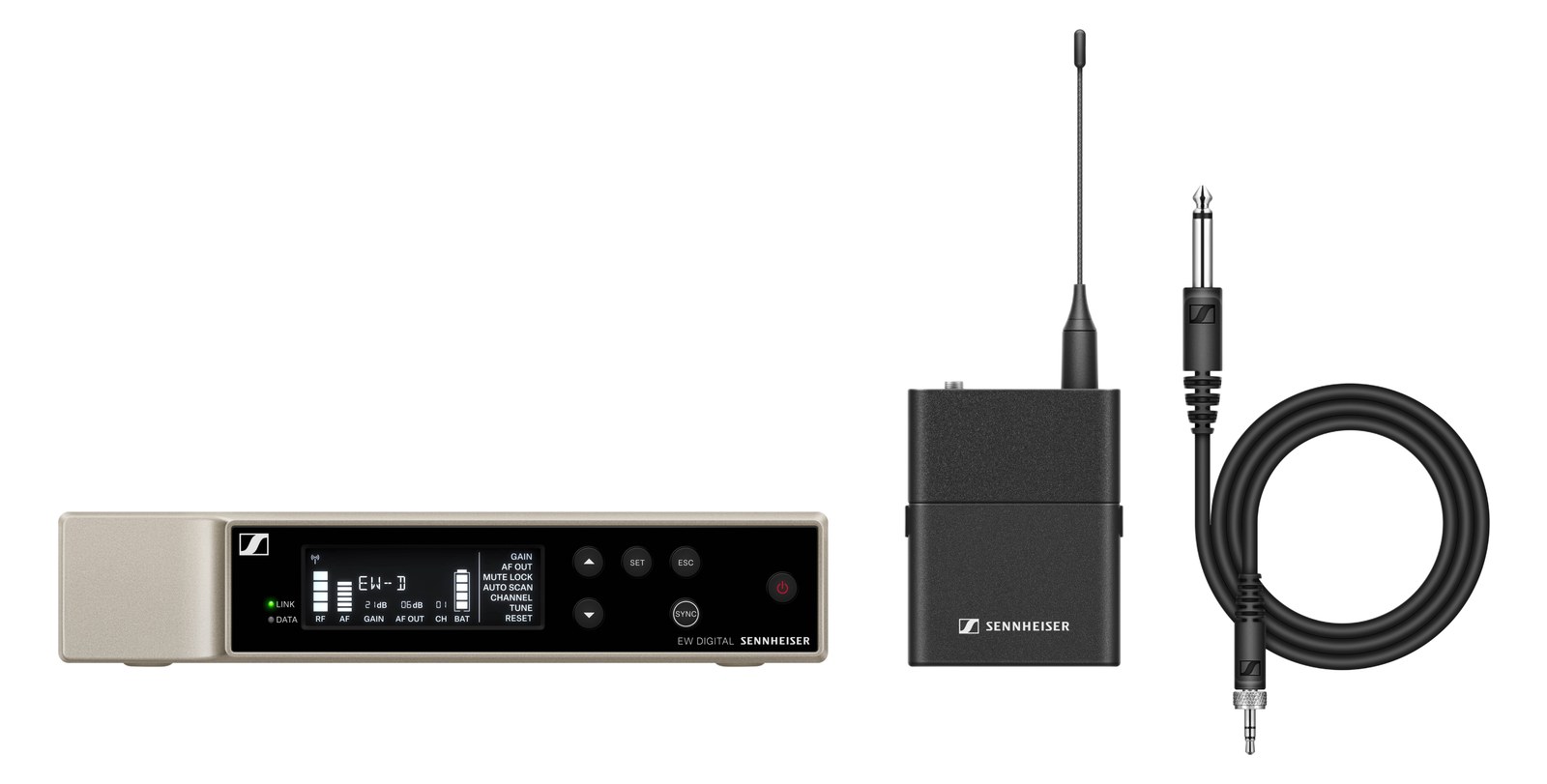
The Shure GLXD4R+ is a rack-mountable digital wireless guitar receiver operating on dual 2.4GHz and 5.8GHz bands for enhanced reliability in congested RF environments. Its half-rack form factor lets you pair two in a single rack space for guitar and bass, or combine it with another half-rack device. The digital transmission ensures transparent audio quality with no companding artifacts, which is critical for guitarists who are particular about their tone.
~$549Use retailer rows for current price and stock
01 · What it does—and what that changes in your rig.
Product overview
Start with the payoff, then work through how it functions, where it fits, and the details that change a real build.
The payoff
Wireless Guitar decisions, organized around the whole rig.
The GLXD4R+ is Shure's rack-mounted answer to the guitarist who wants reliable digital wireless without dedicating a full rack space to it. Operating across both 2.4 GHz and 5.8 GHz simultaneously, it pairs with either the GLXD1+ bodypack or the GLXD6+ pedalboard transmitter and gives you a clean, companderCOMpressing-exPANDing: analog wireless squeezes audio’s dynamics to fit the radio link, then mirrors them back out. Done badly, it breathes.-free signal path — meaning what goes into the transmitter is what comes out the XLRThe standard 3-pin locking connector for mics and balanced line signals — pin 1 is the shield, pins 2 and 3 carry the balanced pair. or quarter-inch on the back. At a half-rackThe standard slice of rack height: 1U = 1.75″. A 3U box takes three slices; half-rack gear pairs two units side by side in one. width, it's genuinely designed to share a 1U slot with a second unit, which makes it a natural fit for a guitar-and-bass wireless pair in a single space.
Documented outputs
22 destination connections
Documented inputs
3Based on documented inputs
Rack space
1U · half-rackBuilder checks available rail space
Photo: Shure1U · half-rack · 5W
Function
How it works in the path
Five watts typical draw and 200 mm depth mean this sits comfortably in even a shallow utility rack. The dual-output on the back — both XLRThe standard 3-pin locking connector for mics and balanced line signals — pin 1 is the shield, pins 2 and 3 carry the balanced pair. and quarter-inch are live simultaneously — gives you flexibility at patch time without adapters: go XLR to a stage boxThe I/O endpoint on stage: mics plug in there and one digital line (AES50, Dante) carries everything to the console. The snake, digitized. or direct to a DIDirect Injection box — converts an instrument’s unbalanced signal to a balanced mic-level XLR so it can run long cables without noise. channel, or run the quarter-inch straight into an amp head sitting on the shelf above. The dual SMAThe small threaded RF connector on bodypacks and half-rack wireless — hand-tight antenna connections that survive a gig bag. antenna inputs support a remote antenna setup if you need to move the receive points further upstage, which matters on wide stages where a rack sitting in the wings would otherwise struggle. The GLXD system handles channel coordination automatically, which shortens RFRadio Frequency — the wireless part of wireless. RF planning is why big rigs scan, coordinate, and combine antennas instead of hoping. check at load-in considerably.
Best fit
Where it earns its place in the rack
This receiver is the right call for a touring or theater rig where RFRadio Frequency — the wireless part of wireless. RF planning is why big rigs scan, coordinate, and combine antennas instead of hoping. real estate is tight and you want a set-and-forget system that won't demand a spectrum analyzer before every show. The 2.4 and 5.8 GHz bands are unlicensed worldwide, so there are no frequency coordinationCalculating a set of wireless frequencies that won’t interfere with each other or local TV — the homework behind a clean RF night. headaches crossing borders or moving venues. That said, if you're running more than two or three wireless channels, or working in a venue with extremely dense Wi-Fi saturation, you'll want to evaluate whether the GLXD system's automatic coordination scales to your channel count before committing. For a straightforward one- or two-channel guitar wireless in a compact rack, it's hard to argue with the combination of size, simplicity, and audio transparency.
Mount two GLXD4R+ units side by side in a single 1UThe standard slice of rack height: 1U = 1.75″. A 3U box takes three slices; half-rack gear pairs two units side by side in one. slot using Shure's rack mount hardware — guitar on the left, bass on the right — and label the XLRThe standard 3-pin locking connector for mics and balanced line signals — pin 1 is the shield, pins 2 and 3 carry the balanced pair. outputs clearly on the rear panel before the rig goes out.
If the rack lives in a side stage pocket or behind a amp wall, run the SMAThe small threaded RF connector on bodypacks and half-rack wireless — hand-tight antenna connections that survive a gig bag. antennas out to a remote paddleA directional antenna (paddle, LPDA, helical) aimed at the stage — focuses coverage where the performers are and rejects RF from elsewhere. position with a low-loss coax extension rather than relying on the built-in antennas pointing into a metal enclosure.
Use the XLRThe standard 3-pin locking connector for mics and balanced line signals — pin 1 is the shield, pins 2 and 3 carry the balanced pair. output when feeding FOHFront Of House — the main mix the audience hears, and the console position out in the room where it gets mixed. or a stage boxThe I/O endpoint on stage: mics plug in there and one digital line (AES50, Dante) carries everything to the console. The snake, digitized., and reserve the quarter-inch output for a local amp feed — both outputs are active simultaneously, so you can run both paths without a splitter.
At load-in, power the receiver up before the transmitter so the GLXD system completes its band scan and locks a channel before the performer walks on — the automatic coordination is fast but it needs the receiver online first.
02 · Know the whole path before you buy.
Signal path
Learn the route as a block diagram: source, product function, transport, and destination. Select any block to see what enters, what changes, and what leaves.
Interactive block diagramAuto-looping · hover, focus, or tap to hold a stage
Port-type signalProduct functionSystem boundary
Follow one signal from source to destination
Each block answers the same three questions: what arrives, what changes here, and what leaves.
01 · Source · selected
sma + dc barrel
XLR male + ¼-inch TRS
01 · Source
3 documented inputs
sma + dc barrel
Arrives as
3 documented inputs
Connector
sma + dc barrel
Signal
antenna
03 · What this product asks of the rest of the system.
Compatibility
Treat connector names as the start of the check—not the answer. These are the boundaries that determine a complete working path.
Best fit · Wireless Guitar
Use it when 1U · half-rack and 163 mm of depth fit the case.
Plan the companion path
Complete the path with upstream and downstream gear that matches connector, direction, signal type, protocol, and wiring standard.
Connector boundary
Documented connectors: XLR male, ¼-inch TRS, sma, usb c. Match connector, direction, and signal type—not shape alone.
04 · Every connector, grouped by job.
I/O ports
Switch the product view and the documented port inventory updates with it—hardware and data stay side by side.
Every connector, grouped by job.
Switch panels to keep the hardware view and the documented port list in sync.
Front panelRear panel
All documented ports for Shure GLXD4R+ Wireless Guitar Receiver
Port
Panel
Connector
Direction
Signal
Channels
XLR OUT
rear
XLR male
output
analog audio
—
INST / AUX
rear
¼-inch TRS
output
analog audio
—
ANTENNA A
rear
sma
input
antenna
—
ANTENNA B
rear
sma
input
antenna
—
FW UPDATE
rear
usb c
bidirectional
data
—
POWER
rear
dc barrel
input
power
—
Showing 6 of 6 documented physical ports.
05 · Compare the decision, not just the price.
Alternatives
The rows are organized around fit, power, I/O, and system role so a cheaper unit cannot hide a more expensive workflow.
GLXD4R+The Shure GLXD4R+ is a rack-mountable digital wireless guitar receiver operating on dual 2.4GHz and 5.8GHz bands for enhanced reliability in congested RF environments. Its half-rack form factor lets you pair two in a single rack space for guitar and bass, or combine it with another half-rack device. The digital transmission ensures transparent audio quality with no companding artifacts, which is critical for guitarists who are particular about their tone.View gear →
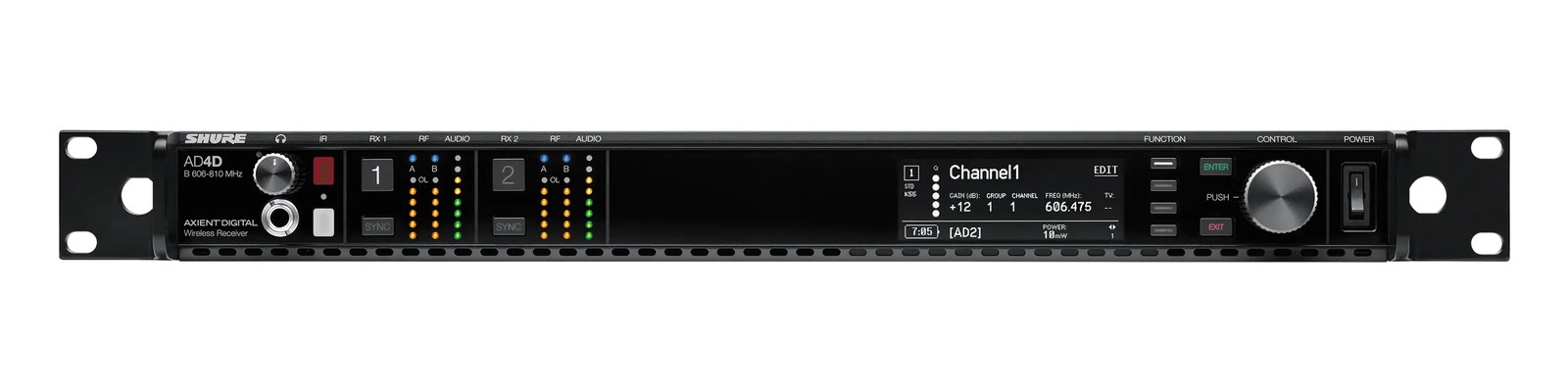
AD4DThe Shure AD4D is the pinnacle of wireless guitar reception, offering Axient Digital's full feature set including Quadversity antenna combining, ShowLink real-time remote control, and native Dante output. It handles interference detection and frequency coordination automatically, which is invaluable on large productions with dense RF environments. The investment is justified on major tours and broadcast events where wireless reliability must be absolute.View gear →
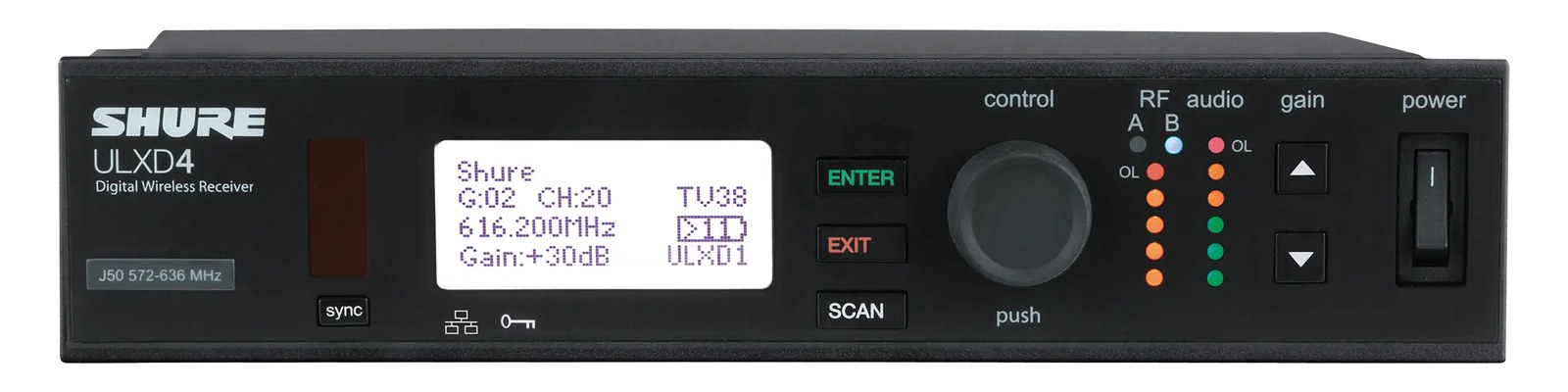
ULXD4The Shure ULXD4 is a professional UHF digital wireless receiver that delivers 24-bit audio quality with AES-256 encryption, making it suitable for high-profile touring and corporate events where audio security matters. Its half-rack size and Ethernet port for networked management make it easy to integrate into organized rack builds. The ULX-D platform offers an excellent balance of performance and price between the entry-level SLX-D and flagship Axient Digital lines.View gear →
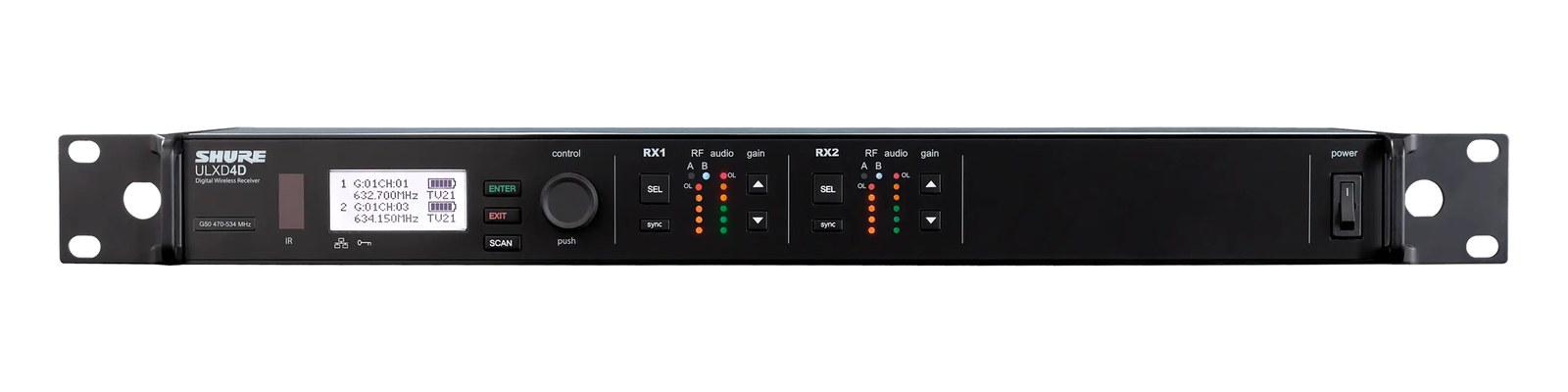
ULXD4DThe Shure ULXD4D puts two ULX-D receivers in a single full-rack unit, halving the rack space needed for multi-channel wireless guitar or instrument deployments. Available Dante output lets you route the wireless audio directly onto your network without analog conversion, simplifying signal flow in Dante-based rigs. This is the efficient choice when you need two wireless instrument channels and want to minimize rack footprint.View gear →
06 · Resolve the questions that can change the purchase or build plan.
Planning questions
Short, source-backed answers surface rack fit, power, cabling, and connection details before they become surprises.
How will the Shure GLXD4R+ Wireless Guitar Receiver affect rack fit and case depth?
It occupies 1U · half-rack. Its documented depth is 163 mm.
How much power does the Shure GLXD4R+ Wireless Guitar Receiver draw?
Typical draw is 5W and documented maximum draw is 10.2W.
What connections does the Shure GLXD4R+ Wireless Guitar Receiver have?
6 documented physical ports, including XLR OUT, INST / AUX, ANTENNA A, ANTENNA B, FW UPDATE, POWER.
07 · See this unit inside a real rack plan.
Builder preview
Placement is only the start. Builder checks space · depth · weight, power headroom, dependencies, and compatible signal paths around this exact catalog item.Open in Builder