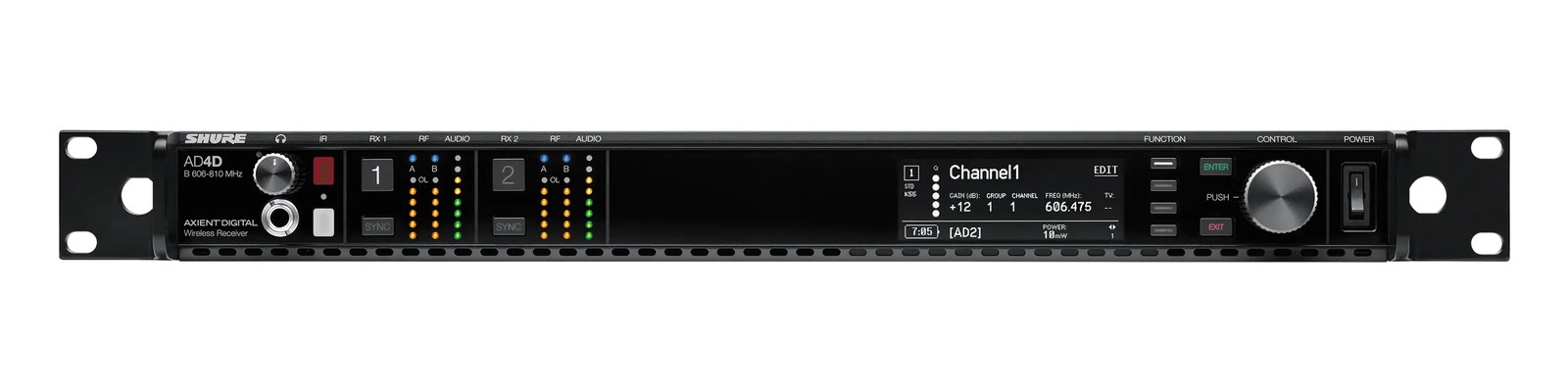

Shure AD4D Axient Digital Dual Receiver
Shure·Model AD4D·shure-ad4d
Photos
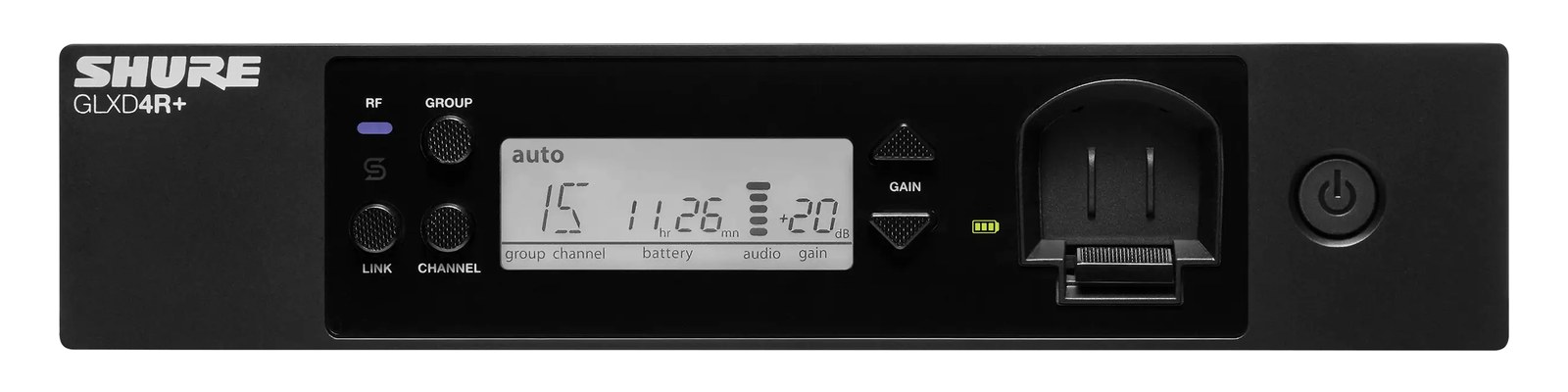
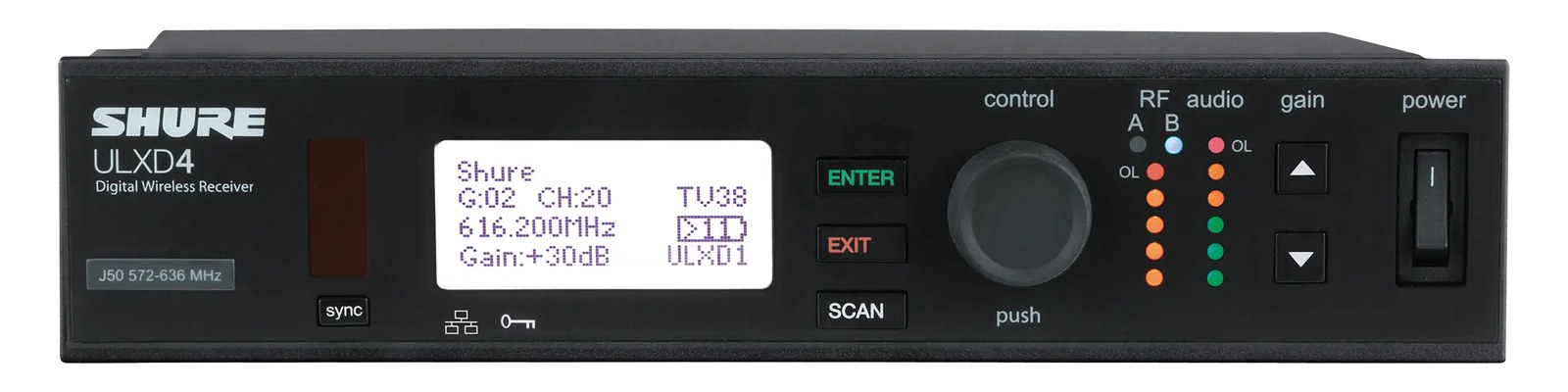
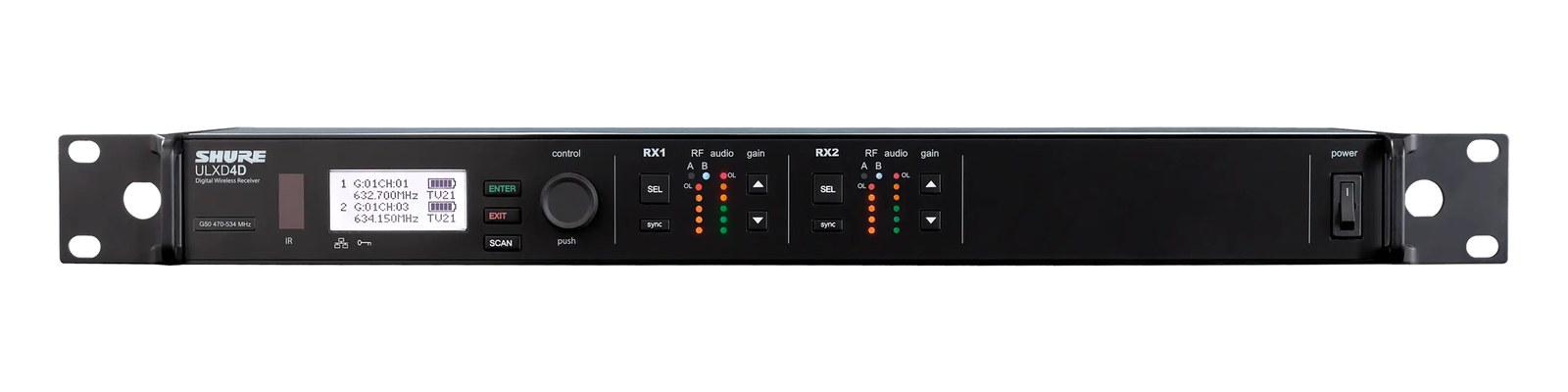
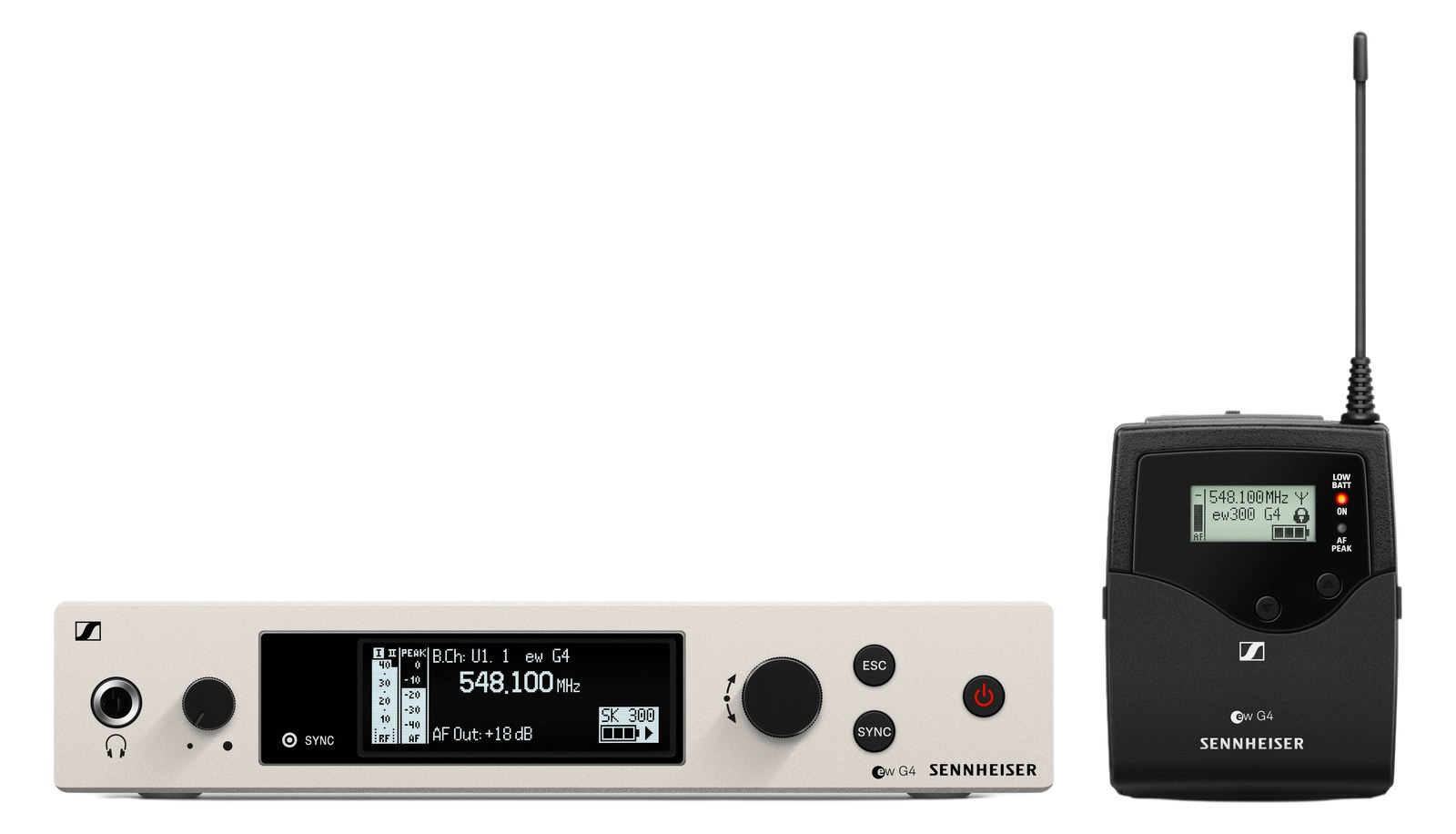
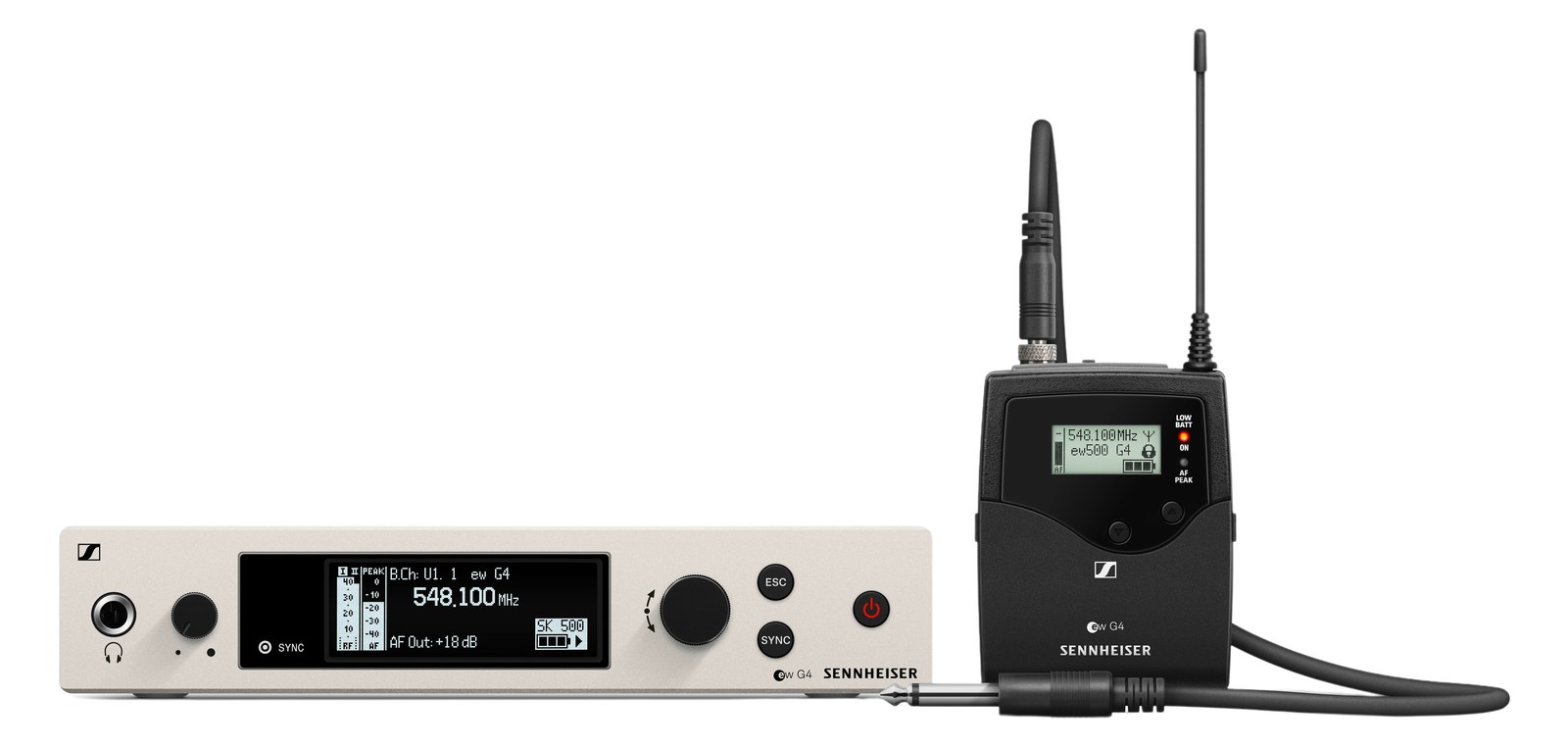
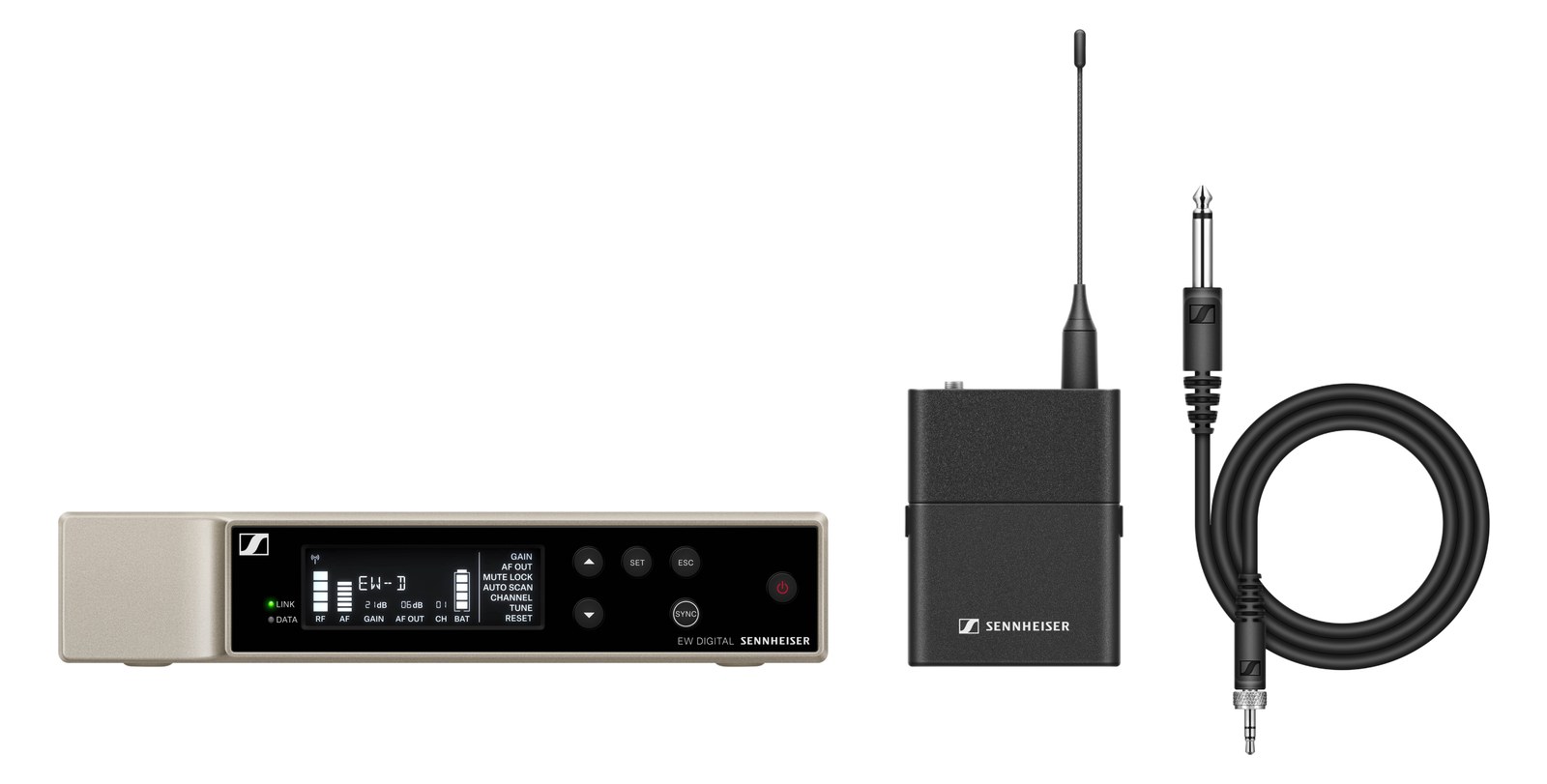
Manufacturer product photography — the drawn faceplate above stays true to panel layout; these show the hardware itself.
About the Shure AD4D
The Shure AD4D is the pinnacle of wireless guitar reception, offering Axient Digital's full feature set including Quadversity antenna combining, ShowLink real-time remote control, and native DanteThe most common audio-over-network standard: dozens of channels of uncompressed digital audio down one ordinary Ethernet cable between Dante boxes. output. It handles interference detection and frequency coordinationCalculating a set of wireless frequencies that won’t interfere with each other or local TV — the homework behind a clean RF night. automatically, which is invaluable on large productions with dense RFRadio Frequency — the wireless part of wireless. RF planning is why big rigs scan, coordinate, and combine antennas instead of hoping. environments. The investment is justified on major tours and broadcast events where wireless reliability must be absolute.
The AD4D is Shure's flagship dual wireless receiver, and it earns that title by treating RFRadio Frequency — the wireless part of wireless. RF planning is why big rigs scan, coordinate, and combine antennas instead of hoping. management as a system problem rather than a per-channel one. Two channels in a single 1UThe standard slice of rack height: 1U = 1.75″. A 3U box takes three slices; half-rack gear pairs two units side by side in one. rack space is table stakes at this price point — what you're actually buying is Axient Digital's interference detection, automatic frequency coordinationCalculating a set of wireless frequencies that won’t interfere with each other or local TV — the homework behind a clean RF night., and ShowLink remote control, which lets you change transmitter parameters from the console without touching the pack. On a large tour or broadcast date where you might have a dozen wireless channels competing with IEMIn-Ear Monitor — earpieces that replace floor wedges, feeding each player their own mix. The reason this whole rack exists. systems, broadcast hops, and local TV trucks, that infrastructure makes a real difference before the first note is played.
At 25 watts nominal in a 1UThe standard slice of rack height: 1U = 1.75″. A 3U box takes three slices; half-rack gear pairs two units side by side in one. chassis, the AD4D is a reasonable draw per channel-pair; plan your power distribution accordingly if you're stacking several units. The 340mm depth is worth noting — this is a full-depth unit and will bottom out in shallow-depth road cases, so verify your rack interior before load-in. The dual EtherConAn Ethernet plug inside a rugged XLR-style locking shell — tour-grade network connections that can’t be yanked loose. DanteThe most common audio-over-network standard: dozens of channels of uncompressed digital audio down one ordinary Ethernet cable between Dante boxes. outputs (primary and secondary) mean you can run a redundantA second copy of anything critical — supply, computer, network path — already running so one failure can’t stop the show. network path and route audio entirely in the digital domain, skipping the XLRThe standard 3-pin locking connector for mics and balanced line signals — pin 1 is the shield, pins 2 and 3 carry the balanced pair. outs entirely if your console is Dante-native. The BNCThe twist-lock coax connector used for word clock and antenna runs — it locks, so it can’t be pulled out mid-show. antenna inputs are standard, so your existing active antenna distributionOne pair of antennas feeding many receivers through an amplified splitter — replaces the forest of whips and keeps RF levels consistent. and combinersThe transmit-side twin of a distro: merges several IEM transmitters into one antenna without letting them intermodulate. will integrate without adapters.
If you're running professional theatrical, broadcast, or arena-level touring productions where RFRadio Frequency — the wireless part of wireless. RF planning is why big rigs scan, coordinate, and combine antennas instead of hoping. failure is not an option and your RF engineer is coordinating double-digit channel counts, the AD4D is the right tool. The ShowLink capability alone saves real time during soundcheck when a vocalist's pack needs a gainHow much the preamp amplifies the incoming signal. Too low and you’re hunting through hiss; too high and peaks clip. trim or a frequency reassignment mid-line-checkThe quick pre-show pass confirming every input reaches the console, one line at a time. Not a soundcheck — just does it work.. If you're doing club work, corporate one-offs, or even mid-size festival stages with a modest wireless count, the investment is hard to justify — a well-configured ULX-D or QLX-D system will handle those environments competently at a fraction of the price. Buy this receiver when the production demands the full Axient ecosystem, not just the badge.
In the rack
- If you're running DanteThe most common audio-over-network standard: dozens of channels of uncompressed digital audio down one ordinary Ethernet cable between Dante boxes., connect both EtherConAn Ethernet plug inside a rugged XLR-style locking shell — tour-grade network connections that can’t be yanked loose. ports to separate network switches on different power circuits — the redundantA second copy of anything critical — supply, computer, network path — already running so one failure can’t stop the show. path only protects you if it's on a genuinely independent physical route.
- Pair the AD4D with a Shure AXT600 Spectrum Manager on the same network so interference detection and frequency reassignment work automatically across all Axient channels in the rig, not just within this unit.
- Verify your rack case interior depth before load-in — at 340mm this unit is tight in standard 16-inch interior depth cases, and forcing the lid risks damaging rear connectors.
- Use ShowLink range conservatively; the SMAThe small threaded RF connector on bodypacks and half-rack wireless — hand-tight antenna connections that survive a gig bag. port gives you wireless transmitter control, but physical obstructions and dense RFRadio Frequency — the wireless part of wireless. RF planning is why big rigs scan, coordinate, and combine antennas instead of hoping. environments can compress that range significantly in real-world venues — confirm connectivity at doors-open, not just at line checkThe quick pre-show pass confirming every input reaches the console, one line at a time. Not a soundcheck — just does it work..
Axient Digital dual-channel receiver. Flagship wireless platform with ShowLink remote control and DanteThe most common audio-over-network standard: dozens of channels of uncompressed digital audio down one ordinary Ethernet cable between Dante boxes..
I/O Ports (18)
| Port | Connector | Direction | Signal | Channels |
|---|---|---|---|---|
| XLR Out 1 | XLR MALE | output | analog audio | — |
| XLR Out 2 | XLR MALE | output | analog audio | — |
| 1/4" Out 1 (-10dB) | TRS QUARTER | output | analog audio | — |
| 1/4" Out 2 (-10dB) | TRS QUARTER | output | analog audio | — |
| AES3 1&2 Out | AES3 XLR | output | digital audio | 2 |
| Antenna A | BNC | input | antenna | — |
| Antenna B | BNC | input | antenna | — |
| Antenna Cascade Out C | BNC | output | antenna | — |
| Antenna Cascade Out D | BNC | output | antenna | — |
| Dante Primary | DANTE RJ45 | bidirectional | digital audio | 2 |
| Dante Secondary | DANTE RJ45 | bidirectional | digital audio | 2 |
| Ctrl 1 (PoE) | RJ45 | bidirectional | data | — |
| Ctrl 2 (PoE) | RJ45 | bidirectional | data | — |
| ShowLink (retired — via AD610 on ctrl) | SMA | bidirectional | data | — |
| Word Clock In (BNC) | BNC | input | digital audio | — |
| Word Clock Thru (BNC) | BNC | output | digital audio | — |
- Power (IEC locking) (IEC C14)
- AC Power Cascade Out (IEC) (IEC C14)
Deciding between two?
Rack space, watts, weight and every connector, side by side.
Related gear


Related articles
Guides from our library that cover planning around wireless guitar gear.