
Shure SE846 IEM Earphones
Shure·Model SE846·shure-se846
Photos
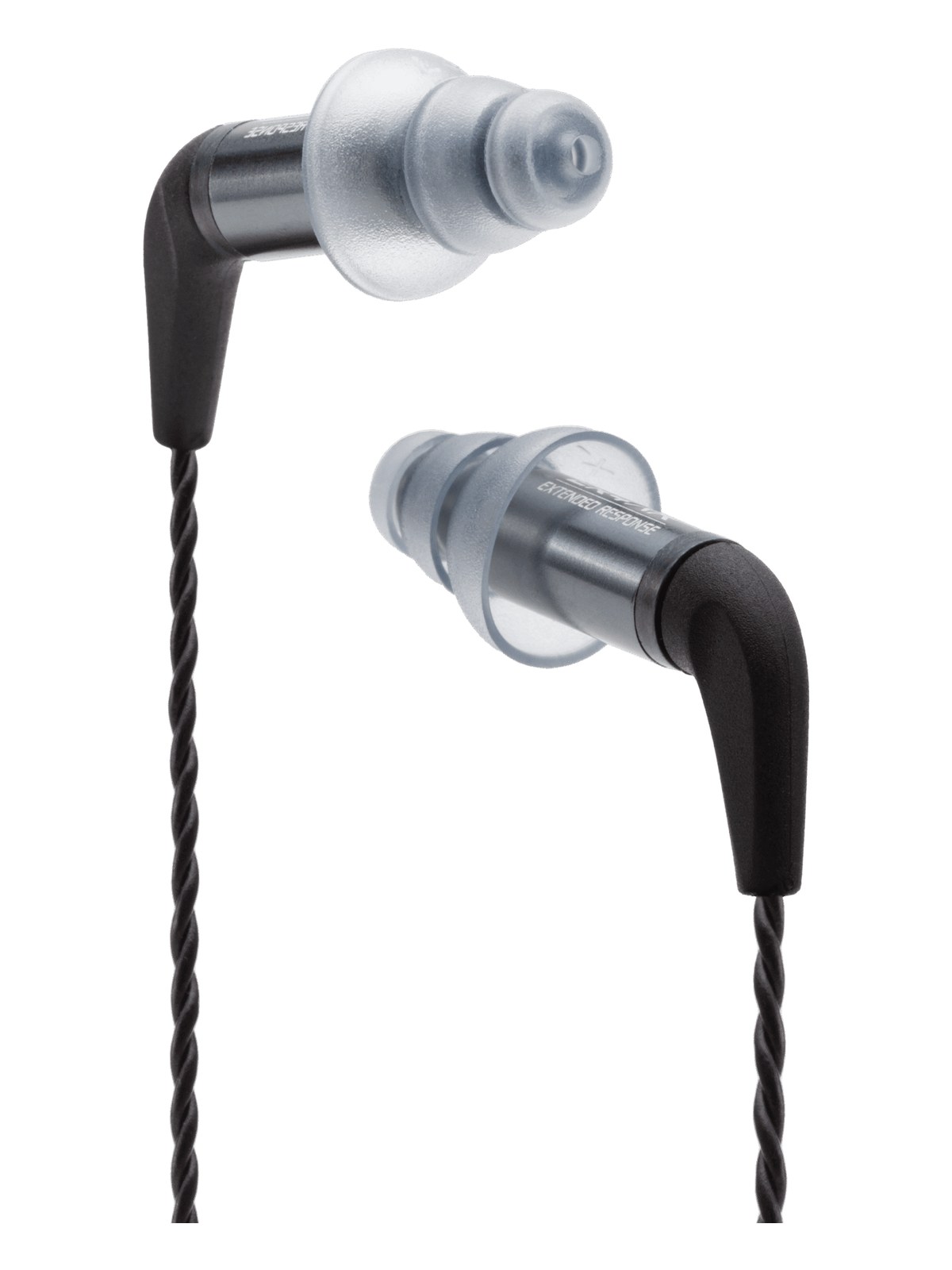
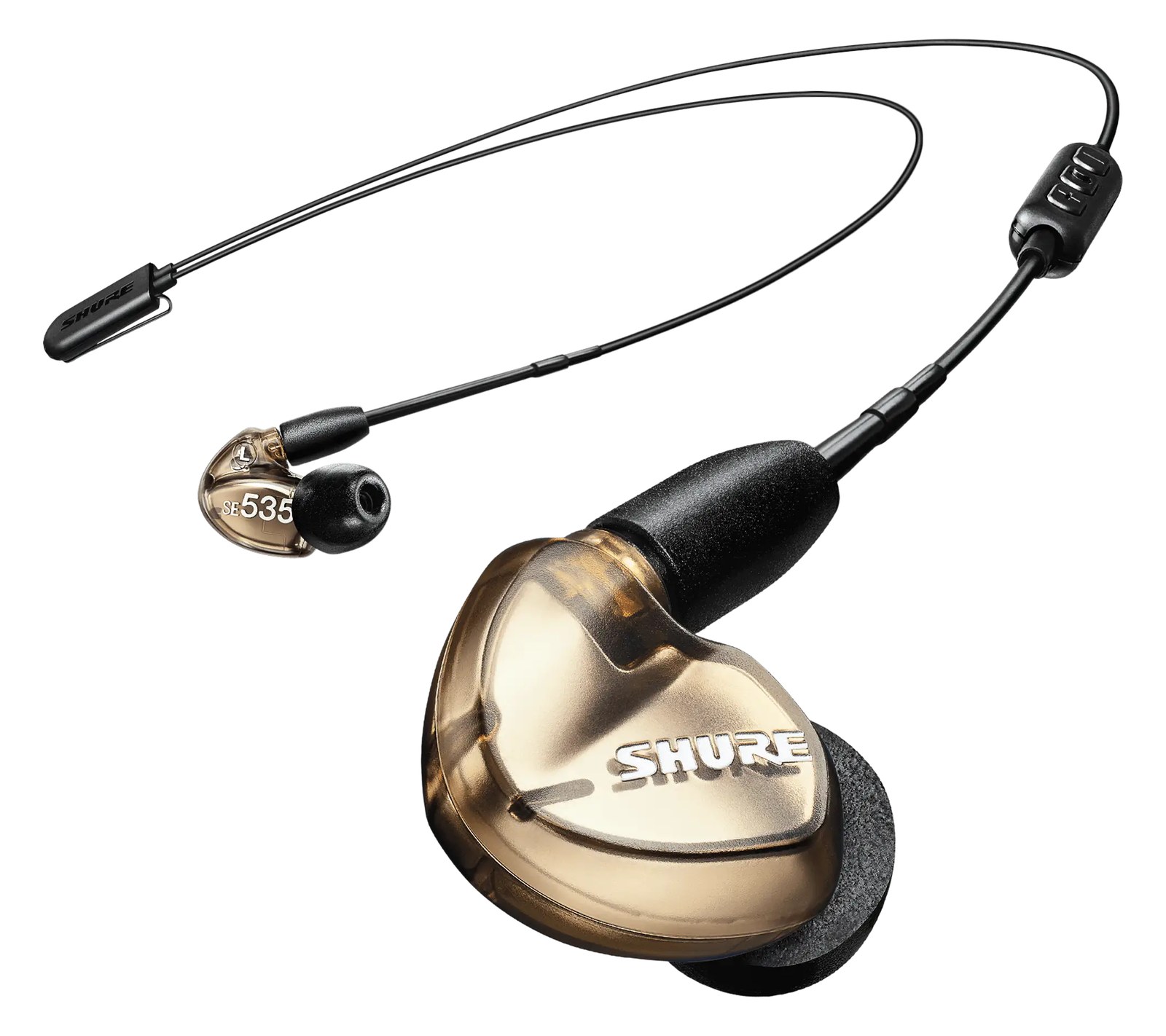
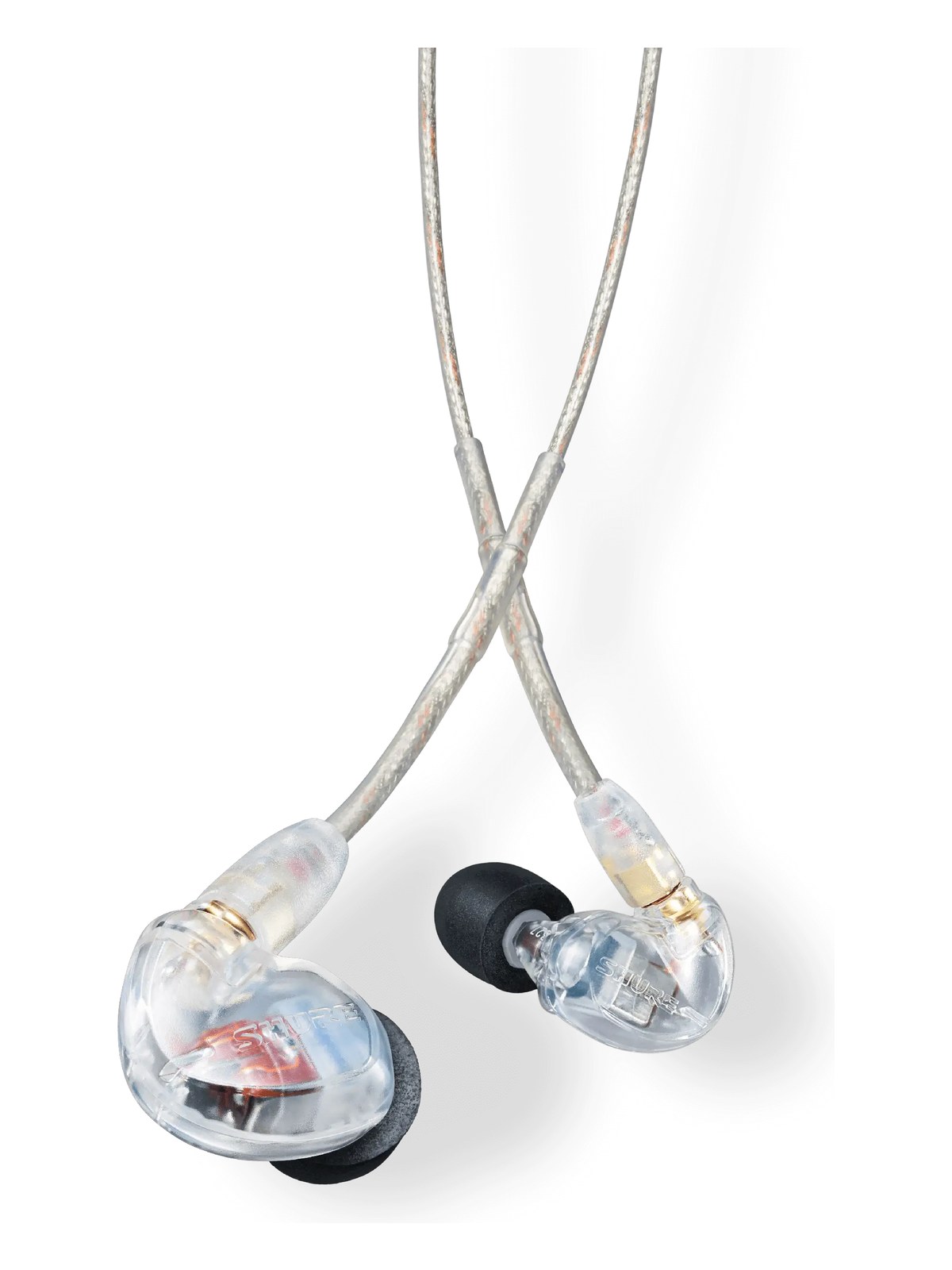
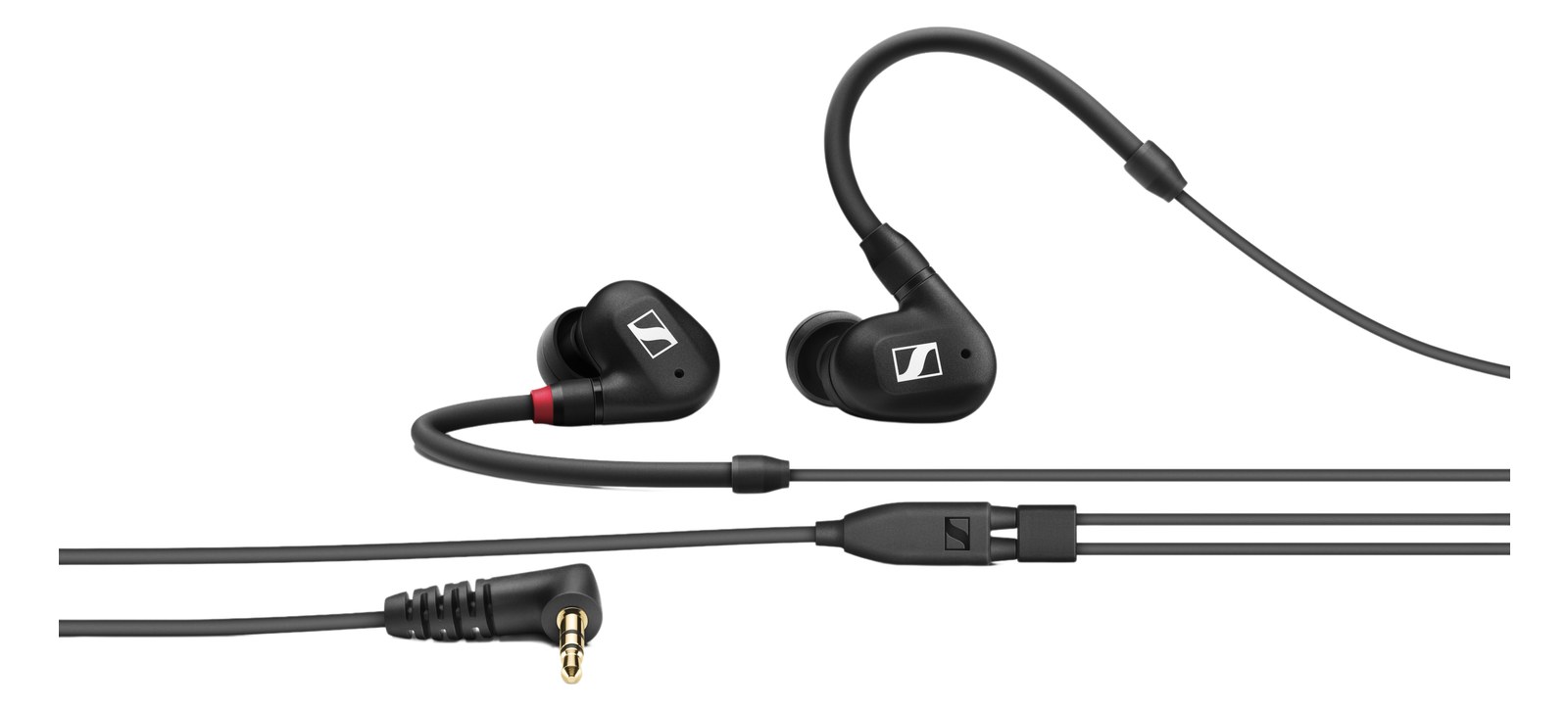
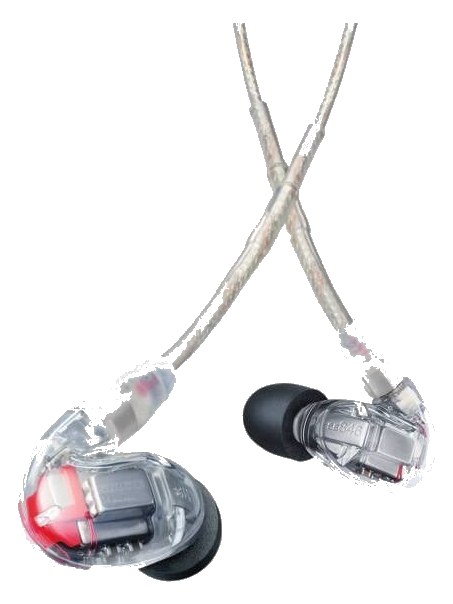
Manufacturer product photography — the drawn faceplate above stays true to panel layout; these show the hardware itself.
About the Shure SE846
The Shure SE846 is a flagship universal-fit IEMIn-Ear Monitor — earpieces that replace floor wedges, feeding each player their own mix. The reason this whole rack exists. with four balanced armatureA tiny hearing-aid-derived driver used in pro IEMs — fast and detailed, often several per ear, each covering its own frequency range. drivers per side, delivering exceptional detail and low-end extension that rivals many custom-molded options. Interchangeable nozzle inserts let you tune the frequency responseThe range of lows-to-highs a device reproduces and how evenly it does it — flat means nothing is hyped or missing. to taste, and the detachable MMCX cables make replacement easy on the road. These are a top-tier choice for performers who want premium sound quality without the wait and expense of custom ear molds.
The Shure SE846 is the earphone itself — the part of your IEMIn-Ear Monitor — earpieces that replace floor wedges, feeding each player their own mix. The reason this whole rack exists. rig that actually touches the performer, which makes it arguably the most consequential piece in the whole signal chain. Four balanced armatureA tiny hearing-aid-derived driver used in pro IEMs — fast and detailed, often several per ear, each covering its own frequency range. drivers per side give it a frequency range that reaches deep enough to feel kick drum and detailed enough at the top to catch tuning issues in real time. It lives on your Bill of Materials, not in a rack unitThe standard slice of rack height: 1U = 1.75″. A 3U box takes three slices; half-rack gear pairs two units side by side in one., but it belongs in any serious rig document because the transducer choice shapes everything downstream — how you EQ at the pack, how hot you set the transmitter, what the artist will and won't tolerate on stage.
In practice, the SE846's interchangeable nozzle inserts are a genuine asset at load-in. You can hand a performer a brighter or warmer response profile before soundcheck without swapping gear, which matters when you're working with artists who have strong opinions and short attention spans. The MMCX detachable cable is the other real-world win: a yanked cable at changeover is a two-minute fix rather than a trip to the repair shop. Isolation is substantial for a universal fit, which reduces the temptation to push level dangerously high just to compete with stage bleed — a meaningful hearing-safety consideration over a long tour.
Pick the SE846 if you're speccing a rig for a performer who needs premium monitoring but won't sit still long enough for custom ear mold impressions, or as a reliable backup set in a rig that normally runs customs. They're also a reasonable house-IEMIn-Ear Monitor — earpieces that replace floor wedges, feeding each player their own mix. The reason this whole rack exists. option for a venue that wants one high-quality universal set for guest artists. Skip them if budget is tight — at $999, the per-ear investment demands careful handling and a performer who'll treat them accordingly. Artists who lose or abuse earphones regularly are better served by something further down the price ladder.
In the rack
- Always document which nozzle insert is loaded for each performer in your show file notes — swapping sound signatures mid-tour without tracking it creates unnecessary troubleshooting when the artist says 'something sounds different.'
- Carry at least one spare MMCX cable per SE846 pair in your spares kit. The connector is reliable but tour abuse is relentless, and a failed cable at downstage right is not the moment to discover you're out of spares.
- For universal-fit IEMsIn-Ear Monitor — earpieces that replace floor wedges, feeding each player their own mix. The reason this whole rack exists. with this much low-end capability, fit quality is everything. Keep a selection of comply foam and triple-flange tips in multiple sizes — a loose seal collapses the bass response and pushes the performer to ask for more level, which defeats the purpose of running a quality transducer.
- When listing the SE846 on your BOM, note the serial number alongside the performer's name. If a set goes missing or gets mixed up across a multi-act bill, you'll want a paper trail.
Quad-driver IEMIn-Ear Monitor — earpieces that replace floor wedges, feeding each player their own mix. The reason this whole rack exists. earphones. Not rack-mounted — listed for BOM.
I/O Ports (0)
No ports.
Related gear


Related articles
Guides from our library that cover planning around earphones / iems gear.
What an IEM rig actually is, the components that go into one, and how to plan your first one without overspending or blowing a circuit.
A plain-English plan for bands switching from floor wedges to in-ear monitors — what to buy, what to expect at the first rehearsal, and how to not hate it.
Why sealed IEMs make you feel disconnected from the room — and exactly how to put the audience back into your mix with one or two well-placed mics.
A feedback squeal in a sealed ear can hit 130 dB SPL instantly. Where the limiter goes, what thresholds make sense, and the daily soundcheck habit that verifies it actually catches.