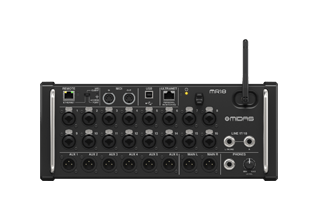

Digital Mixer

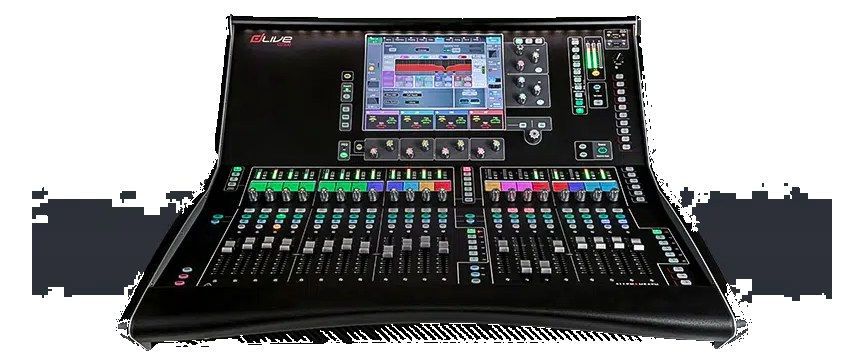
Allen & Heath dLive C2500 Surface

Allen & Heath·Model dLive C2500·allen-heath-dlive-c2500

Photos

Manufacturer product photography — the drawn faceplate above stays true to panel layout; these show the hardware itself.

Photo: Allen & HeathClick to zoom

About the Allen & Heath dLive C2500

The Allen & Heath dLive C2500 is the mid-size control surface in the dLive C-class line — 28 faders across 3 banks plus a 12" capacitive touchscreen, all sitting on a TouchSafe surface designed for live touring abuse. The surface itself has no I/O; it controls a DM-series MixRack (DM48, DM64, DM32, etc.) over a single Cat6 (gigaACE protocol). Pair with the DM48 MixRack for 64 input / 32 output capacity that punches above its weight class on touring rigs.

The dLive C2500 is Allen & Heath's mid-size control surface in the C-class line, and it exists for one purpose: giving a touring engineer a serious physical interface over a dLive DM-series MixRack sitting on the other end of a Cat6 run. There is no audio processing, no preamps, no I/O inside this surface — all of that lives in the MixRack. What you get here is 28 motorized faders across three banks, a 12-inch capacitive touchscreen, and a TouchSafe control layout designed to survive the kind of daily contact that destroys cheaper surfaces. At FOH or at monitors, this is the thing your hands actually touch.

That single Cat6 connection carrying gigaACE is doing a lot of work — up to 128 bidirectional channels between surface and rack, with a second RJ45 port providing redundant link should the primary path fail mid-show. Dual IEC power inputs offer the same redundancy on the electrical side. The surface draws a nominal 100W and peaks at 150W, so a single 20A circuit handles it with room to spare, but you will want to run both power feeds from independent sources if the show warrants it. The AES I/O and word clock BNC let you lock to a house clock or route a digital feed directly at the surface, which is occasionally useful for broadcast or recording splits without involving the rack.
The C2500 makes sense if you are on a touring or festival circuit that demands a deep channel count, solid recall, and a fader layout that can live with a full-time operator. Paired with a DM48 MixRack you are looking at a genuinely capable, redundant system at a price that competes with comparable Avid or DiGiCo rigs. If your shows are smaller club dates or you need an integrated solution with I/O in one box, this surface will feel like overkill and the separate-rack requirement will be a logistical burden you did not need. The C2500 earns its place when the MixRack-at-stage, surface-at-FOH topology is already how you think about your system.

In the rack

  • Run Cat6 between surface and MixRack through a dedicated, labeled run separate from your data network — gigaACE and your show-control network share RJ45 connectors but should never share a cable or switch.
  • Connect both IEC power inputs to independent legs or circuits; the redundant supply is useless if both feeds trace back to the same breaker.
  • Use the USB port to archive show files to a thumb drive at soundcheck — dLive show recall is fast, but only if the file is physically present at the console.
  • The surface has no built-in stagebox functionality, so plan your MixRack position early in the stage plot conversation; the Cat6 run can stretch with active extenders, but Cat6 passive limit is your hard constraint before you start that conversation.

C-class control surface for the dLive ecosystem. Lives at FOH; pairs with a DM-series MixRack on stage.

I/O Ports (11)

PortConnectorDirectionSignalChannels
gigaACE A (RJ45)RJ45bidirectionaldigital audio128
gigaACE B (RJ45) [redundant]RJ45bidirectionaldigital audio128
Network (RJ45)RJ45bidirectionaldata
USB (MIDI / show data)USB Abidirectionaldata
Headphones 1 (1/4")TRS QUARTERoutputanalog audio
Headphones 2 (1/4")TRS QUARTERoutputanalog audio
AES In (XLR)AES3 XLRinputdigital audio
AES Out (XLR)AES3 XLRoutputdigital audio
Word Clock In (BNC)BNCinputdigital audio
Power
  • Power A (IEC) (IEC C14)
  • Power B (IEC) [redundant] (IEC C14)

Related gear

Related articles

Guides from our library that cover planning around digital mixer gear.