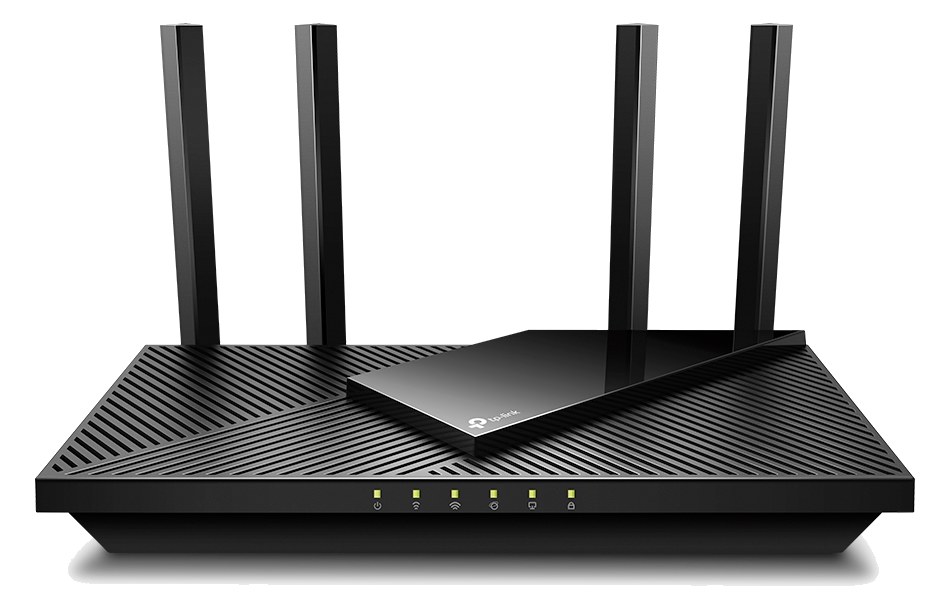

ASUS RT-AX86U Pro WiFi 6 Router
ASUS·Model RT-AX86U Pro·asus-rt-ax86u
Photos
Manufacturer product photography — the drawn faceplate above stays true to panel layout; these show the hardware itself.
About the ASUS RT-AX86U Pro
The ASUS RT-AX86U Pro is a popular mid-range WiFi 6 router with strong range, 2.5 Gbps WAN/LAN, and a solid signal even when stuffed into a tour-pro rack on top of the case. The merlin firmware ecosystem also makes it easy to lock down to a specific SSID + VLANVirtual LAN — slicing one physical switch into separate isolated networks, like keeping Dante away from lighting and guest WiFi. for the rig.
The RT-AX86U Pro is a consumer-grade WiFi 6 router that has earned a quiet following in touring racks because it punches above its category on RFRadio Frequency — the wireless part of wireless. RF planning is why big rigs scan, coordinate, and combine antennas instead of hoping. performance and gives you real flexibility in how you configure the network. In a live rig, it typically serves as the wireless hub for a personal monitoring ecosystem — tablets running mixing apps, phones on artist IEMIn-Ear Monitor — earpieces that replace floor wedges, feeding each player their own mix. The reason this whole rack exists. mixes, click and cue systems that need a clean, isolated SSID — all things that used to require a dedicated IT person to set up and now need to survive load-in in under ten minutes.
The 2.5G WAN port means your uplink to a DanteThe most common audio-over-network standard: dozens of channels of uncompressed digital audio down one ordinary Ethernet cable between Dante boxes. or AVBAudio Video Bridging — open network audio (MOTU, PreSonus) where the switch reserves bandwidth so streams can’t glitch. Milan is its pro profile. switch won't bottleneck at gigabit, which matters if you're also pushing high-channel-count audio over the same physical infrastructure. At a measured 18 watts typical draw and a 30-watt ceiling, it's polite on your rack's power budget. The unit is rackmountable but takes up no rack unitsThe standard slice of rack height: 1U = 1.75″. A 3U box takes three slices; half-rack gear pairs two units side by side in one. in the traditional sense — most engineers shelf-mount it on top of a rack case or bracket it inside a lid. Depth is 245 mm, so mind your case clearance. The Merlin firmware community has documented solid VLANVirtual LAN — slicing one physical switch into separate isolated networks, like keeping Dante away from lighting and guest WiFi. and SSID lockdown procedures, which is exactly what you want when you need to keep artists on one network segment and production on another.
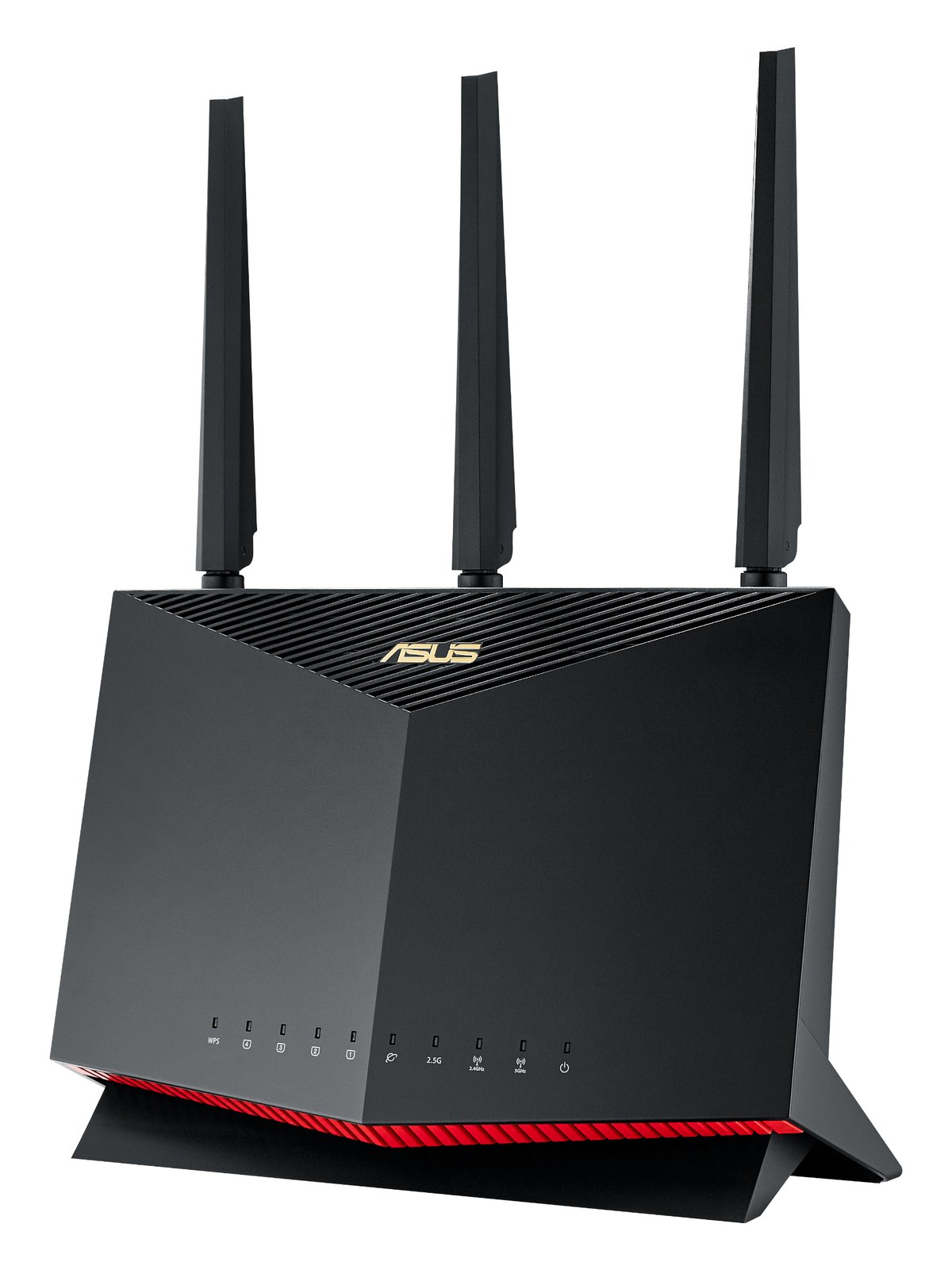
This router belongs in a rig where the engineer wants a proven, configurable platform and isn't afraid to spend thirty minutes pre-show in the firmware doing it right. If you need something you can hand to a less technical crew member with zero setup, a more locked-down dedicated touring router might serve you better. Equally, if your show is all wired and wireless is just a backup path for one tablet, this is more router than you need. But for a mid-size IEMIn-Ear Monitor — earpieces that replace floor wedges, feeding each player their own mix. The reason this whole rack exists. rig with multiple artists on wireless mixing apps and a real need for network segmentation, the RT-AX86U Pro is a sensible, well-supported choice at $269.
In the rack
- Set up a dedicated SSID per show role — one for artist tablets, one for production — and use the VLANVirtual LAN — slicing one physical switch into separate isolated networks, like keeping Dante away from lighting and guest WiFi. tagging in Merlin firmware to keep them isolated. Do this at home before the tour starts, then export the config and keep it on a USB stick in the rack bag.
- The antennas are the physical vulnerability here. If you're shelf-mounting on top of a rack case, angle them flat against the lid rather than vertical to reduce the chance of breakage during load-out — RFRadio Frequency — the wireless part of wireless. RF planning is why big rigs scan, coordinate, and combine antennas instead of hoping. performance in a venue is rarely antenna-angle sensitive enough to matter.
- Plug it into a switched outlet on your power conditionerFilters venue AC, clamps surges, and gives the rack one tidy inlet. Not a voltage regulator and not a battery — just cleaner power. so you can hard-reboot it from the front of the rack without reaching behind the case. A hanging router that requires a physical pull is a liability mid-show.
- The 2.5G WAN port is genuinely useful if your stage network switch has a 2.5G uplink — patch directly to that port rather than daisy-chaining through a gigabit switch and you remove one potential bottleneck from your DanteThe most common audio-over-network standard: dozens of channels of uncompressed digital audio down one ordinary Ethernet cable between Dante boxes. or OSCOpen Sound Control — a network protocol for remote-controlling mixers and software. MIDI’s modern, higher-resolution cousin. traffic path.
Mid-tier AX5700 router with 2.5G WAN.
I/O Ports (7)
| Port | Connector | Direction | Signal | Channels |
|---|---|---|---|---|
| WAN 2.5G | RJ45 | bidirectional | data | — |
| LAN 1 (RJ45) | RJ45 | bidirectional | data | — |
| LAN 2 (RJ45) | RJ45 | bidirectional | data | — |
| LAN 3 (RJ45) | RJ45 | bidirectional | data | — |
| LAN 4 (RJ45) | RJ45 | bidirectional | data | — |
| USB 3.0 | USB A | bidirectional | data | — |
- Power (DC barrel) (DC BARREL)
Deciding between two?
Rack space, watts, weight and every connector, side by side.
Related gear