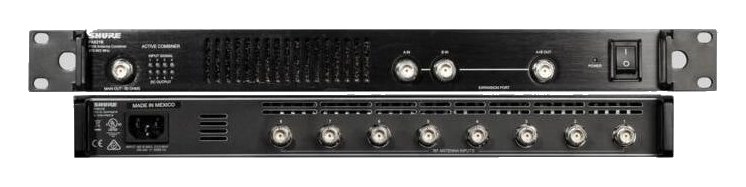
The Audio-Technica ATW-DA49a distributes a diversity antenna pair to four receivers across a very wide 470-950 MHz range, covering the 3000/5000 Series and most anything else in the rack. Cascade outputs feed a second distro for eight-channel systems, and DC outputs power the receivers to cut wall-wart clutter. A cost-effective wideband alternative to brand-locked distros.
~$599Use retailer rows for current price and stock
01 · What it does—and what that changes in your rig.
Product overview
Start with the payoff, then work through how it functions, where it fits, and the details that change a real build.
The payoff
Antenna Distro decisions, organized around the whole rig.
The ATW-DA49a is a one-rack-unit antenna distributor: you run a single diversityA receiver with two antennas and two radio sections that continuously picks the stronger one — the difference between a dropout and a show. pair of remote antennas into it, and it fans that signal out to four receivers simultaneously, maintaining the A/B diversity path all the way through. That's the core job. Without something like this, a four-receiver rack means four separate antenna pairs fighting for position and cable runs multiplying across the stage. The DA49a collapses that into two clean runs from your antenna placement of choice, letting you put paddlesA directional antenna (paddle, LPDA, helical) aimed at the stage — focuses coverage where the performers are and rejects RF from elsewhere. somewhere they actually work rather than wherever each receiver happens to live.
Documented outputs
1010 destination connections
Documented inputs
3Based on documented inputs
Rack space
1UBuilder checks available rail space
Audio-Technica product panel1U · 8W
Function
How it works in the path
The 470–950 MHz coverage is the number that earns this unit a place in mixed-brand racks. That's a wide enough window to accommodate Audio-Technica's own 3000 and 5000 Series alongside many other manufacturers' systems operating in the same spectrum, so you're not buying a distroOne pair of antennas feeding many receivers through an amplified splitter — replaces the forest of whips and keeps RF levels consistent. that becomes a paperweight if you swap a receiver body. The cascade outputs — one A, one B — mean you can chain a second DA49a for eight-channel diversityA receiver with two antennas and two radio sections that continuously picks the stronger one — the difference between a dropout and a show. coverage without returning to your antenna position. Power draw sits between 8 and 12 watts, which is negligible, and the shallow 200mm depth fits without drama into most compact tour racks. DC power output to receivers is a real convenience at load-in; fewer wall-wart lines means a tidier rack and fewer failure points.
Best fit
Where it earns its place in the rack
If you're running three or four Audio-Technica wireless channels — IEMIn-Ear Monitor — earpieces that replace floor wedges, feeding each player their own mix. The reason this whole rack exists. transmitters, handhelds, bodypacks — this is a straightforward, cost-appropriate answer. At $599 it lands well below the flagship distrosOne pair of antennas feeding many receivers through an amplified splitter — replaces the forest of whips and keeps RF levels consistent. from Shure or Sennheiser while covering comparable frequency ground, making it a sensible choice for houses of worship, corporate touring rigs, and working monitor engineers who need reliable distribution without a capital-budget fight. Where it won't fit: if you need more than four outputs and don't want to cascade, or if your receivers fall outside the 470–950 MHz window, look elsewhere. And if your system requires active bias voltage delivery with specific current specs, verify compatibility with your exact receiver models before assuming DC pass-through handles everything.
In the rack
Details worth deciding before load-in.
Place the DA49a near the top of the rack so the BNCThe twist-lock coax connector used for word clock and antenna runs — it locks, so it can’t be pulled out mid-show. outputs are accessible without pulling the unit — you'll re-dress those cascade cables more often than you expect at changeover.
Use the cascade outputs to feed a second DA49a only after confirming your antenna amp and cable run can support the additional signal split; a weak source signal degrades across every output in the chain.
Label each Ch output pair (Ch 1 A / Ch 1 B) with the corresponding receiver and frequency band at patch — wideband coverage is an asset, but unlabeled BNCThe twist-lock coax connector used for word clock and antenna runs — it locks, so it can’t be pulled out mid-show. forests cost you time during a drop-outA brief audio gap when the radio link fails — the thing diversity, distros, and coordination all exist to prevent. diagnosis.
If you're running the DC power output to receivers, route those DC lines with the BNCThe twist-lock coax connector used for word clock and antenna runs — it locks, so it can’t be pulled out mid-show. runs and tie them together; it keeps the rack interior clean and prevents cable drag from unseating BNC connections during transport.
02 · Know the whole path before you buy.
Signal path
Learn the route as a block diagram: source, product function, transport, and destination. Select any block to see what enters, what changes, and what leaves.
Interactive block diagramAuto-looping · hover, focus, or tap to hold a stage
Port-type signalProduct functionSystem boundary
Follow one signal from source to destination
Each block answers the same three questions: what arrives, what changes here, and what leaves.
01 · Source · selected
bnc + dc barrel
bnc
01 · Source
3 documented inputs
bnc + dc barrel
Arrives as
3 documented inputs
Connector
bnc + dc barrel
Signal
antenna
03 · What this product asks of the rest of the system.
Compatibility
Treat connector names as the start of the check—not the answer. These are the boundaries that determine a complete working path.
Best fit · Antenna Distro
Use it when 1U and 200 mm of depth fit the case.
Plan the companion path
Complete the path with upstream and downstream gear that matches connector, direction, signal type, protocol, and wiring standard.
Connector boundary
Documented connectors: bnc, dc barrel. Match connector, direction, and signal type—not shape alone.
04 · Every connector, grouped by job.
I/O ports
Switch the product view and the documented port inventory updates with it—hardware and data stay side by side.
Every connector, grouped by job.
Switch panels to keep the hardware view and the documented port list in sync.
Front panelRear panel
All documented ports for Audio-Technica ATW-DA49a Antenna Distro
Port
Panel
Connector
Direction
Signal
Channels
Antenna A In
rear
bnc
input
antenna
—
Antenna B In
rear
bnc
input
antenna
—
Ch 1 A
rear
bnc
output
antenna
—
Ch 1 B
rear
bnc
output
antenna
—
Ch 2 A
rear
bnc
output
antenna
—
Ch 2 B
rear
bnc
output
antenna
—
Ch 3 A
rear
bnc
output
antenna
—
Ch 3 B
rear
bnc
output
antenna
—
Ch 4 A
rear
bnc
output
antenna
—
Ch 4 B
rear
bnc
output
antenna
—
Cascade A
rear
bnc
output
antenna
—
Cascade B
rear
bnc
output
antenna
—
DC In (12V adapter)
rear
dc barrel
input
power
—
Showing 13 of 13 documented physical ports. Scroll to review the remaining rows.
05 · Compare the decision, not just the price.
Alternatives
The rows are organized around fit, power, I/O, and system role so a cheaper unit cannot hide a more expensive workflow.
ATW-DA49aThe Audio-Technica ATW-DA49a distributes a diversity antenna pair to four receivers across a very wide 470-950 MHz range, covering the 3000/5000 Series and most anything else in the rack. Cascade outputs feed a second distro for eight-channel systems, and DC outputs power the receivers to cut wall-wart clutter. A cost-effective wideband alternative to brand-locked distros.View gear →
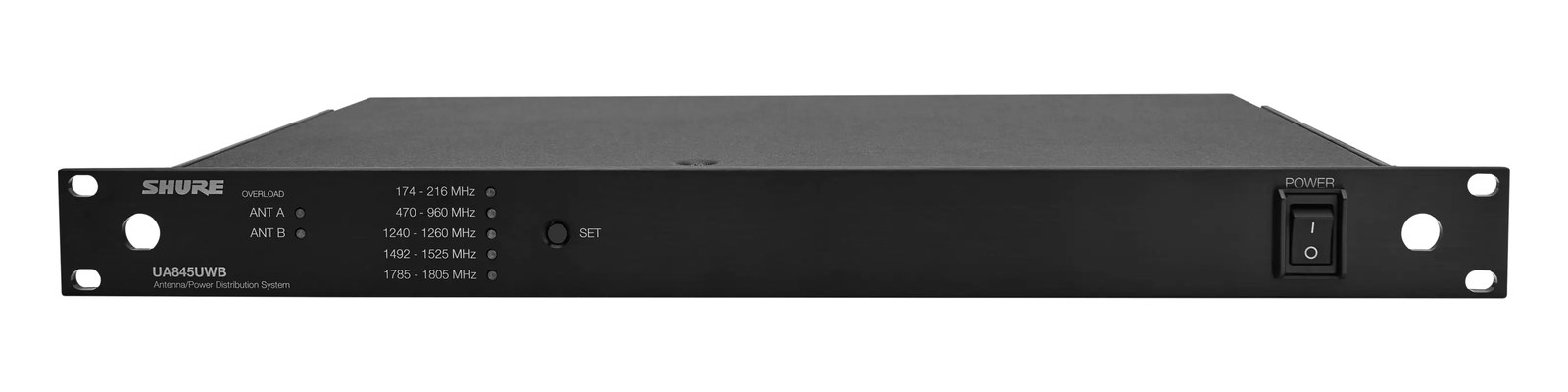
UA845UWBThe UA845+SWB is the standard antenna distribution unit for Shure PSM and ULX-D wireless systems, splitting a single antenna pair to feed up to five receivers per side. Active gain compensation ensures consistent signal levels across all outputs, which is critical when scaling up to larger channel counts. Essential for any rack with more than a couple of wireless receivers sharing a common antenna source.View gear →
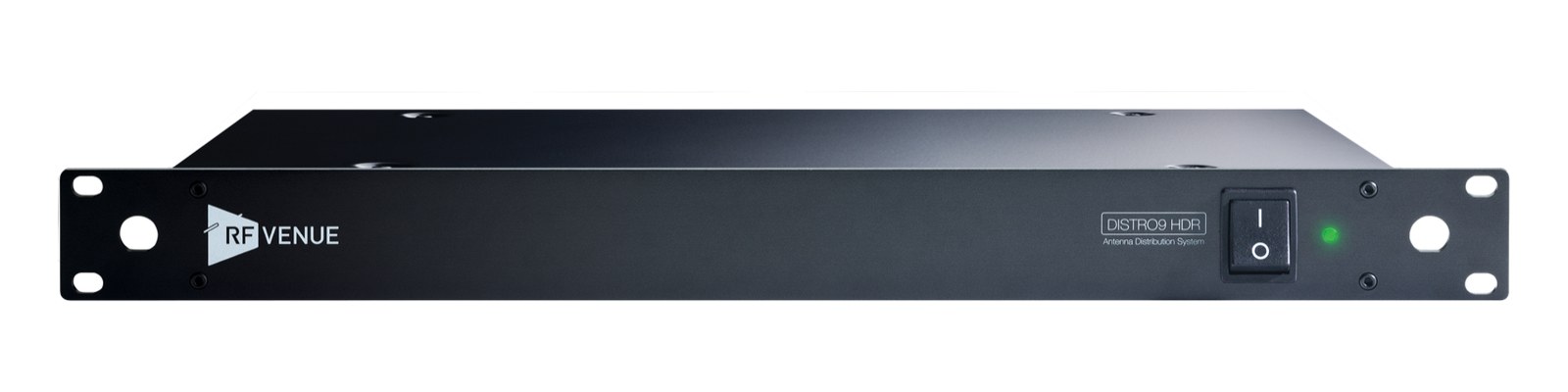
DISTRO9 HDRThe DISTRO9 HDR is RF Venue's flagship antenna distribution system, offering nine outputs with exceptional dynamic range that handles dense wireless environments without intermodulation issues. Its cascadable design lets you daisy-chain multiple units for very large channel counts. Brand-agnostic and wideband, it works equally well with Shure, Sennheiser, or any other UHF wireless system in your IEM rack.View gear →
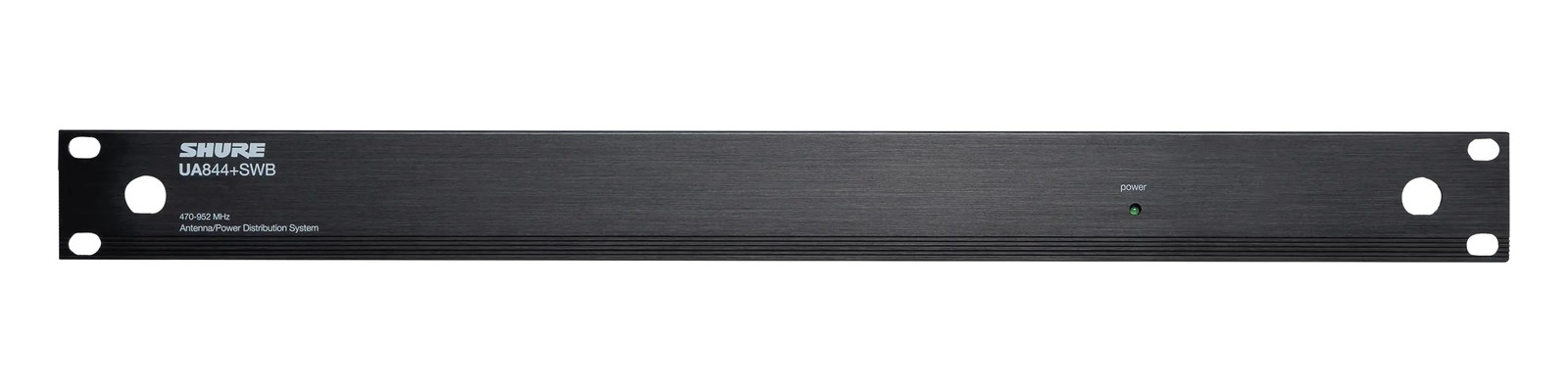
UA844+SWBA compact and reliable antenna splitter for smaller Shure wireless deployments, the UA844+SWB distributes one antenna pair to four receivers while providing DC power to in-line antenna amplifiers. It is a great fit for rigs with up to four PSM or ULX-D receivers that need shared antenna distribution. If you need more than four outputs, step up to the UA845+SWB.View gear →
06 · Resolve the questions that can change the purchase or build plan.
Planning questions
Short, source-backed answers surface rack fit, power, cabling, and connection details before they become surprises.
How will the Audio-Technica ATW-DA49a Antenna Distro affect rack fit and case depth?
It occupies 1U. Its documented depth is 200 mm.
How much power does the Audio-Technica ATW-DA49a Antenna Distro draw?
Typical draw is 8W and documented maximum draw is 12W.
What connections does the Audio-Technica ATW-DA49a Antenna Distro have?
13 documented physical ports, including Antenna A In, Antenna B In, Ch 1 A, Ch 1 B, Ch 2 A, Ch 2 B.
07 · See this unit inside a real rack plan.
Builder preview
Placement is only the start. Builder checks space · depth · weight, power headroom, dependencies, and compatible signal paths around this exact catalog item.Open in Builder