The DiGiCo SD9 is the entry-point to the SD ecosystem — 48 inputs, 16 outputs, single 15" touchscreen, and one MADI port (with an optical option slot for redundancy). It earned a reputation as the "right-sized" console for regional theater, mid-size touring, and worship gigs that wanted DiGiCo reliability without paying SD12 prices. Discontinued by DiGiCo but still extremely common on rental inventories and used markets.
~$26,000Use retailer rows for current price and stock
01 · What it does—and what that changes in your rig.
Product overview
Start with the payoff, then work through how it functions, where it fits, and the details that change a real build.
The payoff
Digital Mixer decisions, organized around the whole rig.
The SD9 is DiGiCo's entry point into the SD world — a full-featured digital console carrying 48 inputs and 16 outputs behind a single 15-inch touchscreen, running the same FPGA-based processing engine that made the larger SD desks a riderThe document attached to a booking that lists what the band needs — inputs, monitors, power, backline (and the green-room snacks). staple. It sits squarely in the territory where regional theater, mid-size touring, and larger fixed-install worship programs need real mixing horsepower without the footprint or price of an SD12. DiGiCo has discontinued it, but the SD9 remains deeply embedded in rental inventories everywhere, which means encountering one on a backlineThe band’s on-stage instrument gear — amps, drums, keys. What a venue or festival sometimes supplies so you can travel light. rider or as a house desk is still an everyday reality.
Documented outputs
99 destination connections
Required cable runs
1madi bnc
Rack space
Outside rackPlan a shelf, tray, or stage position
DiGiCo product panelOutside rack · 150W
Function
How it works in the path
The local I/O is intentionally lean — two mic inputs, six analog outputs, one MADIA pro digital format carrying 64 channels on one coax or optical cable. Point-to-point — one sender, one receiver, no network required. port running up to 56 channels, and an AES pair — so the SD9 assumes you're working with a stage boxThe I/O endpoint on stage: mics plug in there and one digital line (AES50, Dante) carries everything to the console. The snake, digitized.. In practice that means a DiGiCo or compatible MADI stagebox handles your input count while the local XLRsThe standard 3-pin locking connector for mics and balanced line signals — pin 1 is the shield, pins 2 and 3 carry the balanced pair. cover a confidence feed, a broadcast tap, or a quick direct connect for a talk-back mic. Word clockThe shared heartbeat keeping every digital box sampling in lockstep. One device leads, the rest follow — or you get clicks and pops. in and the optical expansion slot (for a second MADI or fiber run) give you real redundancyA second copy of anything critical — supply, computer, network path — already running so one failure can’t stop the show. options if the rental house has the card. At 22 kg and 600 mm deep, it's a sizeable desk; load-in needs a proper stand or a built-in riser — this is not a table-top console.
Best fit
Where it earns its place in the system
If you're a monitor engineer running a dedicated IEMIn-Ear Monitor — earpieces that replace floor wedges, feeding each player their own mix. The reason this whole rack exists. rig, the SD9 is almost certainly not what belongs in this planner — it's a FOHFront Of House — the main mix the audience hears, and the console position out in the room where it gets mixed. or monitor position desk, not a rack unitThe standard slice of rack height: 1U = 1.75″. A 3U box takes three slices; half-rack gear pairs two units side by side in one.. It earns its place if you're spec'ing a full front-of-house solution, a monitor worldThe side-stage domain of the monitor engineer — console, IEM racks, and everything feeding the band’s ears instead of the audience. position on a theater show, or an all-in-one console for a mid-size touring package where the riderThe document attached to a booking that lists what the band needs — inputs, monitors, power, backline (and the green-room snacks). just says 'DiGiCo.' Engineers who need more than 48 inputs or want dual-redundantA second copy of anything critical — supply, computer, network path — already running so one failure can’t stop the show.MADIA pro digital format carrying 64 channels on one coax or optical cable. Point-to-point — one sender, one receiver, no network required. as standard should step up to an SD12. Engineers who need something genuinely compact should look at the SD11 or SD5Q family instead. For the right show size and budget, the SD9 is a proven, forgiving workhorse.
In the rack
Details worth deciding before load-in.
Pair it with a DiGiCo SD-Rack or a compatible MADIA pro digital format carrying 64 channels on one coax or optical cable. Point-to-point — one sender, one receiver, no network required.stageboxThe I/O endpoint on stage: mics plug in there and one digital line (AES50, Dante) carries everything to the console. The snake, digitized. — the two local mic inputs are not enough to run a real show without one, and the 56-channel MADI port is where your actual input count lives.
If the rental house has the optical MADIA pro digital format carrying 64 channels on one coax or optical cable. Point-to-point — one sender, one receiver, no network required. expansion card installed, use it: run primary MADI over BNCThe twist-lock coax connector used for word clock and antenna runs — it locks, so it can’t be pulled out mid-show. and the redundantA second copy of anything critical — supply, computer, network path — already running so one failure can’t stop the show. feed over fiber so a single cable fault at the split doesn't kill your show.
Budget the full 220 W worst-case draw on your power conditionerFilters venue AC, clamps surges, and gives the rack one tidy inlet. Not a voltage regulator and not a battery — just cleaner power. circuit — the SD9's DSPDigital Signal Processing — the number-crunching that does EQ, compression, and effects inside a box. More DSP means more processing at once. load climbs with input count and processing depth, so plan for the ceiling, not the idle figure.
On theater plots where you're sharing a MADIA pro digital format carrying 64 channels on one coax or optical cable. Point-to-point — one sender, one receiver, no network required. loop with another console or a recording interface, lock word clockThe shared heartbeat keeping every digital box sampling in lockstep. One device leads, the rest follow — or you get clicks and pops. externally via the BNCThe twist-lock coax connector used for word clock and antenna runs — it locks, so it can’t be pulled out mid-show. Word Clock In rather than letting the SD9 self-clock — it eliminates the most common source of intermittent digital noise on long runs.
02 · Know the whole path before you buy.
Signal path
Learn the route as a block diagram: source, product function, transport, and destination. Select any block to see what enters, what changes, and what leaves.
Interactive block diagramAuto-looping · hover, focus, or tap to hold a stage
Port-type signalProduct functionSystem boundary
Follow one signal from source to destination
Each block answers the same three questions: what arrives, what changes here, and what leaves.
01 · Source · selected
XLR female + madi bnc
madi bnc + aes3 xlr
XLR male + madi bnc
01 · Source
6 documented inputs
XLR female + madi bnc
Arrives as
6 documented inputs
Connector
XLR female + madi bnc
Signal
analog audio
03 · What this product asks of the rest of the system.
Compatibility
Treat connector names as the start of the check—not the answer. These are the boundaries that determine a complete working path.
Best fit · Digital Mixer
Use it as digital mixer tracked outside rack rails; follow the manufacturer’s mounting and form-factor guidance.
Plan the companion path
Complete the path with upstream and downstream gear that matches connector, direction, signal type, protocol, and wiring standard.
Protocol boundary
This product declares MADI; matching plugs alone do not make other protocols compatible.
04 · Every connector, grouped by job.
I/O ports
Switch the product view and the documented port inventory updates with it—hardware and data stay side by side.
Every connector, grouped by job.
Switch panels to keep the hardware view and the documented port list in sync.
Front panelRear panel
All documented ports for DiGiCo SD9
Port
Panel
Connector
Direction
Signal
Channels
Local Mic In 1 (XLR)
rear
XLR female
input
analog audio
—
Local Mic In 2 (XLR)
rear
XLR female
input
analog audio
—
Local Out 1
rear
XLR male
output
analog audio
—
Local Out 2
rear
XLR male
output
analog audio
—
Local Out 3
rear
XLR male
output
analog audio
—
Local Out 4
rear
XLR male
output
analog audio
—
Local Out 5
rear
XLR male
output
analog audio
—
Local Out 6
rear
XLR male
output
analog audio
—
MADI In (BNC)
rear
madi bnc
input
digital audio
56
MADI Out (BNC)
rear
madi bnc
output
digital audio
56
AES In (XLR)
rear
aes3 xlr
input
digital audio
—
AES Out (XLR)
rear
aes3 xlr
output
digital audio
—
Word Clock In (BNC)
rear
bnc
input
digital audio
—
Network (RJ45)
rear
RJ45
bidirectional
data
—
Headphones (1/4")
rear
¼-inch TRS
output
analog audio
—
Power (IEC)
rear
IEC C14
input
power
—
Showing 16 of 16 documented physical ports. Scroll to review the remaining rows.
05 · Compare the decision, not just the price.
Alternatives
The rows are organized around fit, power, I/O, and system role so a cheaper unit cannot hide a more expensive workflow.
SD9The DiGiCo SD9 is the entry-point to the SD ecosystem — 48 inputs, 16 outputs, single 15" touchscreen, and one MADI port (with an optical option slot for redundancy). It earned a reputation as the "right-sized" console for regional theater, mid-size touring, and worship gigs that wanted DiGiCo reliability without paying SD12 prices. Discontinued by DiGiCo but still extremely common on rental inventories and used markets.View gear →
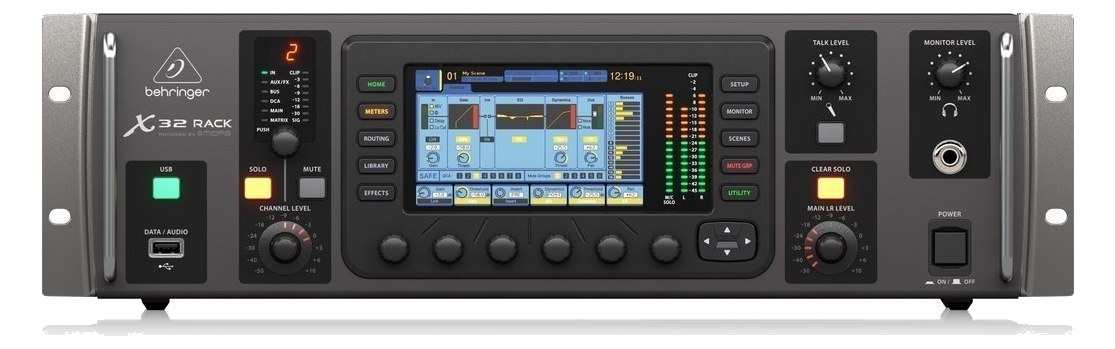
X32 RackThe Behringer X32 Rack packs a full-featured 40-input digital mixer into a 3U rack-mount form factor, making it a popular choice for IEM mixing and playback rigs on a budget. It can serve as both a monitor mixer and a USB audio interface simultaneously, and optional expansion cards add Dante networking or additional digital I/O. The deep bus structure with 25 mix buses means you can create individual IEM mixes for a full band without running out of routing options.View gear →
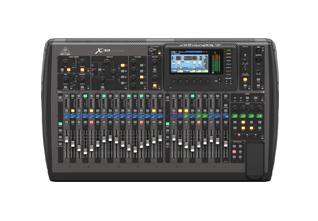
X32The full-size Behringer X32 brings 32 Midas-designed mic preamps and 16 XLR outputs onto the console itself, eliminating the need for a stage box on small-to-mid stages. Two AES50 ports still let you hang DL or S-series stage boxes when the rig grows. The 25-bus engine delivers a healthy supply of independent IEM mixes, and Ultranet runs to P-16 personal mixers off a single Cat5 to the stage. A long-running workhorse of monitor world for budget-conscious productions.View gear →
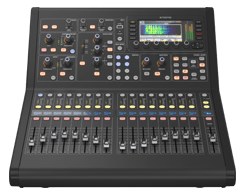
M32R LiveThe Midas M32R Live is the rack-mountable, 16-fader sibling of the flagship M32 console. It brings 16 fully-featured Midas mic preamps, a 40-input mix engine, and two AES50 ports that let you hang Midas DL-series or Behringer S-series stage boxes off a single shielded Cat5e per link — up to 48 channels over one cable. If the rig has a DL16/DL32 or S16/S32 at the stage, the AES50 trunk is the connection back to this console; local XLR inputs on the console itself are reserved for last-minute stage-side patches.View gear →
06 · Resolve the questions that can change the purchase or build plan.
Planning questions
Short, source-backed answers surface rack fit, power, cabling, and connection details before they become surprises.
Where does the DiGiCo SD9 live in a complete rig?
The catalog assigns it no rack units. Builder tracks it as non-rack gear; follow the manufacturer’s mounting, case, and form-factor guidance.
How much power does the DiGiCo SD9 draw?
Typical draw is 150W and documented maximum draw is 220W.
What connections does the DiGiCo SD9 have?
16 documented physical ports, including Local Mic In 1 (XLR), Local Mic In 2 (XLR), Local Out 1, Local Out 2, Local Out 3, Local Out 4.
07 · See this gear inside a complete system plan.
Builder preview
Builder keeps non-rack gear in the same bill of materials, budget, dependency, and connection plan as the rack-mounted system around it.Open in Builder