
01 · Source
12 documented inputs
XLR/TRS combo + toslink
- Arrives as
- 12 documented inputs
- Connector
- XLR/TRS combo + toslink
- Signal
- analog audio

Audio Interface
Focusrite Clarett+ OctoPre 8-channel ADAT Preamp. Plan its source-defined physical connections and placement in your rig.
01 · What it does—and what that changes in your rig.
Start with the payoff, then work through how it functions, where it fits, and the details that change a real build.
Focusrite Clarett+ OctoPre 8-channel ADATOptical digital audio: 8 channels at 48 kHz down one Toslink lightpipe (4 at 96 kHz). The usual way to add more channels to an interface. PreampThe gain stage that lifts a mic’s tiny signal up to line level — the first thing a signal hits, and a big part of how a console sounds.. Plan its source-defined physical connections and placement in your rig.
02 · Know the whole path before you buy.
Learn the route as a block diagram: source, product function, transport, and destination. Select any block to see what enters, what changes, and what leaves.
Each block answers the same three questions: what arrives, what changes here, and what leaves.
XLR/TRS combo + toslink
03 · What this product asks of the rest of the system.
Treat connector names as the start of the check—not the answer. These are the boundaries that determine a complete working path.
Use it when 1U and 286 mm of depth fit the case.
Complete the path with upstream and downstream gear that matches connector, direction, signal type, protocol, and wiring standard.
Documented connectors: XLR/TRS combo, ¼-inch TRS, toslink, bnc. Match connector, direction, and signal type—not shape alone.
04 · Every connector, grouped by job.
Switch the product view and the documented port inventory updates with it—hardware and data stay side by side.
Switch panels to keep the hardware view and the documented port list in sync.
| Port | Panel | Connector | Direction | Signal | Channels |
|---|---|---|---|---|---|
| INPUT 1 | front | XLR/TRS combo | input | analog audio | — |
| INPUT 2 | front | XLR/TRS combo | input | analog audio | — |
| MIC/LINE INPUT 8 | rear | XLR/TRS combo | input | analog audio | — |
| MIC/LINE INPUT 7 | rear | XLR/TRS combo | input | analog audio | — |
| MIC/LINE INPUT 6 | rear | XLR/TRS combo | input | analog audio | — |
| MIC/LINE INPUT 5 | rear | XLR/TRS combo | input | analog audio | — |
| MIC/LINE INPUT 4 | rear | XLR/TRS combo | input | analog audio | — |
| MIC/LINE INPUT 3 | rear | XLR/TRS combo | input | analog audio | — |
| INSERT 8 | rear | ¼-inch TRS | bidirectional | analog audio | — |
| INSERT 7 | rear | ¼-inch TRS | bidirectional | analog audio | — |
| INSERT 6 | rear | ¼-inch TRS | bidirectional | analog audio | — |
| INSERT 5 | rear | ¼-inch TRS | bidirectional | analog audio | — |
| INSERT 4 | rear | ¼-inch TRS | bidirectional | analog audio | — |
| INSERT 3 | rear | ¼-inch TRS | bidirectional | analog audio | — |
| INSERT 1 | rear | ¼-inch TRS | bidirectional | analog audio | — |
| INSERT 2 | rear | ¼-inch TRS | bidirectional | analog audio | — |
| OPTICAL OUT 2 | rear | toslink | output | digital audio | — |
| OPTICAL OUT 1 | rear | toslink | output | digital audio | — |
| OPTICAL IN 2 | rear | toslink | input | digital audio | — |
| OPTICAL IN 1 | rear | toslink | input | digital audio | — |
| WORD CLOCK OUT | rear | bnc | output | data | — |
| WORD CLOCK IN | rear | bnc | input | data | — |
| LINE OUTPUTS 1–8 | rear | db25 | output | analog audio | — |
| AC MAINS | rear | IEC C14 | input | power | — |
Showing 24 of 24 documented physical ports. Scroll to review the remaining rows.
05 · Compare the decision, not just the price.
The rows are organized around fit, power, I/O, and system role so a cheaper unit cannot hide a more expensive workflow.
| Compare |  | |||
|---|---|---|---|---|
| Fit | 📐 1U | 📐 2U | 📐 1U | 📐 1U |
| Power | ⚡ 30W | ⚡ Unverified | ⚡ Unverified | ⚡ Unverified |
| Weight | ⚖️ 9.1 lb | ⚖️ 12.3 lb | ⚖️ 7.3 lb | ⚖️ 6.3 lb |
| I/O | 🔌 24 | 🔌 50 | 🔌 33 | 🔌 33 |
| Estimate | 💵 ~$899.99 | 💵 ~$2,299.99 | 💵 ~$769.99 | 💵 ~$799.99 |
| Deep dive | Current selection | Full comparison → | Full comparison → | Full comparison → |
06 · Resolve the questions that can change the purchase or build plan.
Short, source-backed answers surface rack fit, power, cabling, and connection details before they become surprises.
It occupies 1U. Its documented depth is 286 mm.
Typical draw is 30W and documented maximum draw is 0W.
24 documented physical ports, including INPUT 1, INPUT 2, MIC/LINE INPUT 8, MIC/LINE INPUT 7, MIC/LINE INPUT 6, MIC/LINE INPUT 5.
07 · See this unit inside a real rack plan.
08 · Related gear, in the order you may need it.
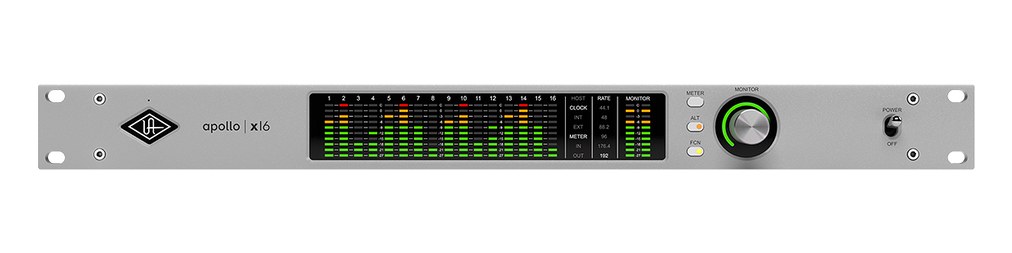
Audio Interface
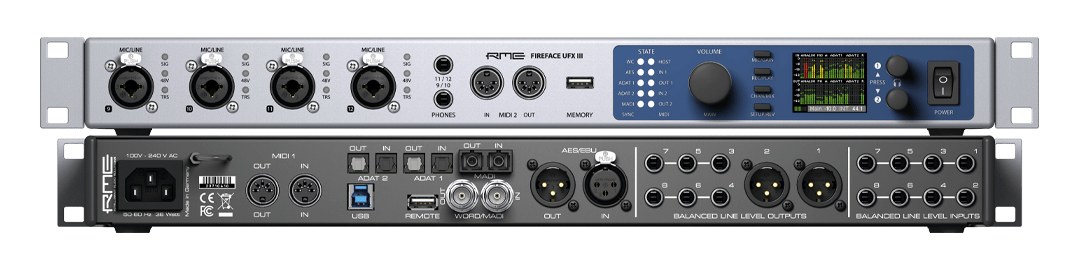
Audio Interface
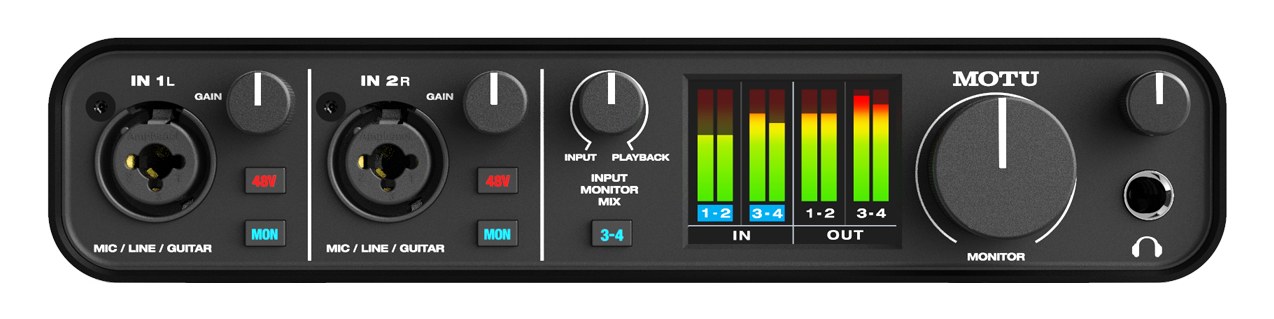
Audio Interface
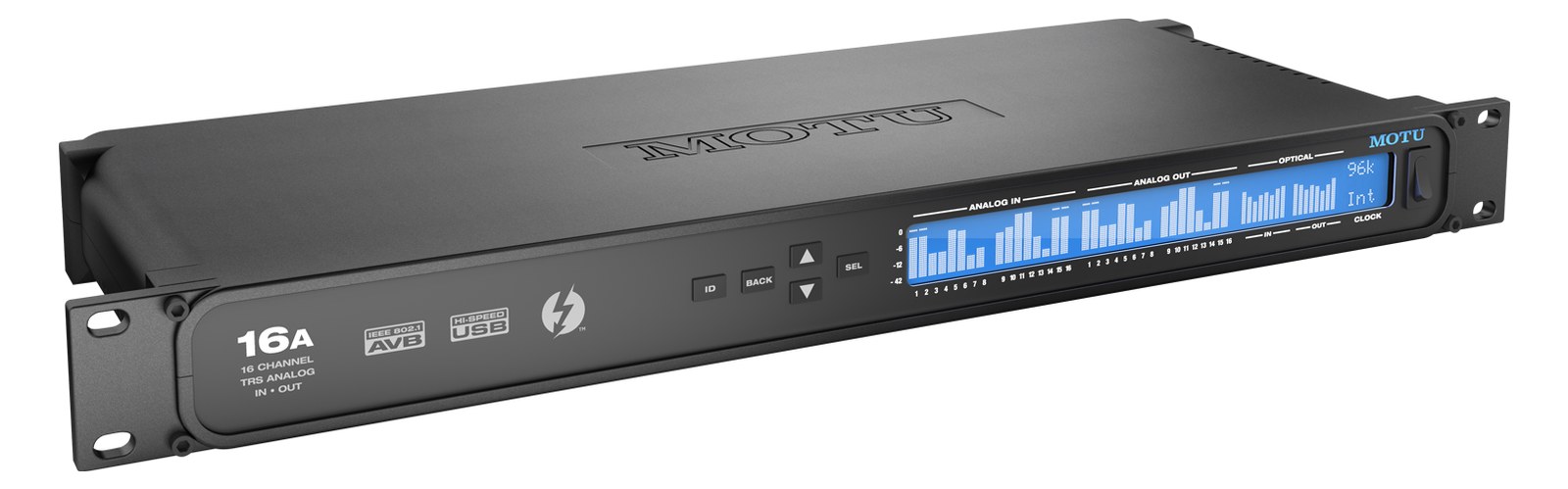
Audio Interface
Audio Interface
Audio Interface
Planning guides for audio interface systems.
Workflow · 7 min
How to choose between a digital mixer, a Thunderbolt interface, and a Dante converter as the brain of your IEM rack — with concrete picks at each tier.
Workflow · 14 min
How to build a live-performance playback rig that runs click + backing tracks reliably — interface sizing, routing rules, software comparison, and what to do when the laptop crashes.
Workflow · 12 min
How to build a fail-safe live playback rig with primary + backup laptops, an auto-switching audio interface, and a failover workflow you can actually trust on a Sunday morning.
Workflow · 11 min
LTC vs MTC vs MIDI Clock, how to generate timecode from Ableton or Playback, how lighting and video receive it, and the frame-rate mistake that drifts every show.


