
Audio Interface

MOTU 24Ai Audio Interface

MOTU·Model 24Ai·motu-24ai

Discontinued MOTU AVB-era interface gone from major retail 2026-07 — superseded by the 2024+ line (828/16A TB4/848). Kept for owners; used-market staple.

Photos

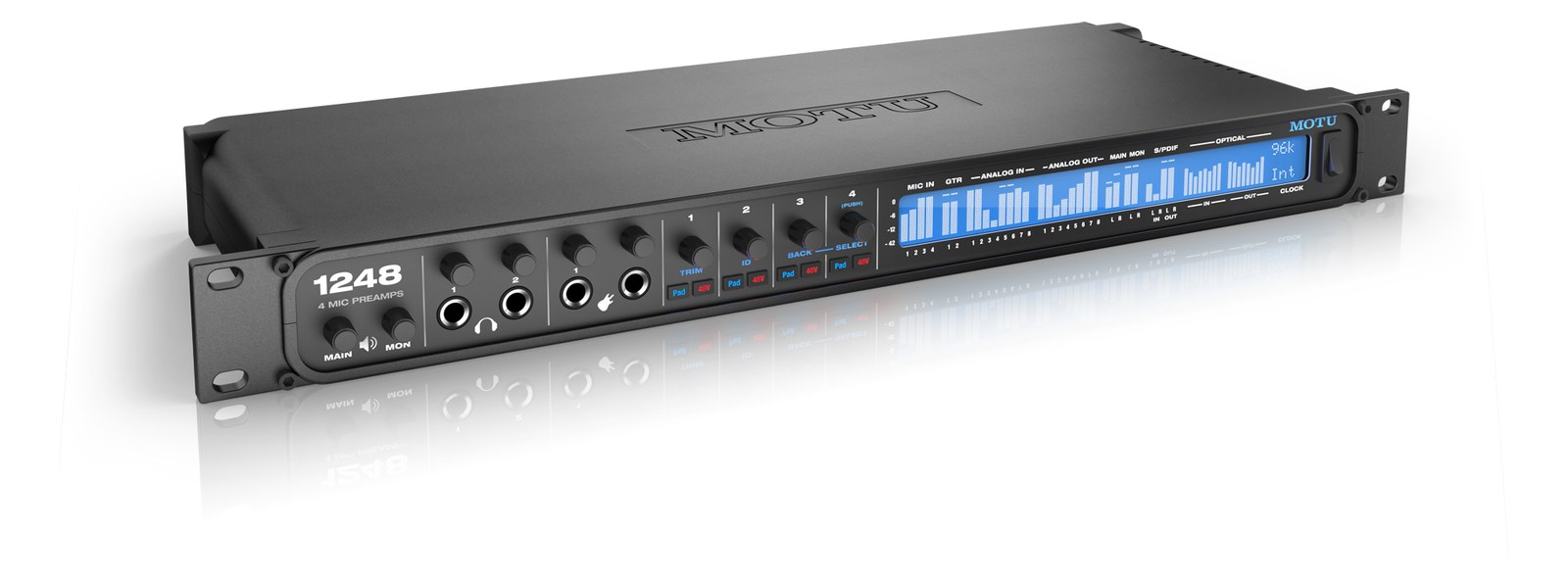
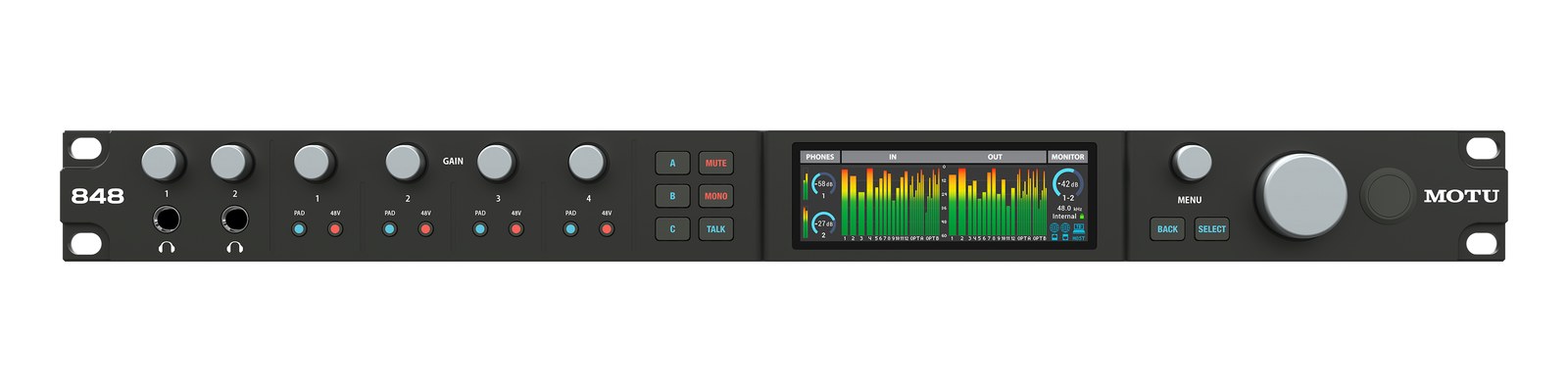
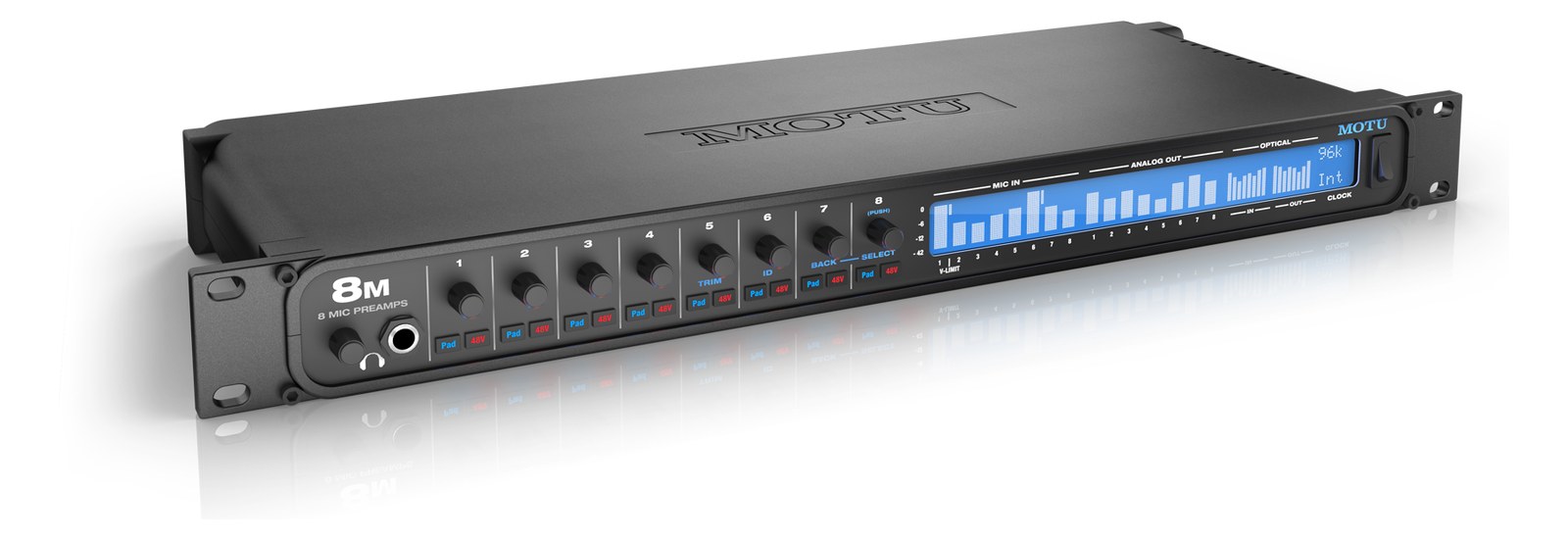
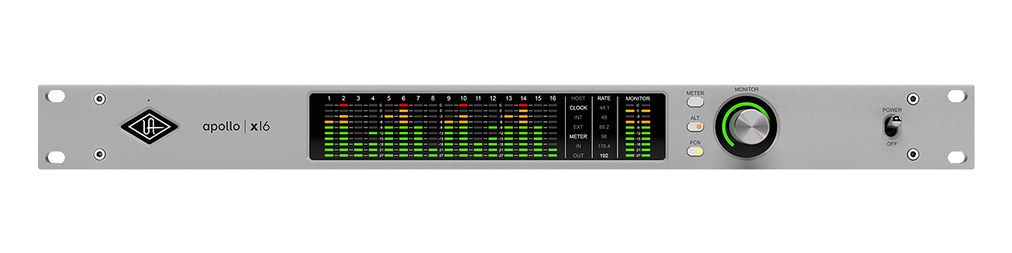
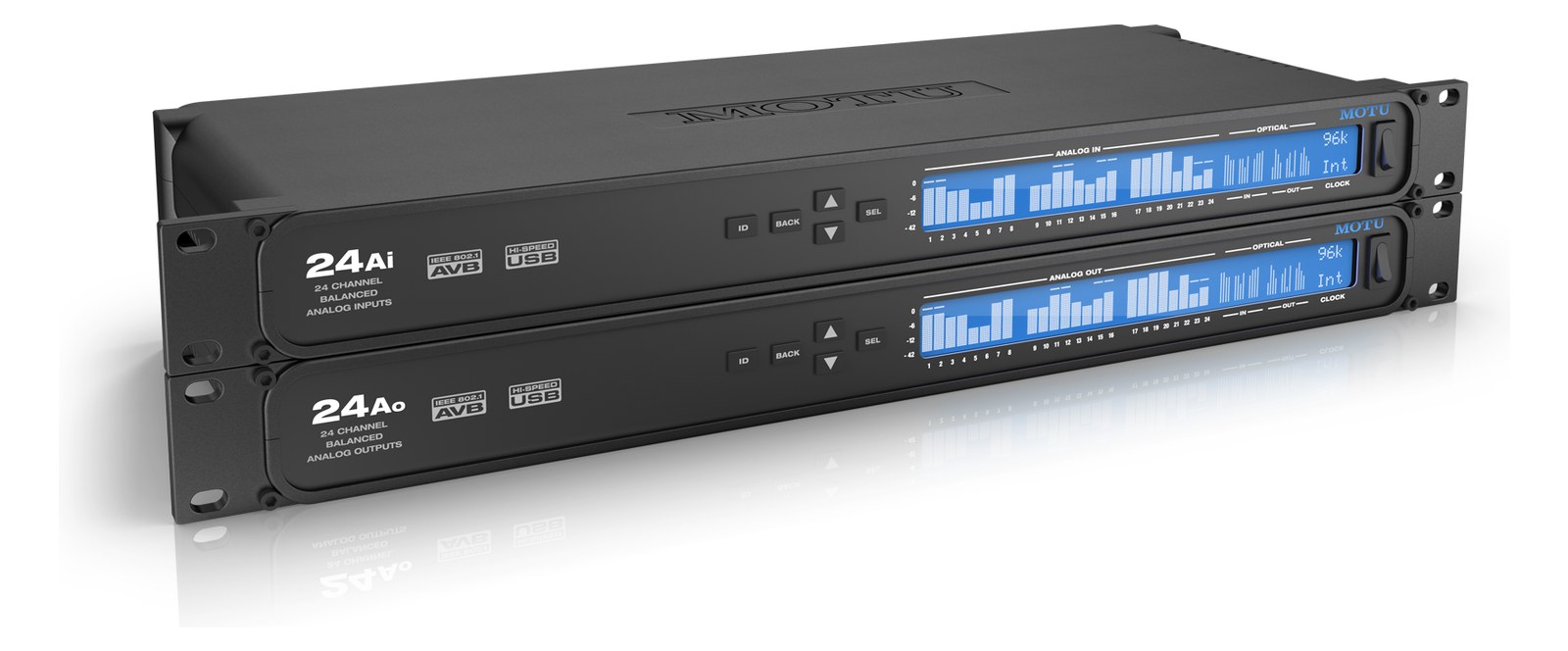
Manufacturer product photography — the drawn faceplate above stays true to panel layout; these show the hardware itself.

Photo: MOTU1 / 3

About the MOTU 24Ai

The MOTU 24Ai mirrors the 24Ao but focuses on inputs, providing 24 channels of analog input on three DB25 connectors. This makes it ideal for recording scenarios, virtual soundcheck capture, or splitting analog signals into a networked audio system. Paired with a 24Ao, you get a full 24x24 analog I/O system in just 2U of rack space with AVB networking for flexible routing across your rig.

The MOTU 24Ai is a purpose-built analog input converter: 24 channels in, nothing wasted on outputs that a capture or splitting rig doesn't need. Three DB25 connectors bring all 24 analog inputs to the front of a 1U panel, and from there the signal moves into your network or DAW over AVB or USB-C. In a live context, this box earns its place as the analog front-end for a virtual soundcheck system, a multitrack recording interface, or the analog ingestion point for an AVB-routed monitor rig where all the real output work is handled downstream.

At load-in, those three DB25 tails are either your best friend or your first headache — have your Elco looms made up and labeled before the truck opens. Once cabled, the 24Ai draws a modest 25 watts typical and sits in 229mm of depth, so it fits a standard shallow tour rack without fighting for space. The dual AVB ports let you daisy-chain network nodes or connect to a switch without burning a separate interface slot, and word clock I/O means you can lock it cleanly to house digital infrastructure or serve as a clock source to the rest of your gear. USB-C connects it directly to a laptop for recording sessions or software control without a separate host machine in the chain.

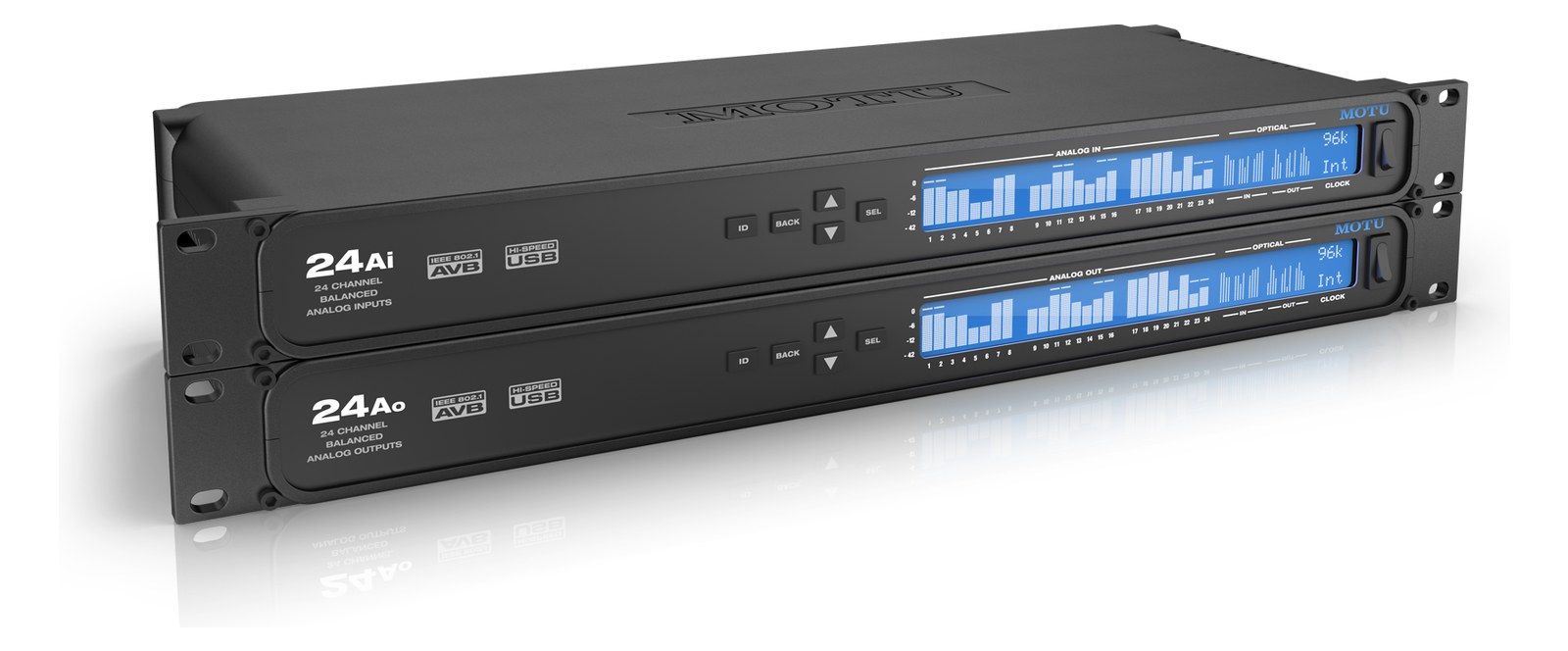
If your rig genuinely needs 24 channels of analog capture — virtual soundcheck on a 32-input stage, multitrack archive of a full band, or splitting analog consoles into a networked system — this is a clean, rack-dense way to do it. Pair it with the MOTU 24Ao and you have a full 24-in/24-out analog system in 2U, which is hard to beat for the footprint. If you need even a handful of analog outputs from the same box, the 24Ai isn't your answer; look at a device with mixed I/O instead. Similarly, if your input count is 8 or 16, you're paying for channels you'll leave dark.

In the rack

  • Pre-build and label your DB25 looms by group — inputs 1–8, 9–16, 17–24 — and sleeve them differently so stagehands can't cross-connect them in a dark wing.
  • Use the word clock output to discipline downstream converters rather than letting every box freewheel; the 24Ai makes a reliable clock source in a small analog-to-AVB rig.
  • If you're running virtual soundcheck, set a dedicated AVB stream for the 24Ai's inputs so they appear as a fixed source on the network — any engineer guest-mixing can pull up the same stream without re-routing.
  • Rack it directly above or below the 24Ao when running them as a pair; keeping the DB25 tails from both units short and parallel reduces cable management chaos and makes the 2U system feel like a single integrated converter.

24-ch analog input + USB/AVB networking. Input-focused for recording/splitting.

I/O Ports (9)

PortConnectorDirectionSignalChannels
Analog In 1-8 (DB25)DB25inputanalog audio
Analog In 9-16 (DB25)DB25inputanalog audio
Analog In 17-24 (DB25)DB25inputanalog audio
AVB Network 1 (RJ45)RJ45bidirectionaldigital audio
AVB Network 2 (RJ45)RJ45bidirectionaldigital audio
USB-CUSB Cbidirectionaldata
Word Clock In (BNC)BNCinputdigital audio
Word Clock Out (BNC)BNCoutputdigital audio
Power
  • Power (IEC) (IEC C14)

Deciding between two?

Rack space, watts, weight and every connector, side by side.

Related gear

Related articles

Guides from our library that cover planning around audio interface gear.