
Audio Interface

MOTU 8M Audio Interface

MOTU·Model 8M·motu-8m

Discontinued MOTU AVB-era interface gone from major retail 2026-07 — superseded by the 2024+ line (828/16A TB4/848). Kept for owners; used-market staple.

Photos

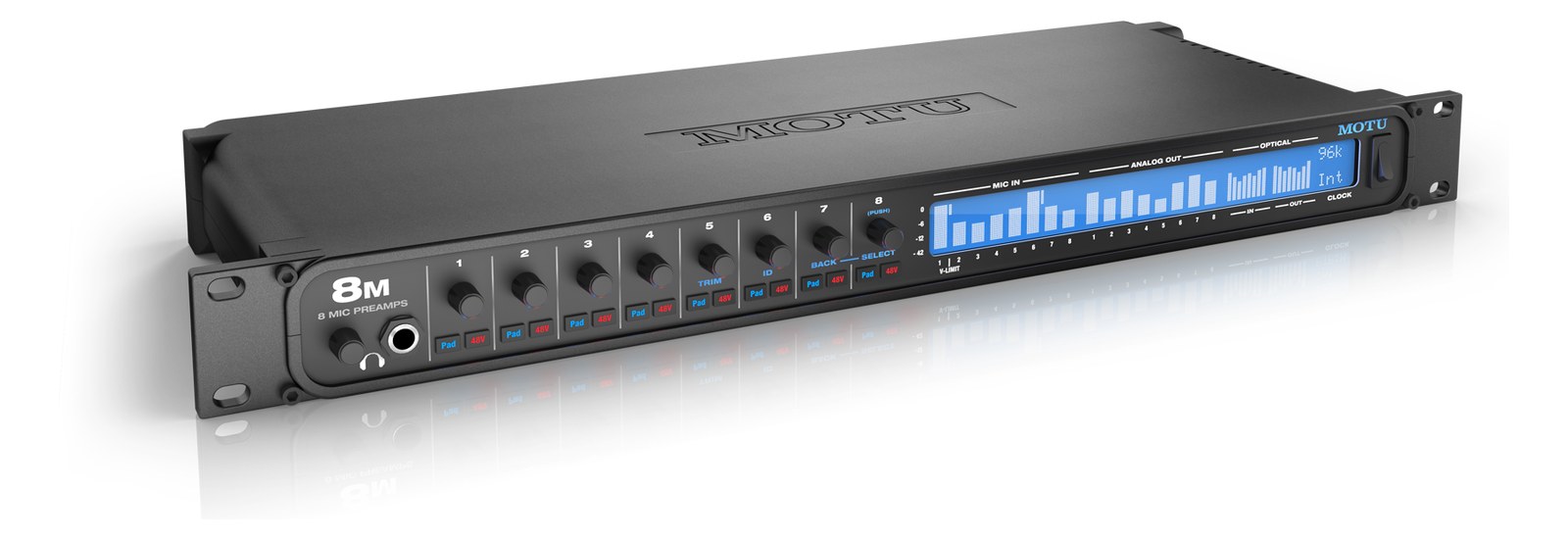
Manufacturer product photography — the drawn faceplate above stays true to panel layout; these show the hardware itself.

Photo: MOTU1 / 2

About the MOTU 8M

The MOTU 8M combines eight high-quality mic preamps with extensive digital expansion (ADAT, AES/EBU) and AVB/TSN networking in a 1U rack. The mic pres provide clean gain for stage boxes and input splitting, while the digital I/O connects to external converters and processors. Thunderbolt, USB, and dual AVB ports give maximum connectivity options, and the 48-input DSP mixer handles monitoring without loading the host. A strong front-end for rigs that need both mic pres and network audio.

The MOTU 8M is a 1U audio interface that earns its rack space by doing several jobs at once: eight front-end mic preamps, a Thunderbolt/USB computer interface, dual AVB network audio ports, AES/EBU digital I/O, and an onboard DSP mixer — all in a single rack unit drawing at most 40 watts. In a playback or IEM rig, it functions as the central audio hub, bridging the computer running your show file to the analog and networked world around it. That combination of mic pres and network I/O is genuinely unusual at this form factor, and it's what gives the 8M its particular usefulness in rigs that need to send and receive audio over an AVB network without adding a separate stage box or dedicated preamp rack.

At load-in, the eight XLR mic inputs land on the rear panel, and analog outputs come back out via a DB25 — so have your DB25 fan-out snake ready, because you won't be plugging individual TRS cables here. The dual AVB ports let you daisy-chain network devices or connect to two separate AVB switches, which matters in larger rigs where the interface is one node in a broader network topology. Word clock I/O over BNC keeps everything locked when you're integrating with external converters or a house digital console. The onboard DSP mixer means monitor mixes and cue feeds can be routed without burning CPU cycles on the host machine during a show, which is worth more than it sounds when your laptop is also running virtual instruments or playback software.
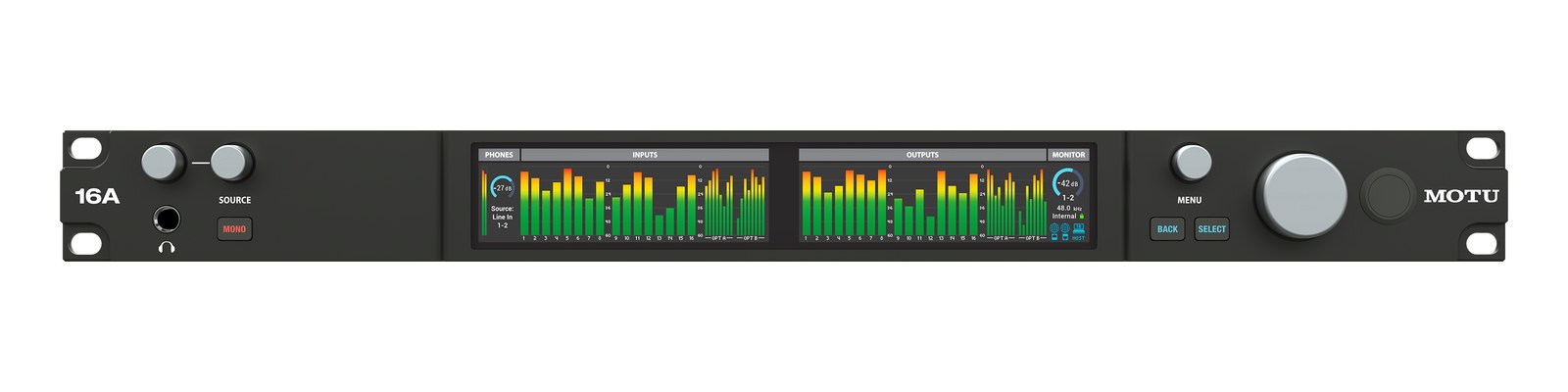
The 8M belongs in the rack of a monitor or playback engineer who genuinely needs mic preamps alongside computer and network I/O — think a musician's personal rig where vocals, click reference mics, and playback all converge in one box, or a small broadcast remote where AVB ties the system together. If you only need conversion with no preamps, a dedicated converter will likely outperform it on analog specs per dollar. If you need more than eight pres or large-format analog I/O, the 8M scales via AVB but you'll be adding hardware. And if your venue or touring rig runs Dante exclusively rather than AVB, the network ports here won't help you — confirm your ecosystem before committing.

In the rack

  • Pre-build and label your DB25 fan-out snake before load-in — analog outputs 1–8 all exit on that single connector, and scrambling for the right breakout cable at show time is a momentum killer.
  • Use one AVB port to connect upstream to your network switch and leave the second as a direct link to another AVB device like a stage box; this keeps audio flowing even if the switch path has an issue.
  • If you're locking to an external clock source such as a digital console or master word clock generator, set the 8M to external sync via BNC and verify lock on the front panel before doors — don't leave clock negotiation to show time.
  • Route your IEM monitor mixes through the onboard DSP mixer rather than the DAW mixer so cue and monitor feeds survive a host application crash or dropout without going silent at the talent's ears.

8 mic pres + 24-ch Thunderbolt/USB/AVB interface with DSP mixing.

I/O Ports (19)

PortConnectorDirectionSignalChannels
Mic In 1 (XLR)XLR FEMALEinputanalog audio
Mic In 2 (XLR)XLR FEMALEinputanalog audio
Mic In 3 (XLR)XLR FEMALEinputanalog audio
Mic In 4 (XLR)XLR FEMALEinputanalog audio
Mic In 5 (XLR)XLR FEMALEinputanalog audio
Mic In 6 (XLR)XLR FEMALEinputanalog audio
Mic In 7 (XLR)XLR FEMALEinputanalog audio
Mic In 8 (XLR)XLR FEMALEinputanalog audio
Analog Out 1-8 (DB25)DB25outputanalog audio
AES/EBU In (XLR)AES3 XLRinputdigital audio
AES/EBU Out (XLR)AES3 XLRoutputdigital audio
AVB Network 1 (RJ45)RJ45bidirectionaldigital audio
AVB Network 2 (RJ45)RJ45bidirectionaldigital audio
ThunderboltTHUNDERBOLTbidirectionaldata
USB-CUSB Cbidirectionaldata
Word Clock In (BNC)BNCinputdigital audio
Word Clock Out (BNC)BNCoutputdigital audio
Headphone Out (TRS)TRS QUARTERoutputanalog audio
Power
  • Power (IEC) (IEC C14)

Deciding between two?

Rack space, watts, weight and every connector, side by side.

Related gear

Community rigs using this gear (1)

Browse all rigs →

Related articles

Guides from our library that cover planning around audio interface gear.