
Audio Interface

MOTU 848

MOTU·Model 848·motu-848

Photos

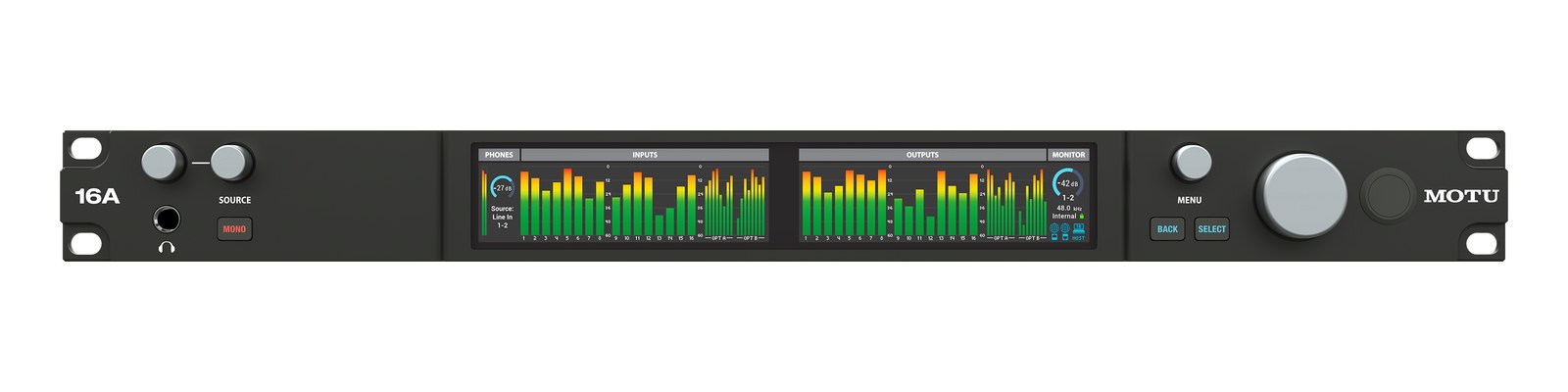
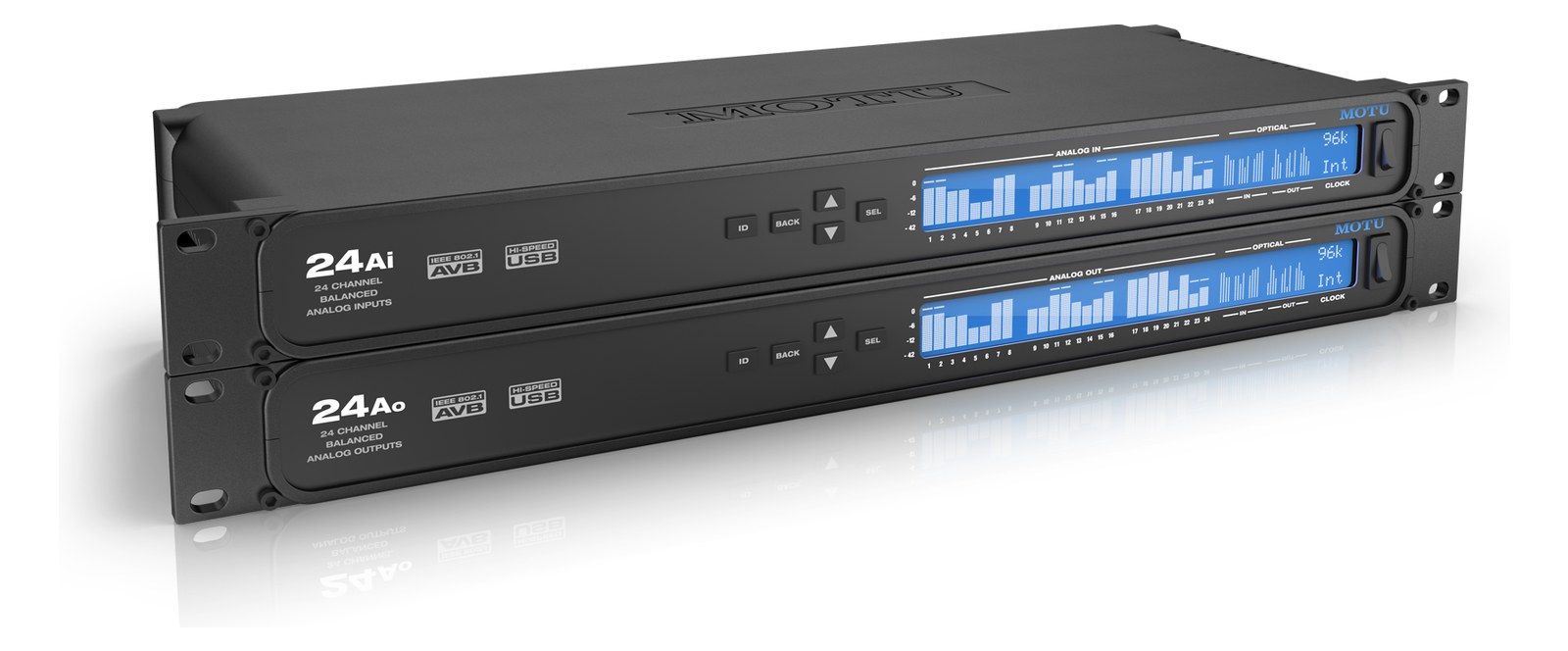
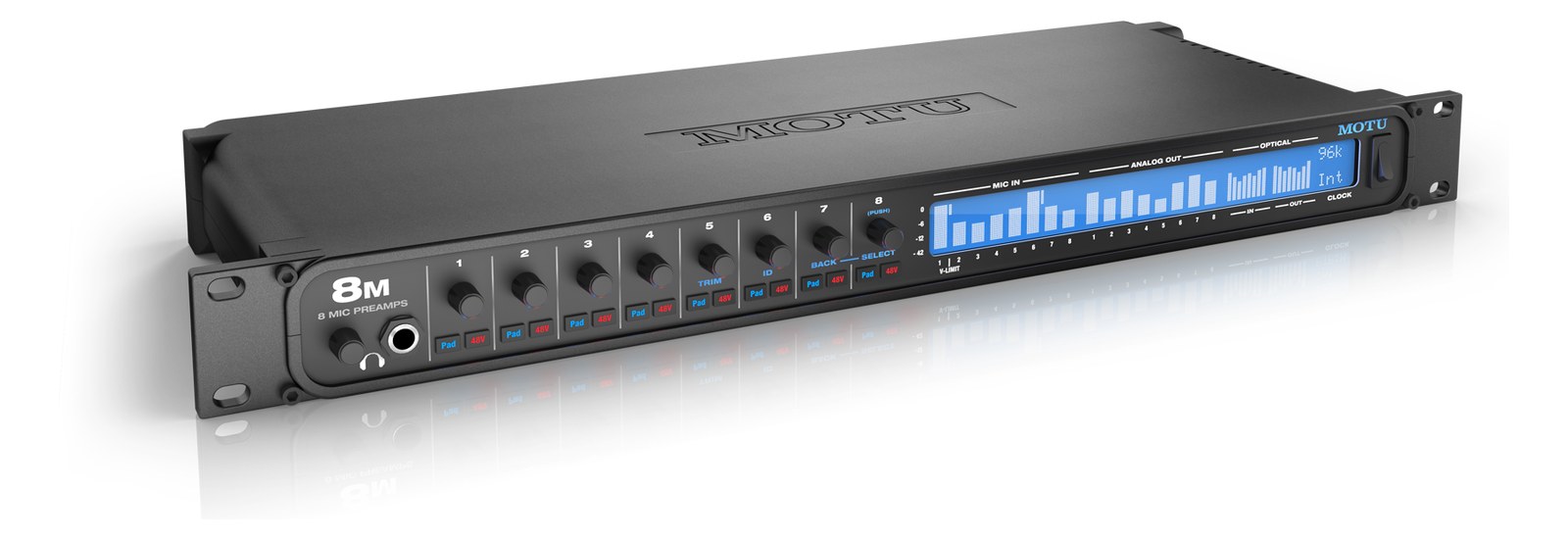
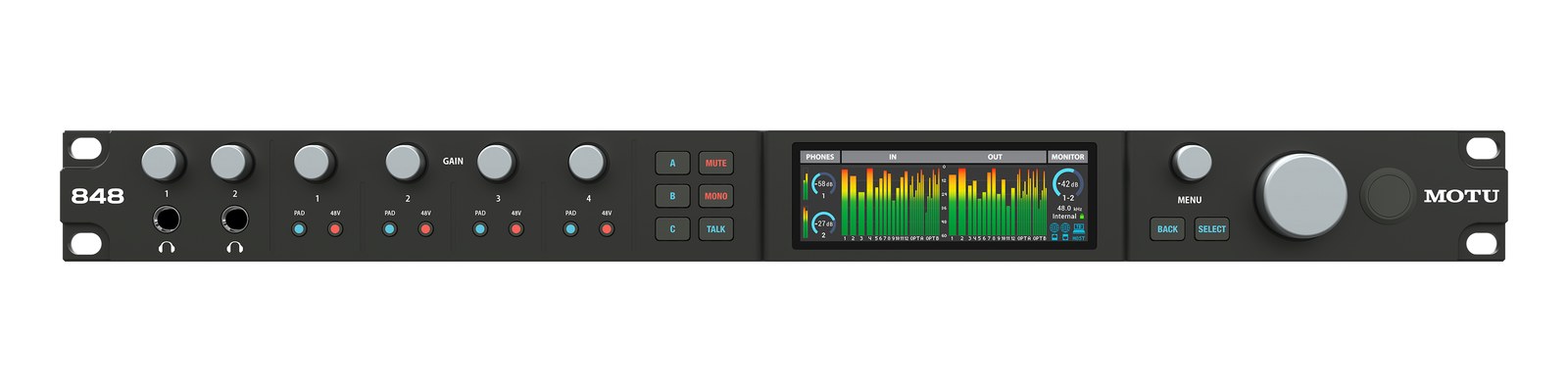
Manufacturer product photography — the drawn faceplate above stays true to panel layout; these show the hardware itself.

Photo: MOTU1 / 3

About the MOTU 848

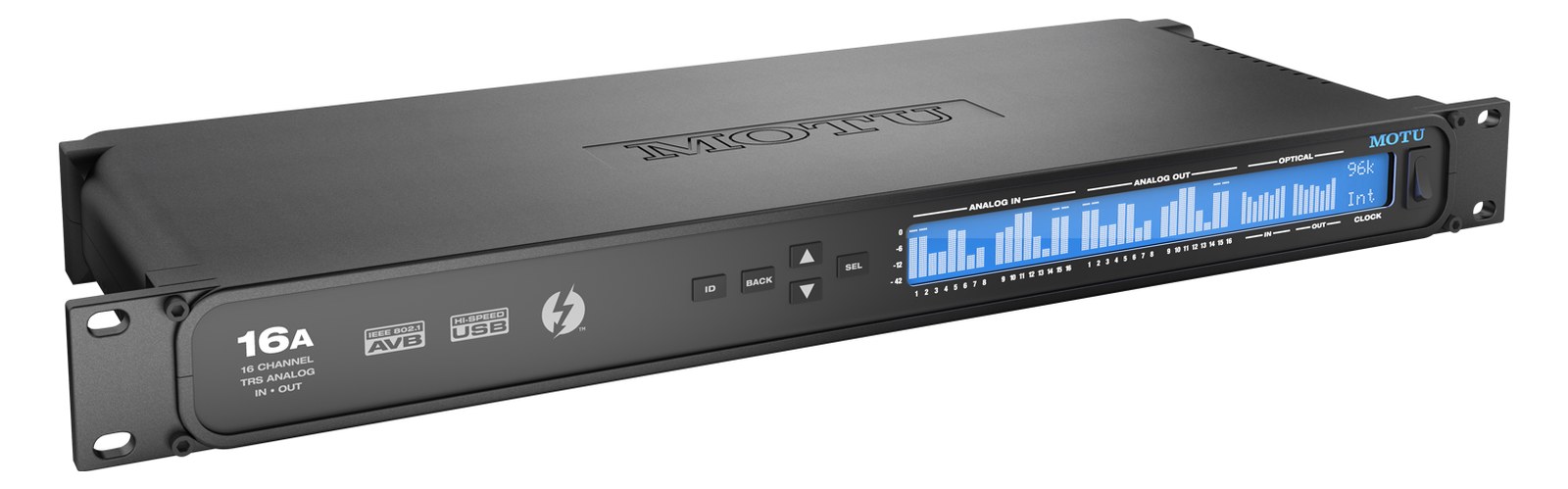
The MOTU 848 is the flagship of the current line: 28-in/32-out over Thunderbolt 4/USB4 with four mic preamps, eight line ins and outs, dual ADAT banks, and AVB networking. It is the 828 concept with more of everything, aimed at rigs that need mic inputs, stem outputs, and network audio from one rack space. Pairs naturally with the TB4-generation 16A for channel expansion.

The MOTU 848 is a single-rack-unit interface that tries to be the only audio device your playback or IEM rig ever needs to argue with. It carries four combo mic preamps, eight additional TRS line inputs, eight balanced TRS outputs plus a dedicated stereo main out, two full ADAT banks, and a 32-channel AVB Ethernet port — all behind a Thunderbolt 4 connection to your host machine. That is a lot of I/O surface area for one rackspace, and the point is consolidation: one box to receive stems from a DAW, route them to IEM transmitters, and still have mic inputs for talkback or backing-vocal spot mics without a separate preamp sitting in the rack.

At 18 watts nominal and a shallow 178 mm depth, the 848 won't stress a small rack or a two-outlet power strip. The Thunderbolt 4 connection keeps latency low enough for real-time monitoring on a live rig, though you'll still want buffer settings dialed in during soundcheck, not at showtime. The dual ADAT banks are the real workhorse for expansion — two optical runs at 44.1/48 kHz give you up to 16 additional channels in and out to something like an expander or a stage box. The AVB port is genuinely useful if you're in a venue or with a console ecosystem that speaks AVB natively, but don't plan around it if your system is entirely point-to-point analog and ADAT.

This box belongs in a Mac-centric playback or IEM rig where the operator needs mic preamps, multi-stem outputs, and future expansion headroom without stacking units. If you're running a straight two-track playback rig with no mics and no expansion, the 848 is more interface than you need and you'll leave most of it dark. Engineers working on PC rigs should verify Thunderbolt 4 compatibility carefully — USB4 mode exists, but test your specific machine before committing. And if your channel count has already outgrown 28 inputs, MOTU's own 16A pairs cleanly via ADAT or AVB for expansion rather than replacing this unit.

In the rack

  • Label your ADAT runs at both ends with the bank letter (A or B) and sample rate before the cables go in the rack — at load-in, a mispatched optical cable between banks is silent and invisible.
  • Use the eight TRS line outputs for your IEM mix sends and reserve the Main Out L/R as a dedicated confidence feed or FOH reference, so you never accidentally reroute a transmitter feed during a software patch.
  • If you're clock-slaving outboard gear via ADAT, designate the 848 as clock master and set everything downstream to external — chasing a flapping clock mid-set on optical is a headache you can eliminate at line check.
  • At 178 mm depth it fits most shallow touring rack drawers, but account for the Thunderbolt cable bend radius behind the unit — a right-angle TB4 cable saves real estate and prevents strain on the port if the rack lid closes tight.

Flagship 28x32 TB4/USB4 interface with AVB and dual ADAT.

I/O Ports (11)

PortConnectorDirectionSignalChannels
Mic/Line 1-4COMBO XLR TRSinputanalog audio4
Line In 5-12TRS QUARTERinputanalog audio8
Line Out 1-8TRS QUARTERoutputanalog audio8
Main Out L/RTRS QUARTERoutputanalog audio2
ADAT In ATOSLINKinputdigital audio
ADAT Out ATOSLINKoutputdigital audio
ADAT In BTOSLINKinputdigital audio
ADAT Out BTOSLINKoutputdigital audio
Thunderbolt 4THUNDERBOLTbidirectionaldata
AVB NetworkETHERCONbidirectionaldigital audio32
Power
  • Power (IEC C14)

Deciding between two?

Rack space, watts, weight and every connector, side by side.

Related gear

Related articles

Guides from our library that cover planning around audio interface gear.