
MOTU 16A Audio Interface
MOTU·Model 16A·motu-16a
Photos
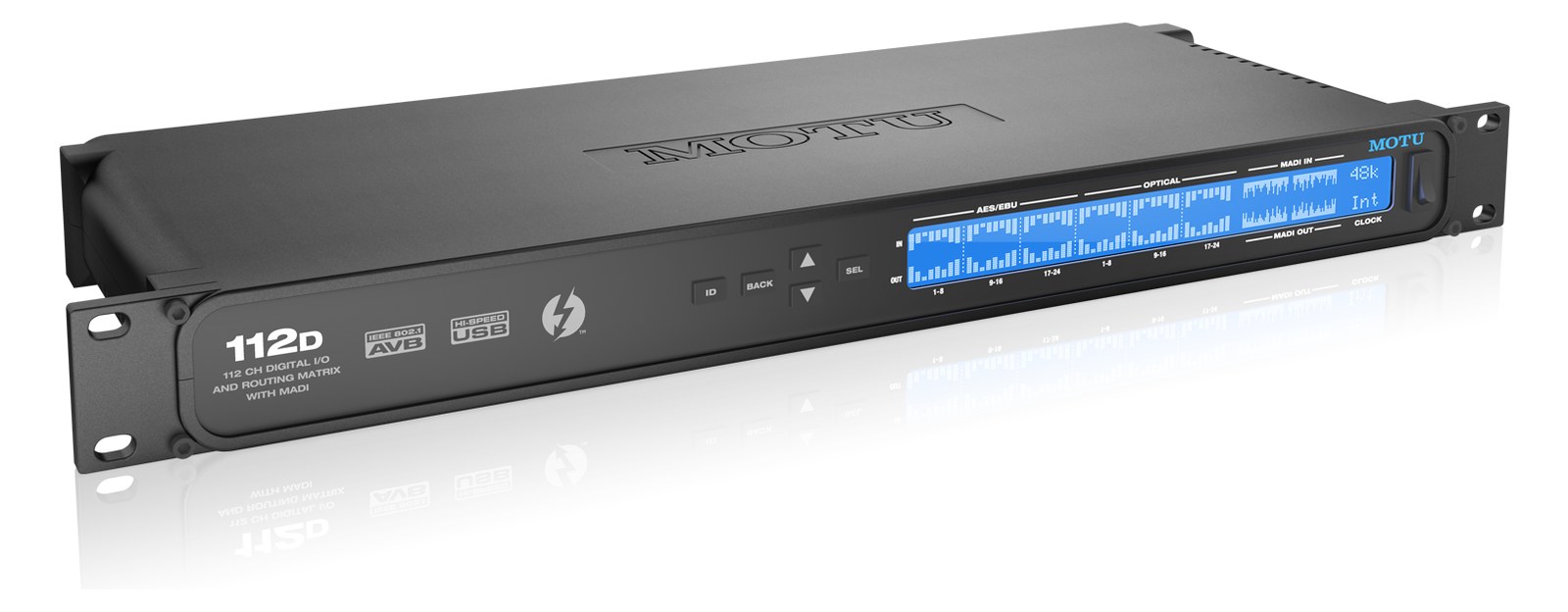
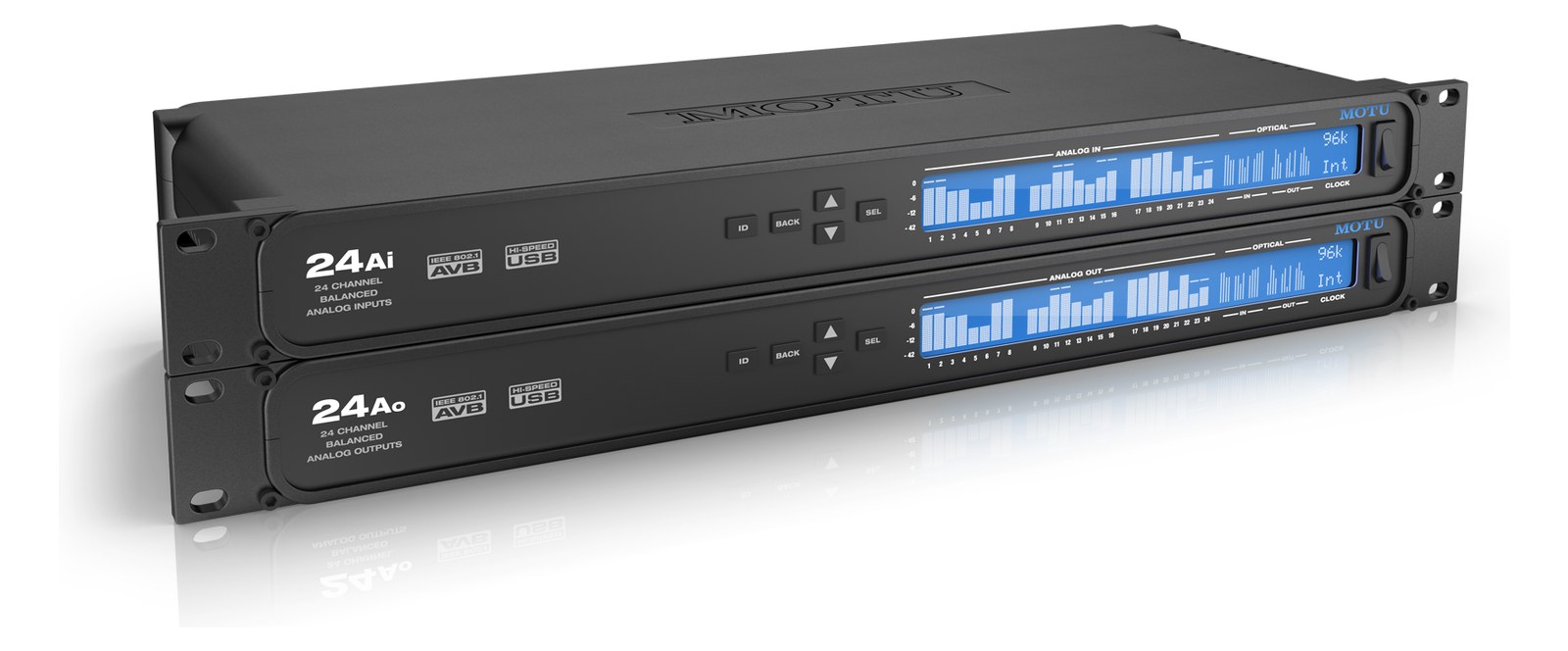
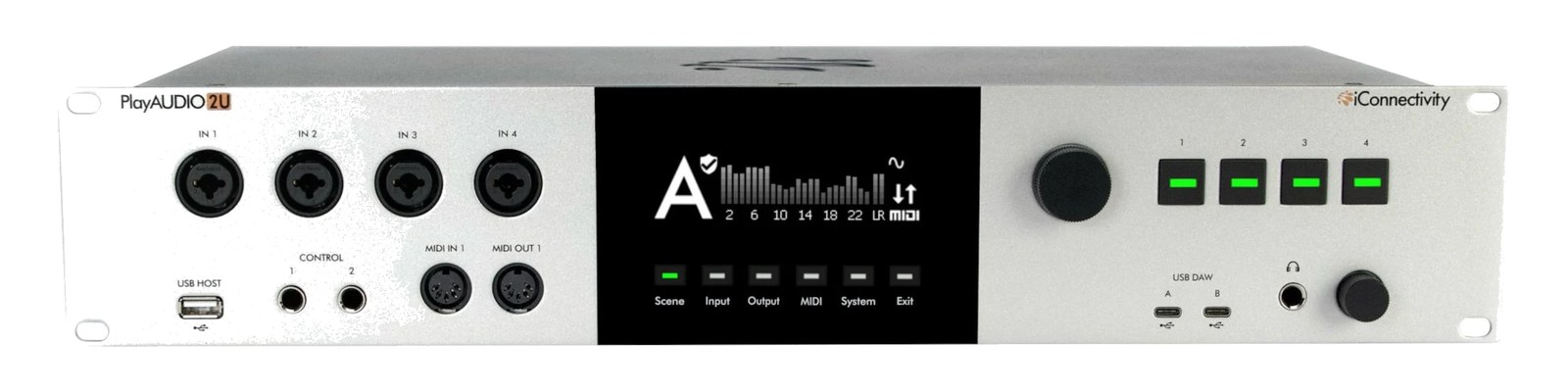
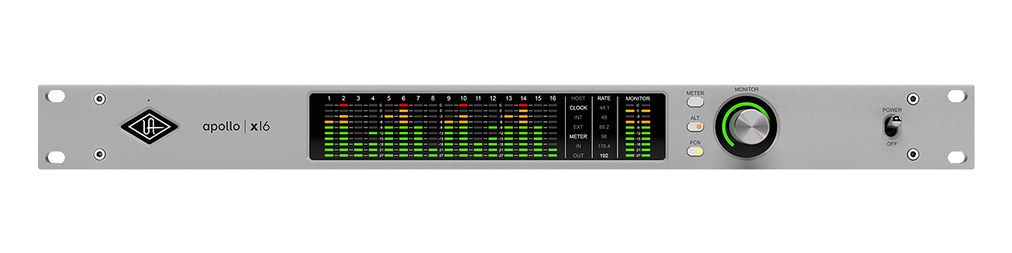
Manufacturer product photography — the drawn faceplate above stays true to panel layout; these show the hardware itself.
About the MOTU 16A
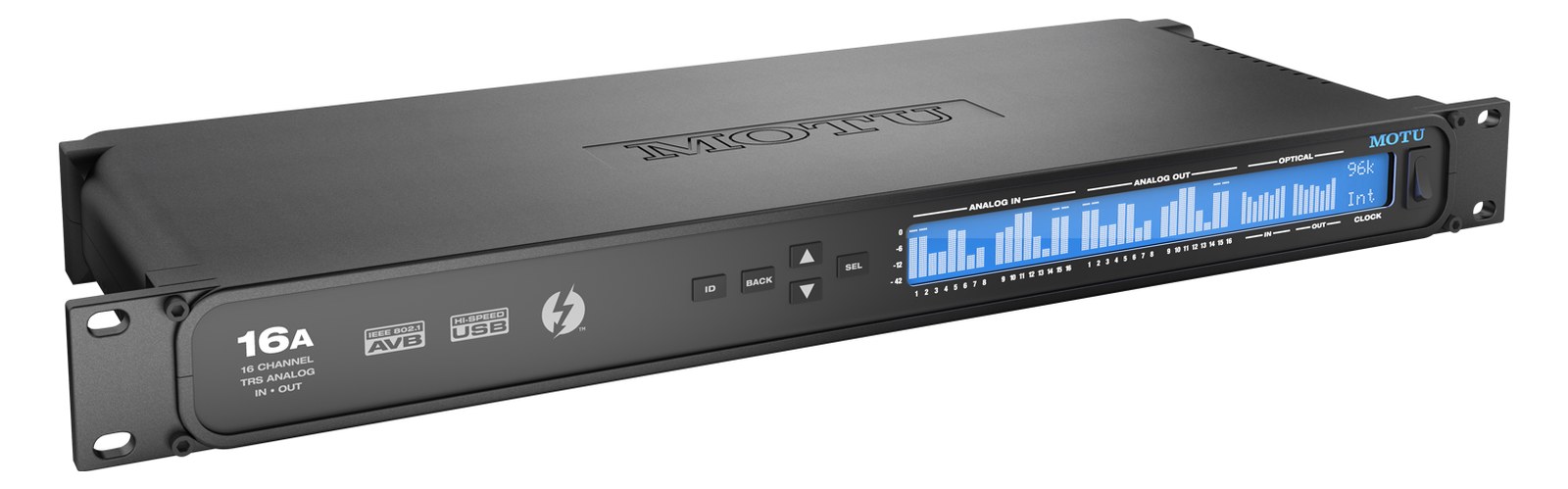
The MOTU 16A is a flagship 1UThe standard slice of rack height: 1U = 1.75″. A 3U box takes three slices; half-rack gear pairs two units side by side in one. rack-mount interface offering 16 channels of premium analog I/O on DB25A 25-pin D-shaped connector carrying 8 channels of analog or AES audio in one multicore — the Tascam pinout is the de-facto standard. connectors alongside Thunderbolt/USB and AVBAudio Video Bridging — open network audio (MOTU, PreSonus) where the switch reserves bandwidth so streams can’t glitch. Milan is its pro profile./TSN Ethernet audio networking. The ESS Sabre32 DACDigital-to-Analog Converter — the chip that turns digital audio back into the analog signal headphones and amps need. technology delivers reference-quality conversion, and the built-in 48-input DSPDigital Signal Processing — the number-crunching that does EQ, compression, and effects inside a box. More DSP means more processing at once. mixer with effects handles complex monitoring scenarios without taxing the host computer. AVB networking lets you daisy-chain multiple units for massive channel counts, making it ideal for large-scale playback and IEMIn-Ear Monitor — earpieces that replace floor wedges, feeding each player their own mix. The reason this whole rack exists. rigs.
The MOTU 16A is a 1UThe standard slice of rack height: 1U = 1.75″. A 3U box takes three slices; half-rack gear pairs two units side by side in one. interface built for rigs where analog channel count, digital networking, and host-computer flexibility all have to coexist in a single rack slot. It gives you 16 channels of analog I/O on four DB25A 25-pin D-shaped connector carrying 8 channels of analog or AES audio in one multicore — the Tascam pinout is the de-facto standard. connectors, Thunderbolt and USB-C connectivity to a playback host, and two AVBAudio Video Bridging — open network audio (MOTU, PreSonus) where the switch reserves bandwidth so streams can’t glitch. Milan is its pro profile. Ethernet ports for networking audio across multiple units or into an AVB-capable console or stage boxThe I/O endpoint on stage: mics plug in there and one digital line (AES50, Dante) carries everything to the console. The snake, digitized.. The onboard 48-input DSPDigital Signal Processing — the number-crunching that does EQ, compression, and effects inside a box. More DSP means more processing at once. mixer means it can handle IEMIn-Ear Monitor — earpieces that replace floor wedges, feeding each player their own mix. The reason this whole rack exists. mix routing internally, reducing the burden on whatever computer is driving it. At $2,495 it sits in flagship interface territory, and the ESS Sabre32 DACDigital-to-Analog Converter — the chip that turns digital audio back into the analog signal headphones and amps need. conversion backs that price point up with legitimate reference-quality analog output.
In practice, the DB25A 25-pin D-shaped connector carrying 8 channels of analog or AES audio in one multicore — the Tascam pinout is the de-facto standard. format means you are committing to loomSeveral cables bundled and run as one — keeps rack interconnects tidy and makes load-in one grab instead of eight. cables or a breakoutA cable that splits one multichannel connector (like a DB25) into individual plugs — the octopus that turns 8 channels into 8 XLRs. snakeA multicore cable bundling many channels into one stage-to-console run. A sub-snake collects one corner of the stage into a drop box. at patch time — have your DB25 to TRSTip-Ring-Sleeve — a 1/4″ jack with three contacts carrying a balanced signal or a stereo pair. A guitar plug with one extra ring. or XLRThe standard 3-pin locking connector for mics and balanced line signals — pin 1 is the shield, pins 2 and 3 carry the balanced pair. fanouts built, labeled, and tested before load-in, because troubleshooting a 16-channel loom under pressure is a bad time. The dual AVBAudio Video Bridging — open network audio (MOTU, PreSonus) where the switch reserves bandwidth so streams can’t glitch. Milan is its pro profile. ports let you daisy-chain a second 16A or connect into an AVB network switch without burning your host connection, which is the right architecture for a large IEMIn-Ear Monitor — earpieces that replace floor wedges, feeding each player their own mix. The reason this whole rack exists. rig that needs more than 16 analog outs. Word clockThe shared heartbeat keeping every digital box sampling in lockstep. One device leads, the rest follow — or you get clicks and pops. I/O on BNCThe twist-lock coax connector used for word clock and antenna runs — it locks, so it can’t be pulled out mid-show. means you can lock this unit as clock master or slave in a multi-device system without relying on network sync alone. At 30W nominal draw in a 1UThe standard slice of rack height: 1U = 1.75″. A 3U box takes three slices; half-rack gear pairs two units side by side in one. chassis, thermal management is not a concern, but budget the full 40W maximum when calculating PDU headroomThe margin between your normal level and where things clip — headroom is what absorbs the snare hit you didn’t see coming..
This unit earns its place in a dedicated playback or IEMIn-Ear Monitor — earpieces that replace floor wedges, feeding each player their own mix. The reason this whole rack exists. rack where you need 16 analog outputs, are already running a Thunderbolt-capable Mac, and can see AVBAudio Video Bridging — open network audio (MOTU, PreSonus) where the switch reserves bandwidth so streams can’t glitch. Milan is its pro profile. networking becoming useful as the rig grows. It is genuinely overkill for a two-musician fly rig or any situation where you only need eight outs — a smaller MOTU or comparable interface will do the job for less money and complexity. If your console or stage boxThe I/O endpoint on stage: mics plug in there and one digital line (AES50, Dante) carries everything to the console. The snake, digitized. is DanteThe most common audio-over-network standard: dozens of channels of uncompressed digital audio down one ordinary Ethernet cable between Dante boxes.-based rather than AVB, the networking ports offer you nothing on that side of the signal chain, so factor that in. Engineers building out a scalable, multi-unit playback or monitor rig on MOTU's AVB ecosystem will find this is the right hub to build around.
In the rack
- Build and label your DB25A 25-pin D-shaped connector carrying 8 channels of analog or AES audio in one multicore — the Tascam pinout is the de-facto standard. loomsSeveral cables bundled and run as one — keeps rack interconnects tidy and makes load-in one grab instead of eight. before the gig — use a consistent color or sleeve system for inputs versus outputs so a sub can trace signal in the dark without calling you.
- If you are chaining two 16A units via AVBAudio Video Bridging — open network audio (MOTU, PreSonus) where the switch reserves bandwidth so streams can’t glitch. Milan is its pro profile., use a dedicated AVB-managed switchA network switch you can configure — VLANs, QoS, IGMP — so audio traffic gets priority. Dante rigs beyond a few boxes want one. between them rather than direct port-to-port daisy-chaining; it gives you more routing flexibility and cleaner network topology.
- Set the 16A as word clockThe shared heartbeat keeping every digital box sampling in lockstep. One device leads, the rest follow — or you get clicks and pops. master and distribute via BNCThe twist-lock coax connector used for word clock and antenna runs — it locks, so it can’t be pulled out mid-show. to any other digital devices in the rack — do not assume AVBAudio Video Bridging — open network audio (MOTU, PreSonus) where the switch reserves bandwidth so streams can’t glitch. Milan is its pro profile. network clock is sufficient if you have non-AVB gear that needs a hard BNC reference.
- The onboard DSPDigital Signal Processing — the number-crunching that does EQ, compression, and effects inside a box. More DSP means more processing at once. mixer can serve as a backup IEMIn-Ear Monitor — earpieces that replace floor wedges, feeding each player their own mix. The reason this whole rack exists. mix engine if the host computer glitches; pre-configure a fallback mix scene in MOTU's software and save it to the device before every show.
16x16 analog + 32-ch Thunderbolt/USB + AVBAudio Video Bridging — open network audio (MOTU, PreSonus) where the switch reserves bandwidth so streams can’t glitch. Milan is its pro profile./TSN networking. ESS Sabre32 DACDigital-to-Analog Converter — the chip that turns digital audio back into the analog signal headphones and amps need..
I/O Ports (11)
| Port | Connector | Direction | Signal | Channels |
|---|---|---|---|---|
| Analog In 1-8 (DB25) | DB25 | input | analog audio | — |
| Analog In 9-16 (DB25) | DB25 | input | analog audio | — |
| Analog Out 1-8 (DB25) | DB25 | output | analog audio | — |
| Analog Out 9-16 (DB25) | DB25 | output | analog audio | — |
| AVB Network 1 (RJ45) | RJ45 | bidirectional | digital audio | — |
| AVB Network 2 (RJ45) | RJ45 | bidirectional | digital audio | — |
| USB-C | USB C | bidirectional | data | — |
| Thunderbolt | THUNDERBOLT | bidirectional | data | — |
| Word Clock In (BNC) | BNC | input | digital audio | — |
| Word Clock Out (BNC) | BNC | output | digital audio | — |
- Power (IEC) (IEC C14)
Deciding between two?
Rack space, watts, weight and every connector, side by side.
Related gear


Related articles
Guides from our library that cover planning around audio interface gear.
How to choose between a digital mixer, a Thunderbolt interface, and a Dante converter as the brain of your IEM rack — with concrete picks at each tier.
How to build a live-performance playback rig that runs click + backing tracks reliably — interface sizing, routing rules, software comparison, and what to do when the laptop crashes.
How to build a fail-safe live playback rig with primary + backup laptops, an auto-switching audio interface, and a failover workflow you can actually trust on a Sunday morning.
LTC vs MTC vs MIDI Clock, how to generate timecode from Ableton or Playback, how lighting and video receive it, and the frame-rate mistake that drifts every show.