
Audio Interface

MOTU 112D Audio Interface

MOTU·Model 112D·motu-112d

Discontinued MOTU AVB-era interface gone from major retail 2026-07 — superseded by the 2024+ line (828/16A TB4/848). Kept for owners; used-market staple.

Photos

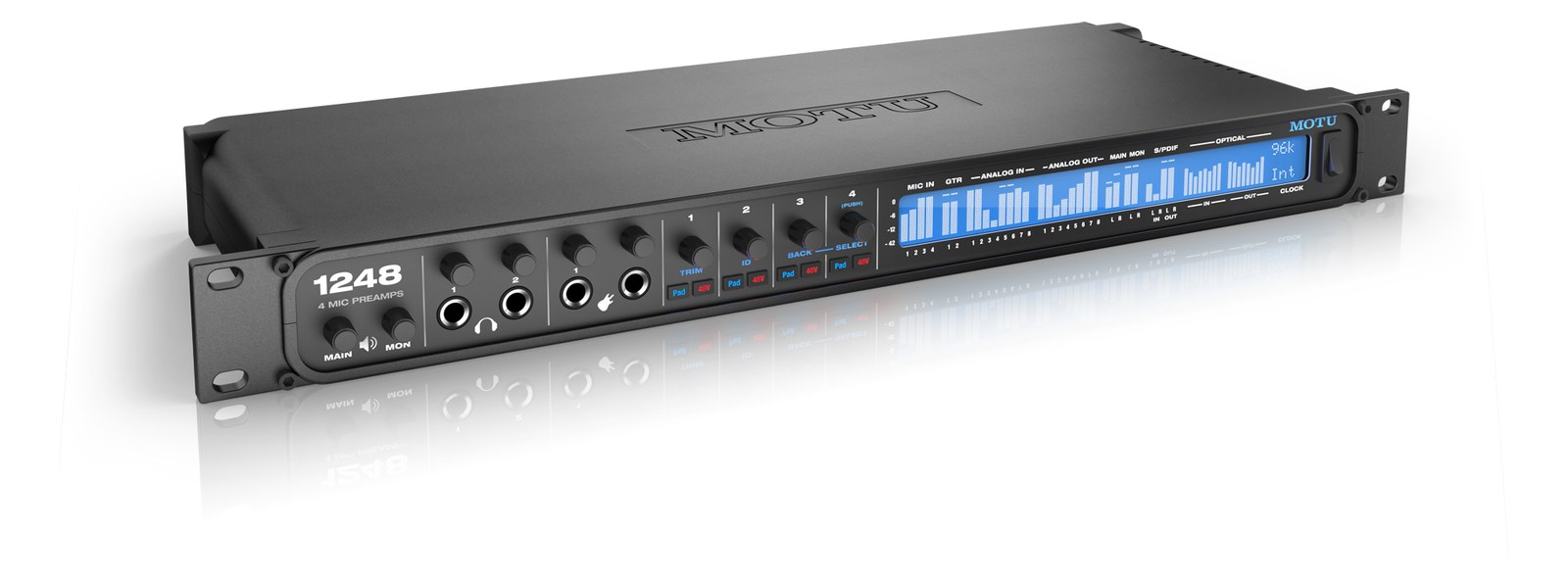
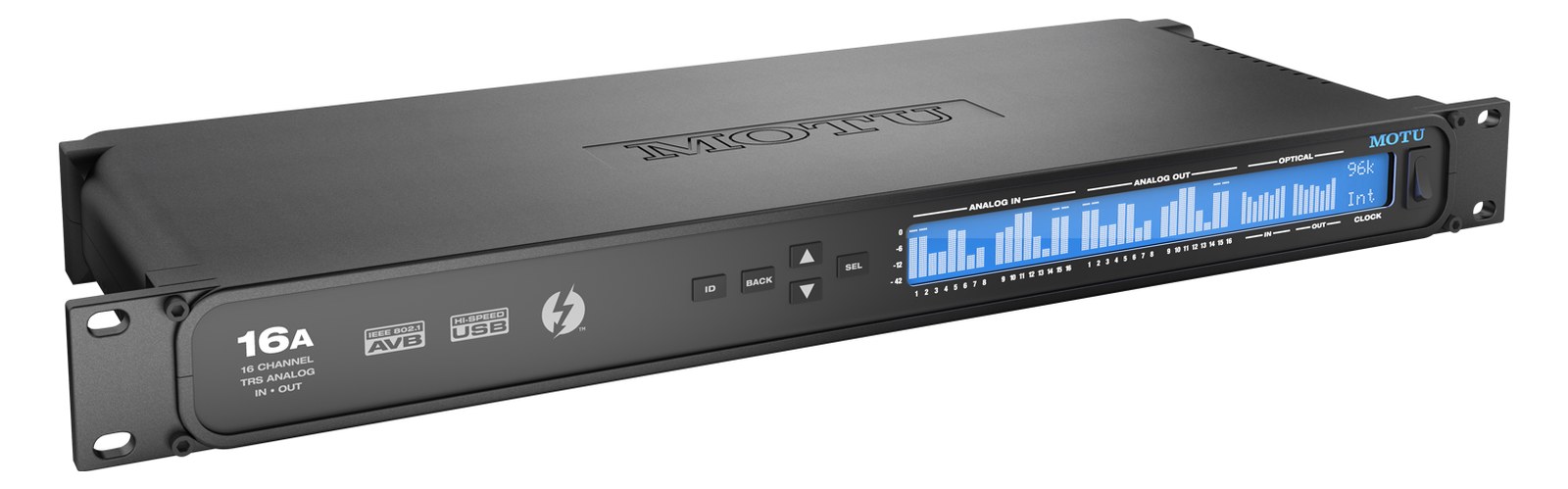
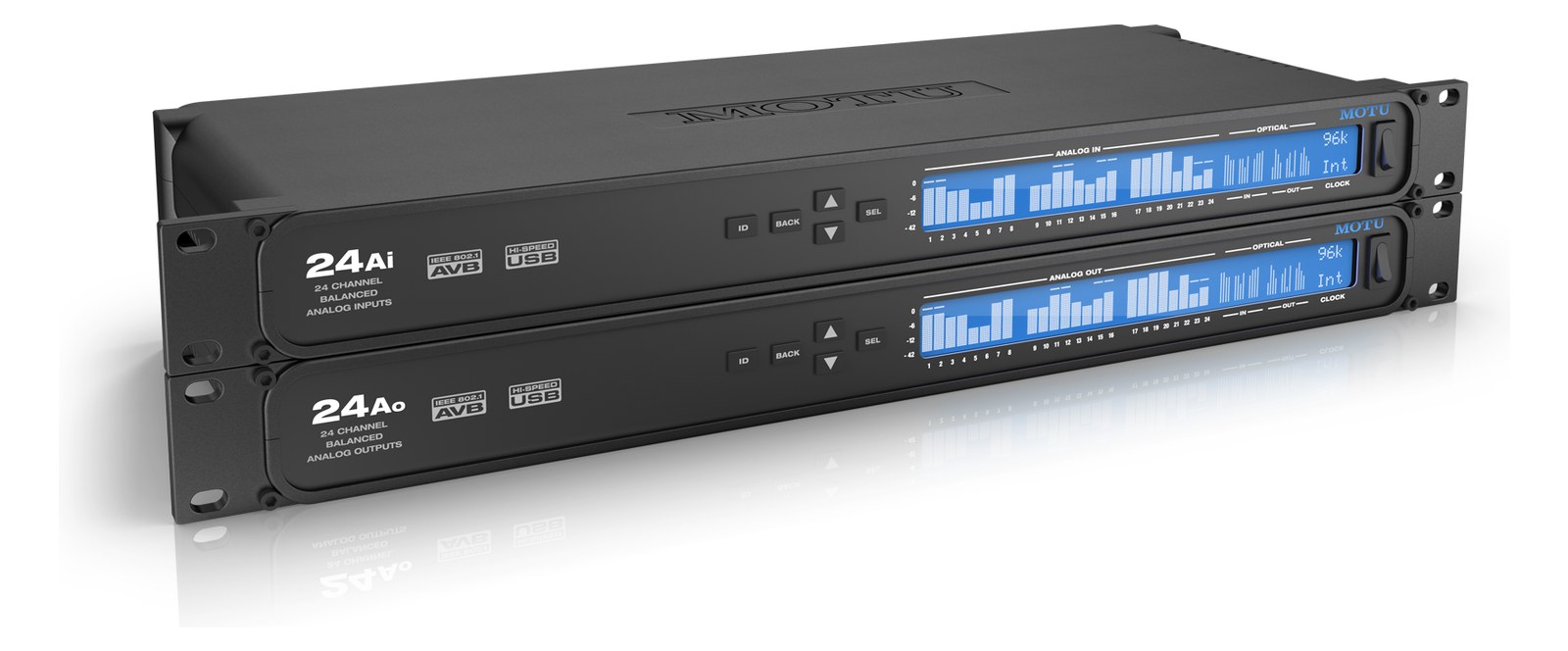
Manufacturer product photography — the drawn faceplate above stays true to panel layout; these show the hardware itself.

Photo: MOTU1 / 3

About the MOTU 112D

The MOTU 112D is a digital routing powerhouse that bridges virtually every digital audio format in a single 1U box: MADI (64 channels), three banks of ADAT (24 channels), and AES/EBU, all accessible via Thunderbolt, USB, or AVB networking. It is designed for complex rigs where multiple digital formats need to coexist, such as connecting a MADI-equipped console to Dante/AVB infrastructure or archiving to ADAT-based recorders. The 48-input DSP mixer adds flexible internal routing without touching the host.

The MOTU 112D is the digital format translator you reach for when your rig has to speak more than one language. In a single 1U box it handles MADI over BNC, AES/EBU on XLR, ADAT on optical, and AVB over standard Ethernet, while simultaneously connecting to a host computer via Thunderbolt or USB-C. That combination is rare. Most interfaces commit to one or two digital worlds; the 112D sits at the center of all of them, making it a natural hub for complex touring or fixed-install rigs where a MADI console, an AVB network, and a DAW-based playback system all need to talk to each other without a pile of format converters.

At load-in, that port count becomes leverage. You can clock the whole system from the 112D's word clock output, feed a MADI split to a redundant console, pull stems from a laptop over Thunderbolt, and route monitor sends out over AVB to a remote stage box — all simultaneously, all in one rack space drawing at most 40 watts. The onboard 48-input DSP mixer means you can build internal routing that survives a laptop hiccup, which matters when you're the only thing standing between the band and silence. At 2.9 kg and 229 mm deep it fits without drama in a shallow pull-out rack drawer if needed.

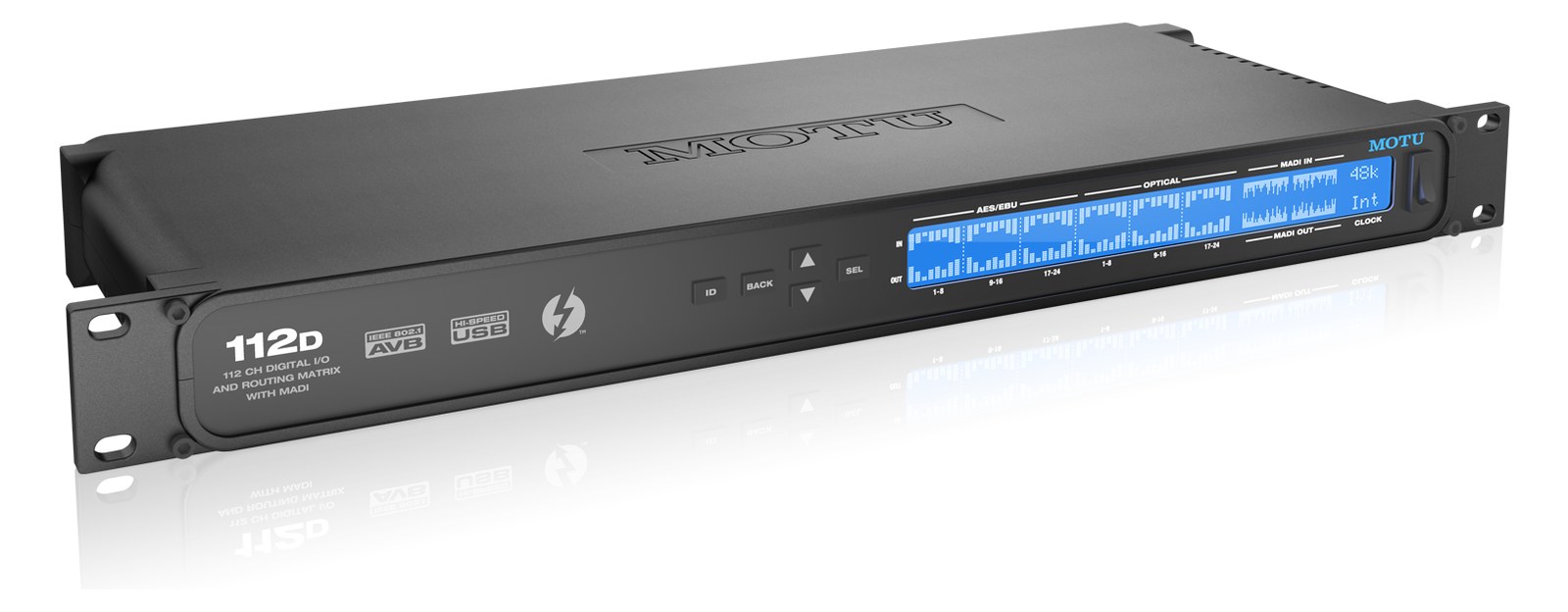
This unit is built for engineers who have already decided on a multi-format digital infrastructure and need one device to knit it together — a monitor engineer bridging a MADI split into an AVB IEM system, a playback operator feeding multiple console formats from one machine, or a systems tech consolidating a cluttered converter shelf. It is not the right call if you need analog I/O, even a single mic pre; the 112D is purely digital in and out. If your rig is straightforward — one console format, one DAW connection — a simpler interface will cost less and add less complexity. But if the cable run between your systems already reads like a format soup, this is the box that cleans it up.

In the rack

  • Make the 112D your system clock master and run word clock out to every other device in the rack — its BNC word clock output is there for exactly this, and having one authoritative source eliminates the sample-rate negotiation headaches that plague multi-format rigs.
  • If you're running AVB alongside MADI, use a dedicated managed switch between the 112D's two AVB ports and your network — consumer-grade switches won't honor AVB's precision timing protocol and you'll get glitches that are maddening to diagnose mid-show.
  • Map your internal DSP mixer routing before doors and save it as a standalone preset; if the host computer goes offline for any reason, the 112D can continue passing audio between its hardware ports without the computer in the loop, which is a useful emergency fallback to rehearse.
  • Label both BNC pairs clearly at patch time — MADI and word clock both live on BNC connectors and the connectors sit close together on the rear panel. A wrong patch under pressure at load-in will cost you more time than the label takes.

112-ch digital interface. Thunderbolt/USB/AVB with ADAT, AES/EBU, and MADI.

I/O Ports (13)

PortConnectorDirectionSignalChannels
MADI In (BNC)MADI BNCinputdigital audio
MADI Out (BNC)MADI BNCoutputdigital audio
AES/EBU In 1 (XLR)AES3 XLRinputdigital audio
AES/EBU In 2 (XLR)AES3 XLRinputdigital audio
AES/EBU Out 1 (XLR)AES3 XLRoutputdigital audio
AES/EBU Out 2 (XLR)AES3 XLRoutputdigital audio
AVB Network 1 (RJ45)RJ45bidirectionaldigital audio
AVB Network 2 (RJ45)RJ45bidirectionaldigital audio
ThunderboltTHUNDERBOLTbidirectionaldata
USB-CUSB Cbidirectionaldata
Word Clock In (BNC)BNCinputdigital audio
Word Clock Out (BNC)BNCoutputdigital audio
Power
  • Power (IEC) (IEC C14)

Deciding between two?

Rack space, watts, weight and every connector, side by side.

Related gear

Related articles

Guides from our library that cover planning around audio interface gear.