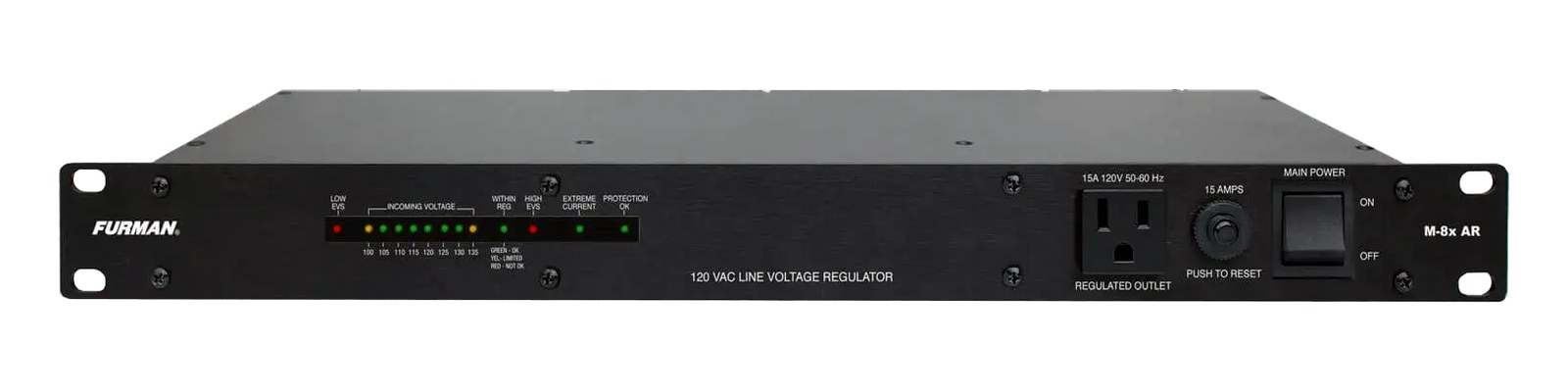
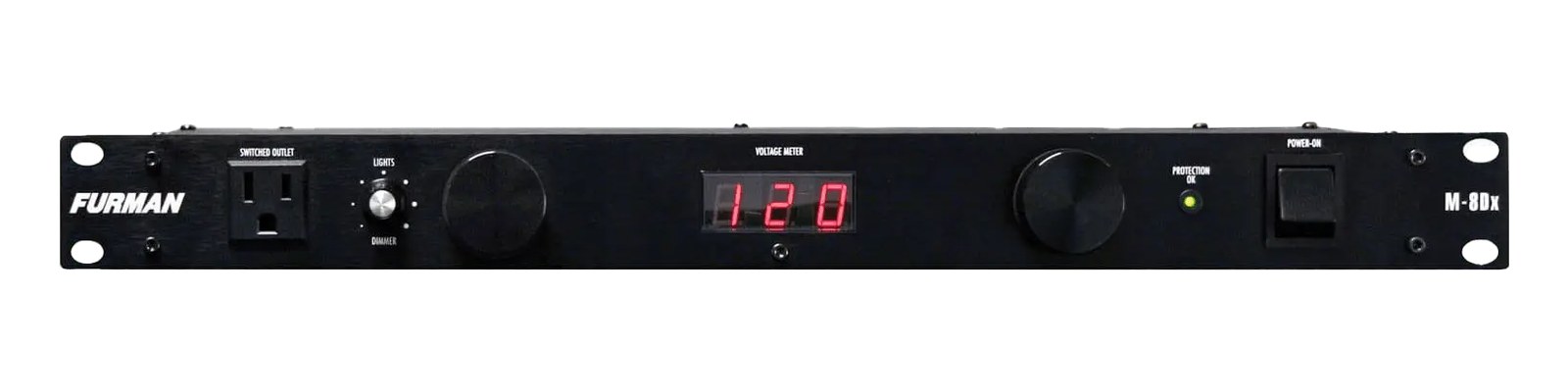
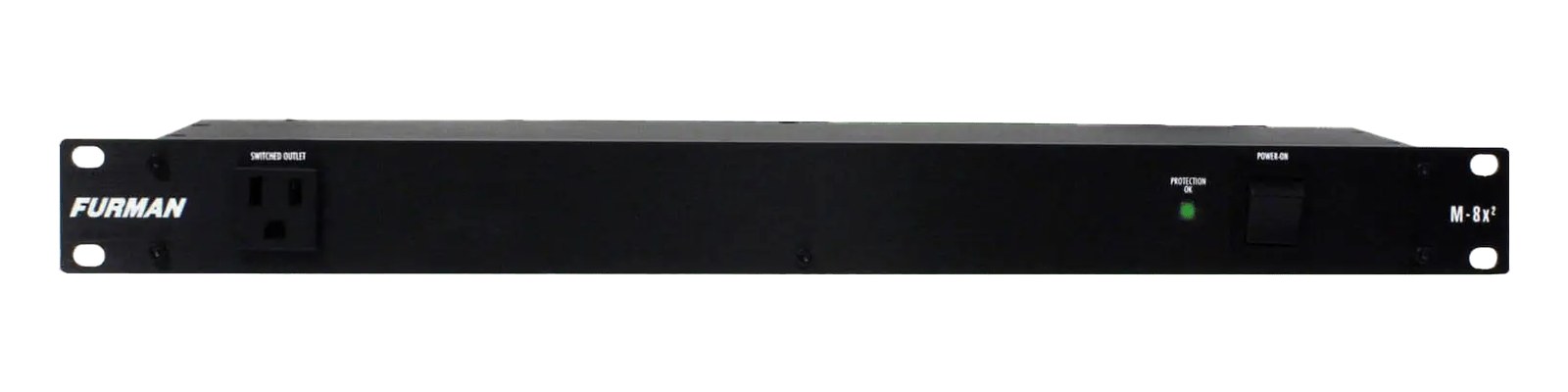
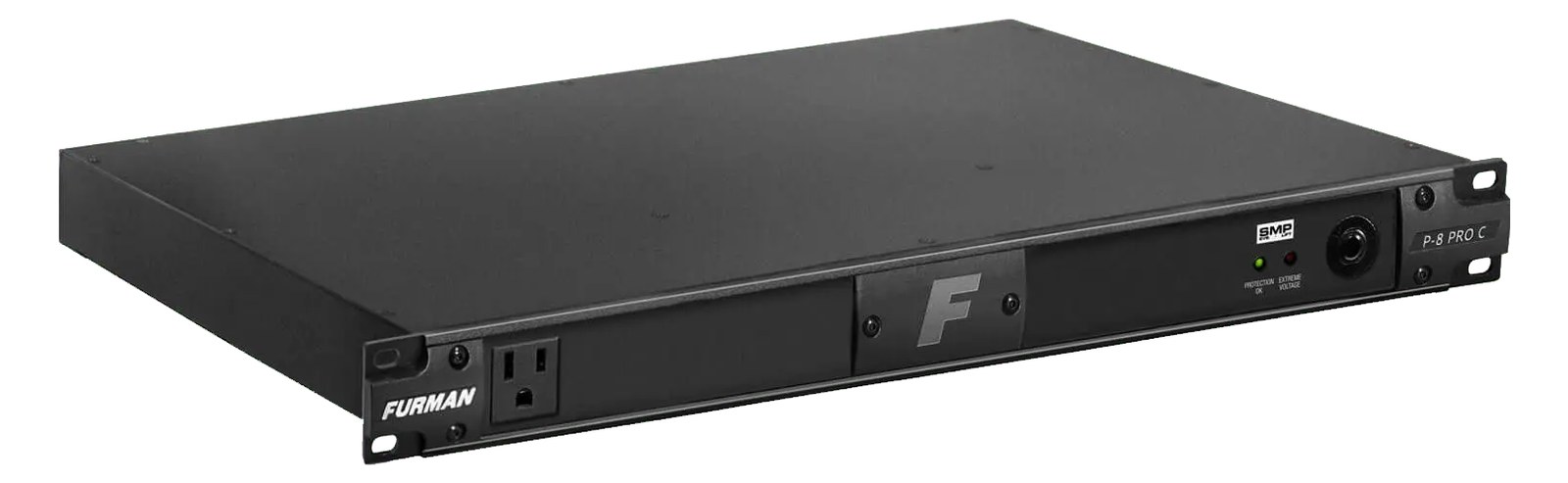
The Furman M-8x AR adds Automatic Voltage Regulation (AVR) to the standard power conditioning package, continuously correcting incoming voltage to a stable 120V even when the venue supply fluctuates between 97V and 141V. This is critical for touring rigs that encounter inconsistent power at different venues — voltage sags and spikes can cause audible artifacts or damage sensitive digital gear. Nine outlets and SMP+ surge protection round out a solid mid-tier conditioner.
UnverifiedPower requirement is not verified in the catalog
Catalog estimate
~$499Use retailer rows for current price and stock
01 · What it does—and what that changes in your rig.
Product overview
Start with the payoff, then work through how it functions, where it fits, and the details that change a real build.
The payoff
Power Conditioner decisions, organized around the whole rig.
The Furman M-8x AR is a 1UThe standard slice of rack height: 1U = 1.75″. A 3U box takes three slices; half-rack gear pairs two units side by side in one. rack power conditionerFilters venue AC, clamps surges, and gives the rack one tidy inlet. Not a voltage regulator and not a battery — just cleaner power. with Automatic Voltage RegulationActively holds the output at a steady 120 V while venue power sags or spikes — a step beyond filtering, one short of a battery. — the AR in the name is the thing that separates it from a basic strip with a rack face. Where a standard conditioner filters noise and clamps surges, the M-8x AR actively corrects incoming AC voltage, holding it at a stable 120V regardless of what the venue wall is actually delivering. For a touring IEMIn-Ear Monitor — earpieces that replace floor wedges, feeding each player their own mix. The reason this whole rack exists. or playback rig full of digital gear — wireless receivers, DanteThe most common audio-over-network standard: dozens of channels of uncompressed digital audio down one ordinary Ethernet cable between Dante boxes.-networked devices, personal mixers — that distinction matters more than most engineers realize until they've heard a low-voltage gig go sideways.
Documented outputs
99 destination connections
Documented inputs
1Based on documented inputs
Rack space
1UBuilder checks available rail space
Furman product panel1U · Unverified
Function
How it works in the path
The regulation window runs from 97V to 141V, which covers the realistic range of bad venue power you'll actually encounter. Nine outlets total — eight on the rear, one on the front — give you enough real estate for a dense rack without daisy-chaining, and the front outlet is genuinely useful for a laptop or a tech's phone at load-in without breaking into the rear wiring. At 5.4 kg in a 270 mm depth, it's not featherweight, but it's a rack anchor in the good sense: low and dense. The 15A rating means your total load needs to live under that ceiling; do the math on your rack's draw before you buy.
Best fit
Where it earns its place in the rack
This unit is the right call if you move between venues regularly — theaters, houses of worship, club stages, festival infrastructure — where incoming power quality is genuinely unpredictable. If you're a working monitor engineer who's watched a receiver glitch during a low-voltage moment at a problematic venue, the M-8x AR is the insurance policy at $499 that pays off once. It is not a UPSUninterruptible Power Supply — a battery that rides the rig through brownouts and generator hiccups so computers never reboot mid-song.; a full power loss takes the rack down like everything else. And if your rig lives permanently in a well-conditioned facility with stable power, a simpler Furman without AVR costs less and does the job.
In the rack
Details worth deciding before load-in.
Calculate your rack's total power draw in watts, divide by 120, and confirm you're comfortably under 15A — leave at least a 20% headroomThe margin between your normal level and where things clip — headroom is what absorbs the snare hit you didn’t see coming. buffer before you hit that ceiling.
Put it at the bottom of the rack; its 5.4 kg weight helps stability, and bottom placement shortens the path from the rack's power input to the conditioner.
Use the front outlet as a designated tech outlet during soundcheck — laptop, tablet, or talkbackThe engineer’s mic into the performers’ ears or monitors — talk to the band without leaving the console. battery charger — so rear outlet assignments stay locked and labeled once the tour starts.
Label each rear outlet with a P-touch or cable flag corresponding to the device it feeds; with eight outlets in a dark rack, tracing a cold outlet by touch costs you time you don't have at show time.
02 · Know the whole path before you buy.
Signal path
Learn the route as a block diagram: source, product function, transport, and destination. Select any block to see what enters, what changes, and what leaves.
Interactive block diagramAuto-looping · hover, focus, or tap to hold a stage
Port-type signalProduct functionSystem boundary
Follow one signal from source to destination
Each block answers the same three questions: what arrives, what changes here, and what leaves.
01 · Source · selected
nema 5 15
nema 5 15
01 · Source
1 documented input
nema 5 15
Arrives as
1 documented input
Connector
nema 5 15
Signal
power
03 · What this product asks of the rest of the system.
Compatibility
Treat connector names as the start of the check—not the answer. These are the boundaries that determine a complete working path.
Best fit · Power Conditioner
Use it when 1U and 270 mm of depth fit the case.
Plan the companion path
Complete the path with upstream and downstream gear that matches connector, direction, signal type, protocol, and wiring standard.
Connector boundary
Documented connectors: nema 5 15. Match connector, direction, and signal type—not shape alone.
04 · Every connector, grouped by job.
I/O ports
Switch the product view and the documented port inventory updates with it—hardware and data stay side by side.
Every connector, grouped by job.
Switch panels to keep the hardware view and the documented port list in sync.
Front panelRear panel
All documented ports for Furman M-8x AR Power Conditioner
Port
Panel
Connector
Direction
Signal
Channels
Power In (NEMA)
rear
nema 5 15
input
power
—
AC Out Rear 1
rear
nema 5 15
output
power
—
AC Out Rear 2
rear
nema 5 15
output
power
—
AC Out Rear 3
rear
nema 5 15
output
power
—
AC Out Rear 4
rear
nema 5 15
output
power
—
AC Out Rear 5
rear
nema 5 15
output
power
—
AC Out Rear 6
rear
nema 5 15
output
power
—
AC Out Rear 7
rear
nema 5 15
output
power
—
AC Out Rear 8
rear
nema 5 15
output
power
—
AC Out Front 1
front
nema 5 15
output
power
—
Showing 10 of 10 documented physical ports.
05 · Compare the decision, not just the price.
Alternatives
The rows are organized around fit, power, I/O, and system role so a cheaper unit cannot hide a more expensive workflow.
M-8x ARThe Furman M-8x AR adds Automatic Voltage Regulation (AVR) to the standard power conditioning package, continuously correcting incoming voltage to a stable 120V even when the venue supply fluctuates between 97V and 141V. This is critical for touring rigs that encounter inconsistent power at different venues — voltage sags and spikes can cause audible artifacts or damage sensitive digital gear. Nine outlets and SMP+ surge protection round out a solid mid-tier conditioner.View gear →
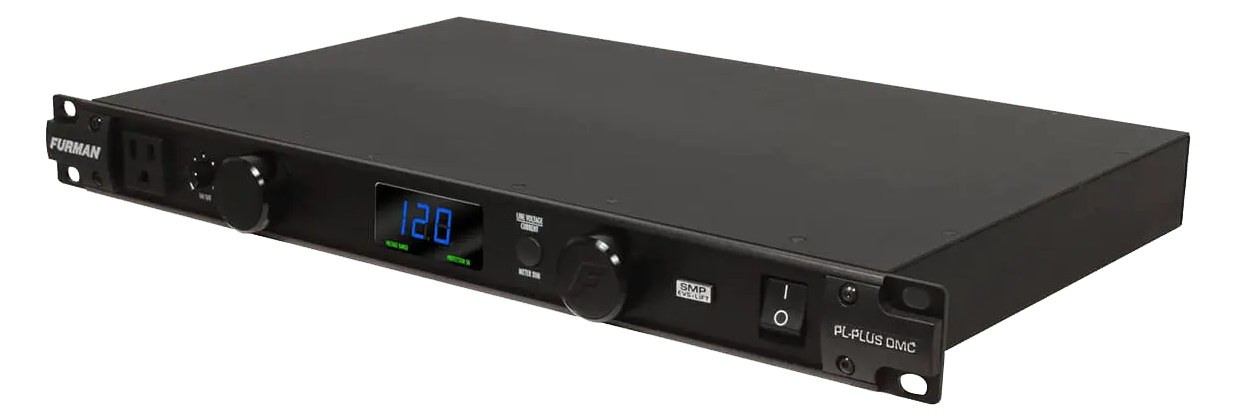
PL-Plus DMCThe Furman PL-Plus DMC is a rack staple that cleans up your AC power while giving you real-time voltage and current monitoring via its front panel meters. The pull-out rack lights are genuinely useful for dark stage-side setups, and the linear filtering protects sensitive audio and digital gear from power line noise. A smart first-piece-in for any IEM or playback rack build.View gear →
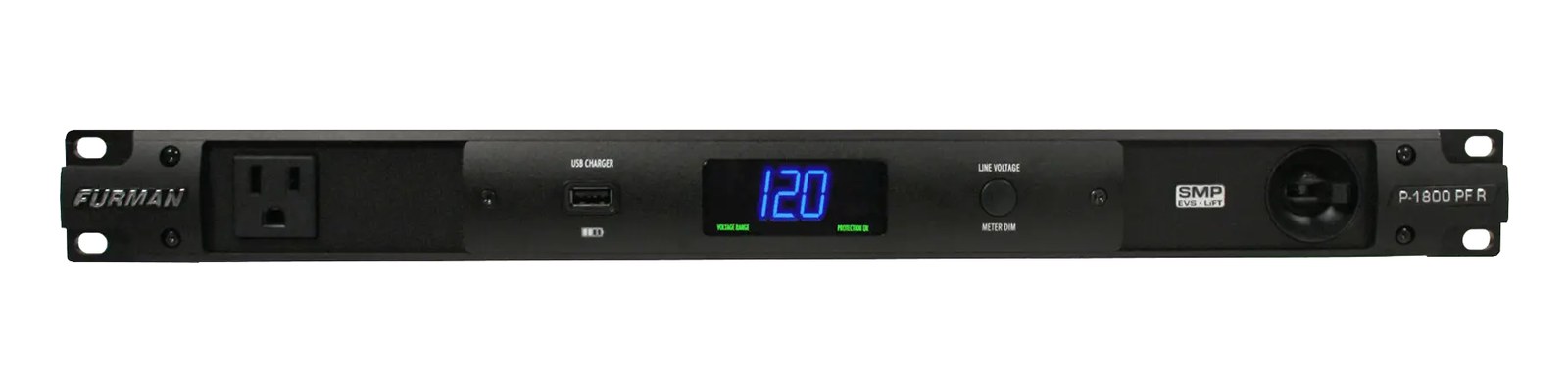
P-1800 PF RThe P-1800 PF R is Furman's premium power conditioner with Series Multi-Stage Protection (SMP) and Linear Filtering Technology (LiFT) that dramatically reduces AC noise reaching your gear. It provides a noticeably quieter noise floor compared to basic power strips, which matters when running sensitive playback interfaces and IEM transmitters. The investment over a basic conditioner is worth it for rigs where audio quality and equipment protection are priorities.View gear →
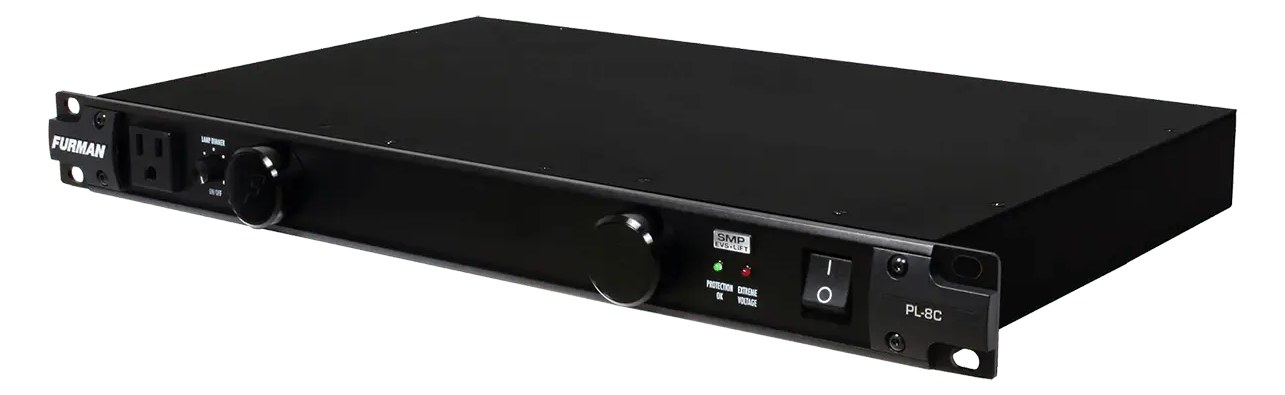
PL-8CThe Furman PL-8C is a no-frills power conditioner with pull-out rack lights that is a staple in live audio racks of all sizes. It provides basic surge protection and noise filtering for your gear while the integrated lights make it easy to work on your rack in dark stage-side environments. At this price point, it is the most practical way to add power conditioning and rack illumination to a budget build.View gear →
06 · Resolve the questions that can change the purchase or build plan.
Planning questions
Short, source-backed answers surface rack fit, power, cabling, and connection details before they become surprises.
How will the Furman M-8x AR Power Conditioner affect rack fit and case depth?
It occupies 1U. Its documented depth is 270 mm.
How much power does the Furman M-8x AR Power Conditioner draw?
Its power requirement is not yet verified in the catalog.
What connections does the Furman M-8x AR Power Conditioner have?
10 documented physical ports, including Power In (NEMA), AC Out Rear 1, AC Out Rear 2, AC Out Rear 3, AC Out Rear 4, AC Out Rear 5.
07 · See this unit inside a real rack plan.
Builder preview
Placement is only the start. Builder checks space · depth · weight, power headroom, dependencies, and compatible signal paths around this exact catalog item.Open in Builder