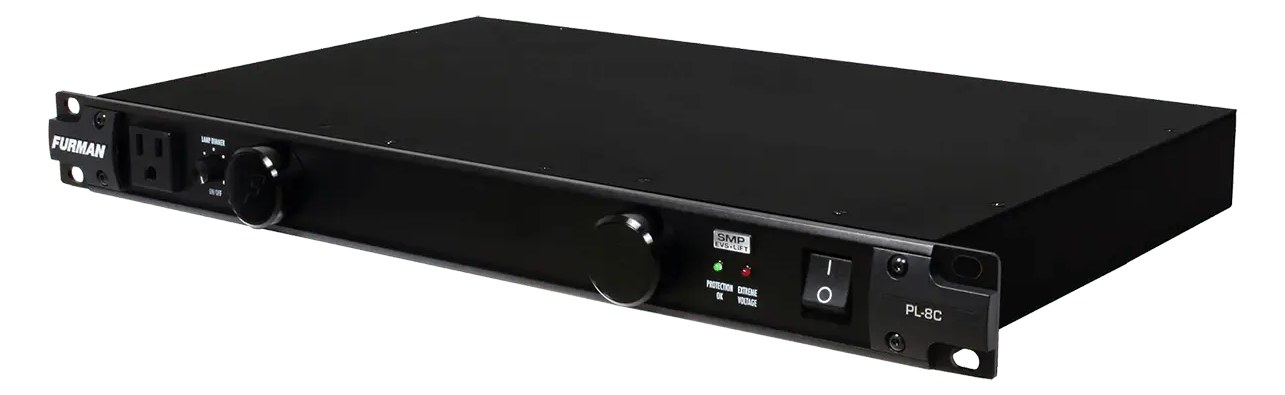
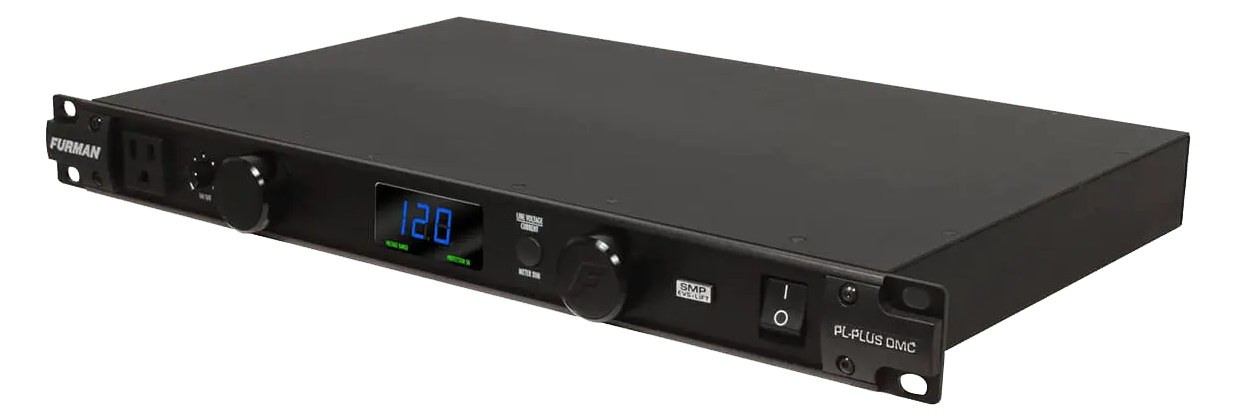
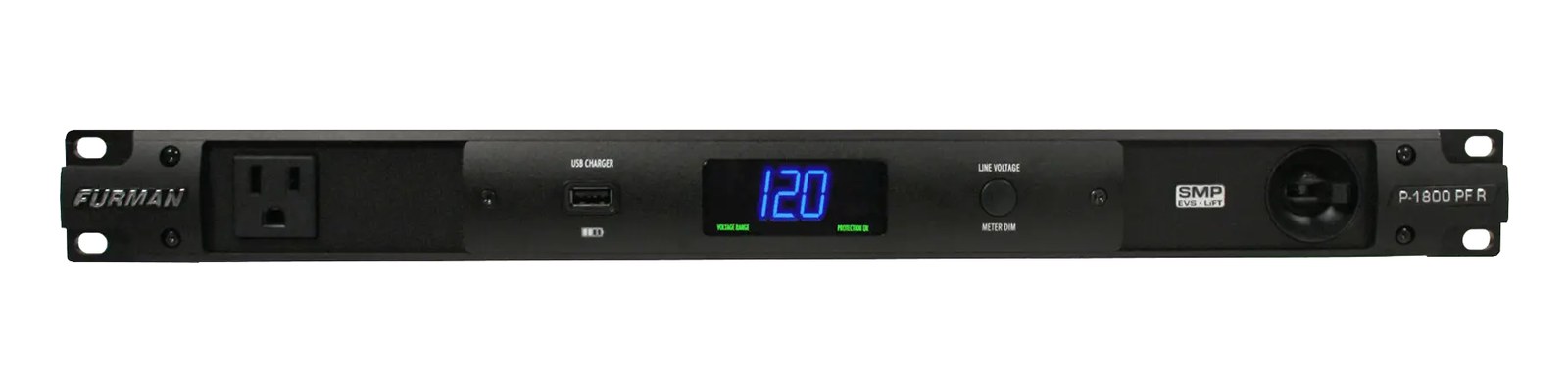
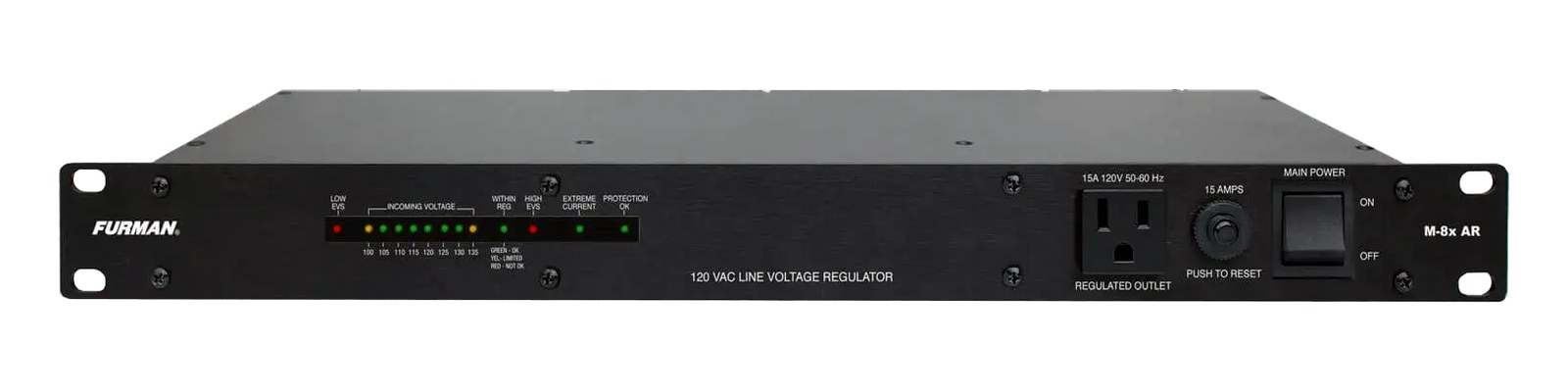
The Furman PL-8C is a no-frills power conditioner with pull-out rack lights that is a staple in live audio racks of all sizes. It provides basic surge protection and noise filtering for your gear while the integrated lights make it easy to work on your rack in dark stage-side environments. At this price point, it is the most practical way to add power conditioning and rack illumination to a budget build.
UnverifiedPower requirement is not verified in the catalog
Catalog estimate
~$219Use retailer rows for current price and stock
01 · What it does—and what that changes in your rig.
Product overview
Start with the payoff, then work through how it functions, where it fits, and the details that change a real build.
The payoff
Power Conditioner decisions, organized around the whole rig.
The Furman PL-8C is the quiet utility player that anchors more working live rigs than almost anything else in the catalog. It sits in one rack unitThe standard slice of rack height: 1U = 1.75″. A 3U box takes three slices; half-rack gear pairs two units side by side in one., hands nine outlets to whatever gear is stacked around it — eight on the rear, one on the front — and throws in a pair of pull-out fluorescent rack lights that have saved countless engineers from fumbling in the dark at a downstage monitor position. Its job is straightforward: filter line noise, clamp surges before they reach your audio gear, and keep the whole rack illuminated when the house lights are off.
Documented outputs
1010 destination connections
Documented inputs
1Based on documented inputs
Rack space
1UBuilder checks available rail space
Furman product panel1U · Unverified
Function
How it works in the path
Nine outlets sounds like plenty until you're building a dense IEMIn-Ear Monitor — earpieces that replace floor wedges, feeding each player their own mix. The reason this whole rack exists. rack with a wireless rack, a monitor console stageboxThe I/O endpoint on stage: mics plug in there and one digital line (AES50, Dante) carries everything to the console. The snake, digitized., a laptop power brick, and a few miscellaneous wall-warts all competing for space. The PL-8C's 15-amp circuit is the ceiling — add up the draw of every device you plan to plug in and make sure you're not crowding that limit, especially if you're in a venue with already-marginal power. The rear outlets are spaced for standard plugs, but a bulky transformerA magnetic coupling that passes audio between two windings with no wire contact — isolates splits and kills ground-loop hum, no power needed. block will almost certainly eat a neighbor. The front outlet is a genuine convenience for a quick laptop or phone charge during changeover without opening the back of the rack.
Best fit
Where it earns its place in the rack
This is the right call for an IEMIn-Ear Monitor — earpieces that replace floor wedges, feeding each player their own mix. The reason this whole rack exists. rig, a compact playback rig, or any budget-conscious build where you need basic protection, noise filtering, and rack lighting without spending real money on a unit that does more than you need. It is not a voltage regulatorActively holds the output at a steady 120 V while venue power sags or spikes — a step beyond filtering, one short of a battery. — if you're heading into venues with genuinely unstable power, look at Furman's AR-series or a comparable voltage-regulating conditioner instead. Similarly, if your rig has grown to the point where 15 amps is a constant worry, step up to a 20-amp unit. But for most touring IEM setups, the PL-8C earns its one rack unitThe standard slice of rack height: 1U = 1.75″. A 3U box takes three slices; half-rack gear pairs two units side by side in one. every night.
In the rack
Details worth deciding before load-in.
Mount it at eye level or just below — the pull-out rack lights throw illumination downward, so positioning them mid-rack lights up more of your gear than burying them at the bottom.
Use the front outlet for your laptop or tablet charger during soundcheck; it keeps the cable out of the rear harness and is easy to yank when you need to move the rack.
Before load-in, tally the wattage of every device you're plugging in — wireless systems, in-ear transmitters, and switching power supplies add up faster than expected on a shared 15-amp circuit.
When building the rear cable bundle, put your heaviest transformerA magnetic coupling that passes audio between two windings with no wire contact — isolates splits and kills ground-loop hum, no power needed. blocks on the outermost outlets so they don't physically block the plugs next to them.
02 · Know the whole path before you buy.
Signal path
Learn the route as a block diagram: source, product function, transport, and destination. Select any block to see what enters, what changes, and what leaves.
Interactive block diagramAuto-looping · hover, focus, or tap to hold a stage
Port-type signalProduct functionSystem boundary
Follow one signal from source to destination
Each block answers the same three questions: what arrives, what changes here, and what leaves.
01 · Source · selected
nema 5 15
nema 5 15 + bnc
01 · Source
1 documented input
nema 5 15
Arrives as
1 documented input
Connector
nema 5 15
Signal
power
03 · What this product asks of the rest of the system.
Compatibility
Treat connector names as the start of the check—not the answer. These are the boundaries that determine a complete working path.
Best fit · Power Conditioner
Use it when 1U and 266.7 mm of depth fit the case.
Plan the companion path
Complete the path with upstream and downstream gear that matches connector, direction, signal type, protocol, and wiring standard.
Connector boundary
Documented connectors: nema 5 15, bnc. Match connector, direction, and signal type—not shape alone.
04 · Every connector, grouped by job.
I/O ports
Switch the product view and the documented port inventory updates with it—hardware and data stay side by side.
Every connector, grouped by job.
Switch panels to keep the hardware view and the documented port list in sync.
Front panelRear panel
All documented ports for Furman PL-8C Power Conditioner
Port
Panel
Connector
Direction
Signal
Channels
POWER CABLE
rear
nema 5 15
input
power
—
OUTLET 1
rear
nema 5 15
output
power
—
OUTLET 2
rear
nema 5 15
output
power
—
OUTLET 3
rear
nema 5 15
output
power
—
OUTLET 4
rear
nema 5 15
output
power
—
OUTLET 5
rear
nema 5 15
output
power
—
OUTLET 6
rear
nema 5 15
output
power
—
OUTLET 7
rear
nema 5 15
output
power
—
OUTLET 8
rear
nema 5 15
output
power
—
FRONT OUTLET
front
nema 5 15
output
power
—
LAMP
rear
bnc
output
analog audio
—
Showing 11 of 11 documented physical ports. Scroll to review the remaining rows.
05 · Compare the decision, not just the price.
Alternatives
The rows are organized around fit, power, I/O, and system role so a cheaper unit cannot hide a more expensive workflow.
PL-8CThe Furman PL-8C is a no-frills power conditioner with pull-out rack lights that is a staple in live audio racks of all sizes. It provides basic surge protection and noise filtering for your gear while the integrated lights make it easy to work on your rack in dark stage-side environments. At this price point, it is the most practical way to add power conditioning and rack illumination to a budget build.View gear →
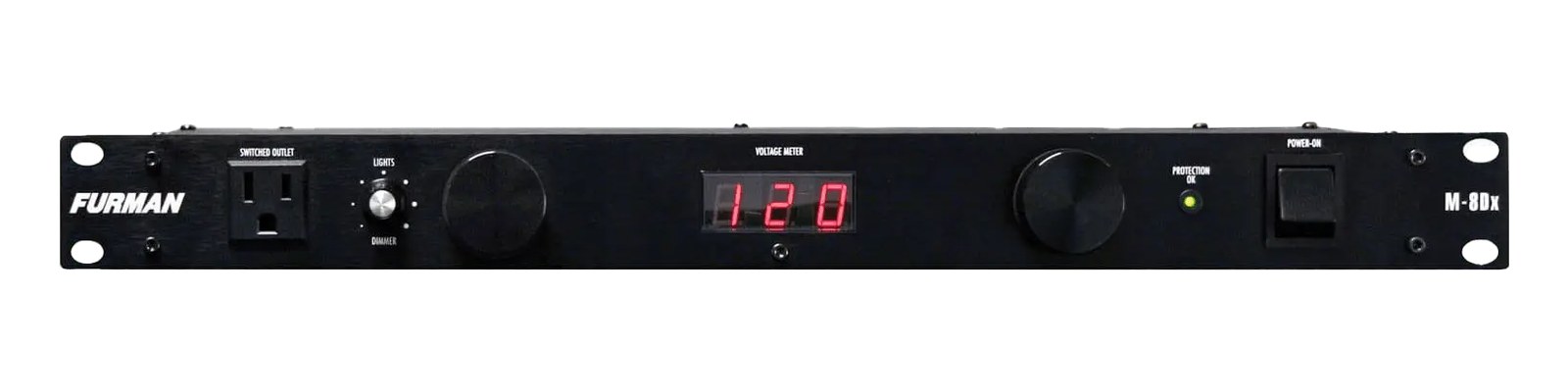
M-8DxThe Furman M-8Dx offers basic power conditioning with the added benefit of a front-panel digital voltmeter that lets you verify incoming power quality at a glance. Nine rear outlets provide plenty of connection points for a moderately loaded rack, and the slim design keeps your budget in check. It is the bare-minimum power conditioner for anyone who wants at least some visibility into their power situation on stage.View gear →
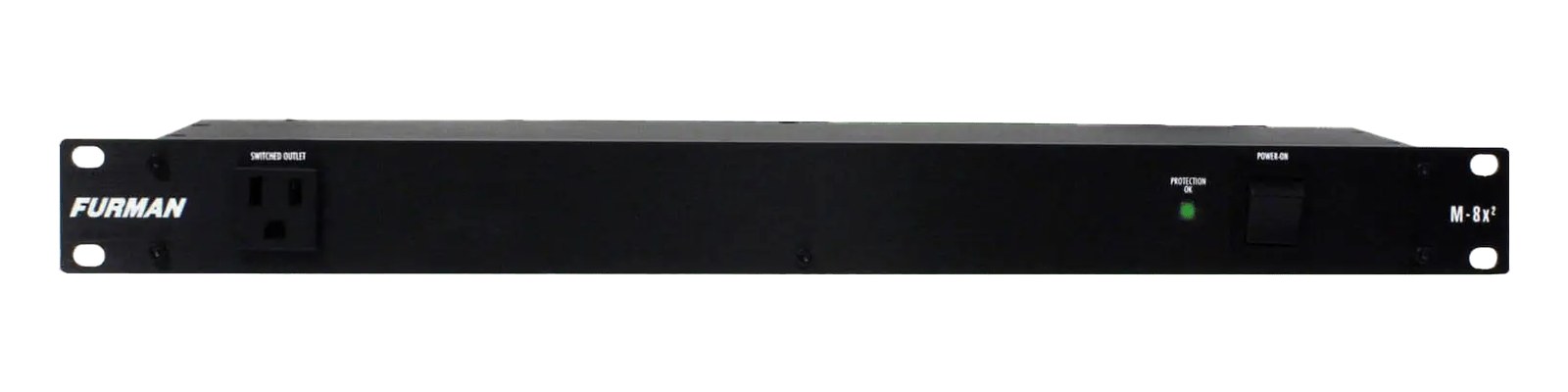
M-8x2The Furman M-8x2 is the most affordable rack-mount power conditioner in Furman's lineup, providing basic surge protection and EMI/RFI filtering across eight rear-panel outlets. It lacks the pull-out rack lights and voltage meters of its siblings, but for budget builds or secondary racks where you just need clean, protected power distribution, it gets the job done at the lowest possible cost. A sensible starting point for any rack build.View gear →
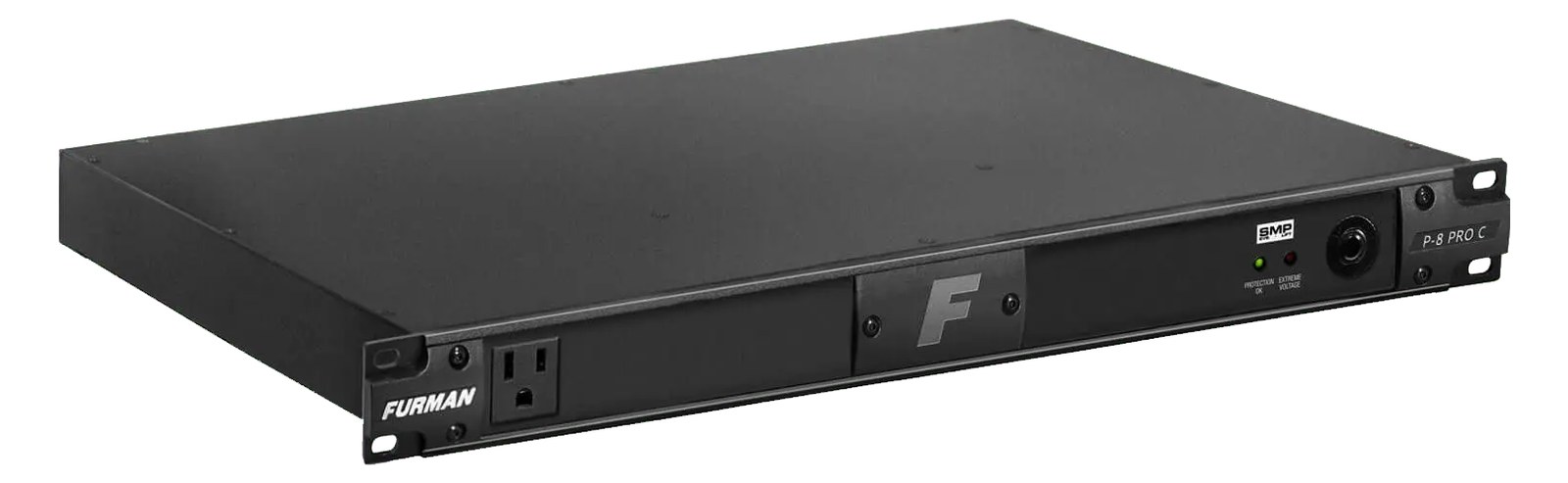
P-8 PRO CThe Furman P-8 PRO C is rated for 20-amp circuits, making it the right choice for racks loaded with power-hungry gear like multiple IEM transmitters, amplifiers, or UPS units that would trip a standard 15A conditioner. SMP+ Series Multi-Stage Protection provides advanced surge and spike filtering, and the eight rear outlets handle a fully loaded rack. Essential for high-draw professional touring rigs.View gear →
06 · Resolve the questions that can change the purchase or build plan.
Planning questions
Short, source-backed answers surface rack fit, power, cabling, and connection details before they become surprises.
How will the Furman PL-8C Power Conditioner affect rack fit and case depth?
It occupies 1U. Its documented depth is 266.7 mm.
How much power does the Furman PL-8C Power Conditioner draw?
Its power requirement is not yet verified in the catalog.
What connections does the Furman PL-8C Power Conditioner have?
11 documented physical ports, including POWER CABLE, OUTLET 1, OUTLET 2, OUTLET 3, OUTLET 4, OUTLET 5.
07 · See this unit inside a real rack plan.
Builder preview
Placement is only the start. Builder checks space · depth · weight, power headroom, dependencies, and compatible signal paths around this exact catalog item.Open in Builder