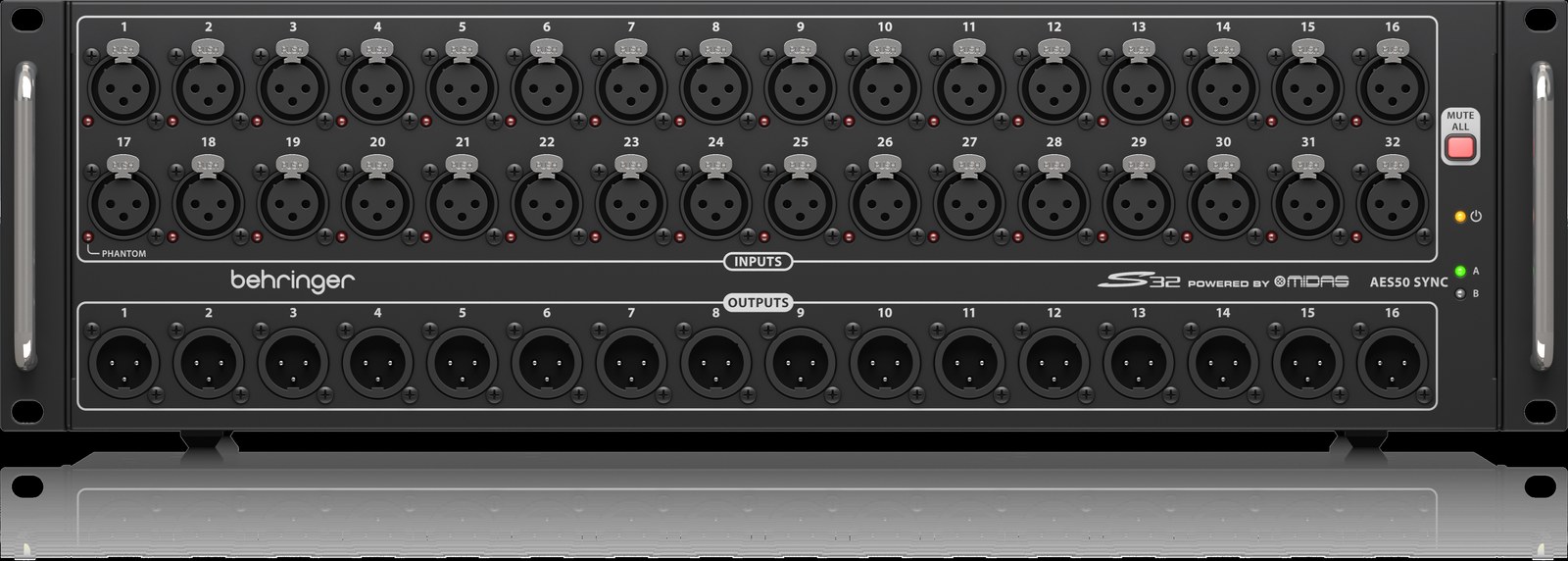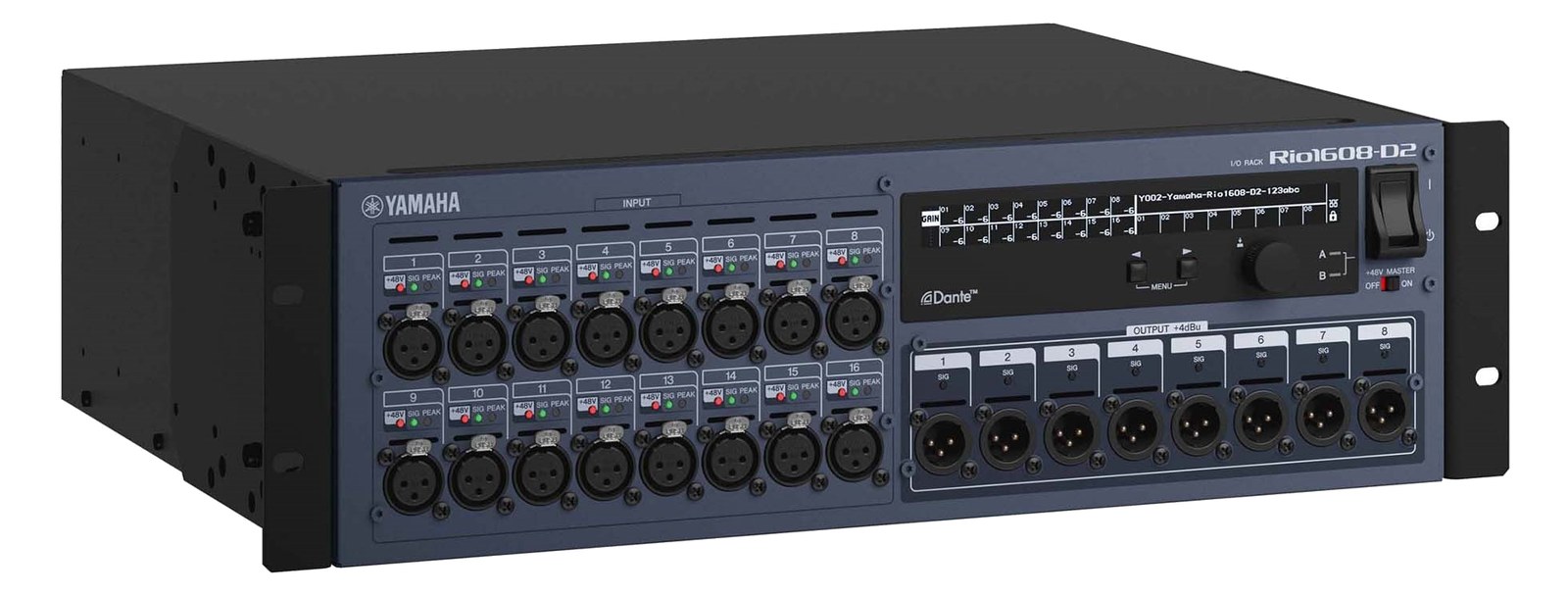

Midas DL251 Digital Stage Box
Midas·Model DL251·midas-dl251
Photos
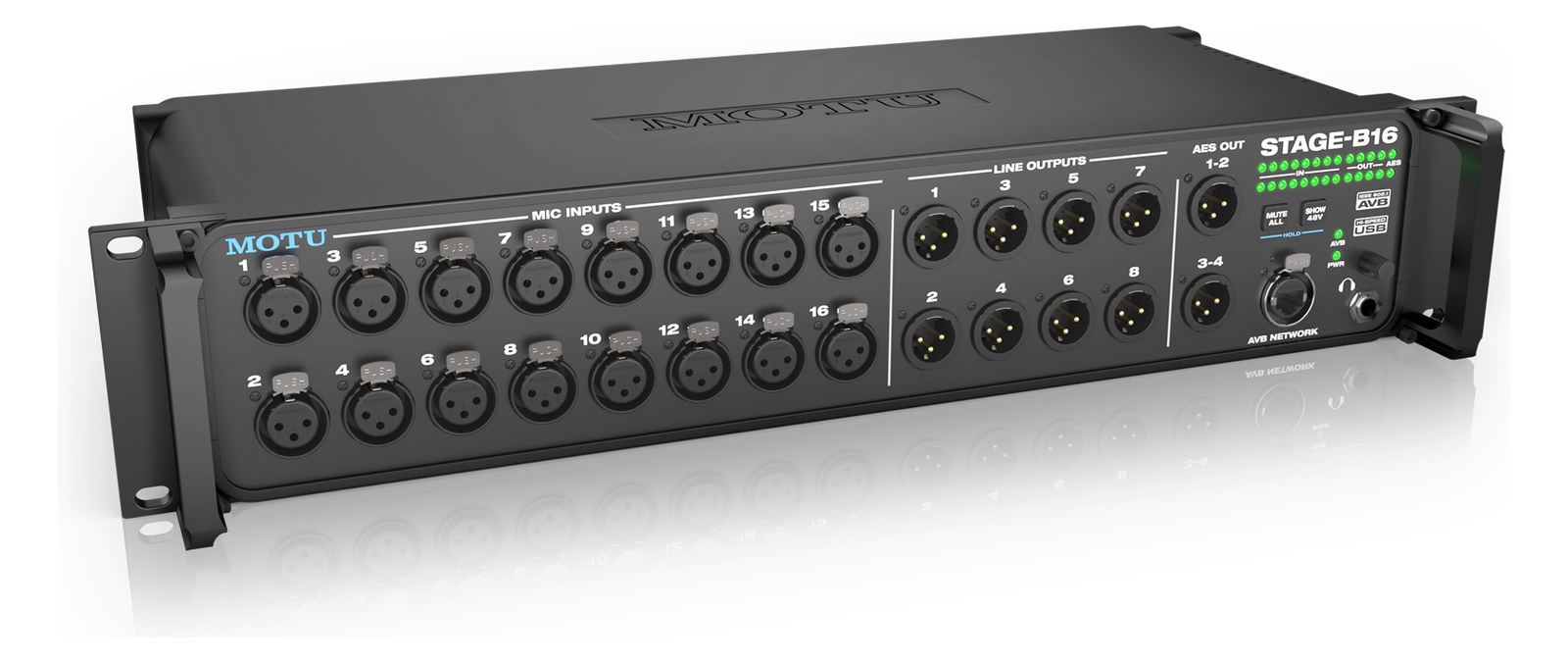
Manufacturer product photography — the drawn faceplate above stays true to panel layout; these show the hardware itself.
About the Midas DL251
The Midas DL251 is the top-of-line AES50The Behringer/Midas console-to-stage-box link: 48 channels each way over one shielded Cat5e cable, with near-zero latency. stage boxThe I/O endpoint on stage: mics plug in there and one digital line (AES50, Dante) carries everything to the console. The snake, digitized. — 48 Midas preampsThe gain stage that lifts a mic’s tiny signal up to line level — the first thing a signal hits, and a big part of how a console sounds. and 16 XLRThe standard 3-pin locking connector for mics and balanced line signals — pin 1 is the shield, pins 2 and 3 carry the balanced pair. outputs, all multiplexed to a pair of redundantA second copy of anything critical — supply, computer, network path — already running so one failure can’t stop the show. AES50 links. Used on major tours where a single stage box needs to service a full band (drums + guitars + keys + vocals + playback) without cascading a second box. Pairs with M32/M32R and Wing consoles; requires an AES50 port with 48-channel capacity on the console side.
The DL251 is the top of the Midas AES50The Behringer/Midas console-to-stage-box link: 48 channels each way over one shielded Cat5e cable, with near-zero latency. stage boxThe I/O endpoint on stage: mics plug in there and one digital line (AES50, Dante) carries everything to the console. The snake, digitized. family — a single 6U unit that swallows an entire band's analog world and hands it back over two EtherCONAn Ethernet plug inside a rugged XLR-style locking shell — tour-grade network connections that can’t be yanked loose. cables. Forty-eight XLRThe standard 3-pin locking connector for mics and balanced line signals — pin 1 is the shield, pins 2 and 3 carry the balanced pair. inputs and sixteen XLR outputs live in one chassis, multiplexed across a primary and redundantA second copy of anything critical — supply, computer, network path — already running so one failure can’t stop the show. AES50 link to the console. If you're running a Midas M32, M32R, or Wing and you need everything — drums, guitars, keys, vocals, playback returns, and monitor sends — in one box without chaining a second stage box, this is the unit the system was designed around.
At 13.5 kg and 6U, the DL251 is not a fly dateA gig you fly to instead of driving — the whole rig has to shrink into checkable cases and carry-ons. piece of gear. It's a touring rack anchor. The 249 mm depth is manageable in a standard road rack, but plan your rack build around it — 48 input connectors and 16 output connectors on the rear panel means a serious cabling footprint at the back. Power draw sits at 55 W nominal with a 75 W ceiling, so it won't stress a standard power conditionerFilters venue AC, clamps surges, and gives the rack one tidy inlet. Not a voltage regulator and not a battery — just cleaner power., but note that both AES50The Behringer/Midas console-to-stage-box link: 48 channels each way over one shielded Cat5e cable, with near-zero latency. ports need to be connected to the same console (or console network) to take advantage of the redundantA second copy of anything critical — supply, computer, network path — already running so one failure can’t stop the show. link — it's not a split for two separate consoles. The 48-channel AES50 requirement also means your console side must have a 48-channel AES50 port, not a 32-channel one.
This box earns its place on productions where the input count is genuinely pushing 40 or beyond and cascading a DL32 or similar smaller box would add cable runs or complexity you don't need. If your show is 24 inputs and 8 outputs, a DL32 or DL16 gets you there at a fraction of the weight and cost. If you're carrying a Wing or M32 and regularly maxing out a smaller stage boxThe I/O endpoint on stage: mics plug in there and one digital line (AES50, Dante) carries everything to the console. The snake, digitized., the DL251 stops you from improvising a second box mid-tour. Engineers on smaller club rigs or IEMIn-Ear Monitor — earpieces that replace floor wedges, feeding each player their own mix. The reason this whole rack exists.-only monitor setups should look elsewhere — this unit is sized for the full-production problem.
In the rack
- Route your redundantA second copy of anything critical — supply, computer, network path — already running so one failure can’t stop the show. AES50The Behringer/Midas console-to-stage-box link: 48 channels each way over one shielded Cat5e cable, with near-zero latency. B cable independently from AES50 A — separate cable paths, ideally separate loomsSeveral cables bundled and run as one — keeps rack interconnects tidy and makes load-in one grab instead of eight. — so a single crush point or trip hazard can't take out both links at once.
- With 48 inputs landing at once, label your rear panel at patch, not just at the box. Color-coded strain-relief boots by section (drums, guitars, keys, vocals) will save you minutes during a fast changeover when someone's tracing a cable in low light.
- Budget at least 2UThe standard slice of rack height: 1U = 1.75″. A 3U box takes three slices; half-rack gear pairs two units side by side in one. of ventilation clearance in your rack plan — 6U of active electronics at up to 75 W in a sealed road case will run warm, and Midas preampsThe gain stage that lifts a mic’s tiny signal up to line level — the first thing a signal hits, and a big part of how a console sounds. aren't shy about temperature affecting noise floorThe constant background hiss a device produces on its own. Everything you pass through it sits on top — lower is better. over a long show day.
- Confirm your console's AES50The Behringer/Midas console-to-stage-box link: 48 channels each way over one shielded Cat5e cable, with near-zero latency. port is configured for 48-channel operation before load-in, not during soundcheck — an M32R running AES50 at 32-channel capacity will simply not see the top 16 inputs from this box.
48-in / 16-out Midas stage boxThe I/O endpoint on stage: mics plug in there and one digital line (AES50, Dante) carries everything to the console. The snake, digitized.. The biggest AES50The Behringer/Midas console-to-stage-box link: 48 channels each way over one shielded Cat5e cable, with near-zero latency. stage box in the Midas line.
I/O Ports (67)
| Port | Connector | Direction | Signal | Channels |
|---|---|---|---|---|
| Stage In 1 | XLR FEMALE | input | analog audio | — |
| Stage In 2 | XLR FEMALE | input | analog audio | — |
| Stage In 3 | XLR FEMALE | input | analog audio | — |
| Stage In 4 | XLR FEMALE | input | analog audio | — |
| Stage In 5 | XLR FEMALE | input | analog audio | — |
| Stage In 6 | XLR FEMALE | input | analog audio | — |
| Stage In 7 | XLR FEMALE | input | analog audio | — |
| Stage In 8 | XLR FEMALE | input | analog audio | — |
| Stage In 9 | XLR FEMALE | input | analog audio | — |
| Stage In 10 | XLR FEMALE | input | analog audio | — |
| Stage In 11 | XLR FEMALE | input | analog audio | — |
| Stage In 12 | XLR FEMALE | input | analog audio | — |
| Stage In 13 | XLR FEMALE | input | analog audio | — |
| Stage In 14 | XLR FEMALE | input | analog audio | — |
| Stage In 15 | XLR FEMALE | input | analog audio | — |
| Stage In 16 | XLR FEMALE | input | analog audio | — |
| Stage In 17 | XLR FEMALE | input | analog audio | — |
| Stage In 18 | XLR FEMALE | input | analog audio | — |
| Stage In 19 | XLR FEMALE | input | analog audio | — |
| Stage In 20 | XLR FEMALE | input | analog audio | — |
| Stage In 21 | XLR FEMALE | input | analog audio | — |
| Stage In 22 | XLR FEMALE | input | analog audio | — |
| Stage In 23 | XLR FEMALE | input | analog audio | — |
| Stage In 24 | XLR FEMALE | input | analog audio | — |
| Stage In 25 | XLR FEMALE | input | analog audio | — |
| Stage In 26 | XLR FEMALE | input | analog audio | — |
| Stage In 27 | XLR FEMALE | input | analog audio | — |
| Stage In 28 | XLR FEMALE | input | analog audio | — |
| Stage In 29 | XLR FEMALE | input | analog audio | — |
| Stage In 30 | XLR FEMALE | input | analog audio | — |
| Stage In 31 | XLR FEMALE | input | analog audio | — |
| Stage In 32 | XLR FEMALE | input | analog audio | — |
| Stage In 33 | XLR FEMALE | input | analog audio | — |
| Stage In 34 | XLR FEMALE | input | analog audio | — |
| Stage In 35 | XLR FEMALE | input | analog audio | — |
| Stage In 36 | XLR FEMALE | input | analog audio | — |
| Stage In 37 | XLR FEMALE | input | analog audio | — |
| Stage In 38 | XLR FEMALE | input | analog audio | — |
| Stage In 39 | XLR FEMALE | input | analog audio | — |
| Stage In 40 | XLR FEMALE | input | analog audio | — |
| Stage In 41 | XLR FEMALE | input | analog audio | — |
| Stage In 42 | XLR FEMALE | input | analog audio | — |
| Stage In 43 | XLR FEMALE | input | analog audio | — |
| Stage In 44 | XLR FEMALE | input | analog audio | — |
| Stage In 45 | XLR FEMALE | input | analog audio | — |
| Stage In 46 | XLR FEMALE | input | analog audio | — |
| Stage In 47 | XLR FEMALE | input | analog audio | — |
| Stage In 48 | XLR FEMALE | input | analog audio | — |
| Stage Out 1 | XLR MALE | output | analog audio | — |
| Stage Out 2 | XLR MALE | output | analog audio | — |
| Stage Out 3 | XLR MALE | output | analog audio | — |
| Stage Out 4 | XLR MALE | output | analog audio | — |
| Stage Out 5 | XLR MALE | output | analog audio | — |
| Stage Out 6 | XLR MALE | output | analog audio | — |
| Stage Out 7 | XLR MALE | output | analog audio | — |
| Stage Out 8 | XLR MALE | output | analog audio | — |
| Stage Out 9 | XLR MALE | output | analog audio | — |
| Stage Out 10 | XLR MALE | output | analog audio | — |
| Stage Out 11 | XLR MALE | output | analog audio | — |
| Stage Out 12 | XLR MALE | output | analog audio | — |
| Stage Out 13 | XLR MALE | output | analog audio | — |
| Stage Out 14 | XLR MALE | output | analog audio | — |
| Stage Out 15 | XLR MALE | output | analog audio | — |
| Stage Out 16 | XLR MALE | output | analog audio | — |
| AES50 A | ETHERCON | bidirectional | digital audio | 48 |
| AES50 B (redundant) | ETHERCON | bidirectional | digital audio | 48 |
- Power (IEC) (IEC C14)
Deciding between two?
Rack space, watts, weight and every connector, side by side.
Related gear


Related articles
Guides from our library that cover planning around stage box gear.
A walking tour of the signal path from microphone to in-ear monitor, with what every box in the rack actually does to the audio along the way.
A plain-English guide to writing the input list, stage plot, and patch sheet that house engineers want — without the jargon, with examples, and with a free way to generate one.
Step-by-step: linking aux buses into stereo pairs, pre-fader vs post-fader, routing buses to Ultranet vs physical XLRs vs AES50, and adding a bus-level limiter.
A practical comparison of the three audio-over-network protocols you’ll encounter in a rack rig, with guidance on when each one is the right pick.