
Yamaha Rio1608-D2 Dante Stage Box
Yamaha·Model Rio1608-D2·yamaha-rio1608-d2
Photos
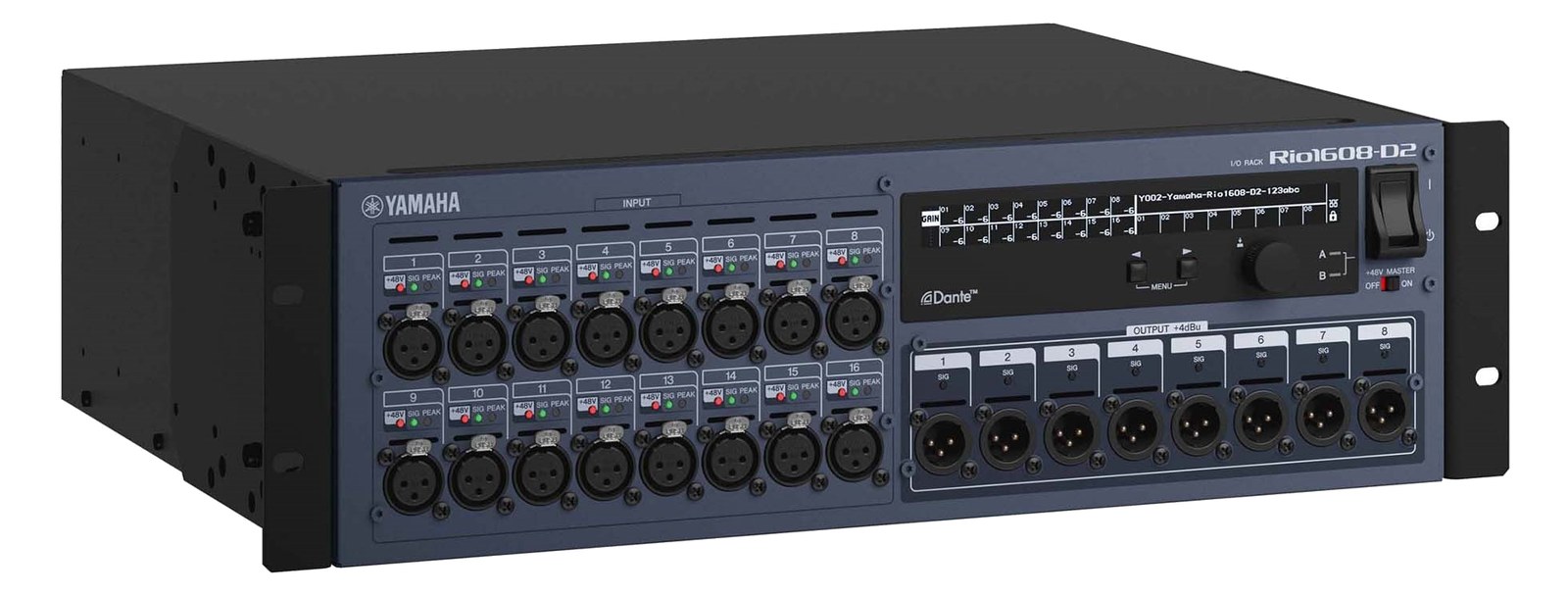
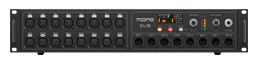
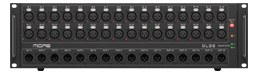
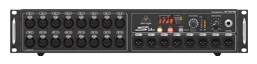
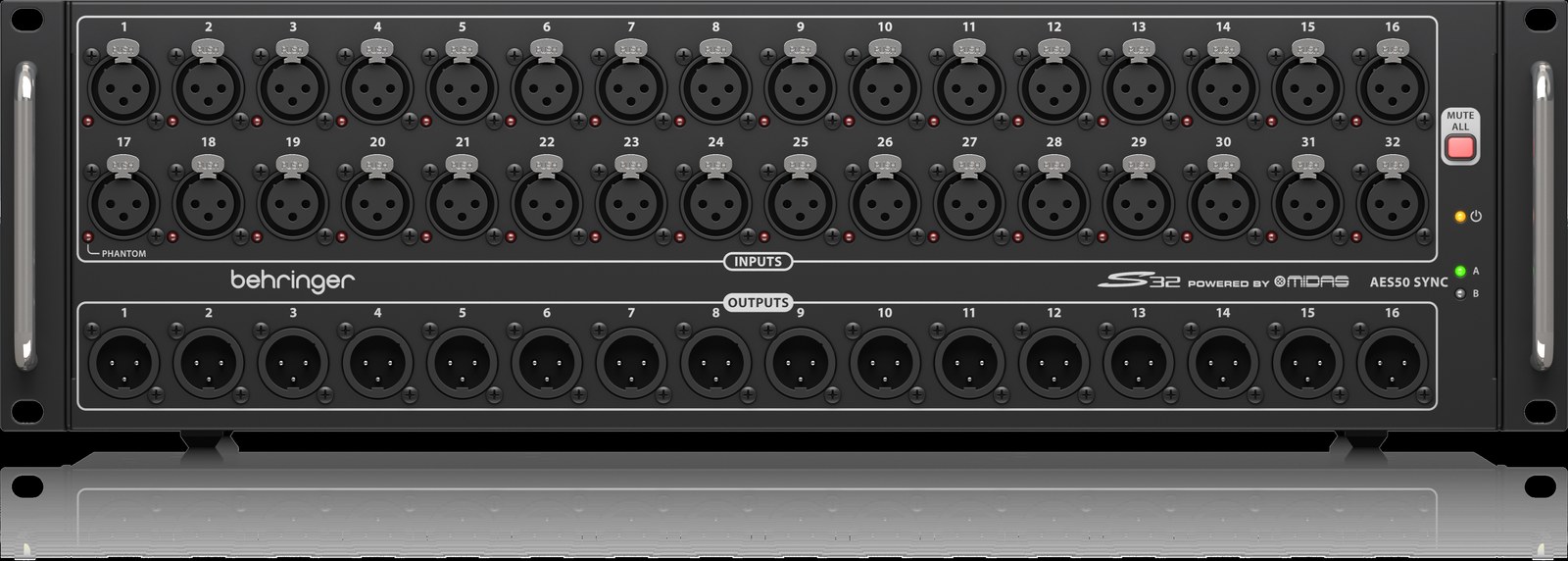
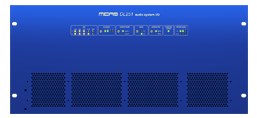
Manufacturer product photography — the drawn faceplate above stays true to panel layout; these show the hardware itself.
About the Yamaha Rio1608-D2
The Yamaha Rio1608-D2 is the DanteThe most common audio-over-network standard: dozens of channels of uncompressed digital audio down one ordinary Ethernet cable between Dante boxes.-network equivalent of Midas DL16 — sixteen Yamaha-designed preampsThe gain stage that lifts a mic’s tiny signal up to line level — the first thing a signal hits, and a big part of how a console sounds. at the stage, carried back to a CL/QL/Rivage console over Cat5eStandard network cable grades. In an audio rig one cheap Cat5e run can replace a 48-channel copper snake; AES50 wants it shielded. using Dante. Two Dante ports support primary + secondary redundantA second copy of anything critical — supply, computer, network path — already running so one failure can’t stop the show. network topology. Bog-standard on Yamaha-anchored pro rigs; pairs with any Dante-enabled console (Allen & Heath Avantis via D-Net, DiGiCo via DMI-Dante, Midas via DN9650, etc.).
The Rio1608-D2 is Yamaha's workhorse stage boxThe I/O endpoint on stage: mics plug in there and one digital line (AES50, Dante) carries everything to the console. The snake, digitized. for DanteThe most common audio-over-network standard: dozens of channels of uncompressed digital audio down one ordinary Ethernet cable between Dante boxes.-networked rigs — sixteen analog inputs with Yamaha's own preampsThe gain stage that lifts a mic’s tiny signal up to line level — the first thing a signal hits, and a big part of how a console sounds. at the stage end, eight analog outputs for local monitor feeds or amplifier drives, all carried back to the console over a single Cat5eStandard network cable grades. In an audio rig one cheap Cat5e run can replace a 48-channel copper snake; AES50 wants it shielded. run. It sits in 3UThe standard slice of rack height: 1U = 1.75″. A 3U box takes three slices; half-rack gear pairs two units side by side in one. of your stage or amp rack and handles the fundamental job of getting mics and instruments off the floor and onto the network without a multicore snakeA multicore cable bundling many channels into one stage-to-console run. A sub-snake collects one corner of the stage into a drop box. in sight. It's the default answer on any rig built around a CL, QL, or Rivage console, and it works outside the Yamaha family too, anywhere Dante is native or added via a card.
The two EtherConAn Ethernet plug inside a rugged XLR-style locking shell — tour-grade network connections that can’t be yanked loose. ports are what matter most operationally. Primary carries the audio; Secondary runs a fully redundantA second copy of anything critical — supply, computer, network path — already running so one failure can’t stop the show. network path so a cable pull or switch failure mid-show doesn't take your inputs with it — that's not a nice-to-have on a serious touring or install rig, it's the reason you spec this unit over a single-port alternative. At 45 watts nominal draw with a 65-watt ceiling, it's well within the capacity of any rack's power conditioning. The 364mm depth is real — this is not a shallow box, so confirm your case depth before it shows up at load-in. PreampThe gain stage that lifts a mic’s tiny signal up to line level — the first thing a signal hits, and a big part of how a console sounds. quality is solid and consistent with the CL/QL ecosystem; if you're running a Yamaha digital console, the gain-stagingSetting sensible levels at every step of the chain so nothing clips and nothing drowns in hiss — the unglamorous secret to clean mixes. feels exactly as expected.
If your console is Yamaha or you're already deep in DanteThe most common audio-over-network standard: dozens of channels of uncompressed digital audio down one ordinary Ethernet cable between Dante boxes., this is an easy choice — the integration is native, the redundantA second copy of anything critical — supply, computer, network path — already running so one failure can’t stop the show. network topology is mature, and rental houses stock them everywhere which matters for fly datesA gig you fly to instead of driving — the whole rig has to shrink into checkable cases and carry-ons.. If you're on a non-Yamaha console you'll need a Dante bridge or expansion card on the desk side, which adds cost and a configuration step at every load-in; that overhead is manageable but worth acknowledging. Engineers who need more than 16 inputs from a single stage boxThe I/O endpoint on stage: mics plug in there and one digital line (AES50, Dante) carries everything to the console. The snake, digitized. should look at pairing two units on the same Dante network rather than expecting this one to stretch. For smaller rigs where 16 inputs is overkill, the Rio608-D2 covers the same ground in less rack space.
In the rack
- Run the DanteThe most common audio-over-network standard: dozens of channels of uncompressed digital audio down one ordinary Ethernet cable between Dante boxes. Secondary port to a physically separate switch or a separate switch port group from Primary — a single shared switch defeats redundancyA second copy of anything critical — supply, computer, network path — already running so one failure can’t stop the show. entirely if the switch itself goes down.
- Word clockThe shared heartbeat keeping every digital box sampling in lockstep. One device leads, the rest follow — or you get clicks and pops. BNCThe twist-lock coax connector used for word clock and antenna runs — it locks, so it can’t be pulled out mid-show. is there if your system has an external master clock, but in a DanteThe most common audio-over-network standard: dozens of channels of uncompressed digital audio down one ordinary Ethernet cable between Dante boxes. network the Rio will happily slave to Dante's internal clock distribution; only patch the BNC if you have a specific reason to pull external sync.
- At 364mm deep, measure your road case interior before ordering — many standard 4UThe standard slice of rack height: 1U = 1.75″. A 3U box takes three slices; half-rack gear pairs two units side by side in one. and 6U stage boxesThe I/O endpoint on stage: mics plug in there and one digital line (AES50, Dante) carries everything to the console. The snake, digitized. run shallow and the Rio1608-D2 will not fit with the lids closed.
- Label your eight analog outputs clearly at the unit itself, not just in the console patch. When a monitor engineer needs to re-route a wedgeA floor monitor speaker angled up at the performer — the thing IEMs replace, and the thing you fall back on when they die. feed fast, readable hardware labeling saves the conversation.
16-in / 8-out DanteThe most common audio-over-network standard: dozens of channels of uncompressed digital audio down one ordinary Ethernet cable between Dante boxes. stage boxThe I/O endpoint on stage: mics plug in there and one digital line (AES50, Dante) carries everything to the console. The snake, digitized. with Yamaha preampsThe gain stage that lifts a mic’s tiny signal up to line level — the first thing a signal hits, and a big part of how a console sounds.. Pairs with CL/QL/Rivage consoles.
I/O Ports (28)
| Port | Connector | Direction | Signal | Channels |
|---|---|---|---|---|
| Stage In 1 | XLR FEMALE | input | analog audio | — |
| Stage In 2 | XLR FEMALE | input | analog audio | — |
| Stage In 3 | XLR FEMALE | input | analog audio | — |
| Stage In 4 | XLR FEMALE | input | analog audio | — |
| Stage In 5 | XLR FEMALE | input | analog audio | — |
| Stage In 6 | XLR FEMALE | input | analog audio | — |
| Stage In 7 | XLR FEMALE | input | analog audio | — |
| Stage In 8 | XLR FEMALE | input | analog audio | — |
| Stage In 9 | XLR FEMALE | input | analog audio | — |
| Stage In 10 | XLR FEMALE | input | analog audio | — |
| Stage In 11 | XLR FEMALE | input | analog audio | — |
| Stage In 12 | XLR FEMALE | input | analog audio | — |
| Stage In 13 | XLR FEMALE | input | analog audio | — |
| Stage In 14 | XLR FEMALE | input | analog audio | — |
| Stage In 15 | XLR FEMALE | input | analog audio | — |
| Stage In 16 | XLR FEMALE | input | analog audio | — |
| Stage Out 1 | XLR MALE | output | analog audio | — |
| Stage Out 2 | XLR MALE | output | analog audio | — |
| Stage Out 3 | XLR MALE | output | analog audio | — |
| Stage Out 4 | XLR MALE | output | analog audio | — |
| Stage Out 5 | XLR MALE | output | analog audio | — |
| Stage Out 6 | XLR MALE | output | analog audio | — |
| Stage Out 7 | XLR MALE | output | analog audio | — |
| Stage Out 8 | XLR MALE | output | analog audio | — |
| Dante Primary | ETHERCON | bidirectional | digital audio | 16 |
| Dante Secondary | ETHERCON | bidirectional | digital audio | 16 |
| Word Clock | BNC | bidirectional | digital audio | — |
- Power (IEC) (IEC C14)
Deciding between two?
Rack space, watts, weight and every connector, side by side.
Related gear


Related articles
Guides from our library that cover planning around stage box gear.
A walking tour of the signal path from microphone to in-ear monitor, with what every box in the rack actually does to the audio along the way.
A plain-English guide to writing the input list, stage plot, and patch sheet that house engineers want — without the jargon, with examples, and with a free way to generate one.
Step-by-step: linking aux buses into stereo pairs, pre-fader vs post-fader, routing buses to Ultranet vs physical XLRs vs AES50, and adding a bus-level limiter.
A practical comparison of the three audio-over-network protocols you’ll encounter in a rack rig, with guidance on when each one is the right pick.