
Yamaha Rio1608-D3 Stage Box
Yamaha·Model Rio1608-D3·yamaha-rio1608-d3
About the Yamaha Rio1608-D3
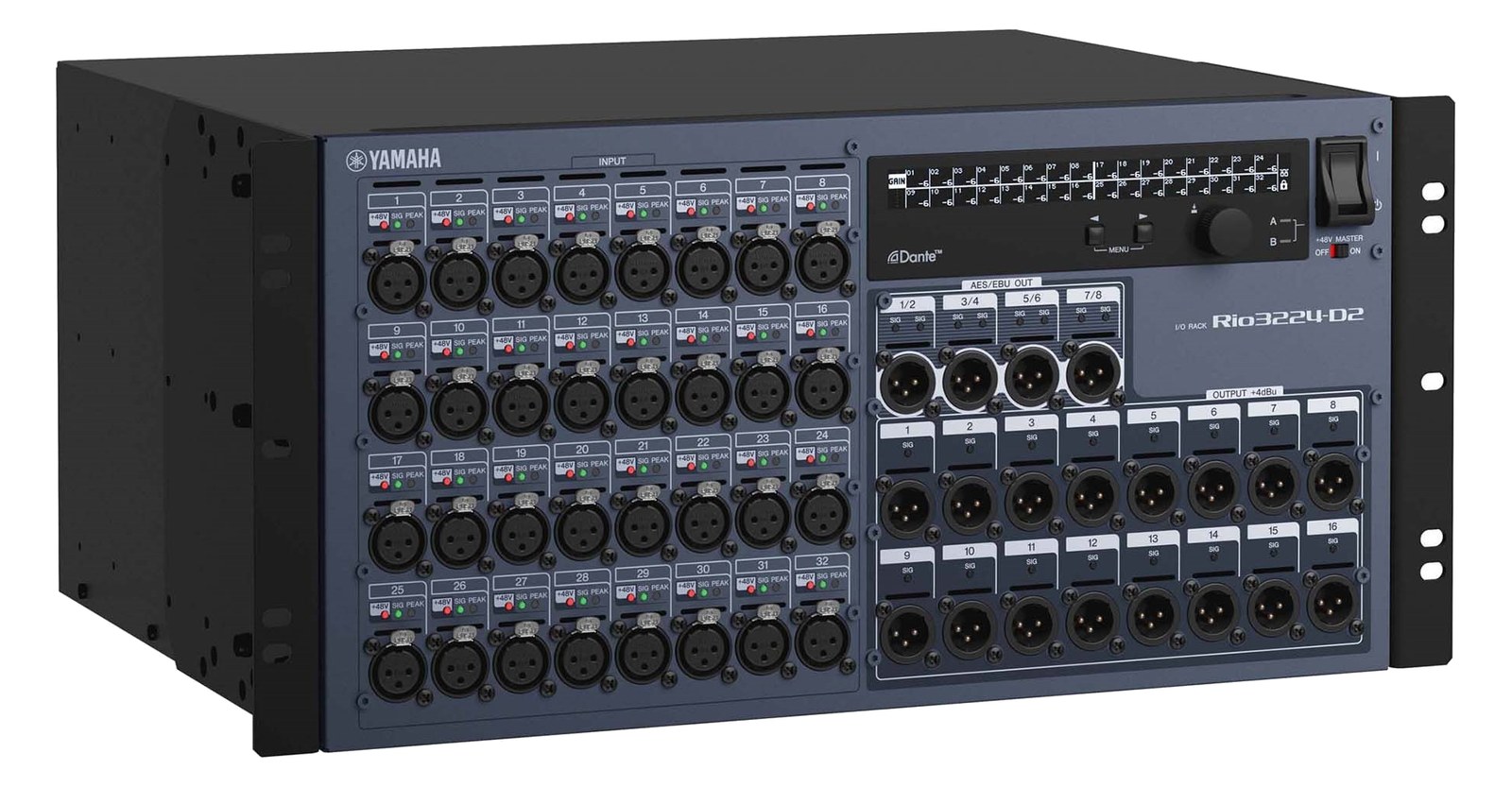
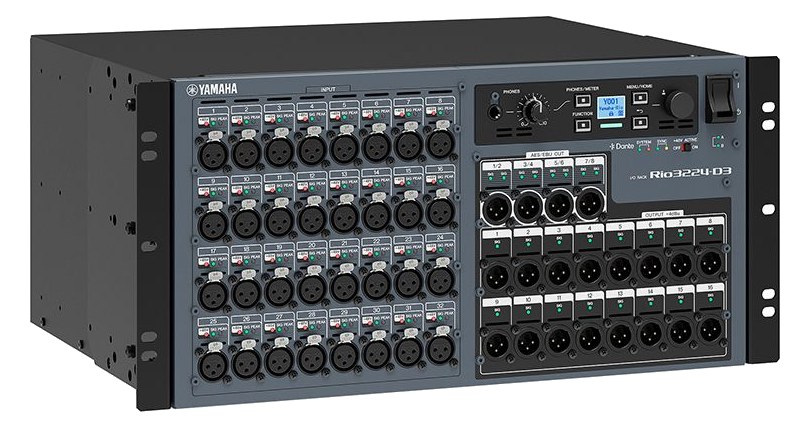
The Yamaha Rio1608-D3 is the third generation of the touring-standard Rio stage boxThe I/O endpoint on stage: mics plug in there and one digital line (AES50, Dante) carries everything to the console. The snake, digitized.: sixteen premium preampsThe gain stage that lifts a mic’s tiny signal up to line level — the first thing a signal hits, and a big part of how a console sounds., eight outs, redundantA second copy of anything critical — supply, computer, network path — already running so one failure can’t stop the show. DanteThe most common audio-over-network standard: dozens of channels of uncompressed digital audio down one ordinary Ethernet cable between Dante boxes. and power, and the reliability record that made Rio the riderThe document attached to a booking that lists what the band needs — inputs, monitors, power, backline (and the green-room snacks). default. The D3 generation succeeds the D2 with updated conversion and networking. Pairs natively with DM7 and Rivage consoles.
The Rio1608-D3 is Yamaha's current-generation touring stage boxThe I/O endpoint on stage: mics plug in there and one digital line (AES50, Dante) carries everything to the console. The snake, digitized., and it sits at the center of more professional live rigs than almost anything else in its category. Sixteen analog mic inputs land on stage — where the sources are — and eight analog outputs return monitors, effects sends, or local fills without extra boxes. All of that audio rides over DanteThe most common audio-over-network standard: dozens of channels of uncompressed digital audio down one ordinary Ethernet cable between Dante boxes., which means a single Cat6Standard network cable grades. In an audio rig one cheap Cat5e run can replace a 48-channel copper snake; AES50 wants it shielded. run back to the console handles the full channel count in both directions, simultaneously. The D3 is the third generation of a platform that has genuinely earned its riderThe document attached to a booking that lists what the band needs — inputs, monitors, power, backline (and the green-room snacks).-default status, and it pairs natively with Yamaha's DM7 and Rivage consoles.
The dual EtherConAn Ethernet plug inside a rugged XLR-style locking shell — tour-grade network connections that can’t be yanked loose. ports are the spec that matters most when something goes wrong. Primary and secondary DanteThe most common audio-over-network standard: dozens of channels of uncompressed digital audio down one ordinary Ethernet cable between Dante boxes. connections give you a hot-redundantA second copy of anything critical — supply, computer, network path — already running so one failure can’t stop the show. network path — if the primary cable or switch fails mid-show, the secondary takes over without a dropoutA brief audio gap when the radio link fails — the thing diversity, distros, and coordination all exist to prevent.. The dual IECThe standard three-prong appliance power inlet on rack gear — the kettle lead. C13/C14 in spec-sheet speak. inlets work the same way on the power side: two feeds from two separate circuits and you have covered both failure modes that will ruin your night. At 40 watts nominal draw and 4 kg, this is light enough to fly in a rack without drama, and 250 mm depth is manageable in a shallow tour case. Sixteen preampsThe gain stage that lifts a mic’s tiny signal up to line level — the first thing a signal hits, and a big part of how a console sounds. is the right count for most monitor or IEMIn-Ear Monitor — earpieces that replace floor wedges, feeding each player their own mix. The reason this whole rack exists. rig input lists without daisy-chaining boxes.
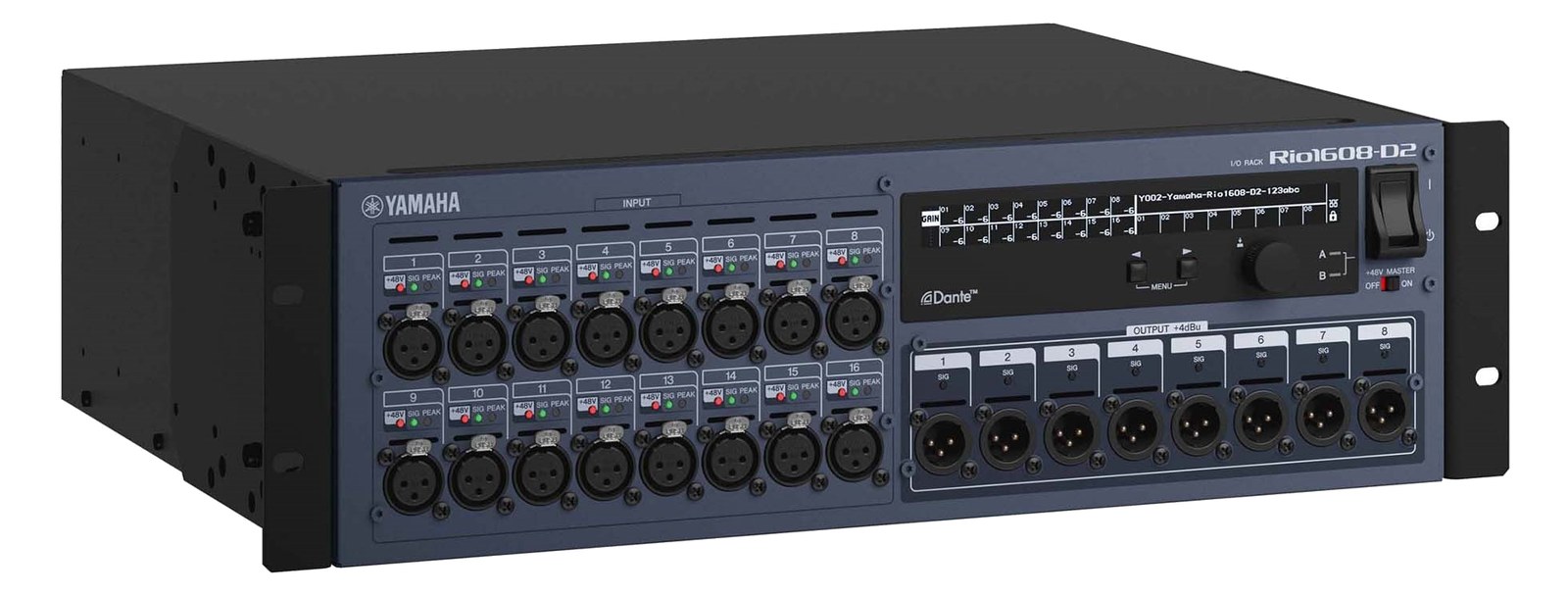
If you are running a Yamaha DanteThe most common audio-over-network standard: dozens of channels of uncompressed digital audio down one ordinary Ethernet cable between Dante boxes. ecosystem — DM7 at FOHFront Of House — the main mix the audience hears, and the console position out in the room where it gets mixed., Rivage for a big theatre run, or a mixed Dante plant shared across monitors and playback — this is the natural anchor for your stage boxThe I/O endpoint on stage: mics plug in there and one digital line (AES50, Dante) carries everything to the console. The snake, digitized. position. The redundancyA second copy of anything critical — supply, computer, network path — already running so one failure can’t stop the show. features justify the price on any gig where downtime is unacceptable. If your console is not Dante-native and you have no plans to go that direction, you are paying for infrastructure you will not use; a simpler analog or MADIA pro digital format carrying 64 channels on one coax or optical cable. Point-to-point — one sender, one receiver, no network required. box will serve you better. And if sixteen inputs is genuinely more than you need, the Rio808-D3 exists for smaller rigs at lower cost.
In the rack
- Run Power A and Power B from separate circuits or separate distrosOne pair of antennas feeding many receivers through an amplified splitter — replaces the forest of whips and keeps RF levels consistent. — redundantA second copy of anything critical — supply, computer, network path — already running so one failure can’t stop the show. inlets connected to the same feed defeats the entire point of the dual-power design.
- On DanteThe most common audio-over-network standard: dozens of channels of uncompressed digital audio down one ordinary Ethernet cable between Dante boxes. Controller, pin the primary and secondary ports to specific network interfaces rather than letting the device float; on a busy festival network, explicit assignment prevents the redundancyA second copy of anything critical — supply, computer, network path — already running so one failure can’t stop the show. from silently resolving to the wrong path.
- If you are sharing this box across an IEMIn-Ear Monitor — earpieces that replace floor wedges, feeding each player their own mix. The reason this whole rack exists. rig and an FOHFront Of House — the main mix the audience hears, and the console position out in the room where it gets mixed. console via DanteThe most common audio-over-network standard: dozens of channels of uncompressed digital audio down one ordinary Ethernet cable between Dante boxes. flows, set your Dante latencyThe delay between sound entering and leaving a digital system. IEM rigs fight to keep the whole chain down to a few milliseconds. to 1 ms only if your network is clean and dedicated — on a shared festival LAN, 4 ms is the safer default before you have verified the infrastructure.
- The analog outputs (Out 1–8) are useful as a local fallback: in a worst-case console failure scenario, a small analog mixer patched into those outputs can keep wedgesA floor monitor speaker angled up at the performer — the thing IEMs replace, and the thing you fall back on when they die. alive while you troubleshoot upstream.
Current-gen 16-in/8-out Rio — D3 replaces D2 (touring-grade DanteThe most common audio-over-network standard: dozens of channels of uncompressed digital audio down one ordinary Ethernet cable between Dante boxes.).
I/O Ports (6)
| Port | Connector | Direction | Signal | Channels |
|---|---|---|---|---|
| Mic In 1-16 | XLR FEMALE | input | analog audio | 16 |
| Out 1-8 | XLR MALE | output | analog audio | 8 |
| Dante Primary | ETHERCON | bidirectional | digital audio | 32 |
| Dante Secondary | ETHERCON | bidirectional | digital audio | 32 |
- Power A (IEC C14)
- Power B (IEC C14)
Deciding between two?
Rack space, watts, weight and every connector, side by side.
Related gear


Related articles
Guides from our library that cover planning around stage box gear.
A walking tour of the signal path from microphone to in-ear monitor, with what every box in the rack actually does to the audio along the way.
A plain-English guide to writing the input list, stage plot, and patch sheet that house engineers want — without the jargon, with examples, and with a free way to generate one.
Step-by-step: linking aux buses into stereo pairs, pre-fader vs post-fader, routing buses to Ultranet vs physical XLRs vs AES50, and adding a bus-level limiter.
A practical comparison of the three audio-over-network protocols you’ll encounter in a rack rig, with guidance on when each one is the right pick.