
Stage Box

Behringer S32 Digital Stage Box

Behringer·Model S32·behringer-s32

Photos

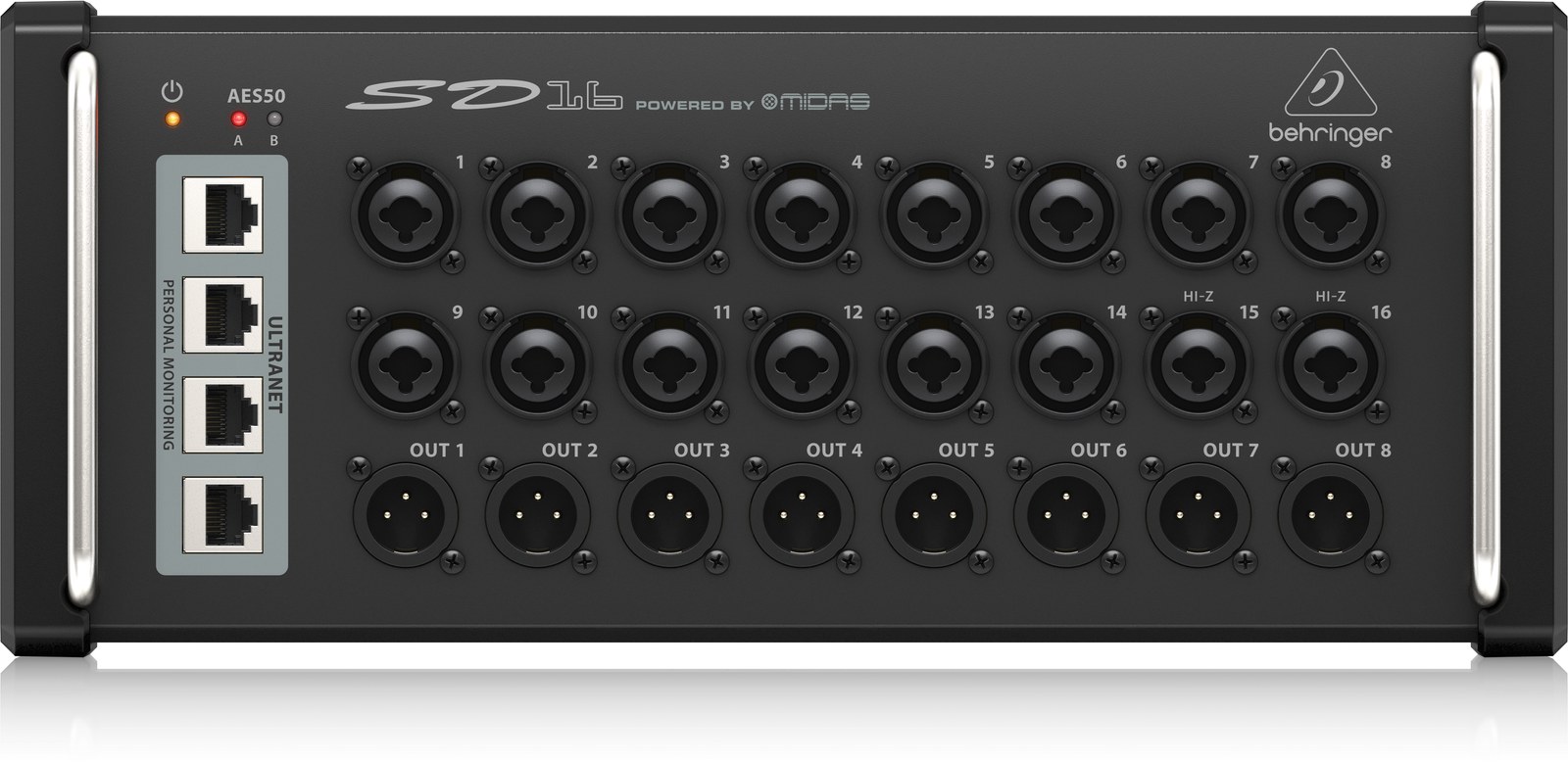
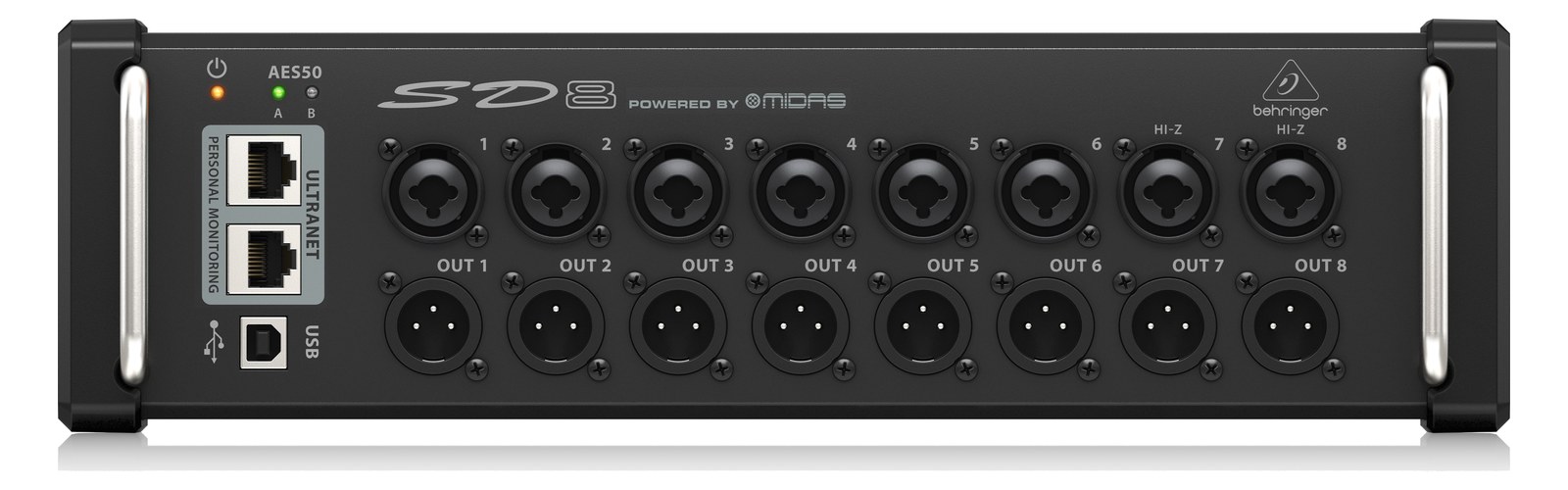
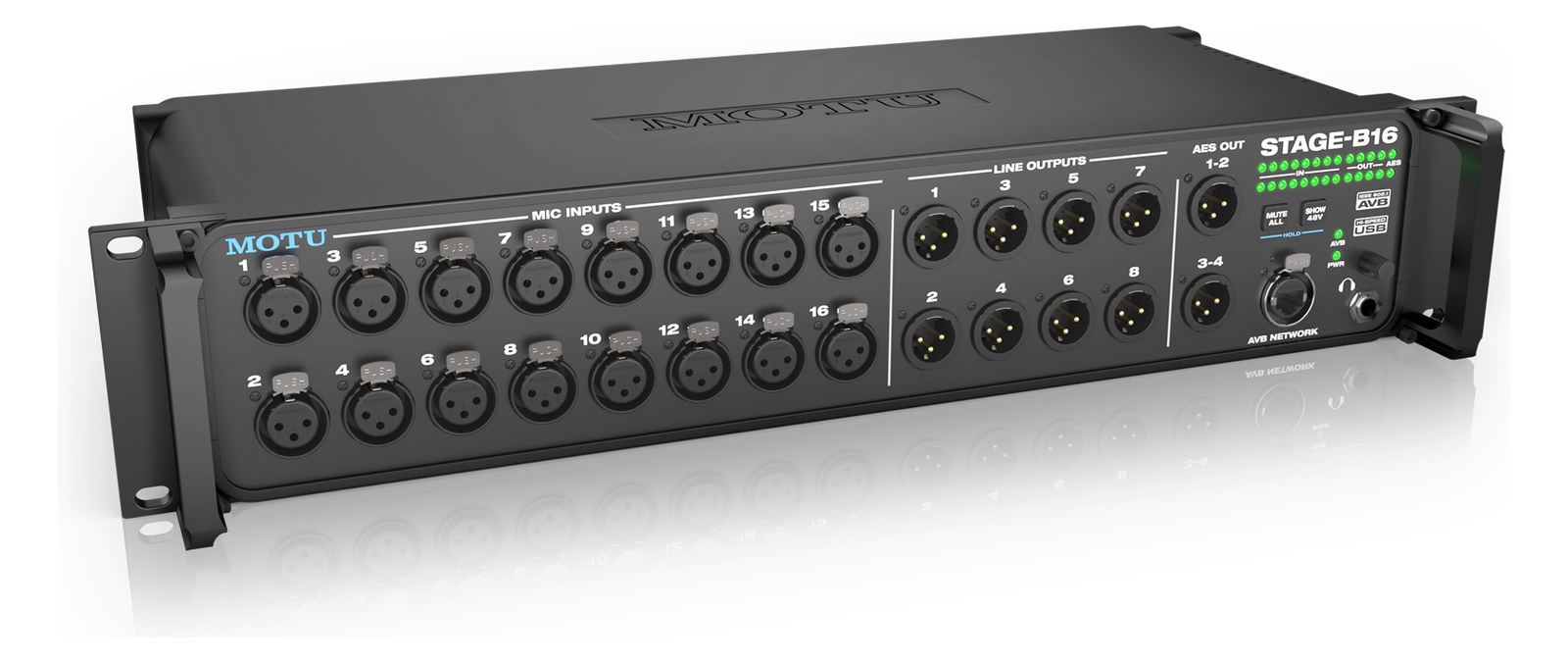
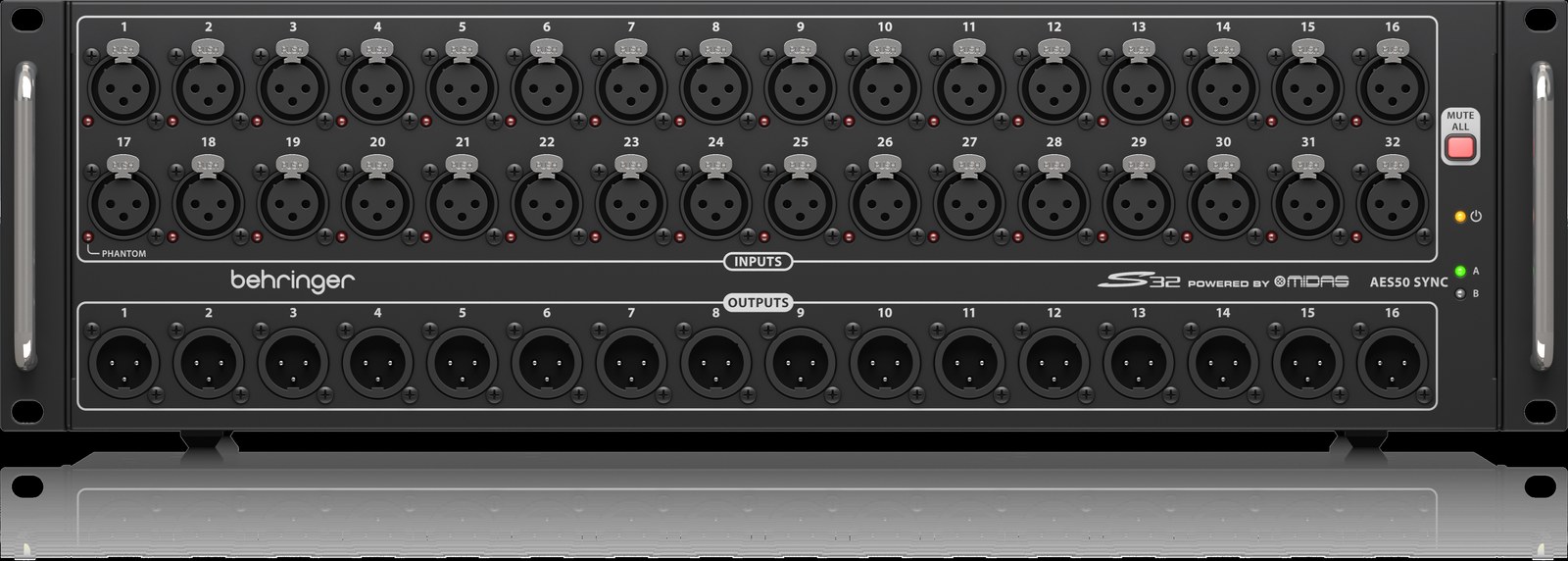
Manufacturer product photography — the drawn faceplate above stays true to panel layout; these show the hardware itself.

Photo: BehringerClick to zoom

About the Behringer S32

The Behringer S32 brings 32 Midas-designed preamps to the stage and carries every channel — plus 16 returns — back to the console on a single AES50 link over shielded Cat5e. Two AES50 ports for primary + redundant operation. The go-to mate for X32 Rack and Wing Rack when the rig needs full-band mic channels without a pair of 24-pair analog snakes coiled in the truck.

The S32 is a stage-side I/O box that collapses what used to be a bundle of analog multicore into a single shielded Cat5e run. Thirty-two XLR inputs with Midas-designed preamps live on the stage end, sixteen XLR outputs return monitor feeds or drive amps, and everything rides the AES50 protocol back to wherever your console sits — FOH, a monitor position, or a rack behind the drum riser. It is the natural stage companion for any X32 or Wing-family console, and it turns a potentially messy analog infrastructure problem into a cable-routing problem, which is a much easier problem to solve.

At load-in, the math is immediately friendly: one Cat5e to the console instead of a 24-pair analog snake, and you still get all 32 inputs plus 16 returns fully available. The second AES50 port labeled redundant gives you a hot-spare path — patch both, and a single cable failure mid-show does not end your night. Power draw sits at 40 watts nominal and peaks at 55, so it won't stress a standard outlet or a modest power conditioner on a monitor rack. Six rack units is substantial — plan for that space on a rolling stage rack, because this box wants to be accessible for quick mic-swap troubleshooting, not buried under a road case lid.
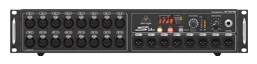
If your console speaks AES50 and you are running more than a handful of channels, the S32 makes straightforward sense at its price point. Where it gets complicated is interoperability: AES50 is a Klark Teknik / Midas ecosystem protocol, so if your console is from a different manufacturer or uses DANTE or MADI as its primary network audio format, this box does not translate for you. For smaller club rigs with under sixteen inputs, the I/O count here is more than you need and the six rack units becomes hard to justify. But for a full-band touring or festival monitor rig built around X32 or Wing hardware, it is a practical and proven workhorse.

In the rack

  • Patch both AES50 ports — A to your primary console connection, B as a pre-run spare to the same console. Label the spare cable clearly at both ends and tape it out of the path so it does not get kicked loose during the set.
  • Place the S32 at the bottom of a rolling stage rack with the XLR inputs facing the audience side. At load-in, every input is accessible without reaching over gear, and the Cat5e exits cleanly upstage toward the console.
  • Use the 16 analog outputs strategically: hardwire your most critical monitor sends — lead vocal wedge, drum fill — directly to amps rather than routing them through a separate analog stage box. You have the outputs already; use them.
  • When troubleshooting a dead input, the S32 has no front-panel gain control you can bump by hand — all preamp control is at the console. Make sure your RF tech or stage hand knows that checking a suspect channel means someone at the desk needs to be on comms, not fiddling with the box itself.

32-input / 16-output stage box with Midas preamps. Dual AES50 at 48 channels each.

I/O Ports (51)

PortConnectorDirectionSignalChannels
Stage In 1XLR FEMALEinputanalog audio
Stage In 2XLR FEMALEinputanalog audio
Stage In 3XLR FEMALEinputanalog audio
Stage In 4XLR FEMALEinputanalog audio
Stage In 5XLR FEMALEinputanalog audio
Stage In 6XLR FEMALEinputanalog audio
Stage In 7XLR FEMALEinputanalog audio
Stage In 8XLR FEMALEinputanalog audio
Stage In 9XLR FEMALEinputanalog audio
Stage In 10XLR FEMALEinputanalog audio
Stage In 11XLR FEMALEinputanalog audio
Stage In 12XLR FEMALEinputanalog audio
Stage In 13XLR FEMALEinputanalog audio
Stage In 14XLR FEMALEinputanalog audio
Stage In 15XLR FEMALEinputanalog audio
Stage In 16XLR FEMALEinputanalog audio
Stage In 17XLR FEMALEinputanalog audio
Stage In 18XLR FEMALEinputanalog audio
Stage In 19XLR FEMALEinputanalog audio
Stage In 20XLR FEMALEinputanalog audio
Stage In 21XLR FEMALEinputanalog audio
Stage In 22XLR FEMALEinputanalog audio
Stage In 23XLR FEMALEinputanalog audio
Stage In 24XLR FEMALEinputanalog audio
Stage In 25XLR FEMALEinputanalog audio
Stage In 26XLR FEMALEinputanalog audio
Stage In 27XLR FEMALEinputanalog audio
Stage In 28XLR FEMALEinputanalog audio
Stage In 29XLR FEMALEinputanalog audio
Stage In 30XLR FEMALEinputanalog audio
Stage In 31XLR FEMALEinputanalog audio
Stage In 32XLR FEMALEinputanalog audio
Stage Out 1XLR MALEoutputanalog audio
Stage Out 2XLR MALEoutputanalog audio
Stage Out 3XLR MALEoutputanalog audio
Stage Out 4XLR MALEoutputanalog audio
Stage Out 5XLR MALEoutputanalog audio
Stage Out 6XLR MALEoutputanalog audio
Stage Out 7XLR MALEoutputanalog audio
Stage Out 8XLR MALEoutputanalog audio
Stage Out 9XLR MALEoutputanalog audio
Stage Out 10XLR MALEoutputanalog audio
Stage Out 11XLR MALEoutputanalog audio
Stage Out 12XLR MALEoutputanalog audio
Stage Out 13XLR MALEoutputanalog audio
Stage Out 14XLR MALEoutputanalog audio
Stage Out 15XLR MALEoutputanalog audio
Stage Out 16XLR MALEoutputanalog audio
AES50 AETHERCONbidirectionaldigital audio48
AES50 B (redundant)ETHERCONbidirectionaldigital audio48
Power
  • Power (IEC) (IEC C14)

Deciding between two?

Rack space, watts, weight and every connector, side by side.

Related gear

Related articles

Guides from our library that cover planning around stage box gear.