
Stage Box

MOTU Stage-B16 Stagebox

MOTU·Model Stage-B16·motu-stage-b16

Discontinued MOTU AVB-era interface gone from major retail 2026-07 — superseded by the 2024+ line (828/16A TB4/848). Kept for owners; used-market staple.

Photos

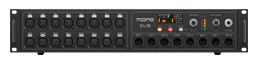
Manufacturer product photography — the drawn faceplate above stays true to panel layout; these show the hardware itself.

Photo: MOTUClick to zoom

About the MOTU Stage-B16

The MOTU Stage-B16 is built for the road with a rugged 1U chassis, locking combo jacks, and front-panel headphone monitoring. It offers 16 mic/line inputs and 12 analog outputs with onboard DSP mixing and effects, plus AVB/TSN networking and USB connectivity. The dedicated headphone output with independent mix is invaluable for quick monitor checks, and the robust build quality handles the rigors of touring. A strong choice for the front end of a playback or IEM rig.

The MOTU Stage-B16 is a network-connected stagebox that lives at the analog edge of your rig — the point where microphones, DI boxes, and playback sources enter the digital domain and where monitor feeds return to the stage as analog signals. Its sixteen inputs and twelve outputs, combined with onboard DSP and dual AVB ports, make it a serious front-end for an IEM rack or a compact playback system. The headphone output on the front panel is a genuine working tool: you can sanity-check a mix or verify signal flow without pulling out a laptop or walking to FOH.

At load-in the numbers matter. Eight of the sixteen inputs are XLR combo jacks suited for microphones or line-level sources; the remaining eight are quarter-inch TRS, which works well for keyboard submixes, playback outputs, or anything already at line level. Two of the twelve outputs are XLR male — useful for the mains or a FOH send — while the rest are TRS. The two AVB Ethernet ports let you daisy-chain or connect to a network switch without losing a port, which keeps cabling tidy when the Stage-B16 is talking to a MOTU interface or another AVB device across the stage. At 35 watts nominal draw in a 2U chassis weighing 3.2 kg, it is light enough that the rack weight budget stays reasonable.
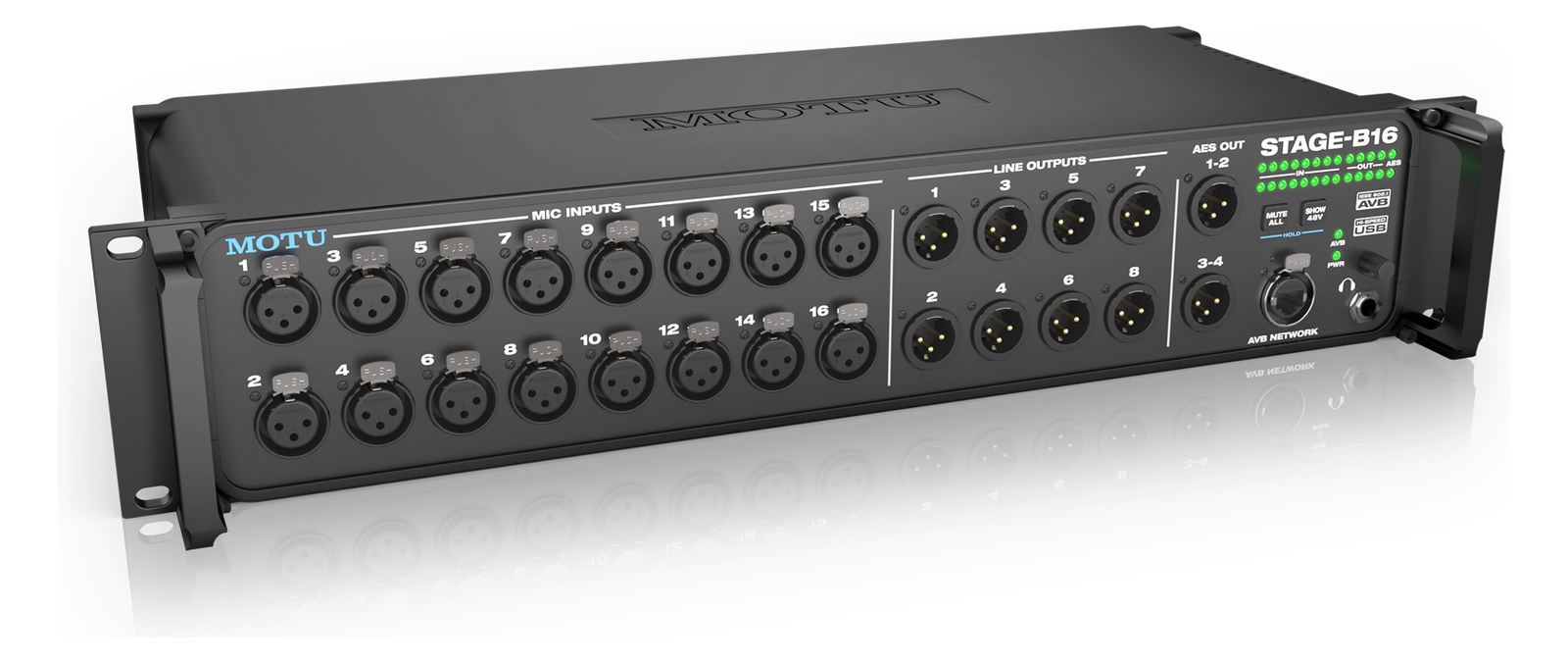
This unit belongs in a rig where AVB is already the transport or where you are building a MOTU-native system from scratch. If your console or interface speaks Dante or MADI, you will need a protocol bridge and that erases much of the value here. Engineers running hybrid rigs with a mix of analog and network I/O will appreciate the flexible input pairing, but anyone expecting straightforward AES67 interop should verify compatibility before committing. The $1,695 price puts it in direct conversation with other 16-input stageboxes in the AVB space; where it earns its keep is the onboard DSP and that front-panel headphone amp, which together reduce your dependency on a laptop for basic monitoring tasks on busy show days.

In the rack

  • Use the dual AVB ports in a daisy-chain to a second MOTU device rather than running separate home-runs — it keeps your Cat6 count low and the network topology simple to troubleshoot mid-show.
  • Assign the two XLR outputs to your main IEM transmitter feeds and reserve the TRS outputs for auxiliary or utility sends; the XLR locks are more reliable on cables that get yanked during changeovers.
  • Plug a set of in-ears directly into the front-panel headphone output and assign it an independent mix for line-check — you can verify every input and output without disturbing the running mix going to the transmitters.
  • Budget the full 45-watt maximum draw figure when calculating your rack's power needs, not the 35-watt nominal — a fully loaded analog I/O section under phantom power load will push closer to that ceiling.

16x12 stagebox with DSP, AVB/USB, and rugged design for live use.

I/O Ports (35)

PortConnectorDirectionSignalChannels
Mic/Line In 1 (XLR)XLR FEMALEinputanalog audio
Mic/Line In 2 (XLR)XLR FEMALEinputanalog audio
Mic/Line In 3 (XLR)XLR FEMALEinputanalog audio
Mic/Line In 4 (XLR)XLR FEMALEinputanalog audio
Mic/Line In 5 (XLR)XLR FEMALEinputanalog audio
Mic/Line In 6 (XLR)XLR FEMALEinputanalog audio
Mic/Line In 7 (XLR)XLR FEMALEinputanalog audio
Mic/Line In 8 (XLR)XLR FEMALEinputanalog audio
Line In 9 (TRS)TRS QUARTERinputanalog audio
Line In 10 (TRS)TRS QUARTERinputanalog audio
Line In 11 (TRS)TRS QUARTERinputanalog audio
Line In 12 (TRS)TRS QUARTERinputanalog audio
Line In 13 (TRS)TRS QUARTERinputanalog audio
Line In 14 (TRS)TRS QUARTERinputanalog audio
Line In 15 (TRS)TRS QUARTERinputanalog audio
Line In 16 (TRS)TRS QUARTERinputanalog audio
Analog Out 1 (XLR)XLR MALEoutputanalog audio
Analog Out 2 (XLR)XLR MALEoutputanalog audio
Analog Out 3 (TRS)TRS QUARTERoutputanalog audio
Analog Out 4 (TRS)TRS QUARTERoutputanalog audio
Analog Out 5 (TRS)TRS QUARTERoutputanalog audio
Analog Out 6 (TRS)TRS QUARTERoutputanalog audio
Analog Out 7 (TRS)TRS QUARTERoutputanalog audio
Analog Out 8 (TRS)TRS QUARTERoutputanalog audio
Analog Out 9 (TRS)TRS QUARTERoutputanalog audio
Analog Out 10 (TRS)TRS QUARTERoutputanalog audio
Analog Out 11 (TRS)TRS QUARTERoutputanalog audio
Analog Out 12 (TRS)TRS QUARTERoutputanalog audio
Headphone Out (TRS)TRS QUARTERoutputanalog audio
AVB Network 1 (RJ45)RJ45bidirectionaldigital audio
AVB Network 2 (RJ45)RJ45bidirectionaldigital audio
USB-CUSB Cbidirectionaldata
MIDI InMIDI DIN5inputdata
MIDI OutMIDI DIN5outputdata
Power
  • Power (IEC) (IEC C14)

Deciding between two?

Rack space, watts, weight and every connector, side by side.

Related gear

Related articles

Guides from our library that cover planning around stage box gear.