
Allen & Heath DX168 Stage Box
Allen & Heath·Model DX168·allen-heath-dx168
Photos
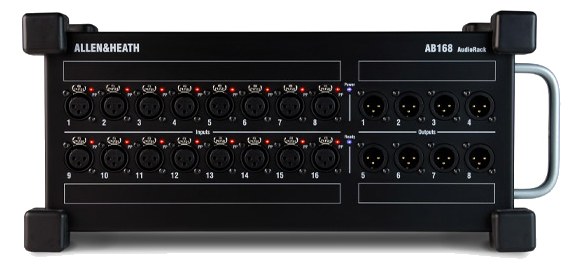
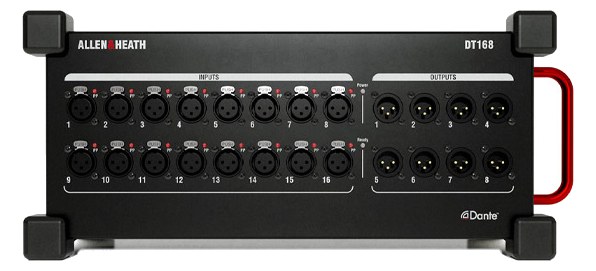
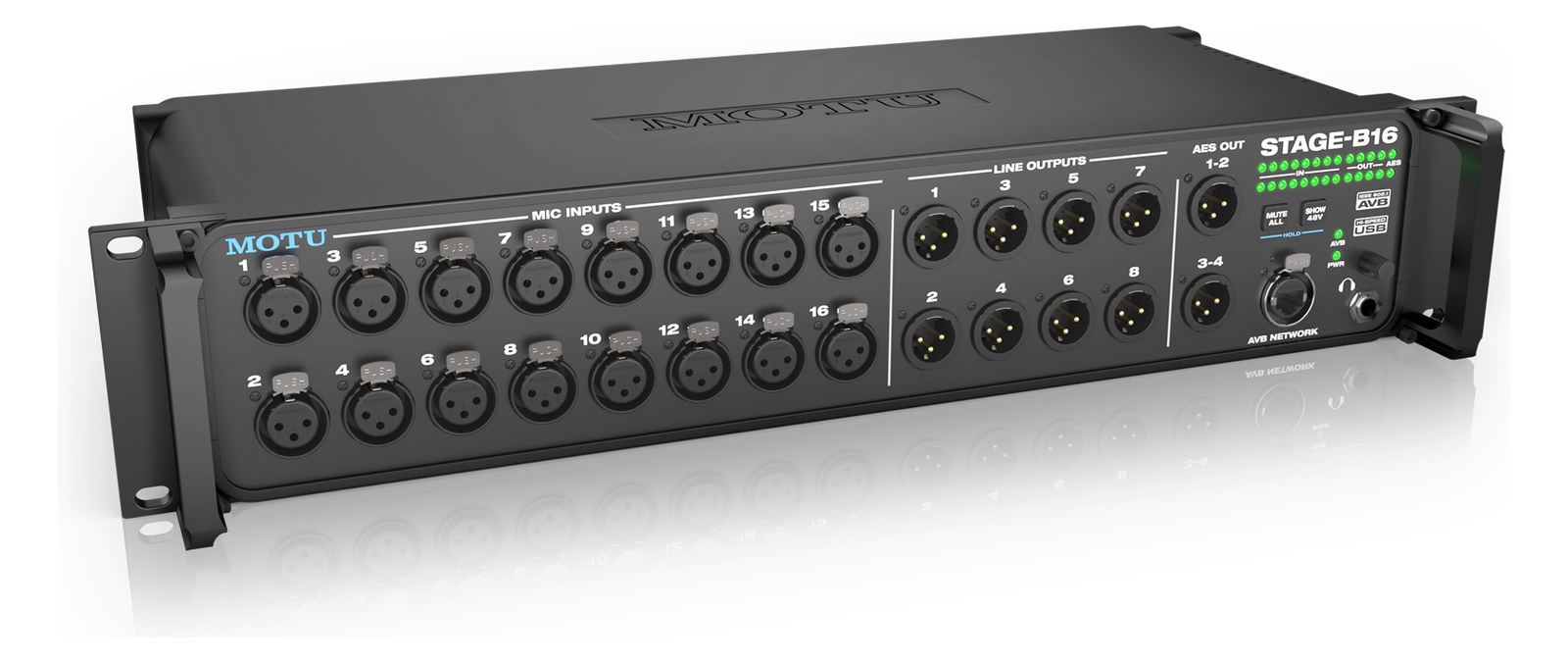
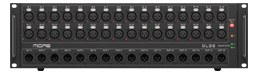
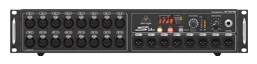
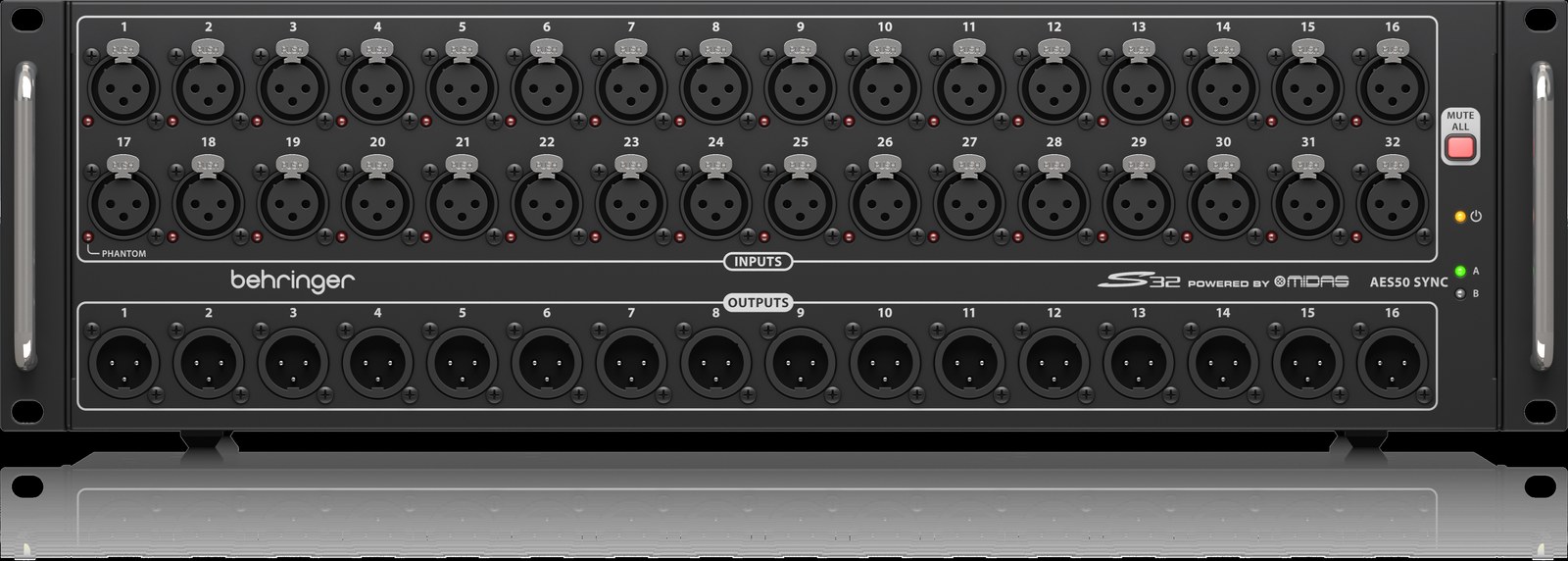
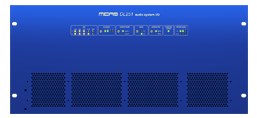
Manufacturer product photography — the drawn faceplate above stays true to panel layout; these show the hardware itself.
About the Allen & Heath DX168
The Allen & Heath DX168 delivers 16 boutique A&H preampsThe gain stage that lifts a mic’s tiny signal up to line level — the first thing a signal hits, and a big part of how a console sounds. at the stage over a single SLink shielded Cat5eStandard network cable grades. In an audio rig one cheap Cat5e run can replace a 48-channel copper snake; AES50 wants it shielded. link — the A&H equivalent of AES50The Behringer/Midas console-to-stage-box link: 48 channels each way over one shielded Cat5e cable, with near-zero latency.. Pairs with SQ, Avantis, and dLive consoles. Two SLink ports allow daisy-chaining a second DX168 or DX32 off one console port for 32+ channel rigs without a second network cable run to FOHFront Of House — the main mix the audience hears, and the console position out in the room where it gets mixed..
The DX168 is Allen & Heath's mid-size stage boxThe I/O endpoint on stage: mics plug in there and one digital line (AES50, Dante) carries everything to the console. The snake, digitized. — sixteen analog inputs and eight analog outputs housed in a 3UThe standard slice of rack height: 1U = 1.75″. A 3U box takes three slices; half-rack gear pairs two units side by side in one. rackmount chassis, all transported back to the console over a single SLink connection on shielded Cat5eStandard network cable grades. In an audio rig one cheap Cat5e run can replace a 48-channel copper snake; AES50 wants it shielded.. SLink is A&H's proprietary network, functionally their answer to AES50The Behringer/Midas console-to-stage-box link: 48 channels each way over one shielded Cat5e cable, with near-zero latency., and this box exists to solve the oldest live-audio problem: getting a lot of microphone signals off the stage and to your console without running a snakeA multicore cable bundling many channels into one stage-to-console run. A sub-snake collects one corner of the stage into a drop box. thick enough to trip a drummer. It's the natural stage-end complement to any SQ, Avantis, or dLive system, and for those ecosystems it's the cleanest, most integrated answer available.
At load-in, the single-cable discipline matters more than it sounds. One Cat5eStandard network cable grades. In an audio rig one cheap Cat5e run can replace a 48-channel copper snake; AES50 wants it shielded. run — shielded, locking EtherConAn Ethernet plug inside a rugged XLR-style locking shell — tour-grade network connections that can’t be yanked loose. on both ends — carries everything in both directions, which means your stage pocket needs one cable path to the console, not a bundle. The two SLink ports let you daisy-chain a second DX168 or DX32 off the same console port, so a 32-input rig doesn't require a second network run back to FOHFront Of House — the main mix the audience hears, and the console position out in the room where it gets mixed.. At 30 watts nominal draw with a 45-watt ceiling, it's easy on your stage rack's power budget. The 330 mm depth is worth checking against shallow rack lids, but 5.5 kg means it won't fight you during a fast hang.
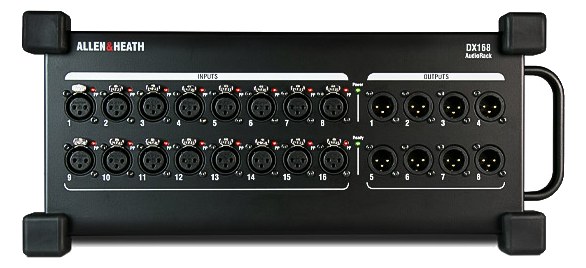
If you're already on A&H — SQ for club work, Avantis for mid-size touring, dLive for the big rigs — the DX168 belongs in your system without much debate. The preampsThe gain stage that lifts a mic’s tiny signal up to line level — the first thing a signal hits, and a big part of how a console sounds. are the same platform you chose the console for, gainHow much the preamp amplifies the incoming signal. Too low and you’re hunting through hiss; too high and peaks clip. is controlled from the surface or tablet, and the ecosystem just works. If you're on a different console family, it doesn't belong here at all; SLink is proprietary and there's no workaround. For straight A&H users whose input count exceeds 16, the daisy-chain option buys you time before you need to step up to a DX32, and that alone can justify the decision.
In the rack
- Use shielded Cat5eStandard network cable grades. In an audio rig one cheap Cat5e run can replace a 48-channel copper snake; AES50 wants it shielded. or Cat6 with locking EtherConAn Ethernet plug inside a rugged XLR-style locking shell — tour-grade network connections that can’t be yanked loose. connectors on both ends — A&H specifies shielded cable for SLink, and an unshielded run on a noisy stage will remind you of that spec mid-show.
- Plug the second SLink port into a downstream DX168 or DX32 rather than leaving it empty; even on a current single-box rig, having the daisy-chain path tested and labeled means a second box can drop in during a crisis without any recabling at the console end.
- Map your eight outputs before doors — monitor sends, IEMIn-Ear Monitor — earpieces that replace floor wedges, feeding each player their own mix. The reason this whole rack exists. feeds, or a side-fill mix — and label the rear panel with a strip of gaff and a marker so a substitute engineer can follow the patch without your help.
- Budget the DX168 into a dedicated stage rack rather than sharing a case with amp gear; the analog I/O panel faces the back, and you want clear, organized cable dress rather than fighting amp power connectors for space.
16-in / 8-out SLink stage boxThe I/O endpoint on stage: mics plug in there and one digital line (AES50, Dante) carries everything to the console. The snake, digitized.. Pairs with SQ, Avantis, and dLive consoles.
I/O Ports (27)
| Port | Connector | Direction | Signal | Channels |
|---|---|---|---|---|
| Stage In 1 | XLR FEMALE | input | analog audio | — |
| Stage In 2 | XLR FEMALE | input | analog audio | — |
| Stage In 3 | XLR FEMALE | input | analog audio | — |
| Stage In 4 | XLR FEMALE | input | analog audio | — |
| Stage In 5 | XLR FEMALE | input | analog audio | — |
| Stage In 6 | XLR FEMALE | input | analog audio | — |
| Stage In 7 | XLR FEMALE | input | analog audio | — |
| Stage In 8 | XLR FEMALE | input | analog audio | — |
| Stage In 9 | XLR FEMALE | input | analog audio | — |
| Stage In 10 | XLR FEMALE | input | analog audio | — |
| Stage In 11 | XLR FEMALE | input | analog audio | — |
| Stage In 12 | XLR FEMALE | input | analog audio | — |
| Stage In 13 | XLR FEMALE | input | analog audio | — |
| Stage In 14 | XLR FEMALE | input | analog audio | — |
| Stage In 15 | XLR FEMALE | input | analog audio | — |
| Stage In 16 | XLR FEMALE | input | analog audio | — |
| Stage Out 1 | XLR MALE | output | analog audio | — |
| Stage Out 2 | XLR MALE | output | analog audio | — |
| Stage Out 3 | XLR MALE | output | analog audio | — |
| Stage Out 4 | XLR MALE | output | analog audio | — |
| Stage Out 5 | XLR MALE | output | analog audio | — |
| Stage Out 6 | XLR MALE | output | analog audio | — |
| Stage Out 7 | XLR MALE | output | analog audio | — |
| Stage Out 8 | XLR MALE | output | analog audio | — |
| SLink A | ETHERCON | bidirectional | digital audio | 128 |
| SLink B (thru) | ETHERCON | bidirectional | digital audio | 128 |
- Power (IEC) (IEC C14)
Deciding between two?
Rack space, watts, weight and every connector, side by side.
Related gear


Related articles
Guides from our library that cover planning around stage box gear.
A walking tour of the signal path from microphone to in-ear monitor, with what every box in the rack actually does to the audio along the way.
A plain-English guide to writing the input list, stage plot, and patch sheet that house engineers want — without the jargon, with examples, and with a free way to generate one.
Step-by-step: linking aux buses into stereo pairs, pre-fader vs post-fader, routing buses to Ultranet vs physical XLRs vs AES50, and adding a bus-level limiter.
A practical comparison of the three audio-over-network protocols you’ll encounter in a rack rig, with guidance on when each one is the right pick.