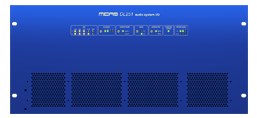

Allen & Heath DT168 Stage Box
Allen & Heath·Model DT168·allen-heath-dt168
Photos
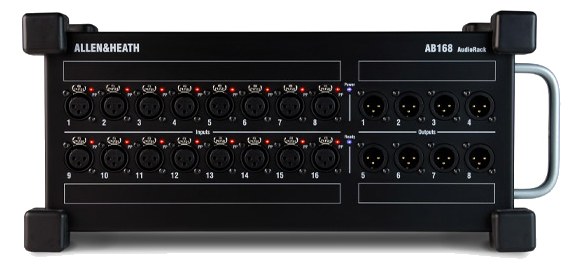
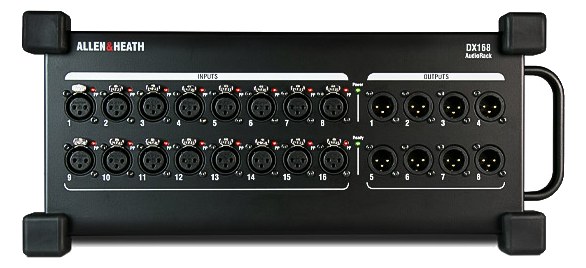
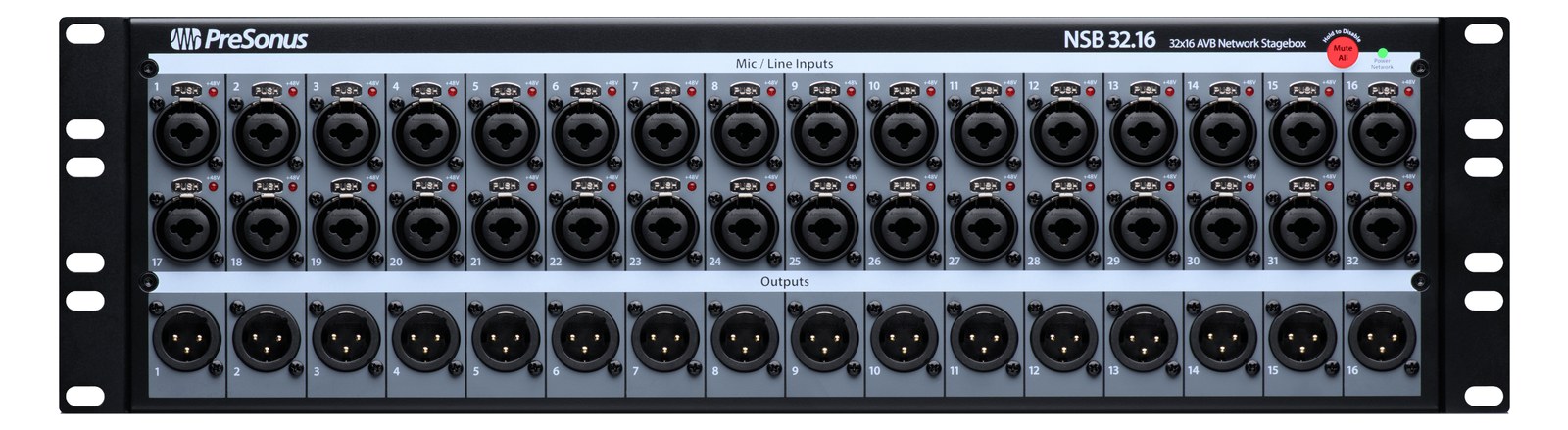
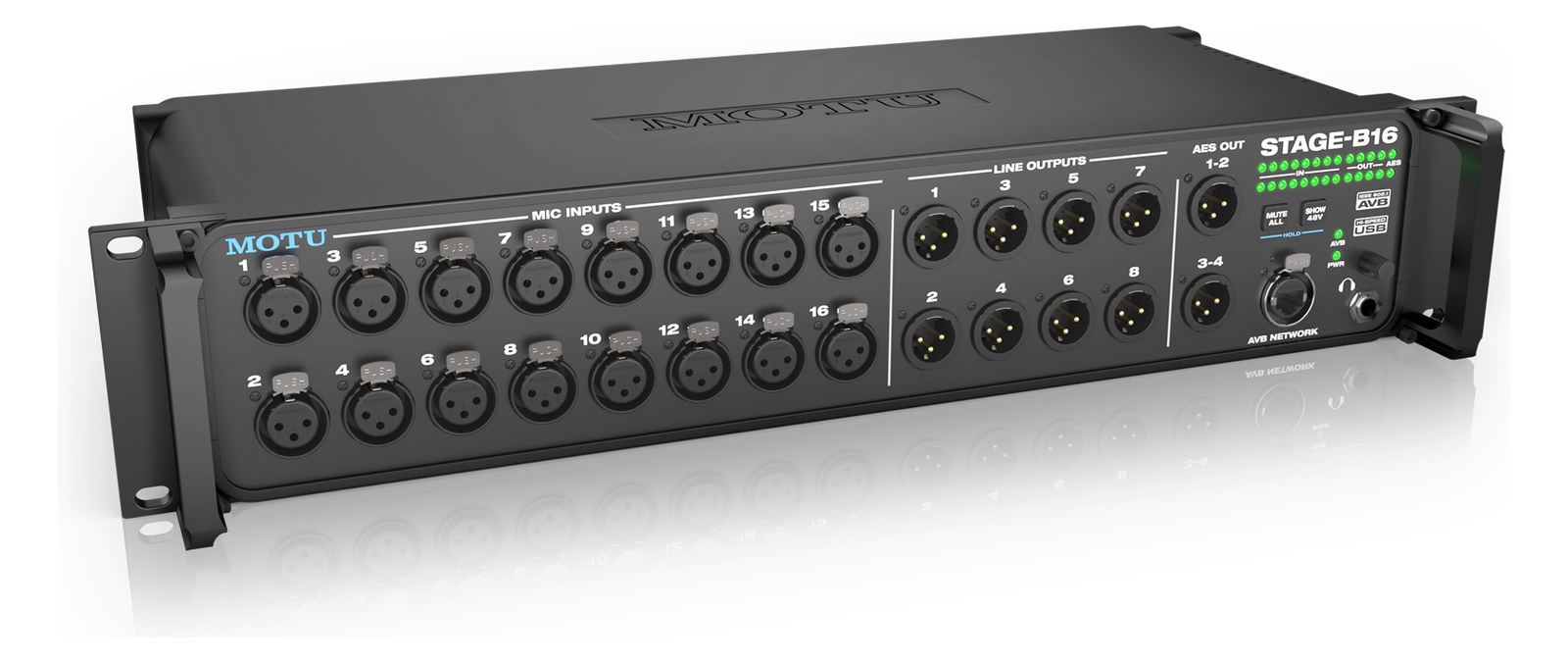
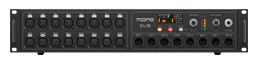
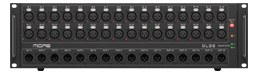
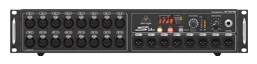
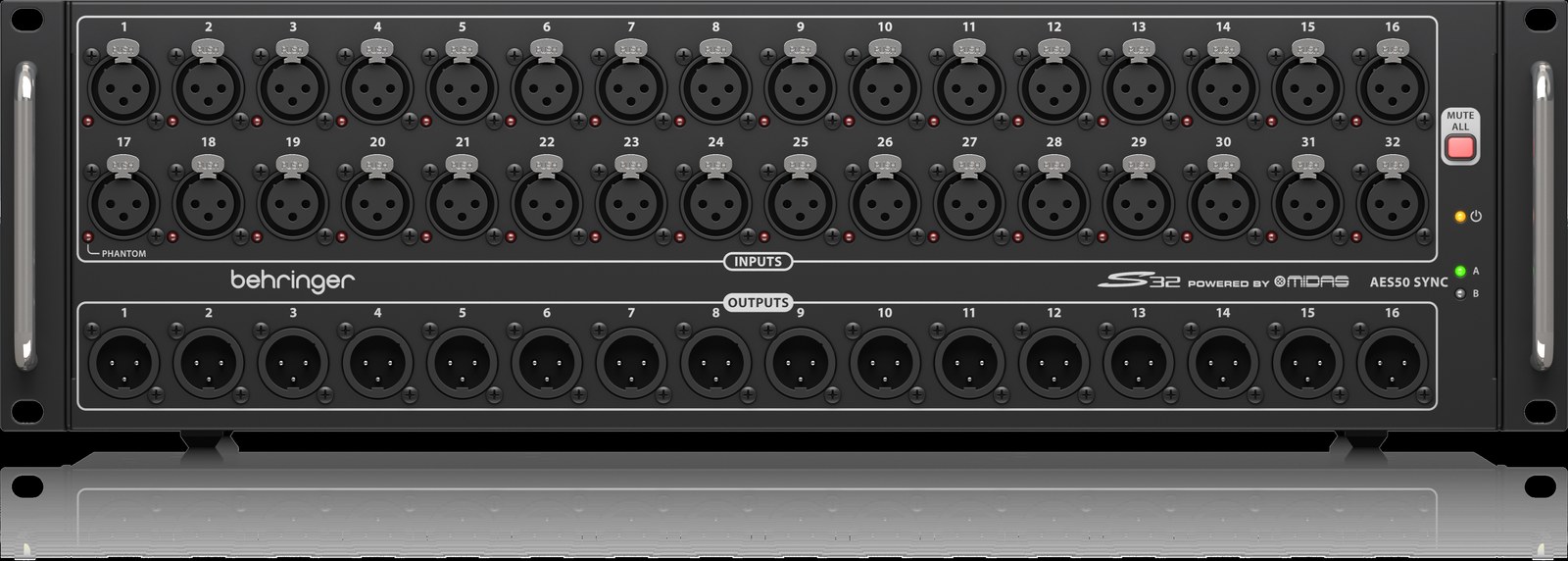
Manufacturer product photography — the drawn faceplate above stays true to panel layout; these show the hardware itself.
About the Allen & Heath DT168
The Allen & Heath DT168 is a 16-input, 8-output DanteThe most common audio-over-network standard: dozens of channels of uncompressed digital audio down one ordinary Ethernet cable between Dante boxes. stage boxThe I/O endpoint on stage: mics plug in there and one digital line (AES50, Dante) carries everything to the console. The snake, digitized. that integrates seamlessly with Avantis, dLive, and SQ consoles via a single Dante connection. Solid mic preampsThe gain stage that lifts a mic’s tiny signal up to line level — the first thing a signal hits, and a big part of how a console sounds., comprehensive metering on the front, and a 3UThe standard slice of rack height: 1U = 1.75″. A 3U box takes three slices; half-rack gear pairs two units side by side in one. rack format make it a popular choice for venues already on Dante.
The DT168 is Allen & Heath's answer to a specific but common problem: you have a DanteThe most common audio-over-network standard: dozens of channels of uncompressed digital audio down one ordinary Ethernet cable between Dante boxes. network already running to your stage, and you need a reliable, rackmountable analog front-end that speaks that language natively. Sixteen mic preampsThe gain stage that lifts a mic’s tiny signal up to line level — the first thing a signal hits, and a big part of how a console sounds. go in, eight line outputs come back out, and all of it moves over a single EtherConAn Ethernet plug inside a rugged XLR-style locking shell — tour-grade network connections that can’t be yanked loose. run via Dante. It sits cleanly inside the SQ, Avantis, and dLive ecosystems, where patching is handled in the console software without a separate Dante Controller session for basic routing. That tight integration is the whole pitch.
Three rack unitsThe standard slice of rack height: 1U = 1.75″. A 3U box takes three slices; half-rack gear pairs two units side by side in one. and 6.5 kg means this fits a standard stage rack without drama, and the 250 mm depth won't fight shallow touring cases. Power draw sits at 50 W nominal with a 70 W ceiling — plan for the higher number when you're speccing a PDU. The dual EtherConAn Ethernet plug inside a rugged XLR-style locking shell — tour-grade network connections that can’t be yanked loose. ports give you primary and secondary DanteThe most common audio-over-network standard: dozens of channels of uncompressed digital audio down one ordinary Ethernet cable between Dante boxes. paths, which matters the moment a cable gets kicked at a festival; redundancyA second copy of anything critical — supply, computer, network path — already running so one failure can’t stop the show. on a network stage boxThe I/O endpoint on stage: mics plug in there and one digital line (AES50, Dante) carries everything to the console. The snake, digitized. is not a luxury. Front-panel metering on all inputs means you can confirm signal at the box without walking back to the console, which saves real time during a fast line-checkThe quick pre-show pass confirming every input reaches the console, one line at a time. Not a soundcheck — just does it work..
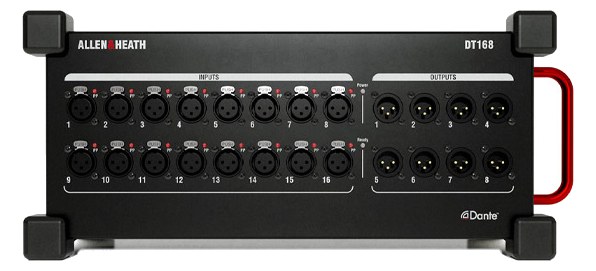
If your console is already an SQ, Avantis, or dLive, this is a logical and well-supported choice — the ecosystem integration removes a layer of configuration friction that third-party DanteThe most common audio-over-network standard: dozens of channels of uncompressed digital audio down one ordinary Ethernet cable between Dante boxes. boxes introduce. If you're running a different console manufacturer's ecosystem, or if your network infrastructure isn't already Dante, the value proposition weakens considerably and you should look at alternatives that match your actual network topology. This is also not the right tool if you need more than eight discrete analog returns to stage; for larger output counts you'll be stacking units or looking at a bigger expander.
In the rack
- Always budget for the 70 W max draw when assigning a PDU circuit — a conditioner or distroOne pair of antennas feeding many receivers through an amplified splitter — replaces the forest of whips and keeps RF levels consistent. that's tight on headroomThe margin between your normal level and where things clip — headroom is what absorbs the snare hit you didn’t see coming. will cause problems if the box spikes during startup.
- Use the secondary DanteThe most common audio-over-network standard: dozens of channels of uncompressed digital audio down one ordinary Ethernet cable between Dante boxes. port for a genuine redundantA second copy of anything critical — supply, computer, network path — already running so one failure can’t stop the show. network path on a physically separate cable run, not just a daisy-chain to the next device; a single tripped cable shouldn't take your whole stage input.
- Label the eight line outputs on the back panel before load-in — in a dark stage rack, unlabeled male XLRsThe standard 3-pin locking connector for mics and balanced line signals — pin 1 is the shield, pins 2 and 3 carry the balanced pair. read identically and a wrong pull during a changeover costs you more time than the label took.
- If you're running this with an SQ console on a 96 kHz session, confirm your DanteThe most common audio-over-network standard: dozens of channels of uncompressed digital audio down one ordinary Ethernet cable between Dante boxes. sample rateHow many times per second audio is measured when digitized — 48 kHz is the live standard; 96 kHz measures twice as often. matches before the gig; a mismatch is silent until you wonder why inputs are dead.
16-in / 8-out DanteThe most common audio-over-network standard: dozens of channels of uncompressed digital audio down one ordinary Ethernet cable between Dante boxes. stage boxThe I/O endpoint on stage: mics plug in there and one digital line (AES50, Dante) carries everything to the console. The snake, digitized. for SQ / dLive ecosystems.
I/O Ports (27)
| Port | Connector | Direction | Signal | Channels |
|---|---|---|---|---|
| Mic In 1 | XLR FEMALE | input | analog audio | — |
| Mic In 2 | XLR FEMALE | input | analog audio | — |
| Mic In 3 | XLR FEMALE | input | analog audio | — |
| Mic In 4 | XLR FEMALE | input | analog audio | — |
| Mic In 5 | XLR FEMALE | input | analog audio | — |
| Mic In 6 | XLR FEMALE | input | analog audio | — |
| Mic In 7 | XLR FEMALE | input | analog audio | — |
| Mic In 8 | XLR FEMALE | input | analog audio | — |
| Mic In 9 | XLR FEMALE | input | analog audio | — |
| Mic In 10 | XLR FEMALE | input | analog audio | — |
| Mic In 11 | XLR FEMALE | input | analog audio | — |
| Mic In 12 | XLR FEMALE | input | analog audio | — |
| Mic In 13 | XLR FEMALE | input | analog audio | — |
| Mic In 14 | XLR FEMALE | input | analog audio | — |
| Mic In 15 | XLR FEMALE | input | analog audio | — |
| Mic In 16 | XLR FEMALE | input | analog audio | — |
| Line Out 1 | XLR MALE | output | analog audio | — |
| Line Out 2 | XLR MALE | output | analog audio | — |
| Line Out 3 | XLR MALE | output | analog audio | — |
| Line Out 4 | XLR MALE | output | analog audio | — |
| Line Out 5 | XLR MALE | output | analog audio | — |
| Line Out 6 | XLR MALE | output | analog audio | — |
| Line Out 7 | XLR MALE | output | analog audio | — |
| Line Out 8 | XLR MALE | output | analog audio | — |
| Dante Primary | ETHERCON | bidirectional | digital audio | 16 |
| Dante Secondary | ETHERCON | bidirectional | digital audio | 16 |
- Power (IEC) (IEC C14)
Deciding between two?
Rack space, watts, weight and every connector, side by side.
Related gear


Related articles
Guides from our library that cover planning around stage box gear.
A walking tour of the signal path from microphone to in-ear monitor, with what every box in the rack actually does to the audio along the way.
A plain-English guide to writing the input list, stage plot, and patch sheet that house engineers want — without the jargon, with examples, and with a free way to generate one.
Step-by-step: linking aux buses into stereo pairs, pre-fader vs post-fader, routing buses to Ultranet vs physical XLRs vs AES50, and adding a bus-level limiter.
A practical comparison of the three audio-over-network protocols you’ll encounter in a rack rig, with guidance on when each one is the right pick.