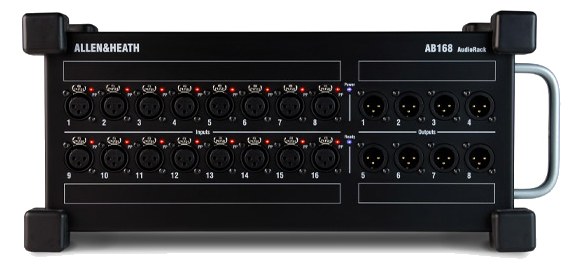
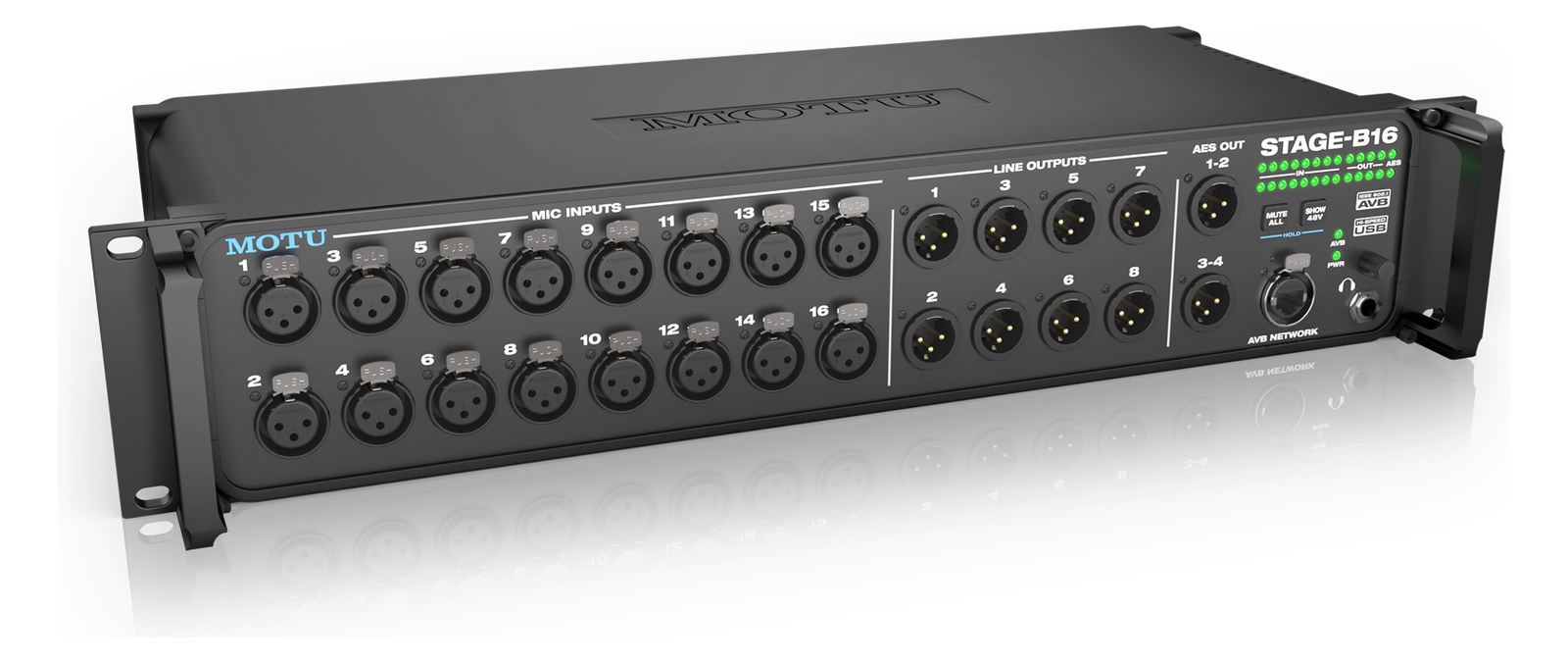
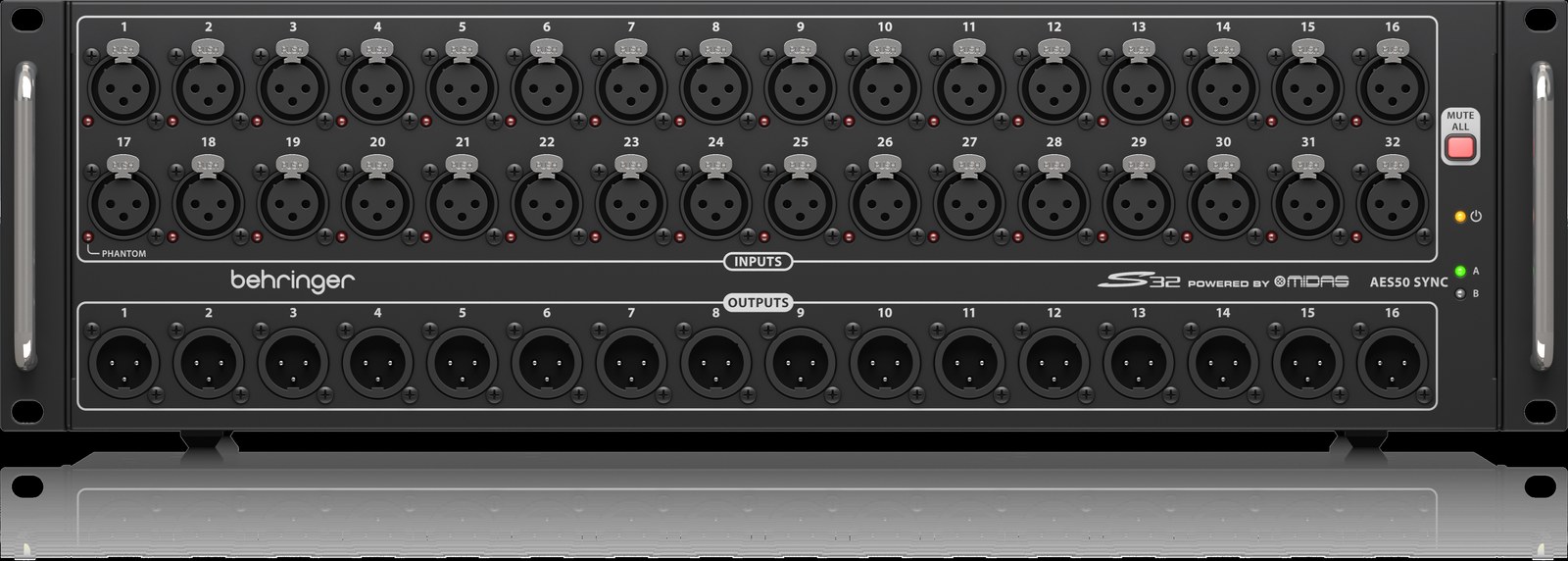
The Allen & Heath AB168 puts sixteen preamps and eight outs on a dSNAKE Cat5 run for Qu, SQ, and Avantis systems. Rugged enough to sit on stage without a rack, rack-eared for permanent installs, and the affordable expansion path A&H rigs reach for first. Chains through an expander port for higher counts.
~$1,499Use retailer rows for current price and stock
01 · What it does—and what that changes in your rig.
Product overview
Start with the payoff, then work through how it functions, where it fits, and the details that change a real build.
The payoff
Stage Box decisions, organized around the whole rig.
The AB168 is Allen & Heath's primary stage-end solution for their dSNAKE ecosystem — the box that sits at the lip of the stage and turns a single Cat5Standard network cable grades. In an audio rig one cheap Cat5e run can replace a 48-channel copper snake; AES50 wants it shielded. run back to your Qu, SQ, or Avantis console into 16 mic inputs and 8 analog outputs. That dSNAKE port carries up to 24 channels bidirectionally, so you're not leaving headroomThe margin between your normal level and where things clip — headroom is what absorbs the snare hit you didn’t see coming. on the table. The Expander port lets you daisy-chain a second AB168 or compatible expander when the input count grows, which makes it a genuinely scalable platform rather than a dead end. At 4 kg and 3UThe standard slice of rack height: 1U = 1.75″. A 3U box takes three slices; half-rack gear pairs two units side by side in one. with rack earsThe flanges that bolt gear to the rack rails. Desktop boxes without them need a shelf, tray, or drawer to live in the case. included, it lives happily either bolted into a portable stage rack or just sitting on the deck in a venue corner.
Documented outputs
1One destination connection
Documented inputs
2Based on documented inputs
Rack space
3UBuilder checks available rail space
Photo: Allen & Heath3U · 30W
Function
How it works in the path
Thirty watts nominal, 45 maximum — this box will run comfortably off a single IECThe standard three-prong appliance power inlet on rack gear — the kettle lead. C13/C14 in spec-sheet speak. feed from whatever power strip or conditioner anchors your stage rack, with no surprises at the busiest moments of the show. The 16 XLRThe standard 3-pin locking connector for mics and balanced line signals — pin 1 is the shield, pins 2 and 3 carry the balanced pair. female inputs cover a typical band or IEMIn-Ear Monitor — earpieces that replace floor wedges, feeding each player their own mix. The reason this whole rack exists. package without patching around anything, and the 8 XLR male outputs give you enough analog returns for a full complement of wedgeA floor monitor speaker angled up at the performer — the thing IEMs replace, and the thing you fall back on when they die. mixes or in-ear feeds without reaching for a secondary D/A box. One Cat5Standard network cable grades. In an audio rig one cheap Cat5e run can replace a 48-channel copper snake; AES50 wants it shielded. to the console means one network cable to troubleshoot, which at a festival changeover where someone always yanks something is a meaningful operational advantage.
Best fit
Where it earns its place in the rack
If your console is a Qu, SQ, or Avantis, this is the natural, lowest-friction stage boxThe I/O endpoint on stage: mics plug in there and one digital line (AES50, Dante) carries everything to the console. The snake, digitized. choice — the preampsThe gain stage that lifts a mic’s tiny signal up to line level — the first thing a signal hits, and a big part of how a console sounds. integrate cleanly, gainHow much the preamp amplifies the incoming signal. Too low and you’re hunting through hiss; too high and peaks clip. is adjustable from the surface, and phantom powerThe +48 V a console sends up the mic cable to power condenser mics and active DI boxes — invisible to gear that doesn’t need it. is per-channel from the console. If you're running a different brand of console, look elsewhere; dSNAKE is a proprietary protocol and the AB168 will not talk to a DiGiCo, Yamaha, or DanteThe most common audio-over-network standard: dozens of channels of uncompressed digital audio down one ordinary Ethernet cable between Dante boxes. network without a bridge that defeats the whole point. Also worth being honest about: if you need more than 32 inputs at stage, you'll want to look at a larger native solution like the DX168 or AB288 rather than chaining two AB168s and managing the complexity that introduces.
AB168 rear panelPhoto: Allen & Heath
In the rack
Details worth deciding before load-in.
Run a pre-tested, labeled Cat5eStandard network cable grades. In an audio rig one cheap Cat5e run can replace a 48-channel copper snake; AES50 wants it shielded. or Cat6 snakeA multicore cable bundling many channels into one stage-to-console run. A sub-snake collects one corner of the stage into a drop box. between the AB168 and your console — dSNAKE is tolerant but not magical, and a marginal cable that passes a laptop ping test can still cause audio dropoutsA brief audio gap when the radio link fails — the thing diversity, distros, and coordination all exist to prevent. under RFRadio Frequency — the wireless part of wireless. RF planning is why big rigs scan, coordinate, and combine antennas instead of hoping. or ground interference.
Use the Expander port with intent: if you're chaining a second unit, lock in your input list before load-in so you're not re-patching console channels at show time when the second box arrives late in the truck.
The 8 analog outputs are your monitor worldThe side-stage domain of the monitor engineer — console, IEM racks, and everything feeding the band’s ears instead of the audience. — map your IEMIn-Ear Monitor — earpieces that replace floor wedges, feeding each player their own mix. The reason this whole rack exists. mixes to outputs 1–6 and reserve 7–8 as a wedgeA floor monitor speaker angled up at the performer — the thing IEMs replace, and the thing you fall back on when they die. or utility pair so your output assignment stays consistent across different venues using the same show file.
Even though the AB168 is built to sit on the floor, rack it when the show has any real production value — a 3UThe standard slice of rack height: 1U = 1.75″. A 3U box takes three slices; half-rack gear pairs two units side by side in one. slot in a carpeted stage rack with a power conditionerFilters venue AC, clamps surges, and gives the rack one tidy inlet. Not a voltage regulator and not a battery — just cleaner power. underneath it protects the preampsThe gain stage that lifts a mic’s tiny signal up to line level — the first thing a signal hits, and a big part of how a console sounds. from phantom powerThe +48 V a console sends up the mic cable to power condenser mics and active DI boxes — invisible to gear that doesn’t need it. spikes when stagehands swap mics mid-show.
02 · Know the whole path before you buy.
Signal path
Learn the route as a block diagram: source, product function, transport, and destination. Select any block to see what enters, what changes, and what leaves.
Interactive block diagramAuto-looping · hover, focus, or tap to hold a stage
Port-type signalProduct functionSystem boundary
Follow one signal from source to destination
Each block answers the same three questions: what arrives, what changes here, and what leaves.
01 · Source · selected
XLR female + IEC C14
etherCON
XLR male
01 · Source
2 documented inputs
XLR female + IEC C14
Arrives as
2 documented inputs
Connector
XLR female + IEC C14
Signal
analog audio
03 · What this product asks of the rest of the system.
Compatibility
Treat connector names as the start of the check—not the answer. These are the boundaries that determine a complete working path.
Best fit · Stage Box
Use it when 3U and 250 mm of depth fit the case.
Plan the companion path
Complete the path with upstream and downstream gear that matches connector, direction, signal type, protocol, and wiring standard.
Protocol boundary
This product declares SLINK; matching plugs alone do not make other protocols compatible.
04 · Every connector, grouped by job.
I/O ports
Switch the product view and the documented port inventory updates with it—hardware and data stay side by side.
Every connector, grouped by job.
Switch panels to keep the hardware view and the documented port list in sync.
Front panelRear panel
All documented ports for Allen & Heath AB168 Stage Box
Port
Panel
Connector
Direction
Signal
Channels
Mic In 1-16
front
XLR female
input
analog audio
16
Out 1-8
front
XLR male
output
analog audio
8
dSNAKE
rear
etherCON
bidirectional
digital audio
24
Expander
rear
etherCON
bidirectional
digital audio
24
Power
rear
IEC C14
input
power
—
Showing 5 of 5 documented physical ports.
05 · Compare the decision, not just the price.
Alternatives
The rows are organized around fit, power, I/O, and system role so a cheaper unit cannot hide a more expensive workflow.
AB168The Allen & Heath AB168 puts sixteen preamps and eight outs on a dSNAKE Cat5 run for Qu, SQ, and Avantis systems. Rugged enough to sit on stage without a rack, rack-eared for permanent installs, and the affordable expansion path A&H rigs reach for first. Chains through an expander port for higher counts.View gear →
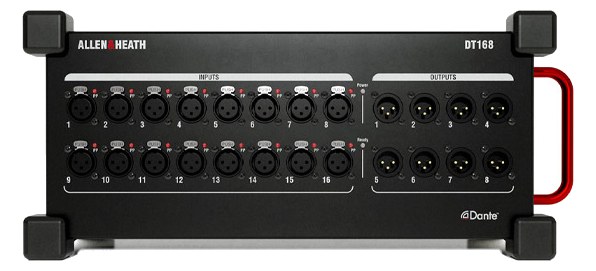
DT168The Allen & Heath DT168 is a 16-input, 8-output Dante stage box that integrates seamlessly with Avantis, dLive, and SQ consoles via a single Dante connection. Solid mic preamps, comprehensive metering on the front, and a 3U rack format make it a popular choice for venues already on Dante.View gear →
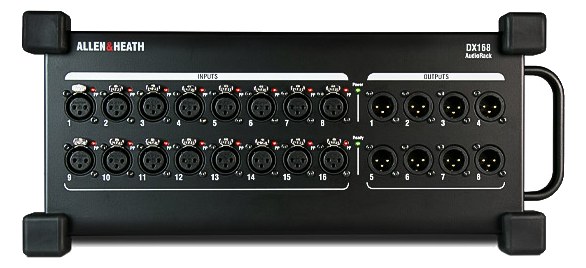
DX168The Allen & Heath DX168 delivers 16 boutique A&H preamps at the stage over a single SLink shielded Cat5e link — the A&H equivalent of AES50. Pairs with SQ, Avantis, and dLive consoles. Two SLink ports allow daisy-chaining a second DX168 or DX32 off one console port for 32+ channel rigs without a second network cable run to FOH.View gear →
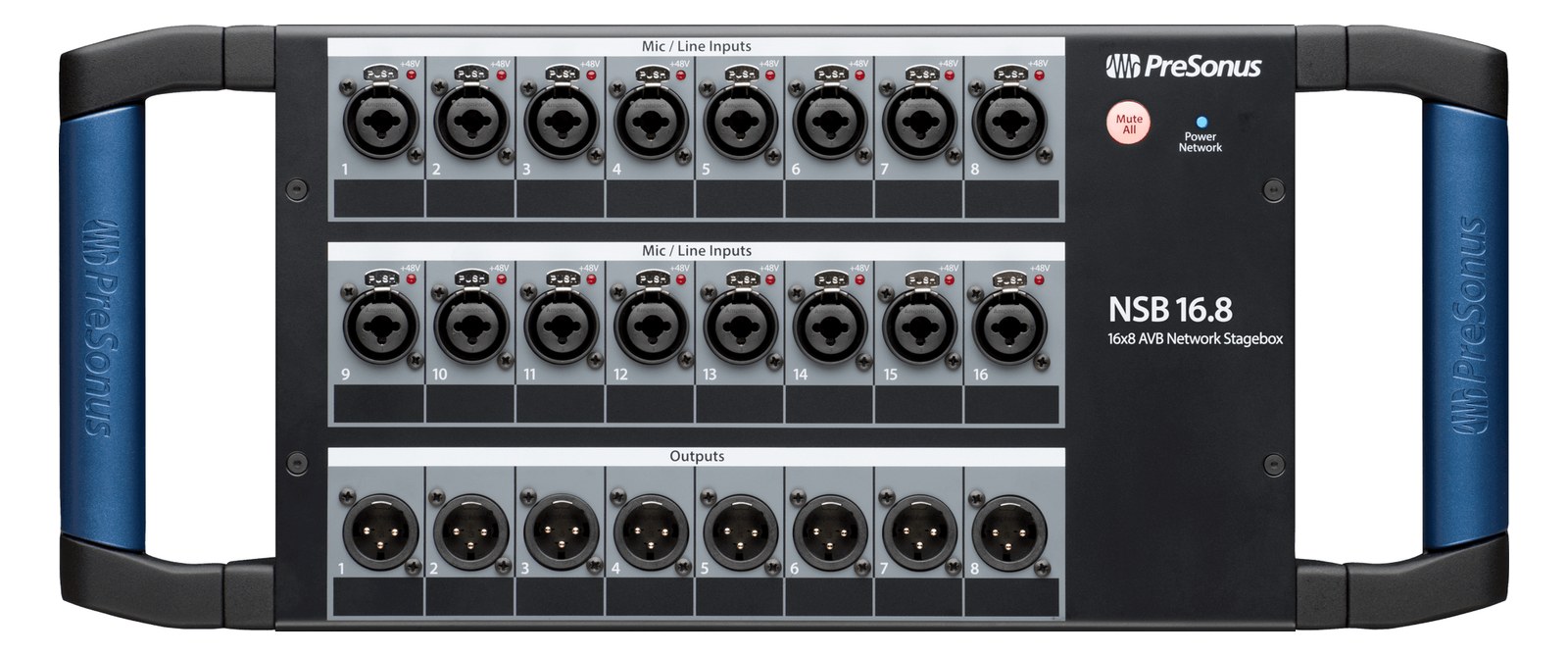
NSB16.8The PreSonus NSB16.8 is the AVB stage box for StudioLive Series III systems: sixteen recallable XMAX preamps and eight outs over a single Cat5 AVB run, with power-over-line convenience and stage-floor or rack mounting. Pairs directly with the R-series rack mixers for a networked monitor rig. Multiple boxes stack for larger input counts.View gear →
06 · Resolve the questions that can change the purchase or build plan.
Planning questions
Short, source-backed answers surface rack fit, power, cabling, and connection details before they become surprises.
How will the Allen & Heath AB168 Stage Box affect rack fit and case depth?
It occupies 3U. Its documented depth is 250 mm.
How much power does the Allen & Heath AB168 Stage Box draw?
Typical draw is 30W and documented maximum draw is 45W.
What connections does the Allen & Heath AB168 Stage Box have?
5 documented physical ports, including Mic In 1-16, Out 1-8, dSNAKE, Expander, Power.
07 · See this unit inside a real rack plan.
Builder preview
Placement is only the start. Builder checks space · depth · weight, power headroom, dependencies, and compatible signal paths around this exact catalog item.Open in Builder