
01 · Source
2 documented inputs
XLR female + IEC C14
- Arrives as
- 2 documented inputs
- Connector
- XLR female + IEC C14
- Signal
- analog audio

Stage Box
The Behringer SD8 puts eight remote-controlled Midas-designed preamps and eight returns on an AES50 run, in a compact chassis that lives on stage or in a drop rack. For X32/WING rigs it is the cheapest way to add an eight-channel drop without a full S16. Chains with other SD/S boxes over the second AES50 port.
Manufacturer product photography — the drawn faceplate stays true to panel layout; these show the hardware itself.
01 · What it does—and what that changes in your rig.
Start with the payoff, then work through how it functions, where it fits, and the details that change a real build.
The Behringer SD8 puts eight remote-controlled Midas-designed preampsThe gain stage that lifts a mic’s tiny signal up to line level — the first thing a signal hits, and a big part of how a console sounds. and eight returns on an AES50The Behringer/Midas console-to-stage-box link: 48 channels each way over one shielded Cat5e cable, with near-zero latency. run, in a compact chassis that lives on stage or in a drop rack. For X32/WING rigs it is the cheapest way to add an eight-channel drop without a full S16. Chains with other SD/S boxes over the second AES50 port.
02 · Know the whole path before you buy.
Learn the route as a block diagram: source, product function, transport, and destination. Select any block to see what enters, what changes, and what leaves.
Each block answers the same three questions: what arrives, what changes here, and what leaves.
XLR female + IEC C14
03 · What this product asks of the rest of the system.
Treat connector names as the start of the check—not the answer. These are the boundaries that determine a complete working path.
Use it when 2U and 149 mm of depth fit the case.
Complete the path with upstream and downstream gear that matches connector, direction, signal type, protocol, and wiring standard.
This product declares AES50; matching plugs alone do not make other protocols compatible.
04 · Every connector, grouped by job.
Switch the product view and the documented port inventory updates with it—hardware and data stay side by side.
Switch panels to keep the hardware view and the documented port list in sync.
| Port | Panel | Connector | Direction | Signal | Channels |
|---|---|---|---|---|---|
| Mic In 1-8 | front | XLR female | input | analog audio | 8 |
| Out 1-8 | front | XLR male | output | analog audio | 8 |
| AES50 A | rear | etherCON | bidirectional | digital audio | 48 |
| AES50 B | rear | etherCON | bidirectional | digital audio | 48 |
| Power | rear | IEC C14 | input | power | — |
Showing 5 of 5 documented physical ports.
05 · Compare the decision, not just the price.
The rows are organized around fit, power, I/O, and system role so a cheaper unit cannot hide a more expensive workflow.
| Compare | 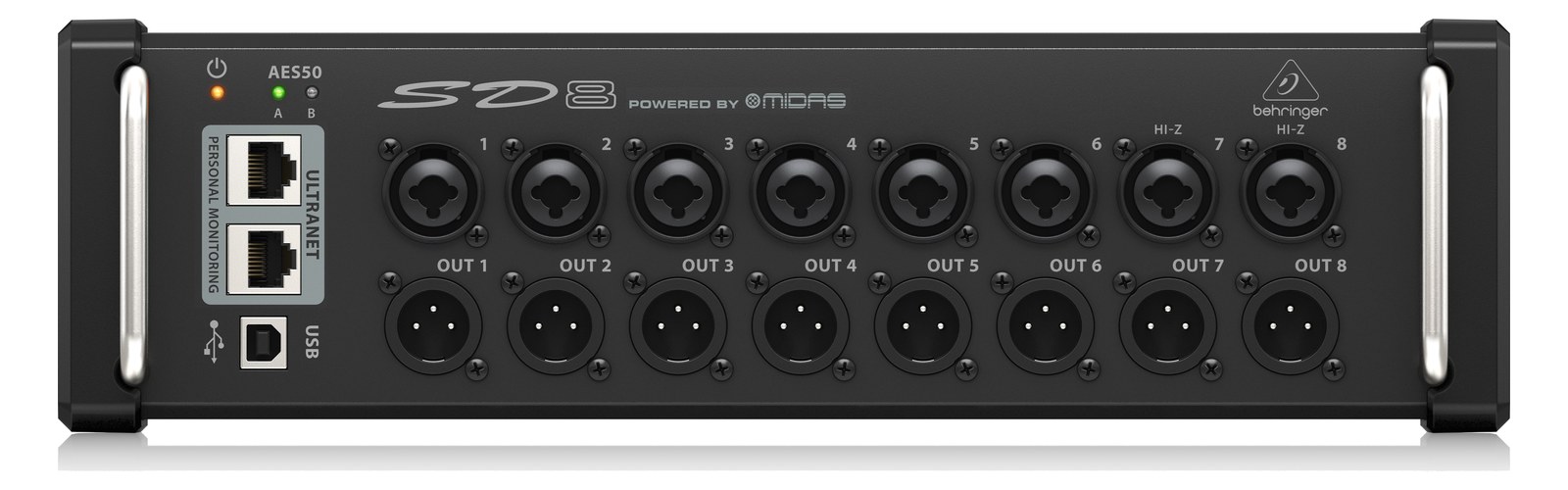 |  |  |  |
|---|---|---|---|---|
| Fit | 📐 2U | 📐 2U | 📐 3U | 📐 3U |
| Power | ⚡ 20W | ⚡ 22W | ⚡ 40W | ⚡ 55W |
| Weight | ⚖️ 5.5 lb | ⚖️ 10.4 lb | ⚖️ 17.9 lb | ⚖️ 7.1 lb |
| I/O | 🔌 5 | 🔌 34 | 🔌 51 | 🔌 27 |
| Estimate | 💵 ~$409 | 💵 ~$579 | 💵 ~$689 | 💵 ~$509 |
| Deep dive | Current selection | Full comparison → | Full comparison → | Full comparison → |
06 · Resolve the questions that can change the purchase or build plan.
Short, source-backed answers surface rack fit, power, cabling, and connection details before they become surprises.
It occupies 2U. Its documented depth is 149 mm.
Typical draw is 20W and documented maximum draw is 35W.
5 documented physical ports, including Mic In 1-8, Out 1-8, AES50 A, AES50 B, Power.
07 · See this unit inside a real rack plan.
08 · Related gear, in the order you may need it.
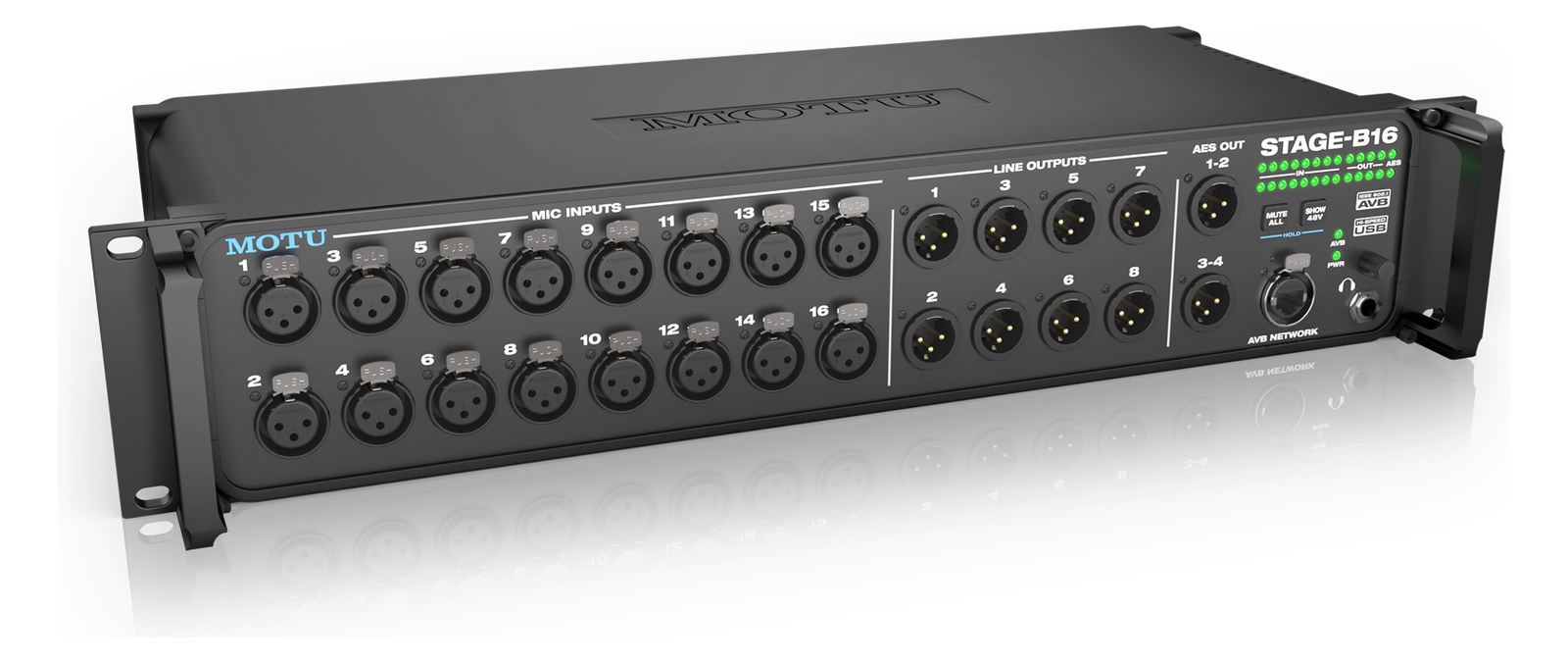
Stage Box
Stage Box
Stage Box
Stage Box
Stage Box
Stage Box
Planning guides for stage box systems.
Fundamentals · 6 min
A walking tour of the signal path from microphone to in-ear monitor, with what every box in the rack actually does to the audio along the way.
Workflow · 10 min
A plain-English guide to writing the input list, stage plot, and patch sheet that house engineers want — without the jargon, with examples, and with a free way to generate one.
Workflow · 10 min
Step-by-step: linking aux buses into stereo pairs, pre-fader vs post-fader, routing buses to Ultranet vs physical XLRs vs AES50, and adding a bus-level limiter.
Networking · 9 min
A practical comparison of the three audio-over-network protocols you’ll encounter in a rack rig, with guidance on when each one is the right pick.


