
Stage Box

Yamaha Rio3224-D3 Stage Box

Yamaha·Model Rio3224-D3·yamaha-rio3224-d3

Photos

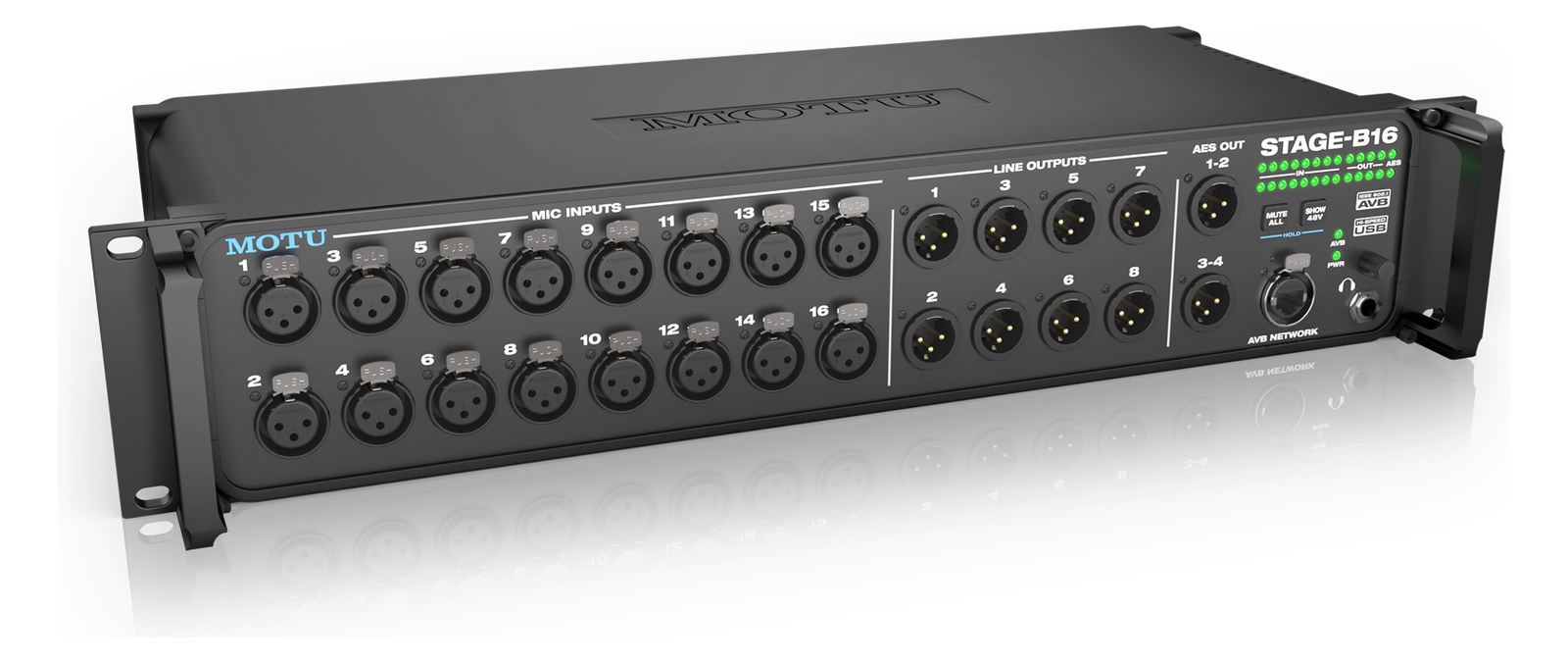
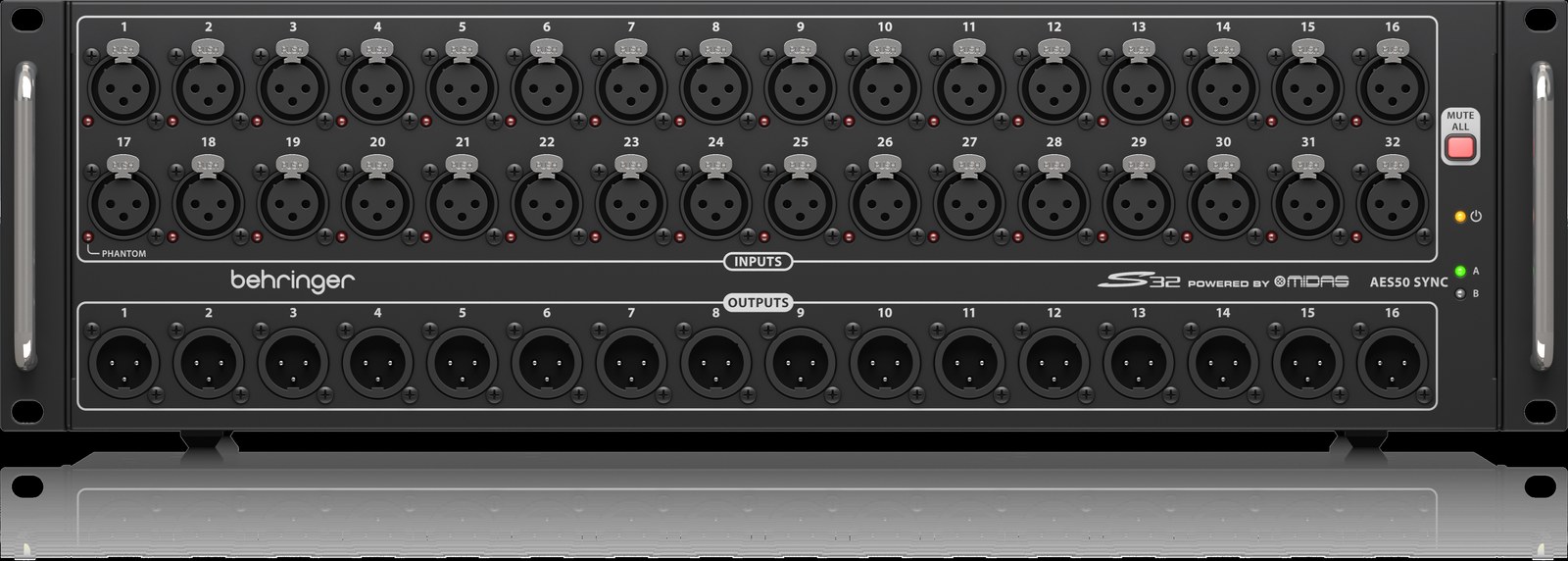
Manufacturer product photography — the drawn faceplate above stays true to panel layout; these show the hardware itself.

Photo: YamahaClick to zoom

About the Yamaha Rio3224-D3

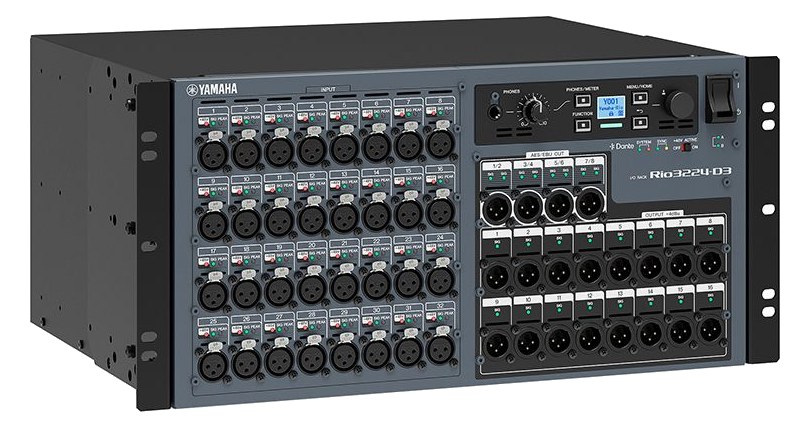
The Yamaha Rio3224-D3 is the current flagship Rio: thirty-two preamps and twenty-four outputs with redundant Dante and dual power supplies in five rack spaces. It is the stage end of DM7 and Rivage systems on arena tours worldwide. The D3 generation carries the Rio name forward from the D2 with updated conversion and control.

The Rio3224-D3 is Yamaha's largest stage box and the hardware that actually touches your inputs on a DM7 or Rivage system. Thirty-two mic preamps and twenty-four analog outputs live in five rack spaces, connecting to the console over Dante with a primary and secondary network port for redundancy. This is the stage end of a properly engineered split: your inputs hit the Rio, travel over Cat6 to the console, and your monitor mixes ride back out to the wedges and IEM transmitters through those twenty-four XLR outputs. At $10,800 it is a serious capital investment, but it is purpose-built infrastructure for shows where losing audio is not an option.

Sixty watts nominal, seventy-five at peak, from dual IEC inlets — that means you can feed Power A and Power B from separate circuits or a UPS and a mains feed, and the box keeps running if one source drops. At load-in that changes the conversation around power distribution: plan two separate runs to the stage box from the start, not as an afterthought. The 4 kg weight and 250 mm depth make it genuinely portable for a five-unit frame — road cases for this box tend to be shallower than you'd expect. The Dante secondary port gives you a warm spare network path with zero reconfiguration if your primary switch has a problem mid-show.
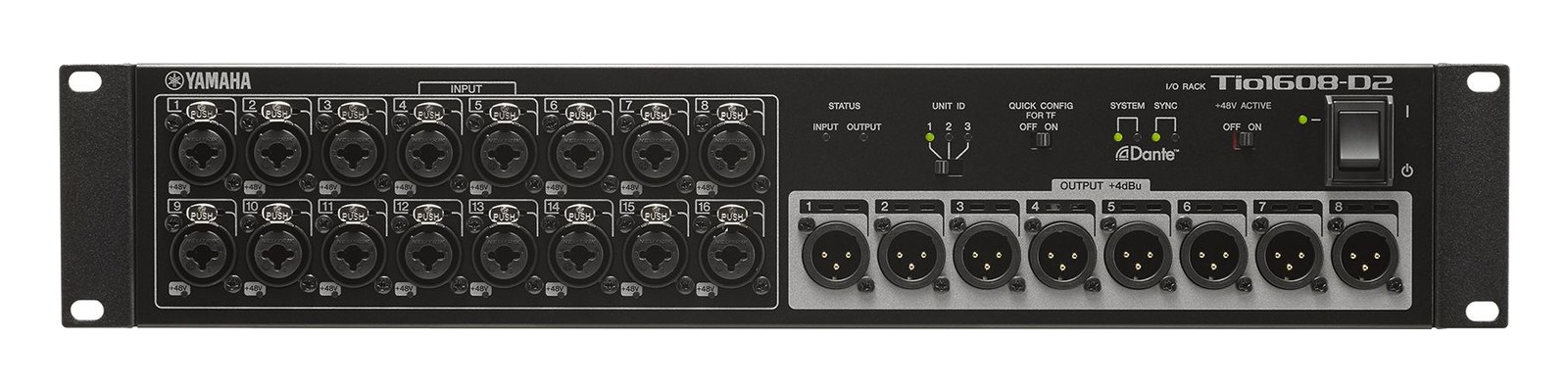
This unit belongs in a rig where the console is a DM7 or a Rivage and the channel count is real — festival patches, theater productions with large orchestras, arena monitor rigs running twenty or more mixes. If you are on an QL or CL series console, you want the D2 generation Rio that pairs with DANTE-MY16-AUD or the native Dante cards in those desks; the D3 is specifically the current flagship for Yamaha's top-tier consoles. If your show is under sixteen inputs and eight outputs, you are buying capacity you will never use. But if you are splitting inputs to FOH and monitors over a Dante network and need all thirty-two channels on stage, this is the box that makes that work without compromise.

In the rack

  • Run Power A from your stage mains circuit and Power B from a UPS or a second dedicated circuit — dual IEC inlets are only useful if they are actually on independent sources.
  • Label the Dante Primary and Secondary ports at the EtherCon with colored boots before the cable run goes in; swapping them under pressure at load-in with dark stage lighting is a real risk.
  • Map your twenty-four outputs deliberately before patch day: monitor mixes first, then effects returns, then any amp-direct feeds — running out of analog outputs mid-show is a planning failure, not a box limitation.
  • At 250 mm depth the Rio3224-D3 fits standard shallow stage boxes without a rear-clearance fight, but confirm your road case lid clears the EtherCon connectors before the first truck pack.

Current-gen 32-in/24-out Rio flagship — D3 replaces D2.

I/O Ports (6)

PortConnectorDirectionSignalChannels
Mic In 1-32XLR FEMALEinputanalog audio32
Out 1-24XLR MALEoutputanalog audio24
Dante PrimaryETHERCONbidirectionaldigital audio64
Dante SecondaryETHERCONbidirectionaldigital audio64
Power
  • Power A (IEC C14)
  • Power B (IEC C14)

Deciding between two?

Rack space, watts, weight and every connector, side by side.

Related gear

Related articles

Guides from our library that cover planning around stage box gear.